
 CZ
CZ SK
SK HU
HU AT
AT DE
DE ES
ES SI
SI HR
HR
Nothing in the basket.

- Search
-
Login

-
0
Comparison
Add products to compare, then they will appear here and you can compare parameters.
-
0
0 €
RGBlink mini-edge SDI
SKU: 230-0008-01-0
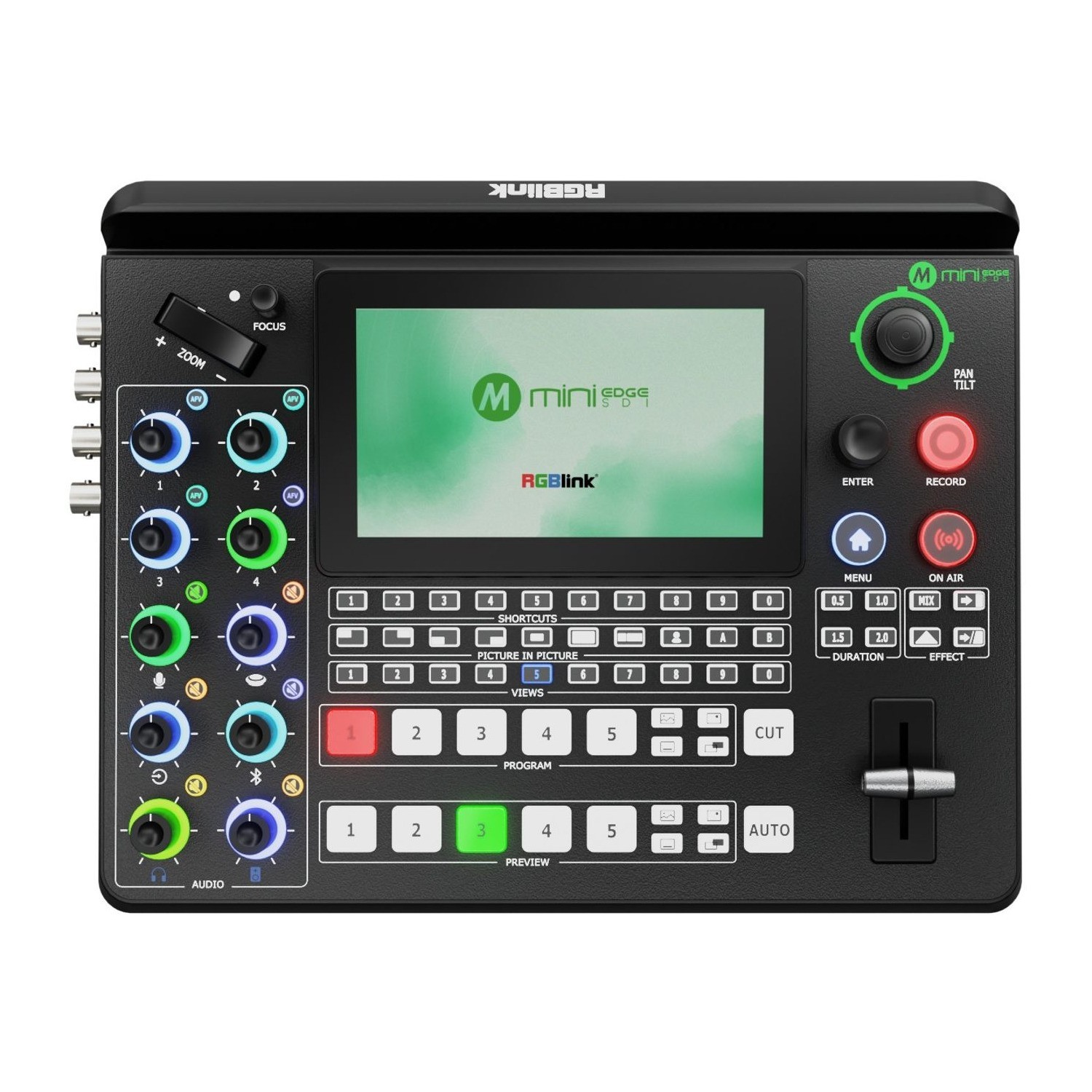
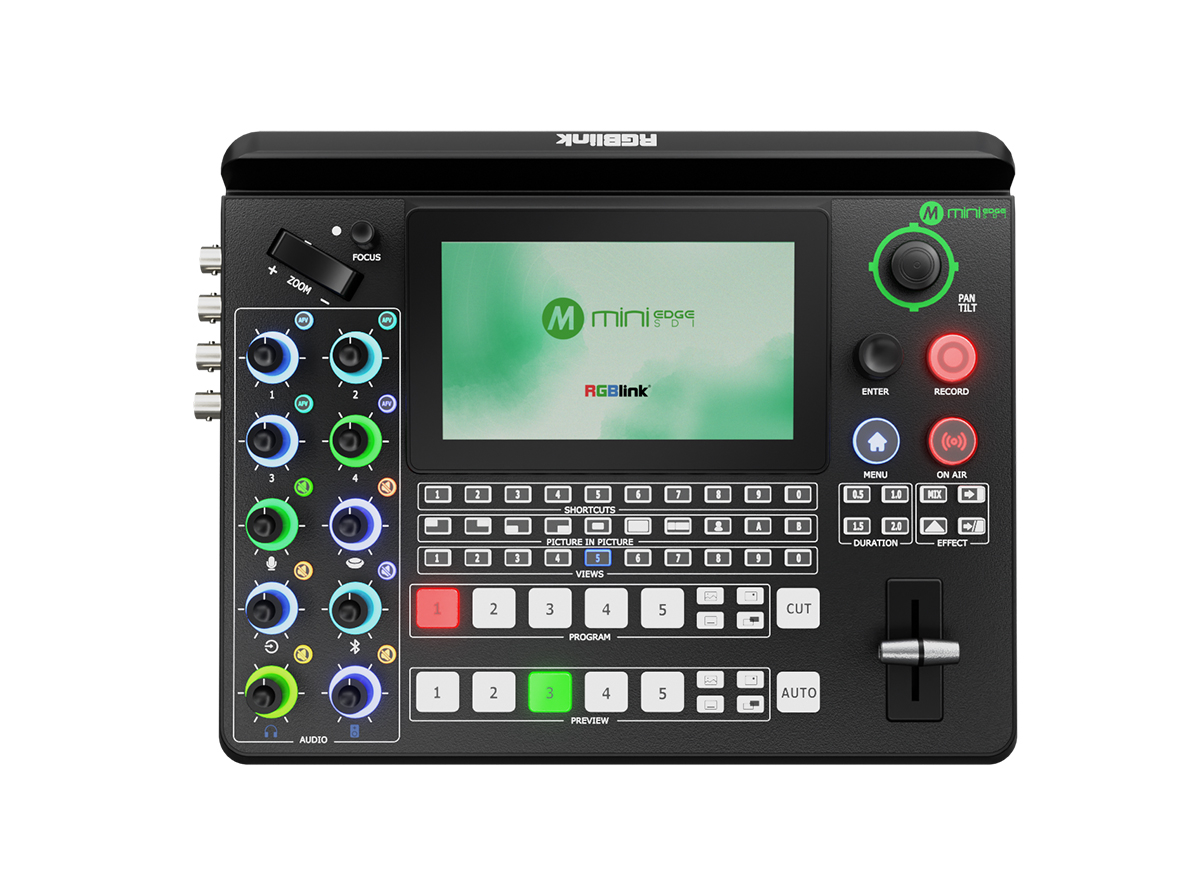
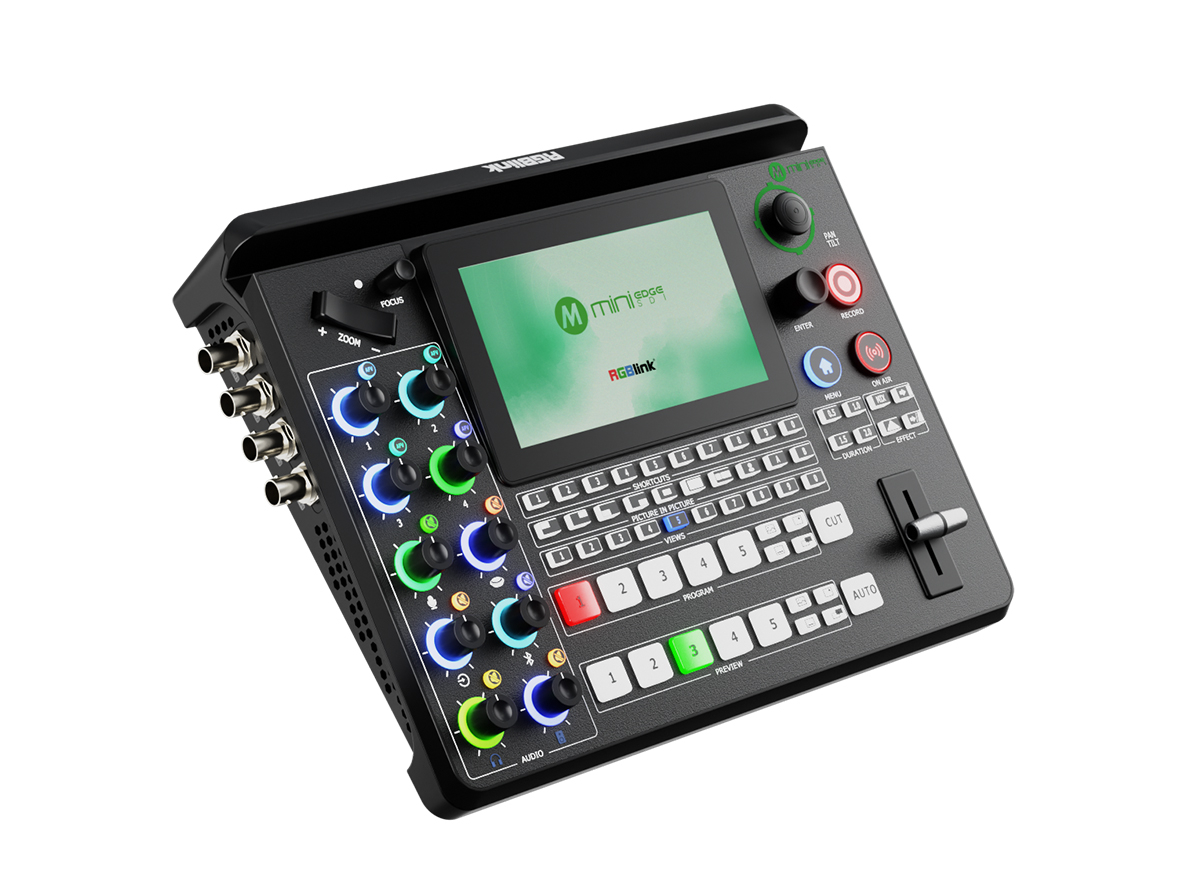
The RGBlink mini-edge SDI combines ten input connectors in a single desk – four HDMI 2.0, four 3G-SDI, a USB camera (UVC) and an NDI | HX2 network source – with an eight-channel audio mix, PTZ camera control, recording to a USB drive and streaming straight to the network. It suits schools, sports, houses of worship, corporate events and conferences.
1 099 € with VAT
908.26 € without VAT
Personal pickup: Tomorrow from 09:00
Shipment day: Tomorrow
Shipment day: Tomorrow
In stock 5 pcs
Praha 5 pcs
Praha 5 pcs
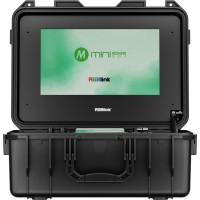
Top accessories for RGBlink mini-edge SDI
RGBlink ASK nano (1TX+1RX)
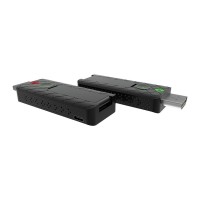
RGBlink ASK nano puts the power of collaboration in your pocket with HDMI sticks
186 €
In stock > 5 pcs
RGBlink RGB20X-PAI-OL
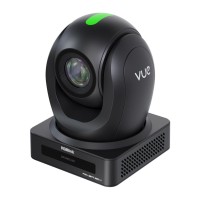
Vue 4K PTZ with 20x optical zoom increases HDMI/RTSP output resolution up to 4K@30Hz.
1 099 €
In stock 5 pcs
RGBlink RGB20X-UNAI-OL
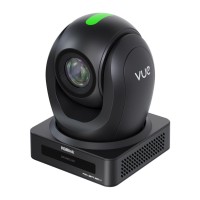
Vue UHD PTZ with 20x optical zoom increases HDMI/RTSP output resolution up to 4K@60Hz.
1 759 €
In stock 4 pcs
RGBlink vue PTZ 2K 20X NDI Camera with TALLY (Support PoE)
Featuring an advanced ISP image processor and a 2-megapixel sensor, vue cameras are
1 319 €
In stock 3 pcs
Product description
SPECIFICATIONS
PACKAGE CONTENT

Product description
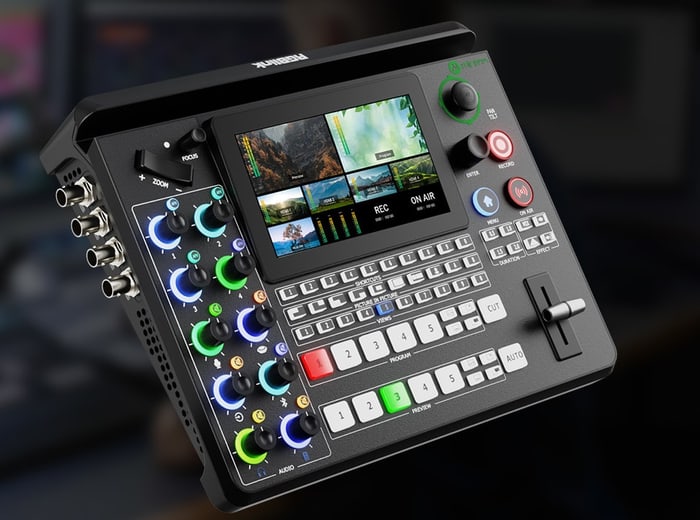
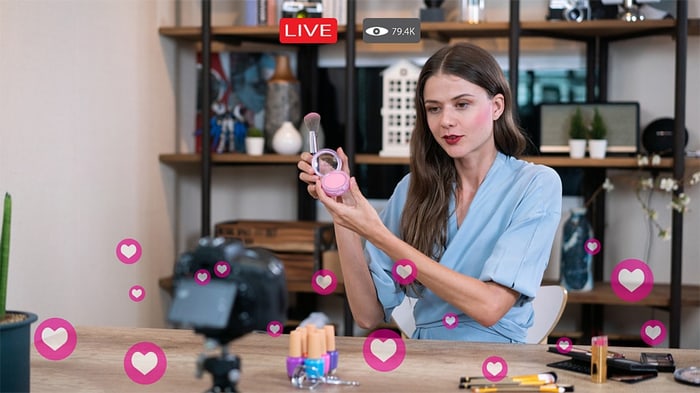
The RGBlink mini-edge SDI combines ten input connectors in a single desk – four HDMI 2.0, four 3G-SDI, a USB camera (UVC) and an NDI | HX2 network source – with an eight-channel audio mix, PTZ camera control, recording to a USB drive and streaming straight to the network. It suits schools, sports, houses of worship, corporate events and conferences.
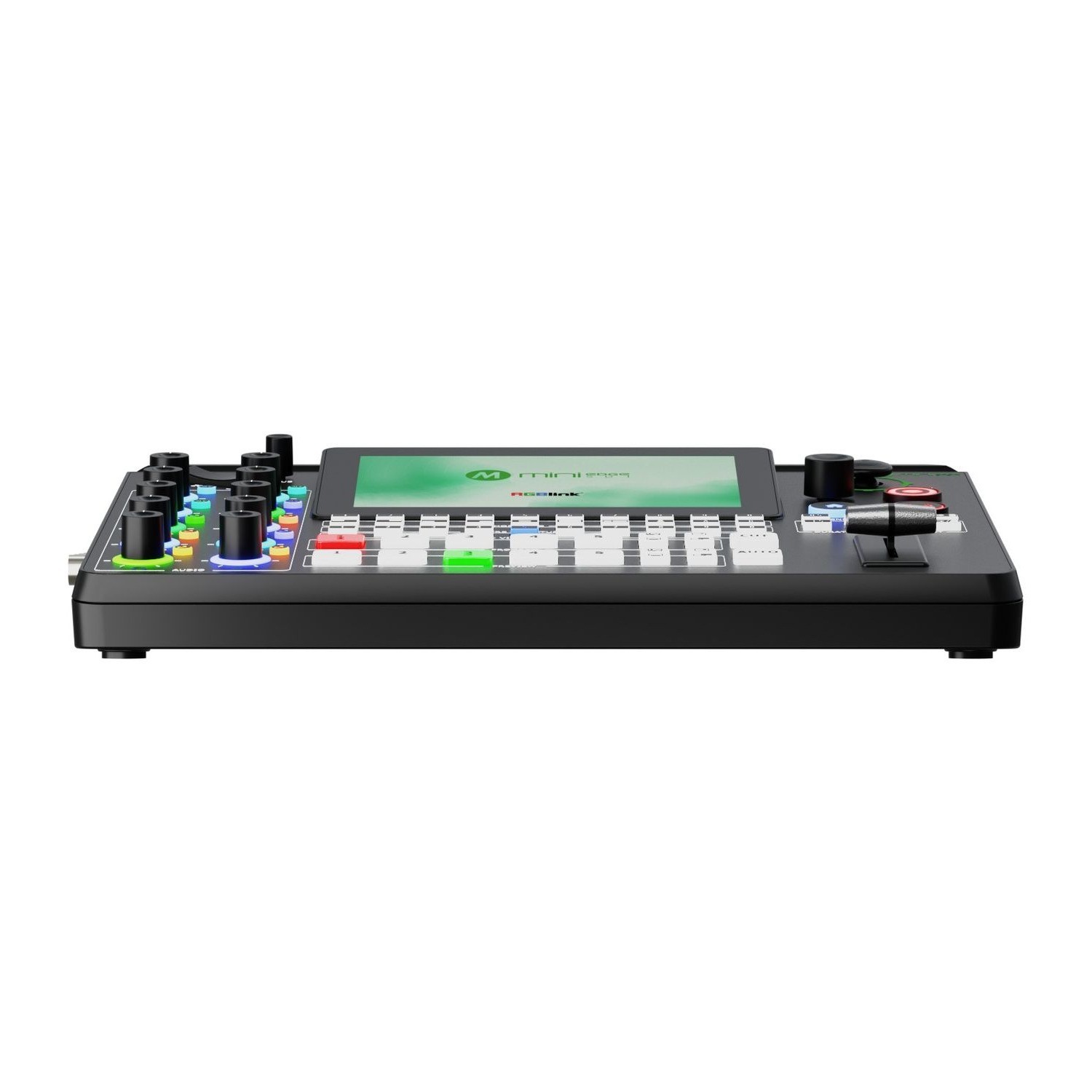
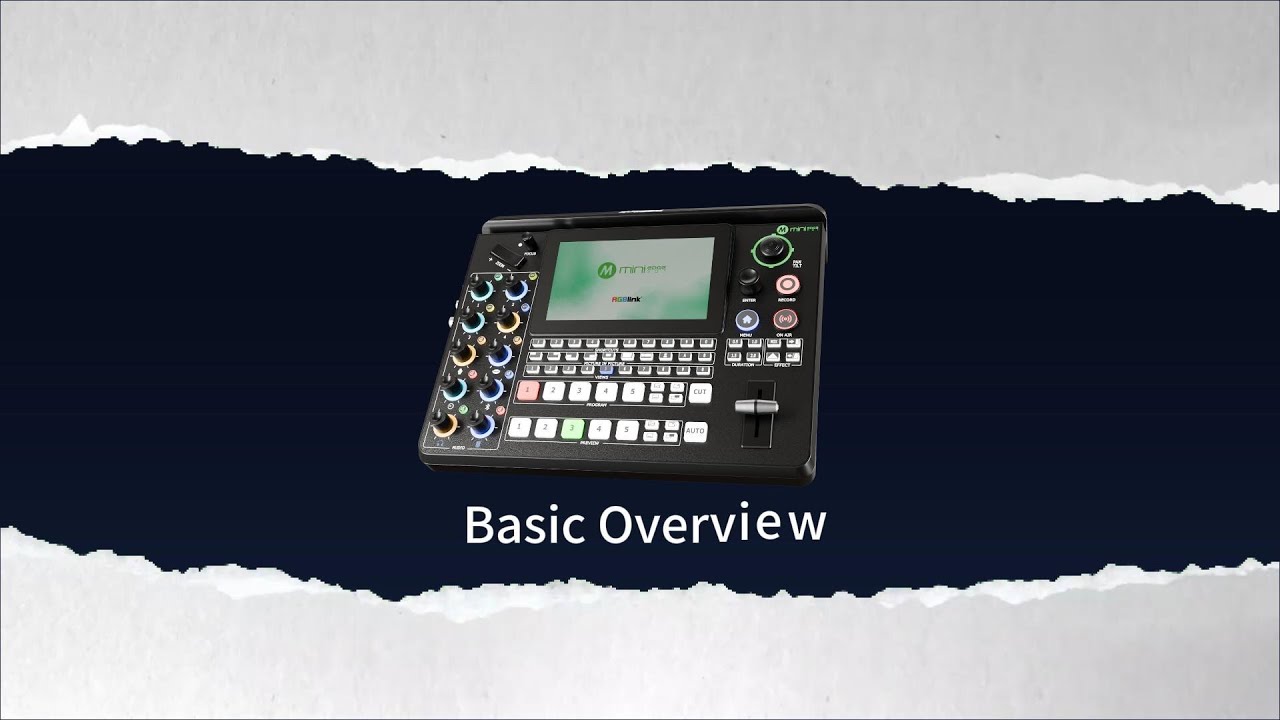
The built-in 5.5-inch screen shows the multiview and menus, and everything else is handled with physical buttons, knobs, the T-bar and the joystick – no computer needed.
Ten inputs in one desk
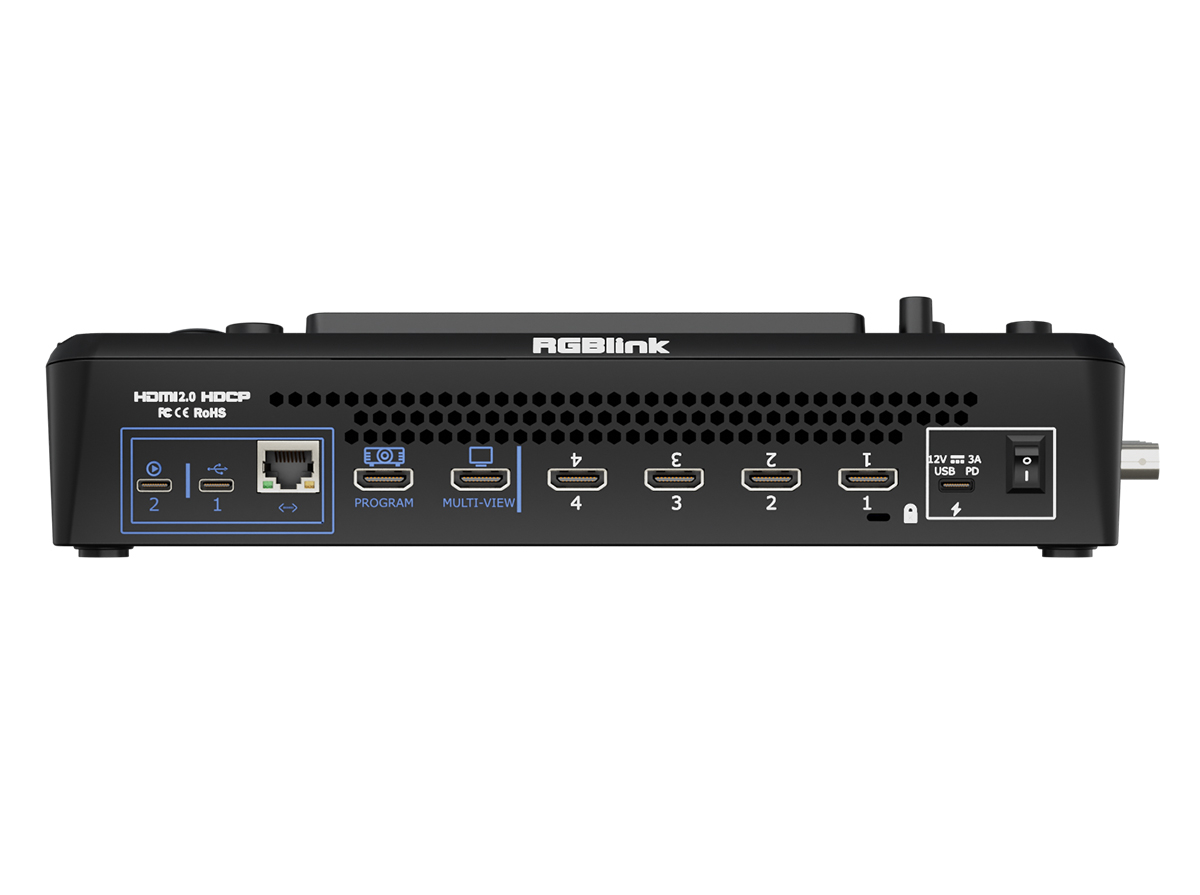
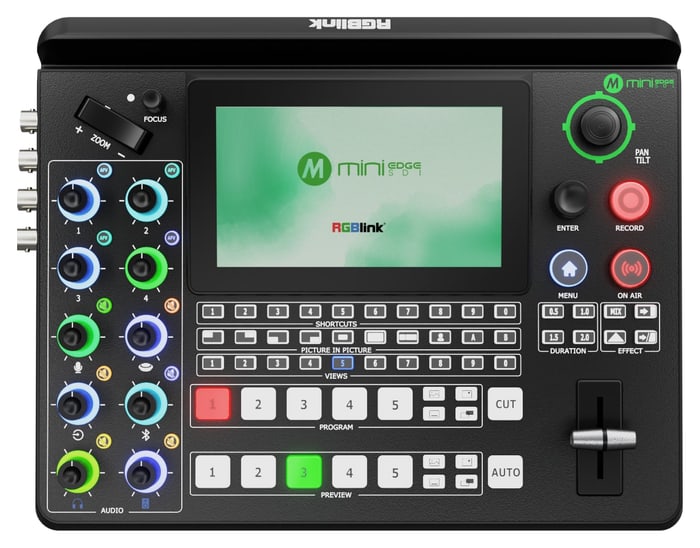
On top of four HDMI 2.0 inputs (up to 4K60), the mini-edge SDI adds four 3G-SDI inputs on BNC, a USB-C input for a UVC camera and bidirectional NDI | HX2 over the network. Buttons 1–4 in the PROGRAM and PREVIEW rows select the HDMI or SDI inputs, button 5 the UVC camera, an NDI source or a file from a USB drive. Two separate HDMI outputs carry the program and the multiview at up to 1080p60. The unit measures 291 × 222.6 × 71.3 mm and is powered over USB-C PD.
Broadcast 3G-SDI inputs
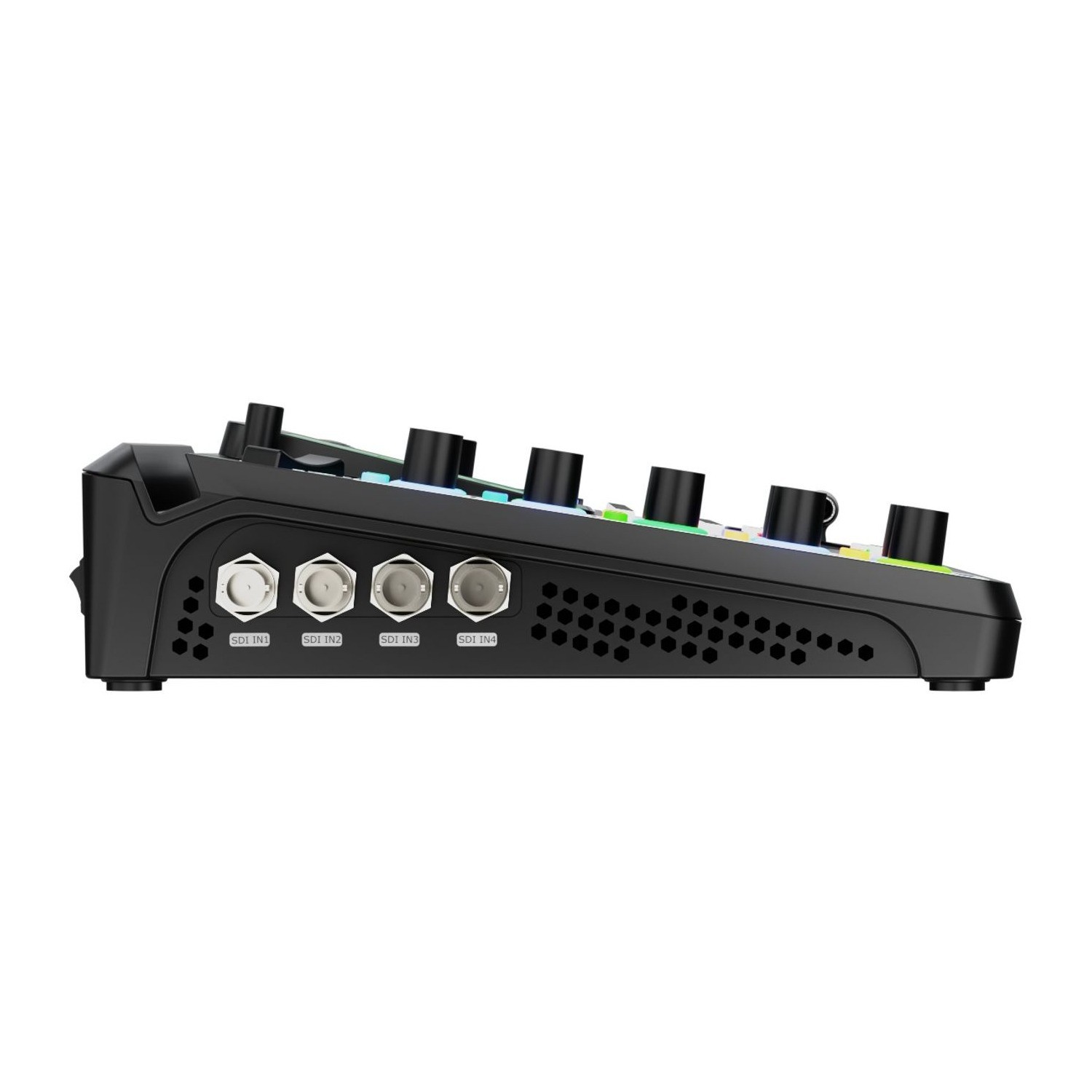
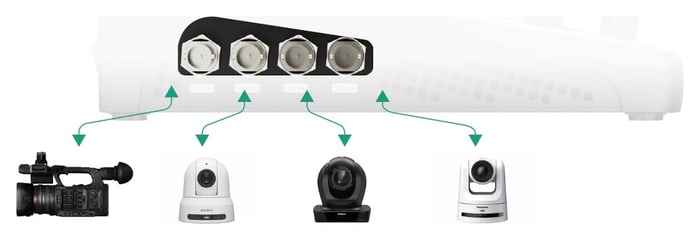
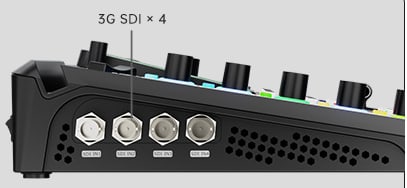
Four 3G-SDI inputs on the side accept 3G/HD/SD-SDI signals up to 1080p60 from cameras, PTZ cameras and other sources. SDI carries the picture over longer cables than HDMI – 3G-SDI reaches up to 100 m (RGBlink laboratory test). The HDMI 2.0 inputs on the rear panel accept up to 4096 × 2160 at 60 Hz; HDMI input 1 supports HDCP 2.2, the other inputs HDCP 1.x.
Connectors
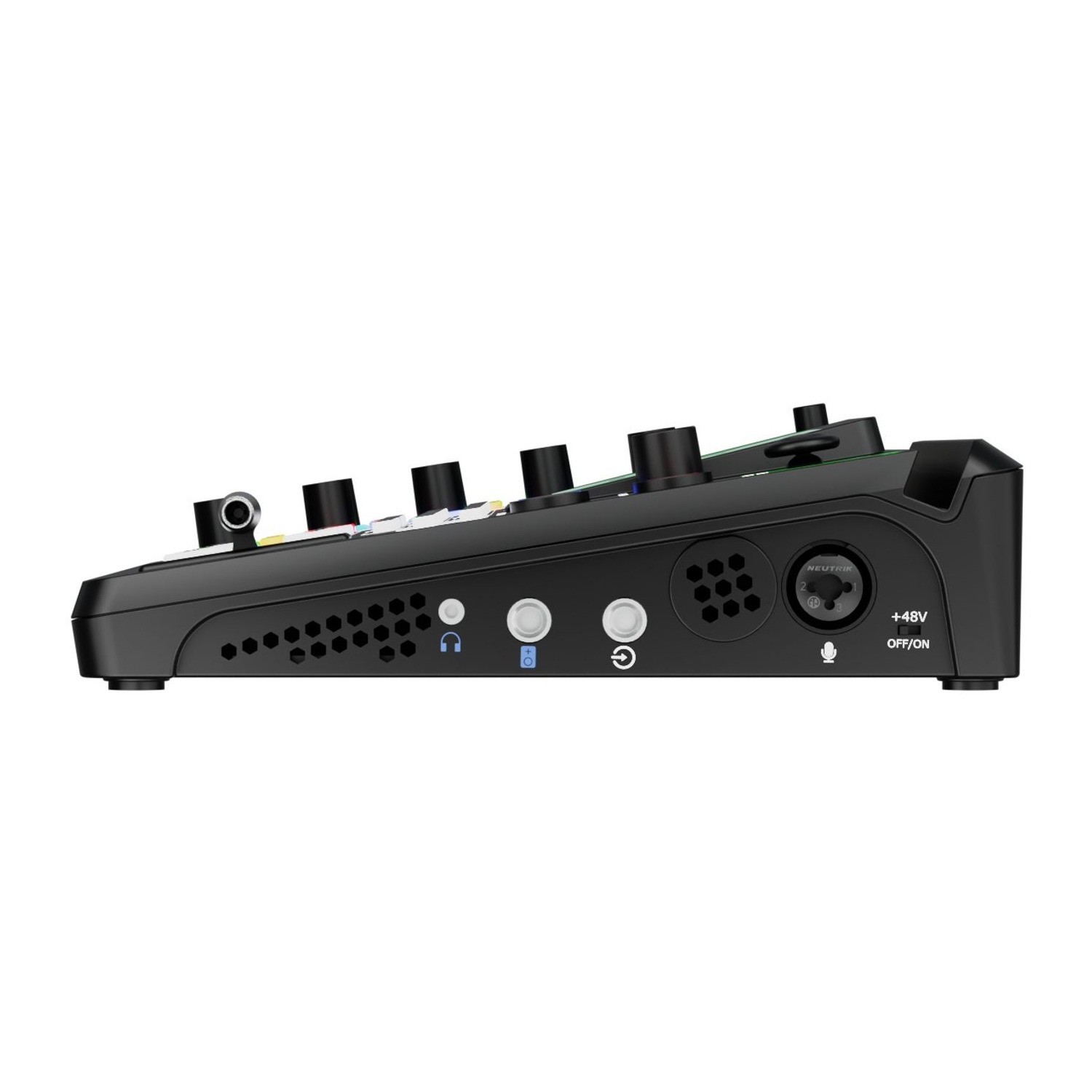
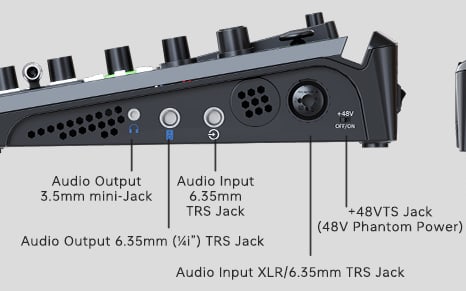
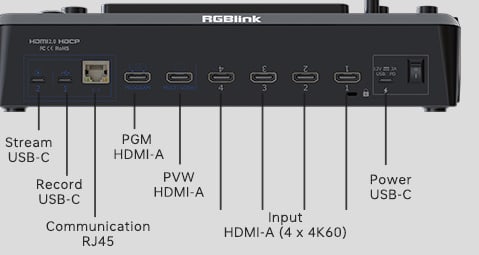
The audio side carries an XLR / 6.35 mm combo microphone input with a 48 V phantom power switch, a 6.35 mm TRS line input, a balanced 6.35 mm TRS output and a 3.5 mm headphone jack. The rear panel has two USB-C ports (stream and record), RJ45 network, program and preview (multiview) outputs, four HDMI inputs and USB-C power; the opposite side has four 3G-SDI inputs.
Everything at your fingertips
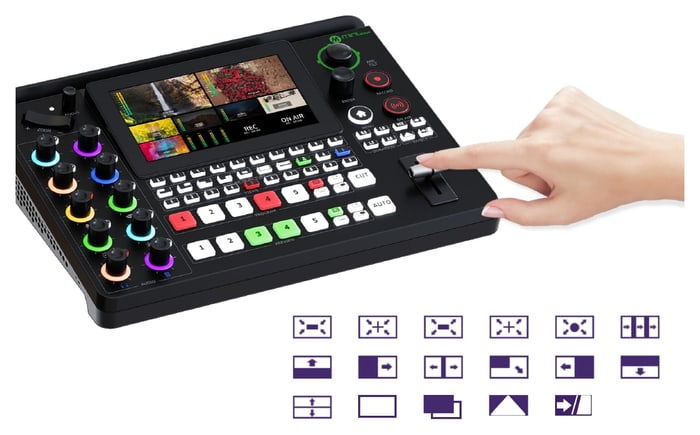
The 5.5-inch screen shows the inputs, the program, recording and streaming status and the menus. Below it sit the PROGRAM and PREVIEW rows, ten shortcuts (SHORTCUTS), picture-in-picture layouts (PICTURE IN PICTURE) and saved scenes (VIEWS). Transitions are triggered with CUT, AUTO or the T-bar, with duration (0.5–2 s) and effect selected by the DURATION and EFFECT buttons. The RECORD and ON AIR buttons start recording and streaming.
Eight-channel audio mix
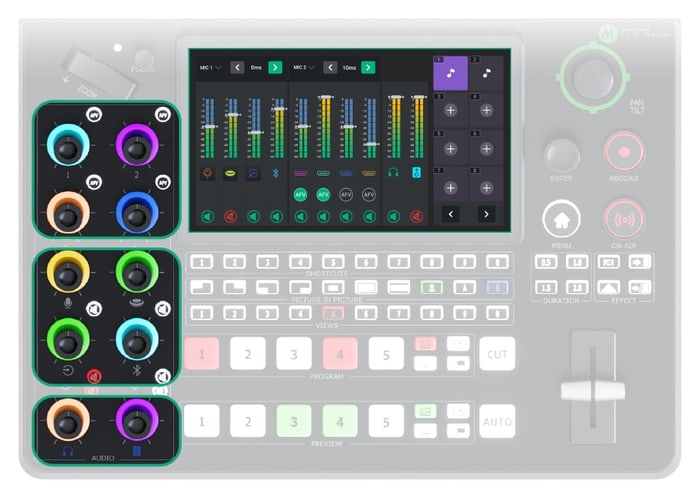
The mix takes four embedded audio signals from the HDMI/SDI inputs and four external sources – microphone, line input, USB audio and Bluetooth. Knobs with coloured rings set the level of each source, the headphones and the program, while the AFV and MUTE buttons handle audio-follow-video and muting. The microphone and a camera input can be delayed to keep audio in sync with the picture, and noise reduction works on the audio inputs.
Layers and picture-in-picture
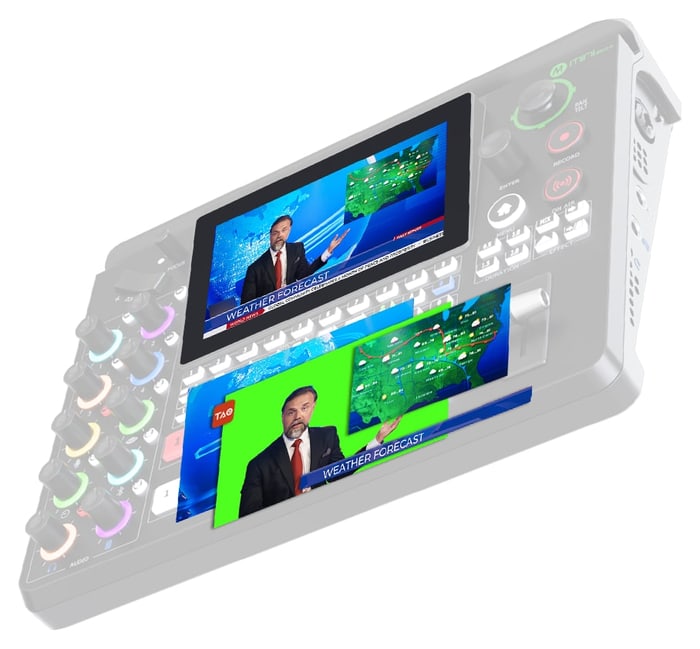
A scene is built from a background image, two video layers A and B and two graphic layers from the media library – a logo or lower thirds. The video layers can be scaled, positioned and cropped with the joystick and the toggle on the panel, so picture-in-picture or two sources side by side are set up without a computer. Images, videos and audio are loaded into the switcher from a USB drive.
One-press chroma key
Key out a presenter in front of a green or blue background right on the switcher with the Chroma Key button: a short press turns keying on, a long press opens the settings. The web app offers six key colours – green, blue, orange, yellow, cyan and purple. Keying settings are saved into scenes together with the rest of the layout.
Scenes and transitions
Up to 16 scenes (VIEWS) store almost the entire setup: picture-in-picture layout, keying, crops, source selection and PTZ camera presets. A scene is recalled to preview with a single button and sent to program with a transition – the default mix (MIX) or one of the DVE effects with a duration of 0.5 to 2 s.
PTZ camera control
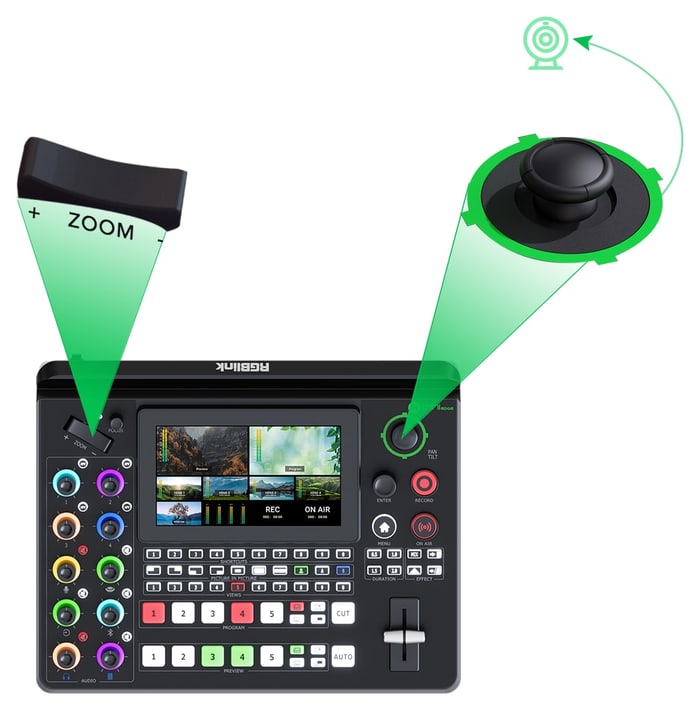
Up to four PTZ cameras are controlled directly from the switcher via VISCA or NDI: the joystick pans and tilts, the ZOOM toggle zooms and the FOCUS knob focuses, with a press switching to autofocus. Pressing the joystick opens the PTZ control screen. When a video layer is selected, the same controls change its size and position.
Streaming, recording and webcam
Over Ethernet the mini-edge SDI streams via RTMP(S) to up to four platforms at once (four platforms need an upload of at least 100 Mb/s), and via RGBlink TAO Cloud to up to 32 platforms. Connected to a computer over USB-C it appears as a UVC webcam for OBS, Zoom or Teams. Recording goes to MP4 on a USB flash drive or an SSD of up to 2 TB, even while streaming. The switcher can also be operated from the web app on a computer, tablet or phone.
More information
The mini-edge SDI features four 4K HDMI 2.0 inputs and four 3G SDI inputs, one UVC and one NDI bi-direction input & output, supporting digital embedded audio and video signals from PC, Camera and more. Also analog audio via a microphone input with 48 V phantom power and a line input, plus Bluetooth audio.
There are two separate HDMI outputs for multi-viewer Preview, Program or Test Pattern. One USB 3.0 output supports YUY2 and MJPEG capture formats, which can be recognized as a webcam for streaming to Facebook, YouTube, ZOOM, etc. The UVC port is bidirectional and also serves USB disk recording, a wireless speaker or a wireless microphone, such as RGBlink AI mini. The ethernet port with NDI license enable is bi-direction too, NDI encoder and decoder can work at the same time. The mini-edge SDI has a built-in 5.5-inch TFT panel for menu operation and multiviewer video display.
Compared with mini-edge, mini-edge SDI has 4 more 3G SDI inputs and bidirectional NDI in & out ready for licensing, also noise reduction for audio inputs. Otherwise it matches the mini-edge, with features including dynamic output control, multiview, picture in picture, chroma key, transitions, on-board PTZ camera control and much more.
The mini-edge SDI can be operated from the web app and is integrated with TAO Cloud for remote control and restream to at least 4 content platforms at the same time.
Key features:
- Embedded 5.5-inch monitor
- 10 input connectors (4× HDMI 2.0, 4× 3G-SDI, 2K UVC and 2K NDI)
- 6 customizable video channels
- Maximum 8 channels for audio mixing
- 2 independent HD HDMI channels
- 2K streaming and live via IP and UVC
- Streaming supports NDI | HX2
- Streaming and management via RGBlink TAO Cloud
- Manual real-time control of PTZ cameras, such as zoom in/out, rotation, and focus, via VISCA or NDI
- Third-party control and integration via free RGBlink Central Control Protocol
PACKAGE CONTENT
- RGBlink mini-edge SDI switcher
- USB-C PD power adapter
- USB-C data cable
- Quick guide
SPECIFICATIONS
- Video inputs: 4× HDMI 2.0 (HDMI-A; HDCP 2.2 on HDMI input 1, others HDCP 1.x), 4× 3G-SDI (BNC), 1× USB-C (UVC), NDI | HX2 (RJ45)
- Video outputs: 2× HDMI-A (program, multiview), 1× USB-C (UVC webcam), NDI | HX2
- HDMI input resolution: 720p to 3840 × 2160p30/50/60 and 4096 × 2160p30/50/60, VESA up to 1920 × 1200
- SDI input resolution: 720p50/60, 1080i50/59.94/60, 1080p23.98 to 60
- HDMI and USB output resolution: 1280 × 720p50/60, 1920 × 1080p24/25/30/50/60
- Video processing: 10-bit, 4:4:4 YUV, latency under 4 frames
- Audio inputs: 1× XLR / 6.35 mm TS jack (48 V phantom power), 1× 6.35 mm TRS jack (line), Bluetooth, HDMI/SDI embedded audio
- Audio outputs: 1× 6.35 mm TRS jack, 1× 3.5 mm headphone jack
- Audio format: HDMI Linear PCM 24-bit / 48 kHz, USB 16-bit / 48 kHz, 2 channels
- Line input delay: up to 8 frames
- Recording: MP4 via USB-C, FAT32 (up to 32 GB) or exFAT (64 GB – 2 TB)
- Streaming: RTMP(S) to up to 4 platforms, TAO Cloud, NDI | HX2, UVC webcam
- PTZ camera control: VISCA, NDI, up to 4 cameras
- Screen: 5.5 inches
- Power: USB-C PD 3.0, 12 V / 3.3 A, max. 40 W
- Dimensions: 291 × 222.6 × 71.3 mm (package 332 × 238.5 × 109 mm)
- Order code: 230-0008-01-0
WE RECOMMEND
The RGBlink mini-edge SDI is a powerful hybrid production switcher that supports 4K HDMI, 3G-SDI, and NDI signals, making it the ideal hub for professional streaming and production. To fully realize its potential, it is recommended to pair it with compatible PTZ cameras, wireless transmission systems, and preview monitors that take advantage of its extensive input connectivity.
PTZ Cameras - These cameras are fully compatible with the control room’s HDMI, SDI, and NDI inputs and support remote control.
- RGBlink vue PTZ camera
- RGBlink vue PTZ 2K 20X NDI Camera with TALLY (PoE Support)
- RGBlink RGB12X-PAI-OL
- RGBlink RGB30X-UPAI-OL
- RGBlink RGB12X-UPAI-OL
- RGBlink RGB20X-NAI-OL
- RGBlink RGB20X-UNAI-OL
- RGBlink RGB30X-NAI-OL
- RGBlink RGB20X-PAI-OL
- RGBlink RGB20X-UPAI-OL
Wireless Video Transmission - Systems for wireless signal transmission to control room HDMI inputs for flexible camera placement.
- RGBLink ASK nano 4K (1TX+2RX)
- RGBlink ASK nano 4K (1T1R)
- RGBlink ASK nano 4K (USB-C)
- RGBlink ASK nano (1TX+1RX)
Monitoring and Recording - External monitors and recorders for previewing and backing up the output signal from the control room.
Installation Accessories - Mounts and mounting hardware for secure mounting of compatible PTZ cameras in production environments.
Parameters
| Manufacturer: | RGBlink |
| Category: | Switchers |
Main parameters
| Number of inputs | 10 |
| Switcher inputs | 3G-SDI · HDMI 2.0 · USB-C/UVC · NDI optional |
| Switcher outputs | HDMI · USB · NDI optional |
| Resolution | HD |
| Features | Streaming · Recording · AUX · Chroma Key · Built-in display · PTZ camera control · Streaming via Ethernet · Audio mixing · Media player · Multiviewer |
ACCESSORIES (4)
ACCESSORIES (4)
RGBlink ASK nano (1TX+1RX)
RGBlink ASK nano puts the power of collaboration in your pocket with HDMI sticks
186 €
In stock > 5 pcs
RGBlink RGB20X-PAI-OL
Vue 4K PTZ with 20x optical zoom increases HDMI/RTSP output resolution up to 4K@30Hz.
1 099 €
In stock 5 pcs
RGBlink RGB20X-UNAI-OL
Vue UHD PTZ with 20x optical zoom increases HDMI/RTSP output resolution up to 4K@60Hz.
1 759 €
In stock 4 pcs
RGBlink vue PTZ 2K 20X NDI Camera with TALLY (Support PoE)
Featuring an advanced ISP image processor and a 2-megapixel sensor, vue cameras are
1 319 €
In stock 3 pcs
Alternative (4)
Alternative (4)
AVMATRIX Shark S6
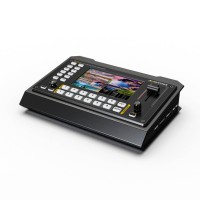
AVMATRIX Shark S6 is a professional six-channel switcher for live production, recording
1 209 €
In stock 2 pcs
Roland VR-1HD
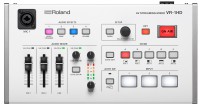
If you’re a content creator seeking maximum engagement, livestreaming outperforms
1 369 €
In stock 1 pcs
RGBlink mini-edge-lite
The RGBlink mini-edge-lite is a compact, all-in-one live production switcher built
1 099 €
on request
RGBlink mini-edge-4S
The RGBlink mini-edge-4S is a rugged, portable field video switcher housed in a durable
Call us for pricing information

News, training, and discounts from Syntex
Special offers and discounts for subscribers only · Free audio & video workshops · News and tips from the world of filmmaking
- Show all
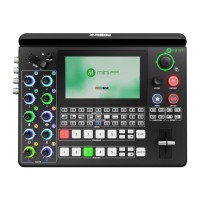
RGBlink mini-edge SDI
The RGBlink mini-edge SDI combines ten input connectors in a single desk – four HDMI1 099 €In stock 5 pcs