
 CZ
CZ SK
SK HU
HU AT
AT DE
DE ES
ES SI
SI HR
HR
Nothing in the basket.

- Search
-
Login

-
0
Comparison
Add products to compare, then they will appear here and you can compare parameters.
-
0
0 €
Sony FX30 (body)
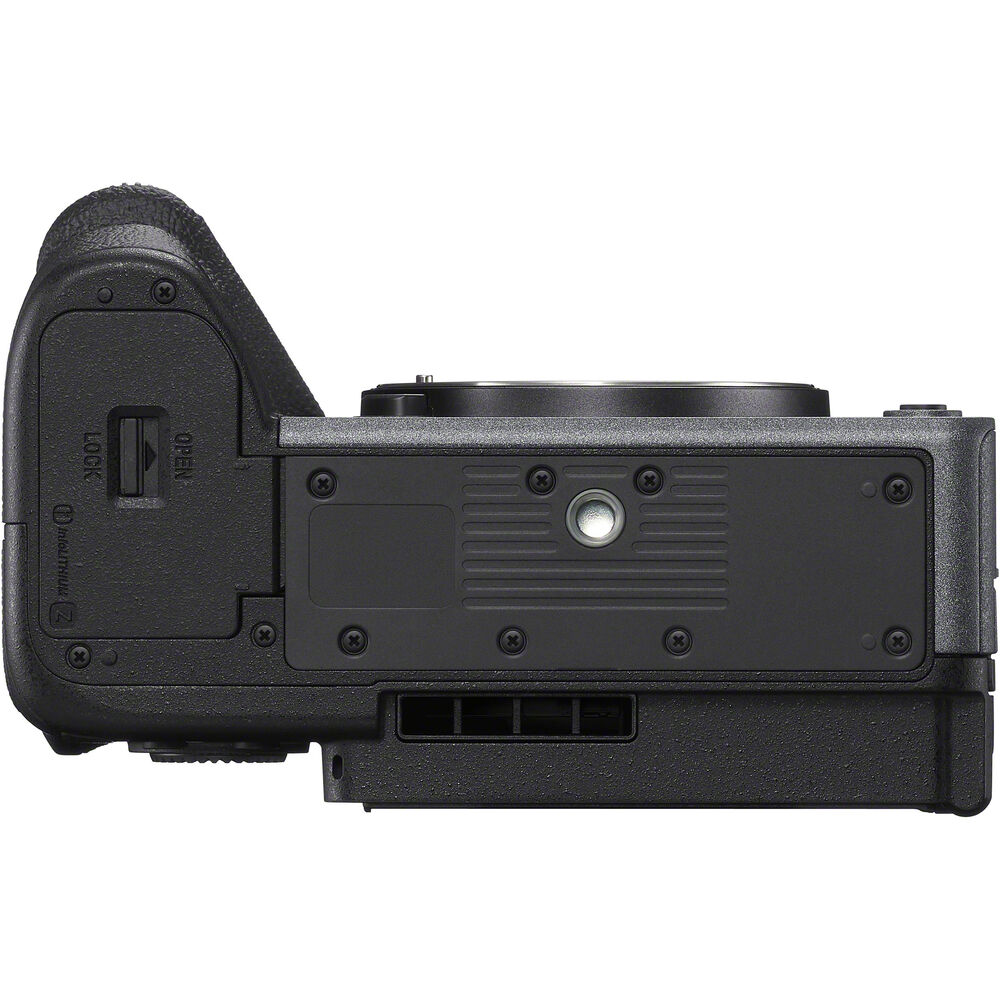
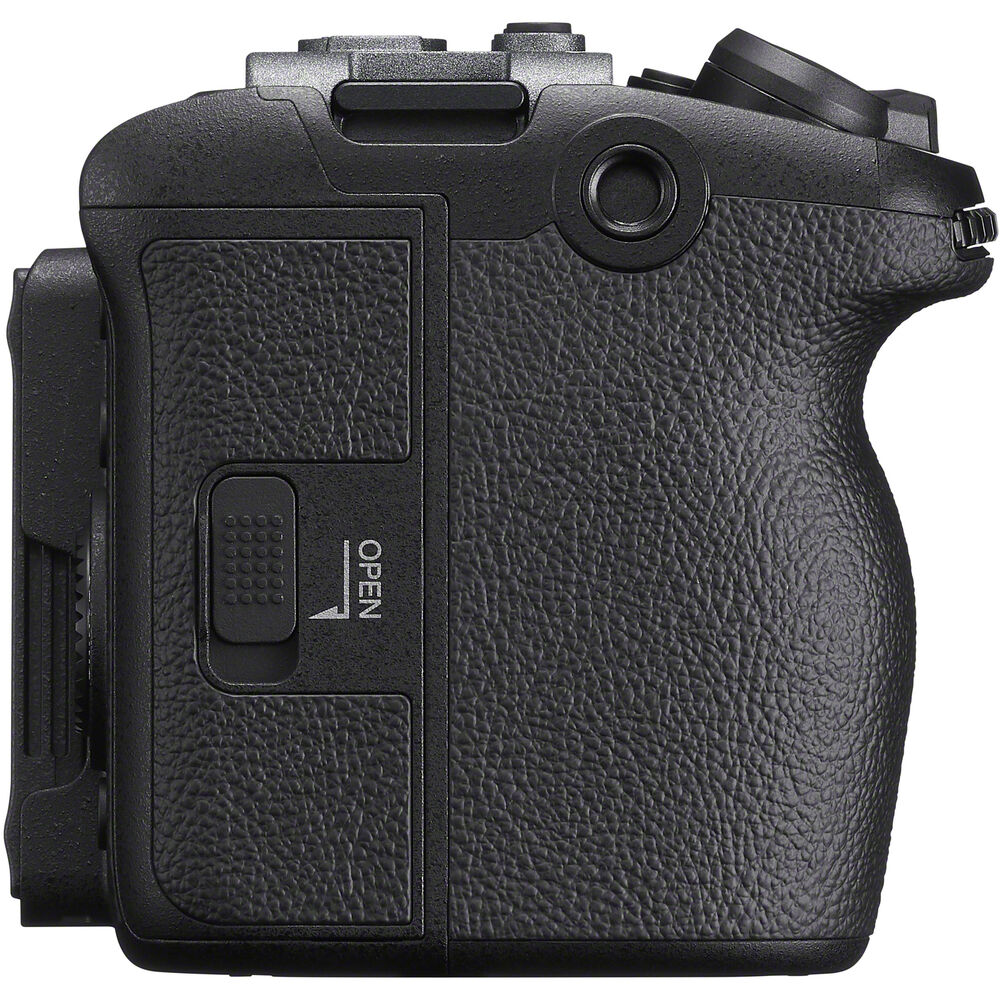
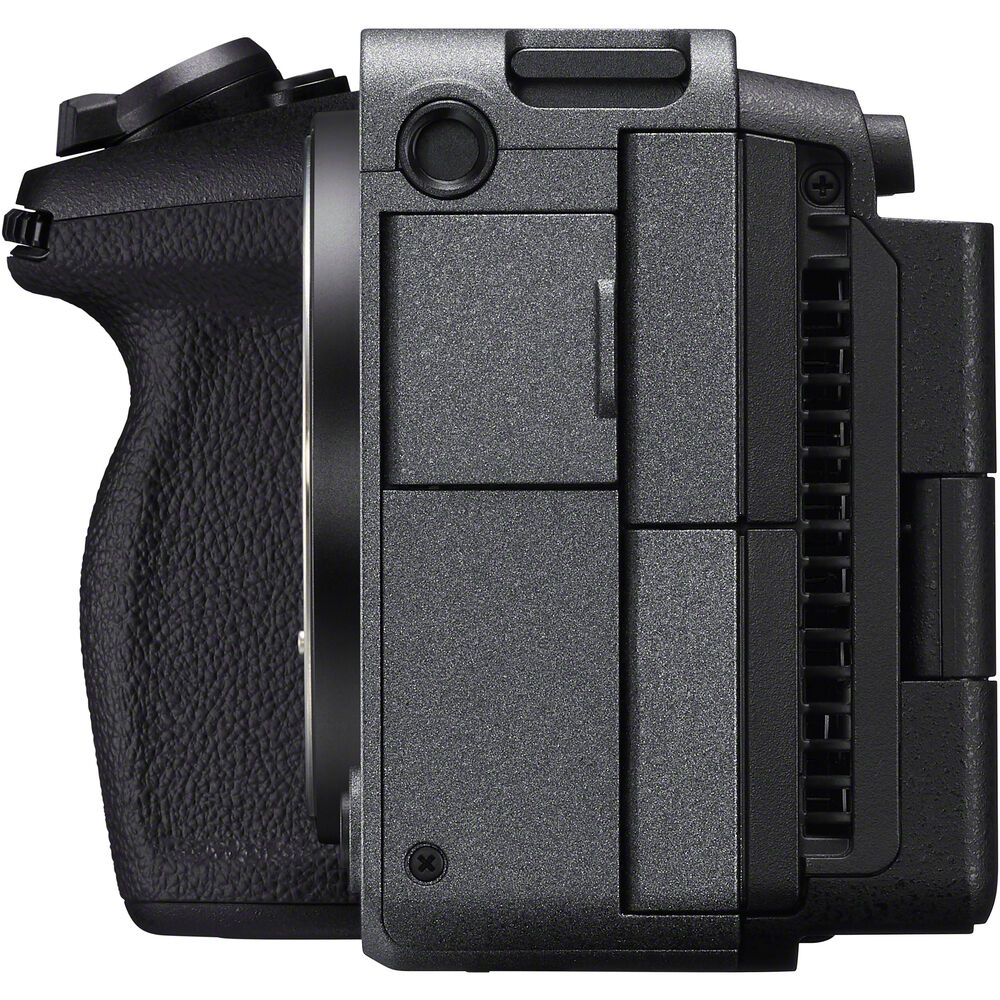
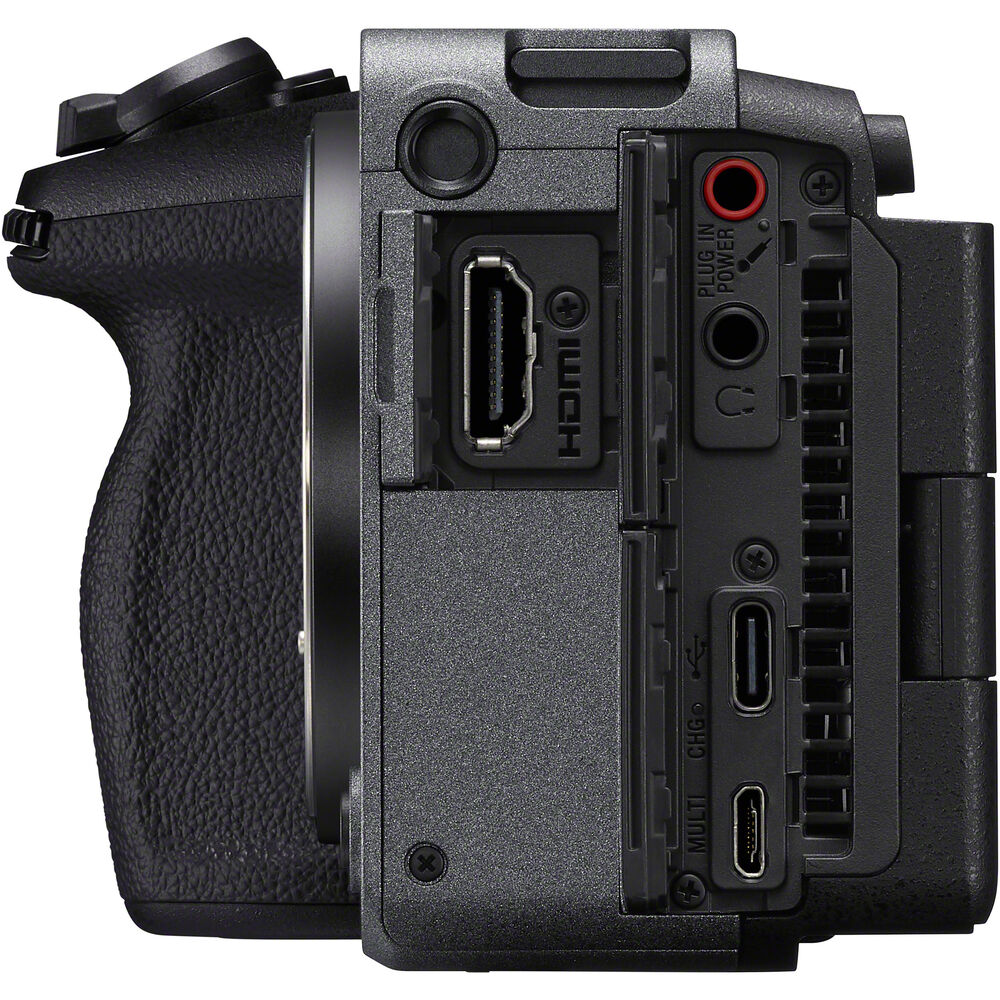
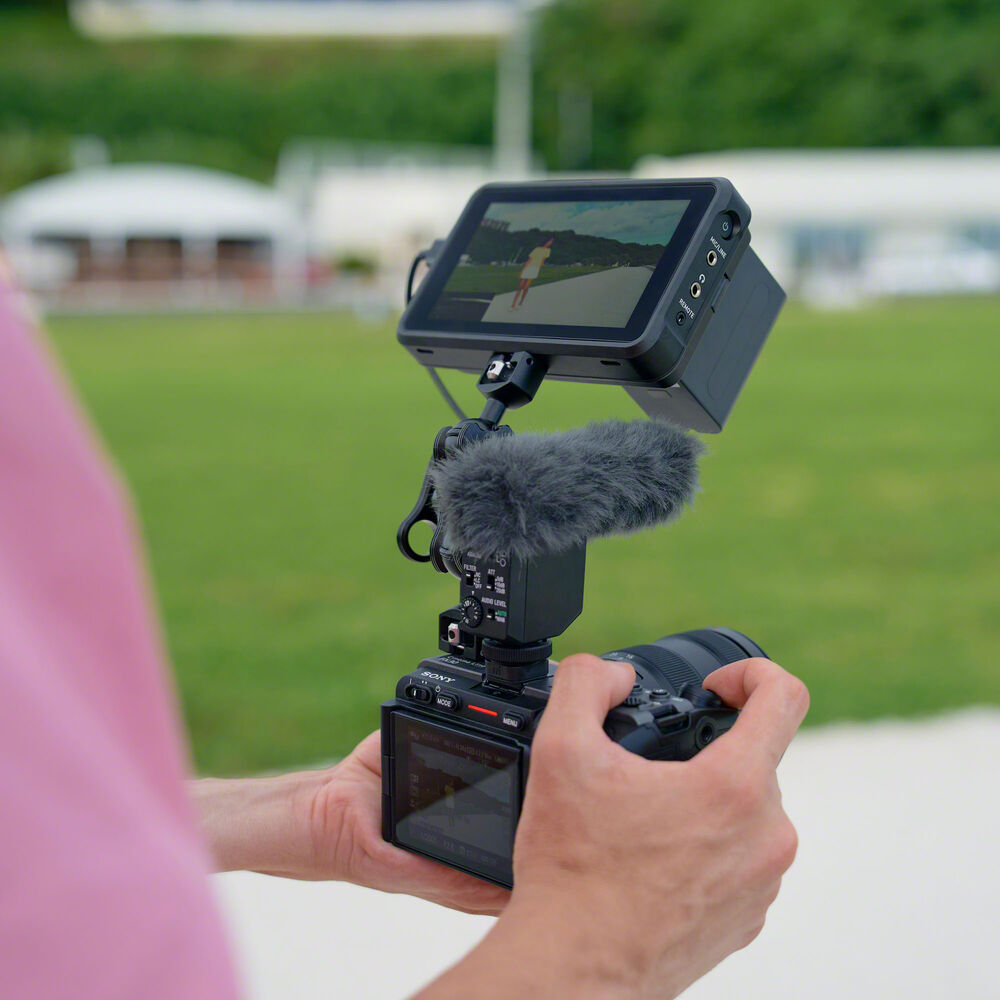
SKU: ILMEFX30BB.CEC
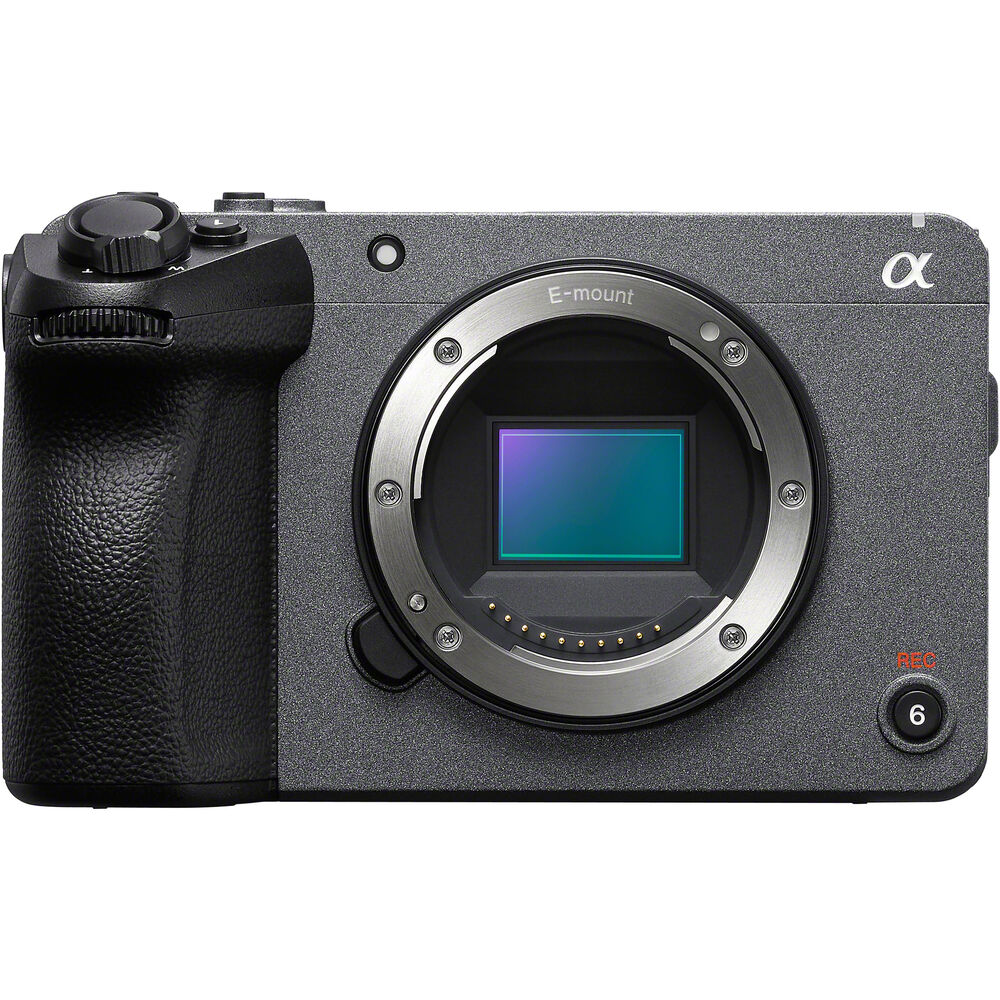
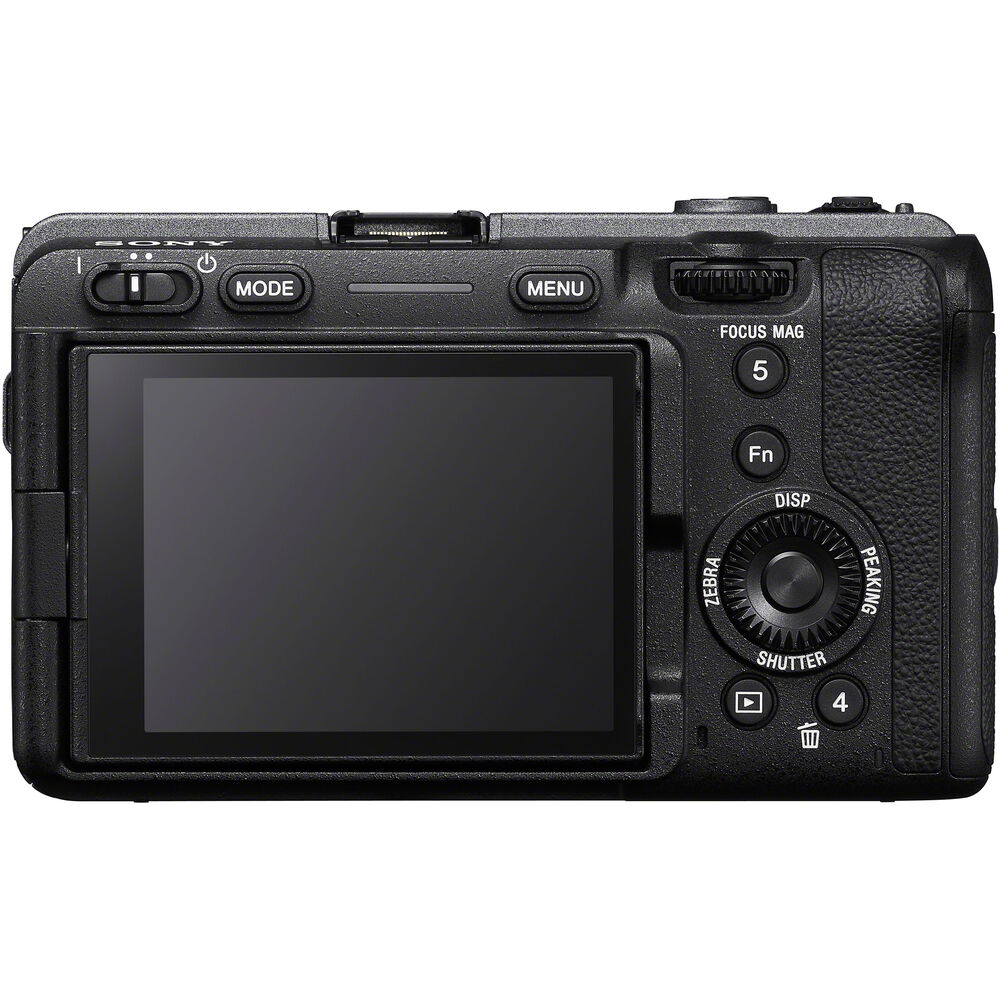
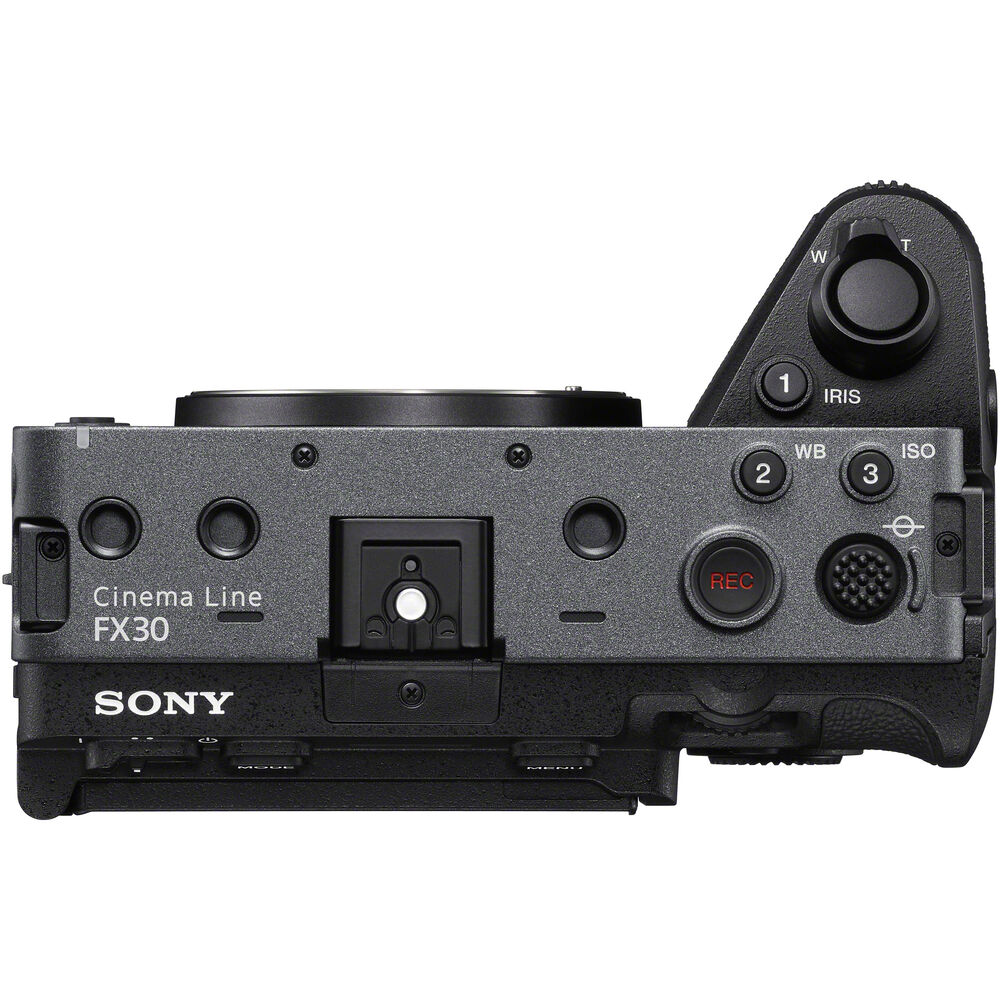
The Sony ILME‑FX30 is a compact Cinema Line camera designed for creators who want cinematic image quality in a lightweight, affordable body. It delivers stunning 4K footage oversampled from a 6K sensor, advanced autofocus with real‑time tracking, and professional filmmaking tools packed into a small, rugged chassis. Ideal for indie filmmakers, content creators,…
Promotion: -17% ends in: 75d: 08h: 32m
2 270.02 €
1 890 € with VAT
1 561.98 € without VAT
Personal pickup: 19. 10. from 09:00
Shipment day: 19. 10.
Shipment day: 19. 10.
In stock 2 pcs
Praha 2 pcs
Praha 2 pcs
DISCOUNTED SETS (1)
 Blackmagic Design DaVinci Resolve Studio
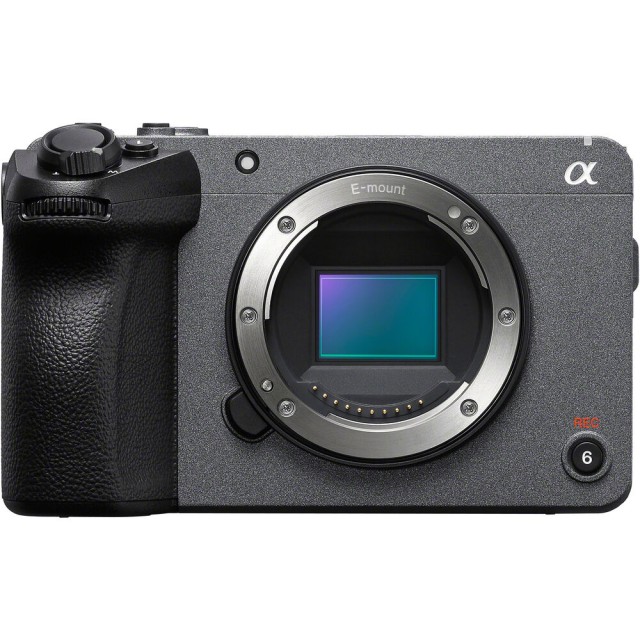 Sony FX30 (body)
2 136.84 €save 441.73 €
Top accessories for Sony FX30 (body)
SmallRig NP-FZ100 Camera Battery and Charger Kit 3824B
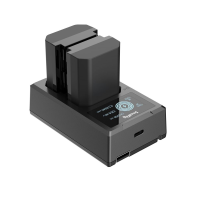
Two NP-FZ100 replacement batteries of 2040 mAh and a dual charger with an LCD. The
66 €
In stock > 5 pcs
SmallRig Heavy-Duty Fluid Head Tripod AD-01 3751
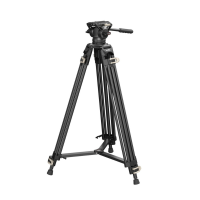
The SmallRig AD-01 3751B video tripod has a fluid head on a 75 mm bowl: it carries
188 €
In stock > 5 pcs
K&F Concept Sony NP-FZ100 2400mAh Battery, 3-Pack + 3-Slot Charger
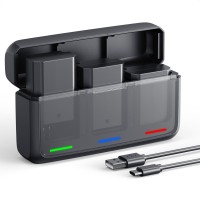
Three Sony NP-FZ100 2400 mAh batteries and a triple-slot charger that charges them
88 €
In stock 5 pcs
SmallRig Compact V-Mount Battery Mounting System 4064B
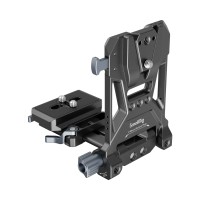
Compact V-mount battery mounting system with an expanding base plate and an Arca-Swiss
94 €
In stock > 5 pcs
Exascend 256GB Catalyst UHS-I SDXC Memory Card
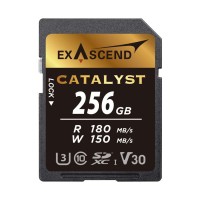
The Catalyst SDXC UHS-I memory card with V30 speed class reads at up to 180 MB/s
118 €
In stock 3 pcs
Exascend 480GB Essential Series CFexpress Type A Memory Card
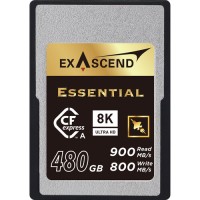
The VPG 200-certified Essential CFexpress Type A memory card reads at up to 900 MB/s,
409 €
In stock > 5 pcs
SmallRig V-Mount Battery Mount Plate 4505B
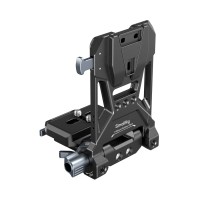
A V-mount battery plate that powers a mirrorless or DSLR body from behind. The stretchable
71 €
In stock > 5 pcs
Exascend Essential Pro CFexpress 4.0 Type A 512GB
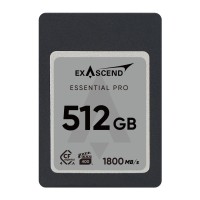
The Essential Pro CFexpress 4.0 Type A card doubles the throughput: up to 1,800 MB/s
469 €
In stock > 5 pcs
Exascend 128GB Catalyst UHS-I SDXC Memory Card
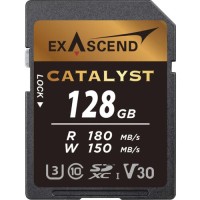
The Catalyst SDXC UHS-I memory card with V30 speed class reads at up to 180 MB/s
78 €
In stock > 5 pcs
K&F Concept Sony NP-FZ100 2280mAh Battery, 2-Pack + 2-Slot Charger
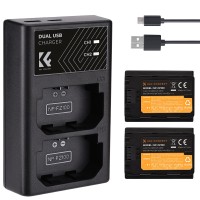
Two Sony NP-FZ100 2280 mAh batteries and a 2-slot charger that charges them all at
49 €
To be sent 3 pcs
Product description
ARTICLES
SPECIFICATIONS
PACKAGE CONTENT

Product description
The Sony ILME‑FX30 is a compact Cinema Line camera designed for creators who want cinematic image quality in a lightweight, affordable body. It delivers stunning 4K footage oversampled from a 6K sensor, advanced autofocus with real‑time tracking, and professional filmmaking tools packed into a small, rugged chassis. Ideal for indie filmmakers, content creators, and anyone stepping into the world of cinema production.
A Cinema Line camera that fits in a backpack
The smallest Cinema Line body, with an APS-C sensor, 4K at up to 120 frames per second and over 14 EV of dynamic range. The XLR-H1 handle can be added later.
CINEMA LINE4K/120P14+ EVDUAL BASE ISO
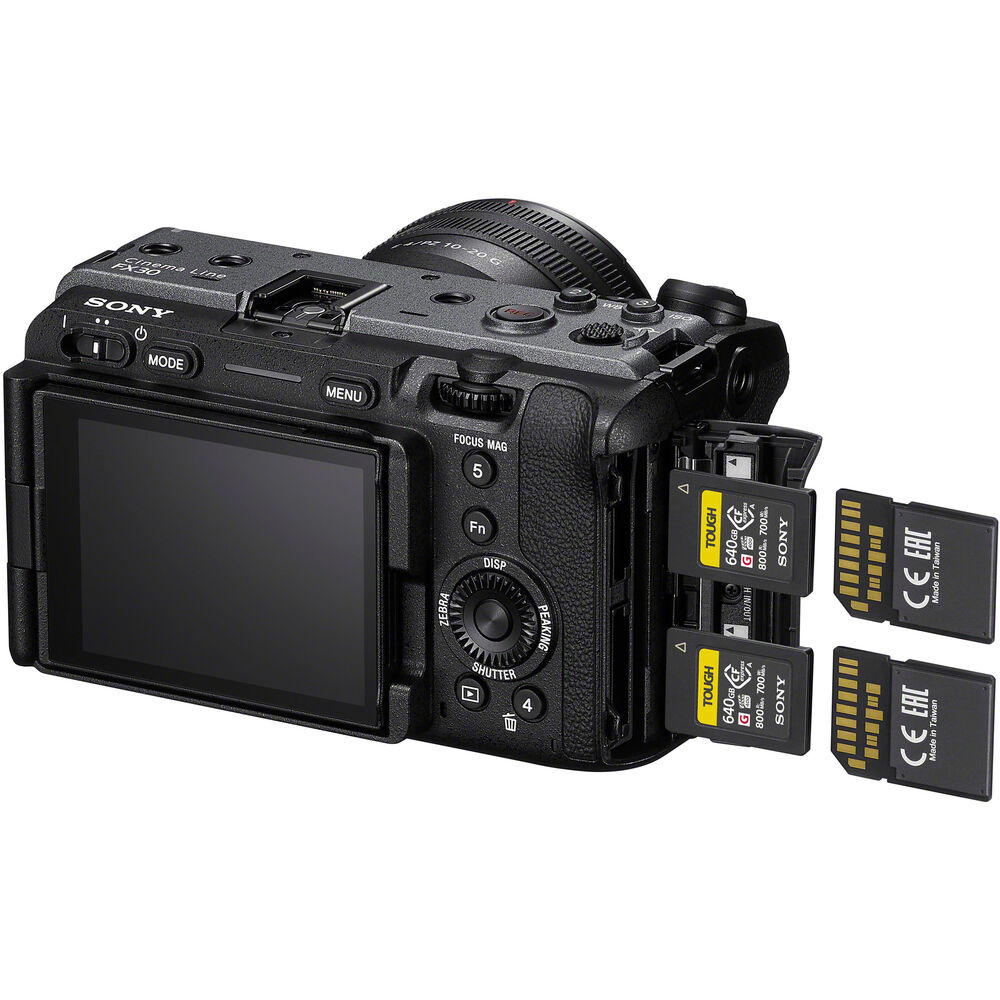
Two card slots
Both slots take CFexpress Type A and SD. Record to two cards at once, swap them on the fly, or keep proxies separate from the main footage.

Sound and picture without the handle
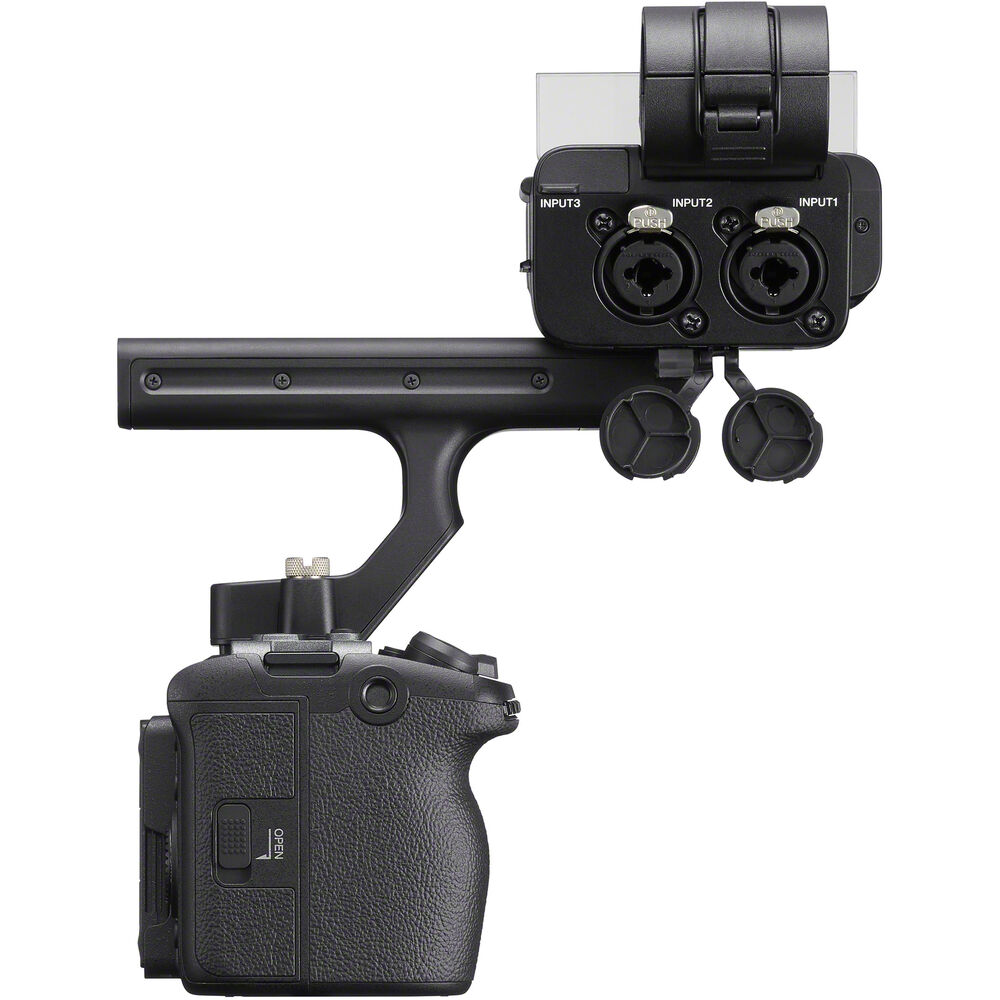
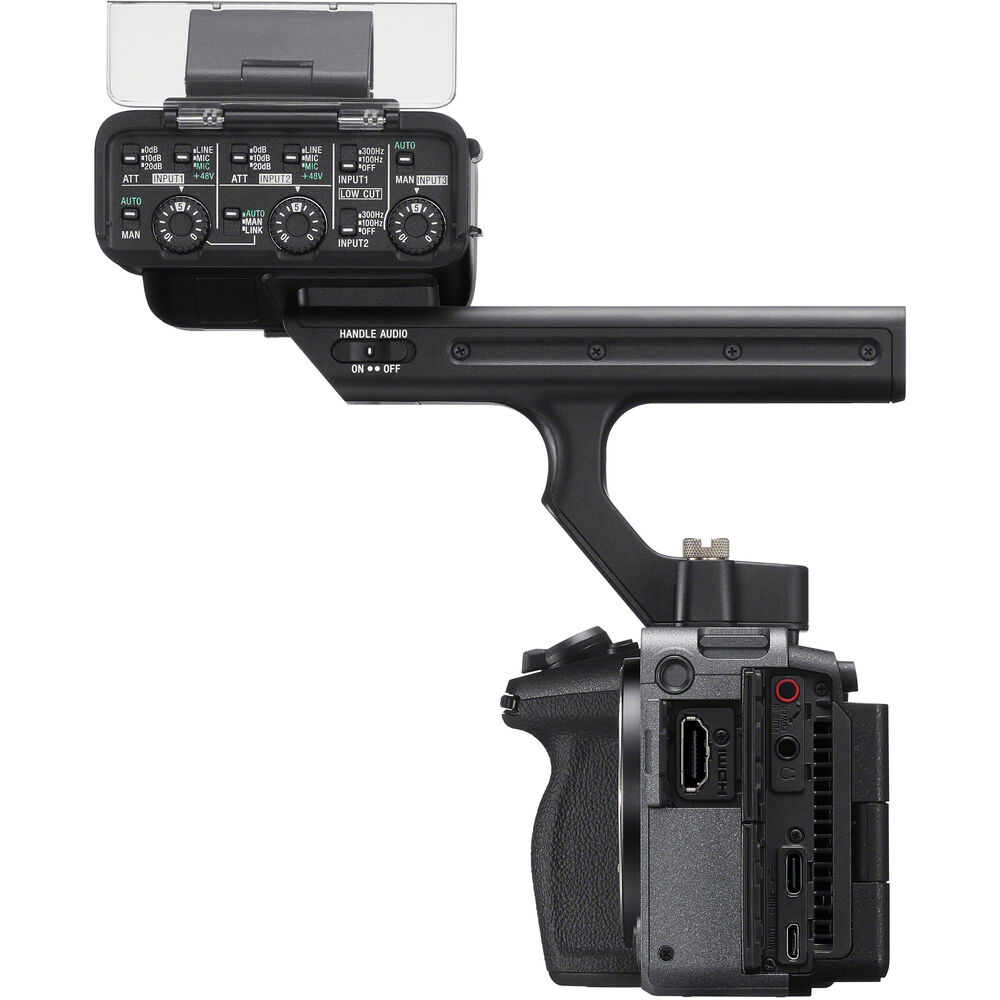
The body carries 3.5 mm input and output plus the Multi Interface shoe for Sony’s wireless microphones. The XLR-H1 stays a decision you can make later.

The image comes from a 6K area
The sensor is read at 6K and only then downsampled to 4K. Noise drops and the shadows keep more detail — exactly where an APS-C sensor shows it most.
Dual base ISO
Two native sensitivities keep the image clean by day and at dusk, without reaching for gain.
User LUTs and Cine EI
Load your own LUTs into the camera; Cine EI gives the exposure workflow film sets expect.
Stabilisation and active cooling
In-body stabilisation holds the handheld shot and the fan allows long takes without overheating.
Timecode via adapter
With the VMC-BNCM1 adapter the FX30 shares a common timecode with the other cameras on set.
The FX30 captures stunning footage with 6K oversampling and a true cinematic look. Thanks to its compact size, you can take it anywhere, and its sophisticated autofocus and stabilization features let you focus on composition rather than the complexities of crew and equipment.
Sony’s award-winning Cinema Line series of cameras sets the standard for filmmaking with stunning cinematic imagery, high performance, and a highly efficient workflow. Enjoy seamless shooting with S-Cinetone™ and S-Log3 for a wide dynamic range, plus many other features. The compact FX30 camera makes filmmaking more accessible to aspiring creators than ever before.
Designed for visual storytelling
The FX30’s S-Cinetone picture profile gives you a beautiful cinematic look straight out of the camera. Features like Dual Base ISO and Cine EI are designed to deliver stunning images for film production and workflows.
Building on the Cinema Line tradition
The outstanding Cinema Line series of cinematic cameras draws on decades of experience in the film industry and is powered by Sony’s sophisticated new technologies, which represent the cutting edge of digital imaging.
Advanced technology for outstanding resolution
The FX30’s back-illuminated Exmor™ R APS-C CMOS sensor captures unforgettable images with outstanding resolution and a shallow depth of field. 6K oversampling condenses a vast amount of information into 4K recording and output, and the BIONZ XR™ processor enables natural gradations, realistic color reproduction, low noise, and other image quality enhancements.
Super 35 mm Sensor
The FX30 is designed as a camera that grows with you, offering many of Sony’s technical innovations—including advanced features such as timecode support and S-Log3—while remaining relatively affordable. By utilizing a newly developed APS-C/Super 35 mm sensor, Sony was able to offer the same recording specifications:
- UHD 4K up to 120p
- 10-bit internal recording
- S-Log3/S-Gamut3
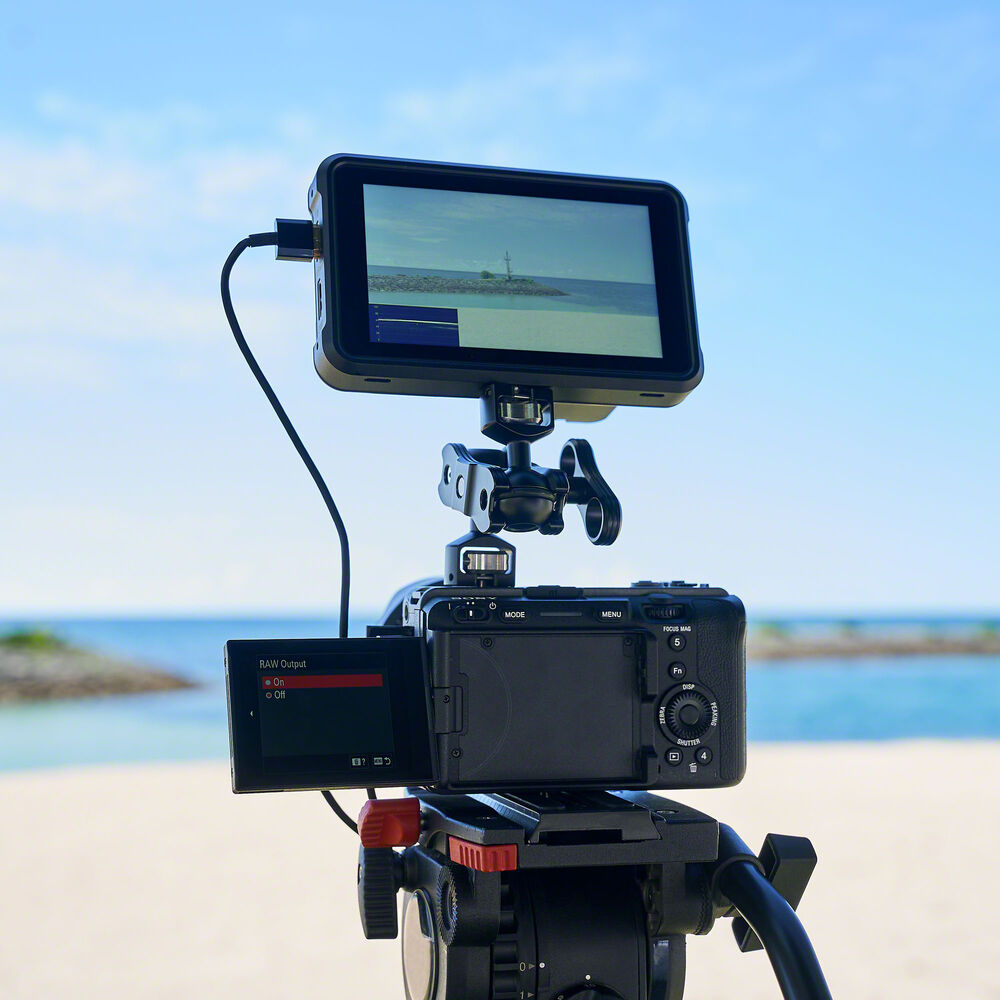
- 16-bit RAW output
- Standard ISO range of 100–32,000
- Dual base ISO (800 / 2500)
Be aware of the crop factor. The FX30 performs 6K upscaling from a sensor area that represents a nearly imperceptible 1.04× crop. This will work for 4K at 10-bit in any recording mode up to 60 fps.
For 120 fps, a 1.6× crop of the Super 35 mm area is now available. This is in addition to the standard APS-C/Super 35 mm system crop.
To make all of this possible, the FX30 uses the latest BIONZ XR image processor, which enables all these new features found in other new camera models.
You can also use the FX30 to capture still images if you prefer; the 26 MP resolution is great for that.
Compared to the FX3
, the FX30 is much more affordable than the FX3, making it an attractive option for many people. Those considering the FX3 may find that the FX30 meets all their needs and more, without being more expensive—and it’s much more compact, too. But what do you gain by switching to the FX3, and what do you lose if you choose the FX30?
The FX3, of course, has a larger full-frame sensor than the FX30’s APS-C sensor. This usually means the FX3 will have better dynamic range and low-light performance; however, Sony has apparently worked some magic with the FX30.
By using a 6K image area and downsampling, image noise is minimized. This can improve low-light performance and allows shadows to retain more detail. Further testing is needed, but the results are very promising.
Although both models share the same native ISO range and dual base ISO specifications, the FX30 has a rated dynamic range of 14+ stops—still very good, but slightly lower than that of its full-frame siblings.
As mentioned earlier, compared to the FX3, the FX30 must crop an already cropped sensor to achieve 120p recording. The FX3 crops, but only by a factor of 1.1× relative to a full-frame image, while the FX30 crops an additional 1.6× beyond its already cropped format. This is certainly not a deal-breaker—it’s just something you need to be aware of if you plan to make extensive use of the slow-motion recording capabilities.
Interestingly, the FX30 gains some features that aren’t currently available on the FX3, such as breathing compensation.
Other than that, almost everything else is the same:
- Same body design
- Support for custom LUTs
- Cine EI and other log recording modes
- Fast hybrid autofocus, including 4K 120p
- In-body image stabilization
- Active cooling
- Timecode input via the optional VMC-BNCM1 timecode adapter cable
Audio
Interestingly, the FX30 does not come with the XLR-H1 XLR handle that is included with every FX3 model. This handle can be purchased separately or as part of a starter kit with the camera.
Without the XLR handle, users can monitor and record via the 3.5mm input and output jacks on the camera body. The Multi Interface Shoe remains, and Sony produces a wide range of accessories that work directly with it for audio transmission.
So if you don’t have much use for the XLR handle right away, you can decide to purchase it later.
Catalyst Software
Many of Sony’s latest features include metadata that is recorded directly into video files. These include the following:
- Embedded LUT and EI information
- Gyroscope and lens stabilization metadata
- Breathing compensation
- Camera rotation
- Take tag
Using this information in Catalyst Browse and Prepare, you can edit and optimize each shot after filming. This can result in faster editing workflows, better image quality, improved stabilization, and other benefits.
To help creators incorporate these benefits into their existing workflows, a Catalyst Prepare plugin for Adobe Premiere Pro will be released in the future, offering editors these controls within their current NLE.
Larger CFexpress Type A Cards
Along with the announcement of the FX30, it was revealed that two larger sizes of Sony CFexpress Type A TOUGH memory cards are on the way: 320 GB and 640 GB. This was one of the criticisms of the relatively new format, and this release should help users looking for speed and long recording times.
Although Sony has dramatically increased the capacity of these cards (the original lineup included 80GB and 160GB versions), the speeds remain the same. This series has rated read and write speeds of up to 800 MB/s and 700 MB/s, respectively.
If you’ve been looking for larger cards for your a1, a7S III, FX3, FX6, or now FX30 models, these cards are the right choice.
The FX30 appears to be a very attractive option for content creators who want to start with more professional film equipment while still having room for future growth. It will certainly be a great start if you plan to use Sony Cinema Line cameras later on or need to rent them for current projects.
Sony FX30 vs. Sony FX3 – Complete Comparison Chart
| Category | Sony FX30 | Sony FX3 |
|---|---|---|
| Sensor Type | APS-C (23.3 × 15.5 mm) Exmor R CMOS | Full-Frame (35.6 × 23.8 mm) Exmor R CMOS |
| Effective megapixels (still images) | 26.0 MP | 12.1 MP |
| Effective megapixels (video) | 20.1 MP | 10.2 MP |
| ISO range (video) | 100–32,000 | 80–102,400 (expandable to 409,600) |
| ISO range (photos) | 100–32,000 (extended to 50–102,400) | 80–102,400 (extended to 40–409,600) |
| Dynamic range | 14+ stops (S‑Log3) | 15+ stops (S-Log3) |
| Lens mount | E-mount | E-mount |
| Internal recording formats | XAVC HS / XAVC S / XAVC S‑I / XAVC S‑I DCI | XAVC S / XAVC S-I / XAVC HS |
| Maximum internal bitrate | 600 Mbps (All-Intra) | 600 Mbps (All-Intra) |
| Maximum resolution / frame rate | 4K 120p (1.04× crop) | 4K 120p (no crop) |
| RAW output | 16-bit 4672×2628 via HDMI | 16-bit 4264×2408 via HDMI |
| Autofocus Points | 495 (video), 759 (still photos) | 627 phase-detection points |
| AF functions | Autofocus on human/animal/bird eyes | Autofocus on human/animal eyes |
| Image stabilization | 5-axis IBIS, 5.5 stops | 5-axis IBIS + Active Mode |
| Storage Media | CFexpress Type A / SD (two slots) | CFexpress Type A / SD (two slots) |
| Battery life (video) | ~115 min actual | ~135 min actual |
| LCD | 3.0", 2.36 million dots, variable angle | 3.0", 1.44 million dots, variable angle |
| HDMI output | Type A, 4:2:2 10-bit | Type A, 4:2:2 10-bit |
| Audio inputs | 3.5 mm + XLR (with handle) | 3.5 mm + XLR (including handle) |
| Body weight (body only) | 562 g | 640 g |
| Body weight (with battery + card) | 646 g | 715 g |
| Dimensions (W × H × D) | 129.7 × 77.8 × 84.5 mm | 129.7 × 77.8 × 84.5 mm (nearly identical) |
| Operating temperature | 0–40 °C | 0–40 °C |
| Wi-Fi / Bluetooth | Wi-Fi 2.4/5 GHz, Bluetooth 5.0 | Wi-Fi 2.4/5 GHz, Bluetooth 5.0 |
| Included Accessories | FX30B: battery, cable; FX30: + XLR handle | The XLR handle is included as standard |
| Target Audience | Independent filmmakers, photographers using APS-C, low-budget films | Professional cinema, full-frame shooting in low-light conditions |
PACKAGE CONTENT
- Sony ILME-FX30 camera body — Main unit (E-mount, APS-C / Super 35)
- NP‑FZ100 battery — Z-Series Rechargeable Battery
- AC adapter — USB-powered charging adapter
- USB-C cable — For charging and data transfer
- Body Cover — Protects the sensor when no lens is attached
- Multi-purpose mount cap — Protects the MI shoe contacts
- User Manual — Quick Start Guide and Warranty Information
SPECIFICATIONS
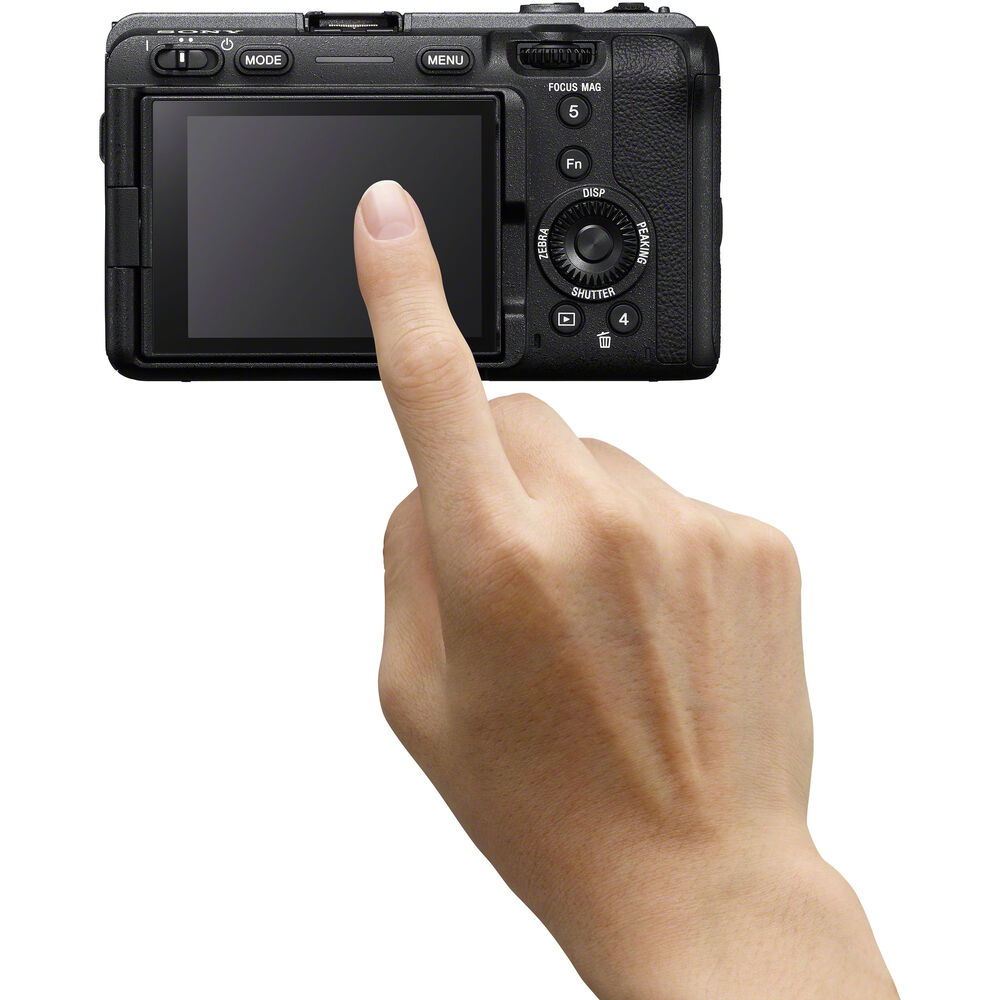
The Sony ILME‑FX30 brings Cinema Line image quality to a compact and affordable APS‑C body. It captures downsampled 4K from a 6K sensor, offers advanced autofocus with 495 phase-detection points, and includes professional tools such as S‑Log3, Cine EI, and 10‑bit 4:2:2 recording. With dual CFexpress/SD slots, a fully articulating touchscreen, and 5-axis stabilization, the FX30 is ideal for filmmakers, content creators, and anyone looking for cinematic results in a lightweight package.
| Category | Specifications |
|---|---|
| Model Variants | ILME‑FX30B (body only), ILME‑FX30 (body + XLR grip) |
| Camera Type | Digital camera with interchangeable lens |
| Lens Mount | E-mount |
| Weight (body only) | 562 g |
| Weight (with battery + memory card) | 646 g |
| Weight (with XLR grip + battery + card) | 951 g |
| Dimensions (W × H × D) | 129.7 × 77.8 × 84.5 mm |
| Power consumption | Video: 5.6 W (with 18–105 mm PZ lens), stills: 3.5 W |
| Battery Life | 115 min actual / 175 min continuous / 570 shots |
| Operating temperature | 0–40 °C |
| Storage temperature | –20 to +55 °C |
| Video format – XAVC HS | 4K: 45–280 Mbps, 4:2:0 and 4:2:2, 10 bits, HEVC/H.265 |
| Video format – XAVC S | 4K and HD, 25–280 Mb/s, 4:2:0 and 4:2:2, H.264 |
| Video format – XAVC S‑I | 4K and HD All-Intra, 89–600 Mb/s, 4:2:2 10-bit |
| Video format – XAVC S-I DCI | DCI 4K All-Intra, 240–600 Mb/s |
| Audio recording | LPCM 16/24-bit (2 channels/4 channels), AAC-LC 2 channels |
| Frame rate – XAVC HS | 4K: 23.98p–119.88p |
| Frame rate – XAVC S | 4K: 23.98p–119.88p, HD: 23.98p–119.88p |
| Frame rate – XAVC S-I | 4K: 23.98p–59.94p, HD: 23.98p–59.94p |
| Frame rates – XAVC S‑I DCI | DCI 4K: 23.98p–59.94p |
| Recording time (examples) | 4K 200M: 80 min (160 GB), 40 min (80 GB) |
| Proxy video | 720p 6 Mbps, 1080p 9/16 Mbps |
| RAW output | HDMI 16-bit 4672×2628 up to 59.94p |
| Sensor type | APS-C Exmor R CMOS (23.3 × 15.5 mm) |
| Effective pixel count (video) | 20.1 MP |
| Effective pixel count (still images) | 26.0 MP |
| Total number of pixels | 27.0 MP |
| ISO (videos) | 100–32,000 (Auto 100–6,400) |
| ISO (photos) | 100–32,000 (50–102,400 extended) |
| Shutter speed (videos) | 1/8000–1/4 |
| Shutter speed (still photos) | 1/8000–30 s |
| S&Q – XAVC HS | 1–120 fps (NTSC), 1–100 fps (PAL) |
| S&Q – XAVC S | 1–240 fps depending on the mode |
| S&Q – XAVC S‑I | 1–120 fps (4K), 1–240 fps (HD) |
| White Balance Modes | Auto, Daylight, Shade, Cloudy, Incandescent, Fluorescent, Underwater, Kelvin 2500–9900 K, Custom |
| Gamma Curves | S‑Cinetone, Cine 1–4, ITU709, ITU709 (800%), S‑Log3, HLG 1–3 |
| Dynamic Range | 14+ stops (S-Log3) |
| AF system | Fast Hybrid AF (phase detection + contrast detection) |
| AF Points | Video: 495, stills: 759 |
| AF sensitivity | EV –3 to EV 20 |
| AF modes | AF-C, AF-S, AF-A, DMF, MF |
| AF Areas | Wide, Zone, Center, Spot, Expanded Spot, Tracking |
| Eye AF | Human, Animal, Bird |
| Metering Sensitivity | EV –3 to EV 20 |
| Exposure modes | P/A/S/M (videos and photos), Intelligent Auto mode (photos) |
| Photo formats | JPEG, HEIF, RAW (ARW 4.0) |
| Still image sizes | 3:2, 4:3, 16:9, 1:1 up to 6192×4128 |
| Playback features | Index, folder view, photo capture, 4-channel audio monitor, rating |
| TC Input/Output | Multi/Micro USB, TC IN |
| Audio Inputs | 3.5 mm, XLR/TRS (via handle), +48 V phantom power |
| USB | USB-C 10 Gb/s, Multi/Micro USB |
| Headphone output | 3.5 mm |
| HDMI output | Type A, 4:2:2 10-bit |
| Multi interface | Digital audio interface |
| Bluetooth | 5.0 |
ARTICLES
WE RECOMMEND
The Sony FX30 is a professional APS-C camera from the Cinema Line series that uses the Sony E-mount and high-capacity NP-FZ100 batteries. To maximize its potential in a production environment, we recommend adding a high-quality cage for mounting accessories and reliable power systems.
Power and Batteries - The FX30 uses NP-FZ100 batteries, which ensure long battery life during shooting.
- SONY NP-FZ100
- K&F NP-FZ100 2280mAh, Type C Mount Direct Camera Battery
- SmallRig NP-FZ100 USB-C Rechargeable Camera Battery 4265
- SmallRig NP-FZ100 USB-C Rechargeable Camera Battery (Orange) 4969
- K&F Concept Sony NP-FZ100 2400mAh Batteries, 3-Pack + Storage Case for 3 Batteries
Chargers and Power Adapters - External chargers and dummy batteries enable efficient power management and uninterrupted operation in the studio.
- Sony BC-QZ1 Battery Charger for NP-FZ100 Batteries
- SmallRig NP-FZ100 4-Channel Camera Battery Charger 4839
- K&F CONCEPT NP-FZ100 Modular Dual-Slot Fast Charger
- ZGCINE Charging Case for SONY NP-FZ100 Battery
- SmallRig Portable Charger Case for NP-FZ100 Camera Batteries 5106
- ZGCINE USB-C to NP-FZ100 Dummy Battery Cable
- K&F Concept D-Tap to NP-FZ100 Dummy Battery – Power Cable for Sony a7 IV, FX3, FX30, and a7S III
Camera Cages and Rigs - Protective cages and mounting accessories designed specifically for the FX30 body allow for secure attachment of monitors and microphones.
- SmallRig Cage for Sony FX30 / FX3 4183B
- SmallRig Handheld Cage Kit for Sony FX30 / FX3 4184B (4139 new version)
- SmallRig HawkLock Quick Release Half Cage for Sony FX3 / FX30 4772
- SmallRig Top Plate for Sony FX30 / FX3 XLR Unit MD3990
- SmallRig Extension Mount Plate Kit for Sony FX3 / FX30 XLR Handle 4830
Optics and Monitoring - Accessories for expanding the capabilities of E-mount lenses and external viewfinders.
Parameters
| Manufacturer: | SONY |
| Category: | Digital Cinema |
Main parameters
| Camera Sensor size | Super35 |
| Resolution | 4K |
| Type of bayonet | Sony E |
| Output | HDMI · USB-C |
| Sensor size | Full Frame |
| Maximum video resolution | 6K |
| Video outputs and transfer | HDMI |
Other parameters
| Version | handycam |
| Record format | XAVC S · XAVC HS · XAVC HD |
| FPS | 4K 60fps · 2K 240fps · 4K 120fps |
| Media type | SD card |
| Battery type | NP-FZ |
| Other features | WiFi |
Blog and news
Date: 21. 09. 2026, Category: Syntex News
Sony Creator Week 21. - 27.9. 2026
Sony Creator Week, September 21–27, 2026: Up to 20% off select gear! Get ready for fall with Sony gear andsave up to 20% on select products. You…
ACCESSORIES (181)
ACCESSORIES (181)
- SD cards (41)
- 7.2V chargers (23)
- 7.2V battery (20)
- Cages (16)
- Lenses (14)
- CFexpress (10)
- Accesories Rigy (10)
- Power battery plates (8)
- Accessories (5)
- Camera monitors (5)
- 14.4V chargers (4)
- Power Cables (4)
- Power supplies (3)
- Adapters (3)
- Handles (3)
- Camera microphones (2)
- Tripods (1)
- Audio cables (1)
- Other cables (1)
- Battery 14,4V (1)
- Tripods - accessories (1)
- Miscellaneous (1)
- Suitcases (1)
- Card readers (1)
- SSD (1)
- Timecode (1)
SmallRig NP-FZ100 Camera Battery and Charger Kit 3824B
Two NP-FZ100 replacement batteries of 2040 mAh and a dual charger with an LCD. The
66 €
In stock > 5 pcs
SmallRig Heavy-Duty Fluid Head Tripod AD-01 3751
The SmallRig AD-01 3751B video tripod has a fluid head on a 75 mm bowl: it carries
188 €
In stock > 5 pcs
K&F Concept Sony NP-FZ100 2400mAh Battery, 3-Pack + 3-Slot Charger
Three Sony NP-FZ100 2400 mAh batteries and a triple-slot charger that charges them
88 €
In stock 5 pcs
SmallRig Compact V-Mount Battery Mounting System 4064B
Compact V-mount battery mounting system with an expanding base plate and an Arca-Swiss
94 €
In stock > 5 pcs
Exascend 256GB Catalyst UHS-I SDXC Memory Card
The Catalyst SDXC UHS-I memory card with V30 speed class reads at up to 180 MB/s
118 €
In stock 3 pcs
Exascend 480GB Essential Series CFexpress Type A Memory Card
The VPG 200-certified Essential CFexpress Type A memory card reads at up to 900 MB/s,
409 €
In stock > 5 pcs
SmallRig V-Mount Battery Mount Plate 4505B
A V-mount battery plate that powers a mirrorless or DSLR body from behind. The stretchable
71 €
In stock > 5 pcs
Exascend Essential Pro CFexpress 4.0 Type A 512GB
The Essential Pro CFexpress 4.0 Type A card doubles the throughput: up to 1,800 MB/s
469 €
In stock > 5 pcs
Exascend 128GB Catalyst UHS-I SDXC Memory Card
The Catalyst SDXC UHS-I memory card with V30 speed class reads at up to 180 MB/s
78 €
In stock > 5 pcs
K&F Concept Sony NP-FZ100 2280mAh Battery, 2-Pack + 2-Slot Charger
Two Sony NP-FZ100 2280 mAh batteries and a 2-slot charger that charges them all at
49 €
To be sent 3 pcs
K&F Concept 2-Slot Charger with LCD for Sony NP-FZ100 Batteries
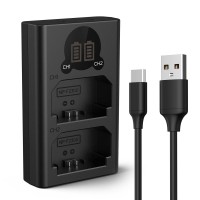
A 2-slot charger with a display for Sony NP-FZ100 batteries that charges both at
21 €
In stock > 5 pcs
K&F Concept Sony NP-FZ100 2280mAh Battery with USB-C Charging
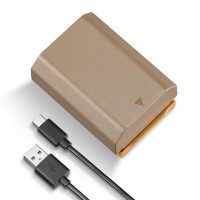
A Sony NP-FZ100 2280 mAh replacement battery with a USB-C port built into the battery.
33 €
To be sent > 5 pcs
SmallRig HawkLock Quick Release Half Cage for Sony FX3 / FX30 4772
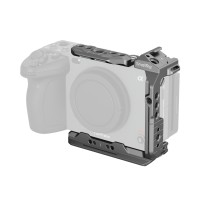
An L-shaped half cage for the Sony FX3 and FX30 with HawkLock quick release. The
71 €
In stock > 5 pcs
Exascend Essential Pro CFexpress 4.0 Type A 256GB
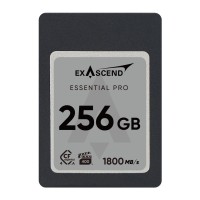
The Essential Pro CFexpress 4.0 Type A card doubles the throughput: up to 1,800 MB/s
308 €
In stock > 5 pcs
Exascend Essential Series CFexpress Type A 1TB
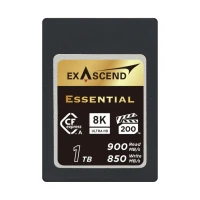
The VPG 200-certified Essential CFexpress Type A memory card reads at up to 900 MB/s,
699 €
In stock > 5 pcs
Exascend Catalyst UHS-II SD card, V90, 64GB
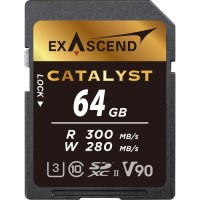
The Catalyst SDXC UHS-II memory card with V90 speed class reads at up to 300 MB/s
132 €
In stock > 5 pcs
K&F Concept 2-Slot Charger with LCD for Sony NP-FZ100 Batteries
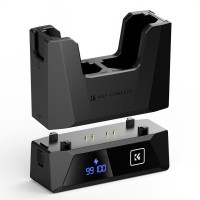
A 2-slot charger with a display for Sony NP-FZ100 batteries that charges both at
44 €
In stock > 5 pcs
Exascend Essential UHS-I SD card, V30,128GB
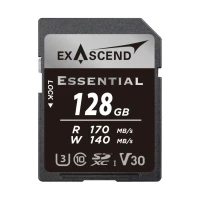
The Essential SDXC UHS-I memory card with V30 speed class reads at up to 170 MB/s
77 €
In stock 4 pcs
Exascend 64GB Catalyst UHS-I SDXC Memory Card
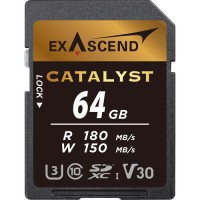
The Catalyst SDXC UHS-I memory card with V30 speed class reads at up to 180 MB/s
43 €
In stock > 5 pcs
Exascend 256GB Essential UHS-II SDXC Memory Card
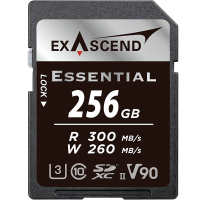
The Essential SDXC UHS-II memory card with V90 speed class reads at up to 300 MB/s
569 €
In stock > 5 pcs
Exascend 120GB Essential Series CFexpress Type A Memory Card
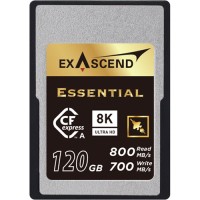
The VPG 200-certified Essential CFexpress Type A memory card reads at up to 800 MB/s,
220 €
In stock 4 pcs
K&F Concept Sony NP-FZ100 2600mAh Battery, 2-Pack + 2-Slot Charger
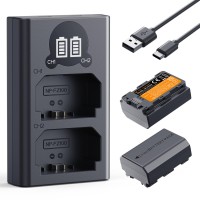
Two Sony NP-FZ100 2600 mAh batteries and a 2-slot charger with a display that charges
58 €
Backordered > 5 pcs
Viltrox TNP-FZ100
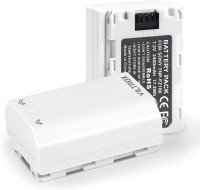
The Viltrox TNP-FZ100 is a 2400 mAh, 7.2 V (17.3 Wh) replacement battery for Sony
76 €
In stock > 5 pcs
SmallRig HawkLock Quick Release Cage Kit for Sony FX3 / FX30 4770
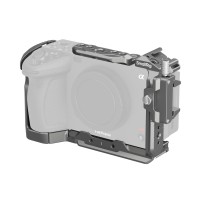
A modular quick-release cage for the Sony FX3 and FX30. The top NATO rail lifts off
118 €
In stock > 5 pcs
Sony NP-FZ100
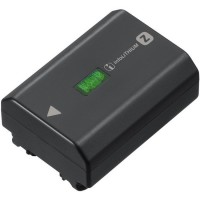
The genuine Sony NP-FZ100 rechargeable lithium-ion battery from the InfoLITHIUM Z
89 €
In stock 3 pcs
SmallRig Camera Battery Kit for Sony NP-FZ100 6016
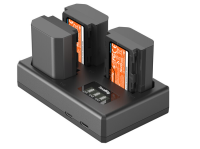
A SmallRig power kit for Sony mirrorless bodies: three 2040 mAh NP-FZ100 batteries
74 €
In stock > 5 pcs
SmallRig NP-FZ100 USB-C Rechargeable Camera Battery 4265
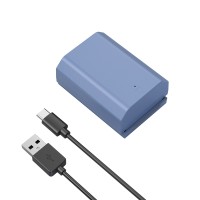
The SmallRig 4265B is an NP-FZ100 replacement battery that charges straight over
47 €
In stock > 5 pcs
K&F Concept Sony NP-FZ100 2280mAh Battery, 3-Pack + 3-Slot Charger
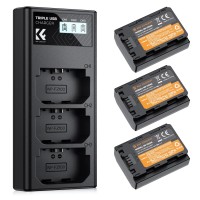
Three Sony NP-FZ100 2280 mAh batteries and a 3-slot charger with a display that charges
82 €
Backordered > 5 pcs
SmallRig NP-FZ100 4-Channel Camera Battery Charger 4839
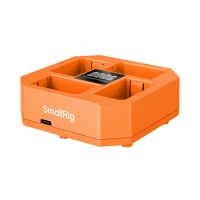
The SmallRig NP-FZ100 4-Channel Camera Battery Charger 4839 is a high-power, multi-port
47 €
In stock > 5 pcs
SmallRig NP-FZ100 USB-C Rechargeable Camera Battery (Orange) 4969
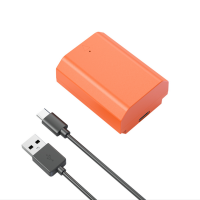
The SmallRig NP-FZ100 USB-C Rechargeable Camera Battery is a high-capacity, fast-charging
47 €
In stock > 5 pcs
SmallRig Turbo Charging Kit for NP-FZ100 Camera Batteries 5483
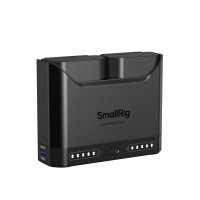
A kit of two NP-FZ100 batteries and a dual-channel fast charger for Sony cameras.
82 €
In stock > 5 pcs
Sony VMC-SA1
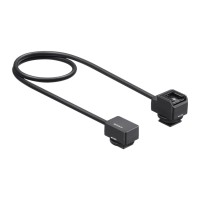
The Sony VMC-SA1 Shoe Audio Extension Cable connects the camera's Multi Interface
168 €
In stock > 5 pcs
K&F Concept 3-Slot Charger with LCD for Sony NP-FZ100 Batteries
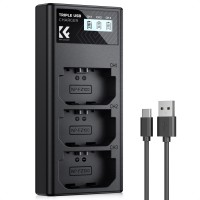
A 3-slot charger with a display for Sony NP-FZ100 batteries that charges all three
22 €
In stock 2 pcs
Exascend Element UHS-I SD Card Series 64GB
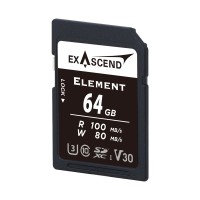
The Element SDXC UHS-I memory card with V30 speed class reads at up to 100 MB/s and
34 €
In stock 4 pcs
Tilta NP-FZ100 Battery with USB-C Input (2400mAh) for Sony Cameras – Green
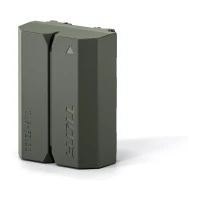
The Tilta NP-FZ100 replacement battery charges straight from a cable through its
47 €
In stock > 5 pcs
Tilta Universal Cooling System Power Kit - Black
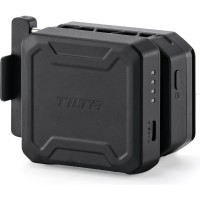
The Tilta Universal Cooling System Power Kit pairs the universal thermoelectric cooler
59 €
In stock > 5 pcs
FALCAM High Capacity Easy Tracking TagBatt Direct-Charge Camera Battery (for Sony NP-FZ100)
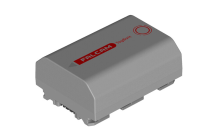
The FALCAM TagBatt Direct-Charge NP-FZ100 Battery (2600mAh) is a high-capacity lithium-ion
77 €
In stock > 5 pcs
Sony BC-QZ1 Battery charger for NP-FZ100 batteries
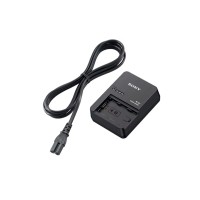
Keep your Sony camera fully charged with the genuine BC-QZ1 charger. It’s designed
99 €
In stock 4 pcs
SmallRig Power Bank Charger Case Kit for Sony NP-FZ100 Camera Batteries 5109
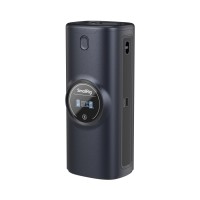
The SmallRig NP-FZ100 Power Bank 2-Bay Charger Case is a portable dual-battery charging
94 €
In stock > 5 pcs
Saramonic SR-TRS-C10 Locking 3.5mm TRS to Sony Multi-Port Timecode Cable
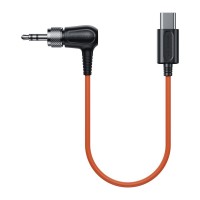
The Saramonic SR-TRS-C10 is a timecode cable from a locking 3.5 mm TRS connector
21 €
In stock > 5 pcs
SmallRig Portable Charger Case for NP-FZ100 Camera Batteries 5106
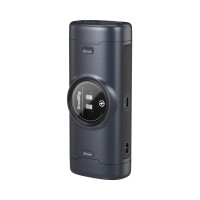
Keep your Sony NP-FZ100 camera batteries powered up on the go with the SmallRig Portable
59 €
In stock > 5 pcs
SmallRig Handheld Cage Kit for Sony FX30 / FX3 4184B (4139 new version)
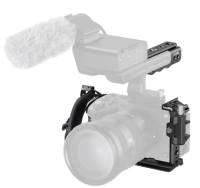
The 4184B Handheld Cage Kit for Sony FX30 / FX3 enhances your filming experience
153 €
In stock 5 pcs
SmallRig Portable Charger Case Kit for NP-FZ100 Camera Batteries 5696
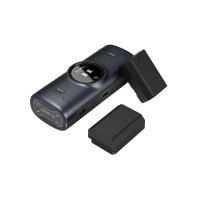
SmallRig 5696 kit: two NP-FZ100 batteries rated at a true 2520mAh plus a palm-sized
147 €
In stock > 5 pcs
SanDisk Extreme PRO SDXC UHS-I 128GB 200MB/s
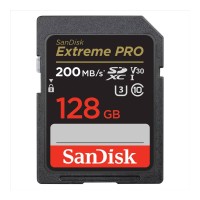
SanDisk Extreme PRO SDXC UHS-I 128GB
58 €
delivery unkown
Tilta NP-FZ100 Charging Station Battery Kit (4 Batteries) - Off White
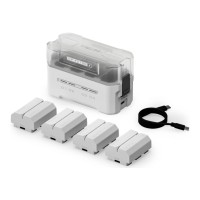
This kit pairs the Tilta charging station for NP-FZ100 batteries with four Tilta
204 €
In stock > 5 pcs
Tilta NP-FZ100 Charging Station Battery Kit (4 Batteries) - Green
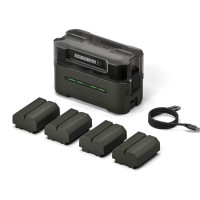
This kit pairs the Tilta charging station for NP-FZ100 batteries with four Tilta
204 €
In stock > 5 pcs
SanDisk Extreme PRO SDXC UHS-I 64GB 200MB/s
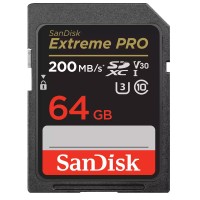
SanDisk Extreme PRO SDXC UHS-I 64GB 200MB/s
43 €
To be sent > 5 pcs
Tilta NP-FZ100 Charging Station Battery Kit (2 Batteries) - Green
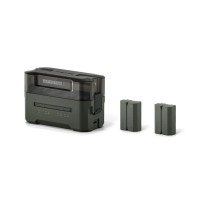
This kit pairs the Tilta charging station for NP-FZ100 batteries with two Tilta NP-FZ100
120 €
In stock > 5 pcs
Tilta Sony NP-FZ100 Dummy Battery to USB-C PD Power Cable
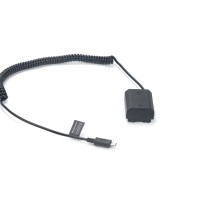
The Tilta DB-SYFZ-USBC is a Sony NP-FZ100 dummy battery with a coiled cable ending
47 €
In stock > 5 pcs
ZGCINE PS-FZ100 USB-C PD Charging Case for Sony NP-FZ100 Battery
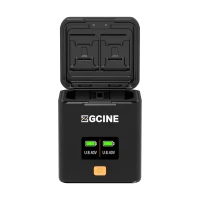
The ZGCINE PS-FZ100 charging case for Sony NP-FZ100 batteries provides USB-C PD input,
33 €
In stock > 5 pcs
Tilta All-In-One Recharge Companion for NP-FZ100 - Black
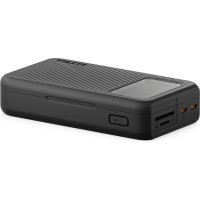
The Tilta All-In-One Recharge Companion packs a dual Sony NP-FZ100 charger, an SD
71 €
In stock > 5 pcs
SmallRig D-Tap to NP-FZ100 Dummy Battery Power Cable 4253B
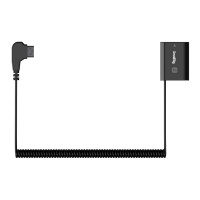
The SmallRig D-Tap to NP-FZ100 Dummy Battery Power Cable 4253B provides continuous
47 €
In stock 1 pcs
K&F Concept D-Tap to Sony NP-FZ100 dummy battery – power cable for Sony a7 IV, FX3, FX30, a7S III
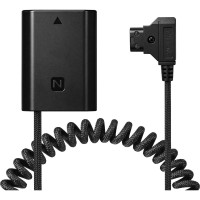
The K&F Concept power cable runs current from a D-Tap connector into a Sony NP-FZ100
33 €
Backordered > 5 pcs
Tilta Universal Cooling System - Black
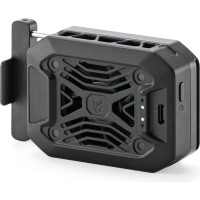
The Tilta Universal Cooling System is a universal cooler for mirrorless cameras from
47 €
In stock > 5 pcs
Lexar SDXC Pro 2000X UHS-II U3 R300/W260 (V90) 256GB
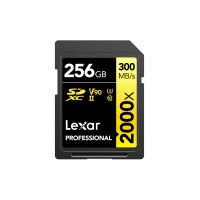
Promotion: -25%
Quickly capture and transfer high-quality photos and 1080p Full HD, 3D, and 4K videos
430.38 €
574.51 €
To be sent > 5 pcs
FALCAM F22&F38&F50 Quick Release Rabbit Cage V3 (for Sony FX3/FX30)
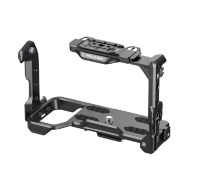
The FALCAM F22 & F38 & F50 Quick Release Rabbit Cage V3 for Sony FX3/FX30
110 €
In stock 5 pcs
Tilta Full Camera Cage for Sony FX3/FX30 V2 - Black
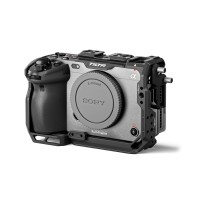
The Tilta Full Camera Cage for Sony FX3/FX30 V2 is the full cage on its own — no
119 €
In stock > 5 pcs
ZGCINE PC2-FZ100 Kit 2 Camera Charging Case
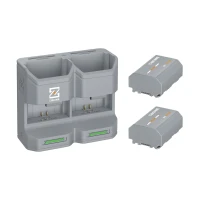
The ZGCINE PC2-FZ100 Kit2 combines a travel charging case with two fully decoded
65 €
In stock 5 pcs
Tilta Sony A9 Series Dummy Battery to 5.5/2.1mm DC Female Cable
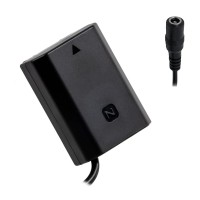
Promotion: -27%
The Tilta DB-SYA9-DCF21 is a Sony NP-FZ100 dummy battery with a 43.8 cm cable ending
24.01 €
32.67 €
In stock 5 pcs
Exascend Element UHS-I SD Card Series 128GB
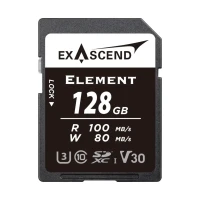
The Element SDXC UHS-I memory card with V30 speed class reads at up to 100 MB/s and
65 €
In stock 3 pcs
SmallRig USB-C Camera Battery with Power Display for Sony NP-FZ100 5297
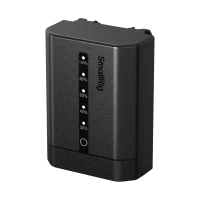
The SmallRig USB-C Camera Battery for Sony NP-FZ100 5297 features a 2600mAh high-capacity
59 €
To be sent 1 pcs
SmallRig Cooling Fan for Nikon ZR and Select Sony Models 5874
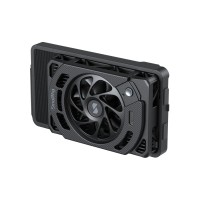
The SmallRig 5874cooling fan for Nikon ZR and selected Sony models is designed to
71 €
In stock 3 pcs
Portkeys LH5P III
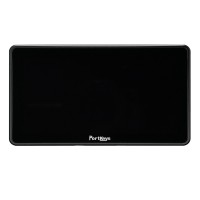
The Portkeys LH5P III is a compact 5.7-inch on-camera touchscreen monitor with up
439 €
Backordered > 5 pcs
Thypoch Leica M to Sony E Positive-Lock Adapter
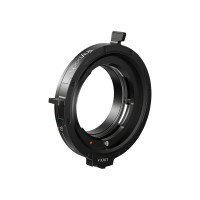
The Thypoch mechanical adapter mounts Leica M lenses on Sony E cameras without optical
229 €
In stock 4 pcs
SmallRig Cage for Sony FX30 / FX3 4183B
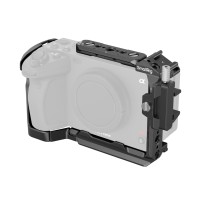
The all-metal SmallRig 4183B cage wraps both the Sony FX30 and FX3. It adds 1/4"-20
106 €
To be sent 1 pcs
K&F Concept Sony NP-FZ100 2600mAh Battery with USB-C Charging, 2-Pack
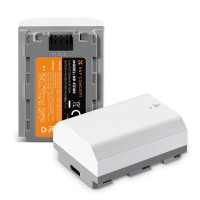
Two Sony NP-FZ100 2600 mAh replacement batteries with a USB-C port built into the
58 €
Backordered > 5 pcs
K&F Concept 2-Slot Charger with Display and 20 W USB-C PD for Sony NP-FZ100 Batteries
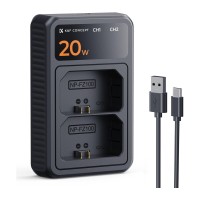
The K&F Concept charger for two Sony NP-FZ100 batteries is powered over USB-C
Call us for pricing information
SmallRig Advanced Compact V-Mount Battery Mounting System 4063
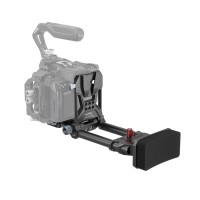
Compact V-mount battery mounting system with an expanding base plate, an Arca-Swiss
153 €
In stock 2 pcs
SmallRig Top Handle with Rec Trigger (ARRI Locating Screw) 4927
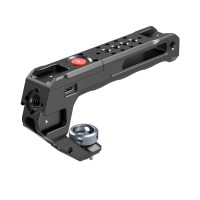
The SmallRig 4927 top handle with an ARRI locating screw steadies camera moves and
82 €
In stock 1 pcs
ZGCINE PC3-FZ100 Camera Charging Case
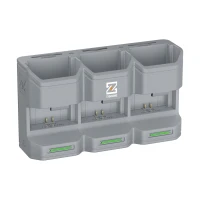
The ZGCINE PC3-FZ100 is a compact, protective charging case designed specifically
39 €
In stock 3 pcs
ZGCINE USB-C to NP-FZ100 Dummy Battery Cable
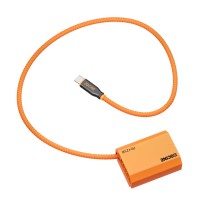
The ZGCINE PD-FZ100 is a 60 cm braided USB-C PD to Sony NP-FZ100 dummy battery cable
39 €
To be sent 1 pcs
Saramonic SR-CA Sony MI Shoe Adapter
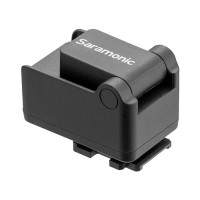
The Saramonic SR-CA is an adapter for the Sony Multi Interface Shoe that takes the
28 €
In stock 3 pcs
Portkeys LH7P
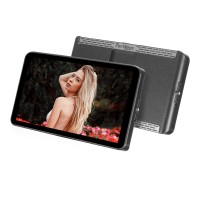
The Portkeys LH7P (black) is a 7-inch touchscreen camera monitor with a Full HD panel,
385 €
To be sent 1 pcs
Ulanzi Camera Cooling Fan For Sony / Canon / FUJIFILM(Silver) V3
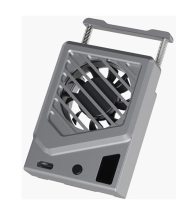
The Ulanzi Camera Cooling Fan V3 in silver is a compact active cooling solution for
58 €
In stock 1 pcs
Tilta Portable Charging Station for NP-FZ100 (4 Channel) - Green
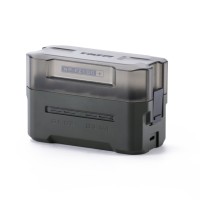
The Tilta charging station for NP-FZ100 batteries has four charging bays and fills
35 €
Backordered > 5 pcs
SmallRig Top Plate for Sony FX30 / FX3 XLR Unit MD3990
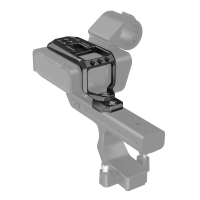
The SmallRig MD3990 top plate covers the XLR handle unit of the Sony FX30 and FX3.
35 €
To be sent 1 pcs
Exascend 240GB Essential Series CFexpress Type A Memory Card
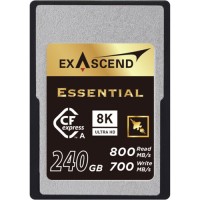
The VPG 200-certified Essential CFexpress Type A memory card reads at up to 800 MB/s,
253 €
In stock 1 pcs
Exascend Catalyst UHS-II SD card, V60,128GB
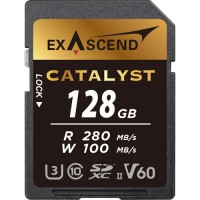
The Catalyst SDXC UHS-II memory card with V60 speed class reads at up to 280 MB/s
47 €
delivery unkown
SmallRig Camera Battery Charger for NP-FZ100 5489
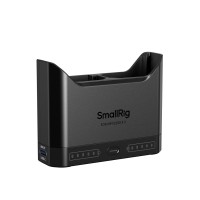
Two-bay charger for NP-FZ100 batteries with a USB-C input: it fills two packs in
31 €
Backordered > 5 pcs
SanDisk Extreme PRO SDXC UHS-II 128GB 300MB/s
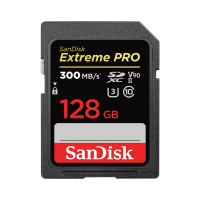
SanDisk Extreme PRO SDXC UHS-II 128GB 300MB/s
282 €
To be sent 3 pcs
ZGCINE PC2-FZ100 Camera Charging Case
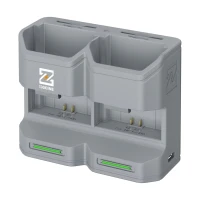
ZGCINE PC2-FZ100 Travel Charging Case (Gray): Compact dual-slot PD fast charger for
28 €
In stock 3 pcs
Tilta Portable Charging Station for NP-FZ100 (4 Channel) - Off White
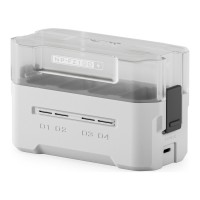
The Tilta charging station for NP-FZ100 batteries has four charging bays and fills
35 €
In stock 1 pcs
SmallRig USB-C&MULTI Cable Clamp for Sony FX3 / FX30 HawkLock Quick Release Cages 4829
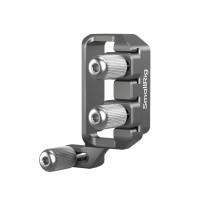
SmallRig USB-C&MULTI Cable Clamp for Sony FX3 / FX30 HawkLock Quick Release Cages
24 €
Backordered 5 pcs
K&F Concept Sony NP-FZ100 2600mAh Battery, 2-Pack + 2-Slot Charger
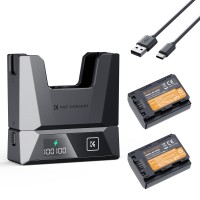
Two Sony NP-FZ100 2600 mAh batteries and a 2-slot charger with a display that charges
85 €
To be sent 1 pcs
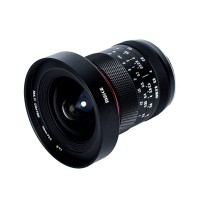
Meike 10mm F2.0 APS-C Prime Lens (Sony E)
Promotion: -9%
Meike 10mm F2.0 APS-C manual focus prime lens is available for Sony E, Fuji X, Canon
357.6 €
392.04 €
In stock 1 pcs
SmallRig Cooling Fan for Sony Selected Cameras 5152

SmallRig 5152 cooling fan for selected Sony mirrorless bodies. A high-speed fan paired
69 €
Backordered > 5 pcs
SmallRig Side Handle with Rec Trigger (1/4"-20 Screws) 4928
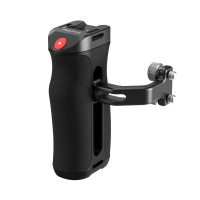
SmallRig Side Handle with Rec Trigger (1/4"-20 Screws) 4928 is designed to assist
82 €
Backordered 5 pcs
SmallRig Extension Mount Plate Kit for Sony FX3 / FX30 XLR Handle 4830
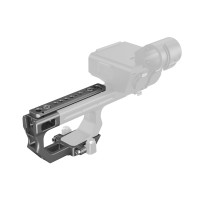
An extension for the Sony FX3 and FX30 XLR handle that stiffens it and adds a closed
53 €
Backordered 4 pcs
SmallRig Rotating Side Handle with Trigger REC for Selected Sony Mirrorless Cameras 3893
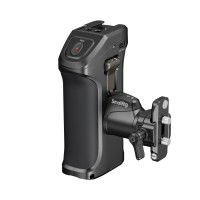
The SmallRig Rotating Side Handle with Trigger REC for Selected Sony Mirrorless Cameras
153 €
Backordered 5 pcs
Tilta Nucleus Auto Focus Adapter Dual Nano II Motor Kit (E to PL) - Black
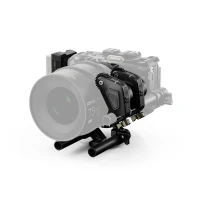
The Tilta Nucleus Auto Focus Adapter (E to PL) turns manual cine lenses into autofocus
729 €
In stock 1 pcs
Tilta Camera Cage for Sony FX3/FX30 V2 Pro Kit - Black
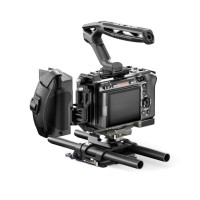
The Tilta Camera Cage for Sony FX3/FX30 V2 Pro Kit is the most complete of the three
326 €
In stock 2 pcs
SmallRig Cage Kit for Sony FX3 / FX30 5823
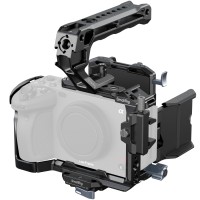
A cage kit for the Sony FX3 / FX30 with a foldable V-mount battery plate. It delivers
224 €
Backordered > 5 pcs
SmallRig NP-F Battery Adapter Mount Plate Kit with NP-FZ100 Dummy Battery Power Cable (Advanced Edit 4341
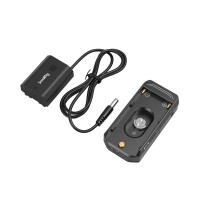
The SmallRig 4341 kit runs Sony mirrorless bodies off ordinary NP-F batteries: an
82 €
Backordered > 5 pcs
SmallRig NP-FZ100 Dummy Battery with Power Adapter (European standard) 4269B
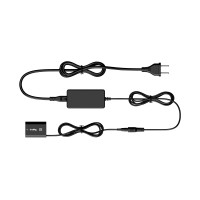
An NP-FZ100 dummy battery with a mains adapter that powers the camera continuously,
47 €
Backordered > 5 pcs
Sony TOUGH SF-M128T 128 GB SDXC UHS-II V60
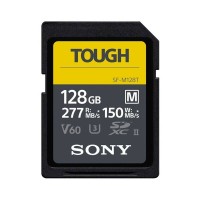
The Sony TOUGH SF-M128T is a rugged 128 GB SDXC UHS-II memory card designed for professional
199 €
In stock 2 pcs
SmallRig Cooling System for Sony / Canon / FUJIFILM Cameras 4815
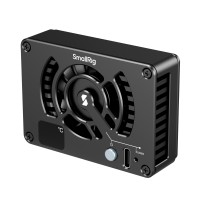
Active cooling for Sony, Canon and FUJIFILM mirrorless bodies. A fan paired with
59 €
Backordered > 5 pcs
Sony CFexpress Type A CEA-G240T 240 GB
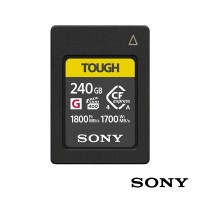
Elevate your professional workflow with the Sony CFexpress Type A 240GB memory card.
299 €
In stock 1 pcs
Sony FE 16-25mm F2.8 G
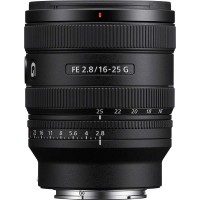
The Sony FE 16-25mm F2.8 G is a compact, lightweight ultra-wide zoom for full frame
1 399 €
In stock 1 pcs
SmallRig Universal Tripod Dolly 3986
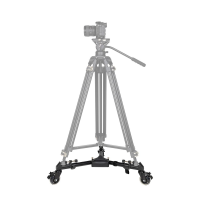
A dolly for your tripod. The large wheels lock so it does not roll away on uneven
82 €
Backordered > 5 pcs
SmallRig HawkLock Quick Release Advanced Cage Kit for Sony FX3 / FX30 4771
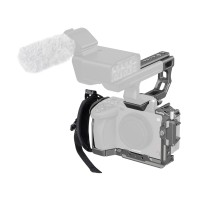
A HawkLock quick-release cage kit for the Sony FX3 and FX30, with an XLR handle extension,
165 €
Backordered > 5 pcs
Sony FE 70-200 mm f/4 Macro G OSS II (E-Mount)
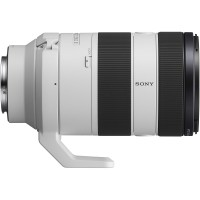
Promotion: -7% ends in: 75d: 08h: 39m
Sony FE 70-200MM F4 Macro G OSS II is a telephoto zoom lens with compact and lightweight
1 869 €
1 999 €
In stock 1 pcs
SmallRig Sony FX30 / FX3 XLR Handle Extension Rig MD3490
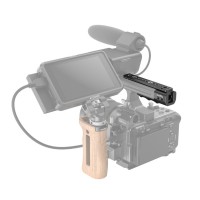
The SmallRig MD3490 extension adds 30 mm to the rear of a Sony FX3 or FX30 XLR handle
35 €
To be sent 1 pcs
SmallRig Adapter Plate for Sony FX3 XLR Handle MD4019
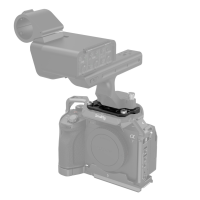
SmallRig Adapter Plate for Sony FX3 XLR Handle MD4019 is designed to enhance the
29 €
To be sent 1 pcs
HPRC2400 for SONY FX3 CINEMA LINE
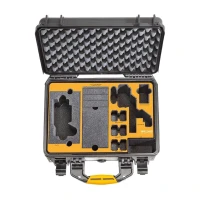
This watertight and waterproof hard case is the HPRC case based on the HPRC2400 specifically
214 €
In stock 2 pcs
K&F Concept NP-FZ100 Battery with USB C Direct Charging 2280mAh 2pcs.
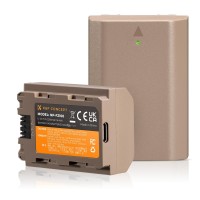
NP-FZ100 Replacement replacement battery, this is perfectly compatible with ZV-E1,
55 €
on request
Wise SDXC SD-S UHS-II V60 128GB (SD-S128)
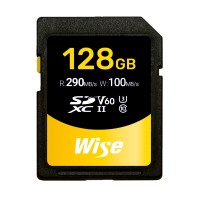
New economical SD-S lineup of Wise SDXC cards for hobbyists and people new to the
137 €
To be sent 2 pcs
ZGCINE BT-FZ100 battery for Sony camera
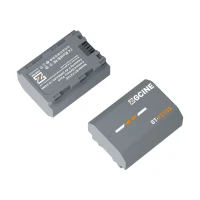
The BT-FZ100 is a fully decoded, high-capacity 2600mAh (7.2V) third-party replacement
32 €
In stock 2 pcs
SmallRig Rotatable Horizontal-to-Vertical Mount Plate Kit for Sony Alpha 4244
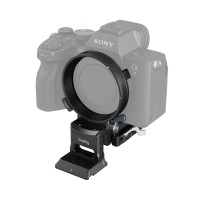
The SmallRig 4244 rotating plate flips a Sony Alpha 1, 7, 9 or FX body 90° between
82 €
To be sent 1 pcs
Core SWX PB-EDGE Sony A7 FZ100 Battery Cable incl. Chip for Sony DSLM
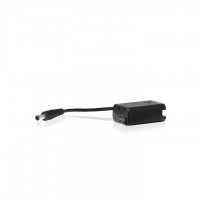
6″ cable to power a Sony a7 FZ100 with Powerbase™ EDGE.
75 €
To be sent 2 pcs
Feelworld LUT7 monitor
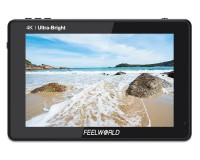
7" camera monitor with high brightness (2,200 cd/m², incl. ambient light sensor for
297 €
Backordered 3 pcs
Tilta Sony A9 Series Dummy Battery to PTAP Cable
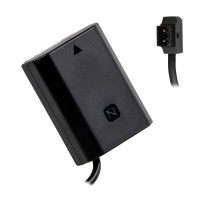
The Tilta DB-SYA9-PTAP is a Sony NP-FZ100 dummy battery with a 43.8 cm cable ending
35 €
Backordered > 5 pcs
ZGCINE PC3-FZ100 Kit 3 Camera Charging Case
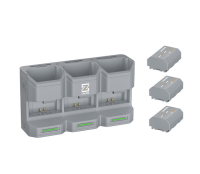
The ZGCINE PC3-FZ100 Kit3 is a complete power solution for equipment using Sony NP-FZ100
76 €
Backordered 5 pcs
Exascend Essential Pro CFexpress 4.0 Type A 1TB
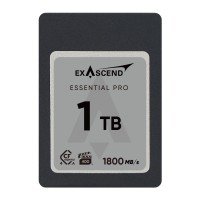
The Essential Pro CFexpress 4.0 Type A card doubles the throughput: up to 1,800 MB/s
759 €
on request
Exascend 64GB Essential UHS-II SDXC Memory Card
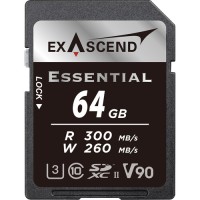
The Essential SDXC UHS-II memory card with V90 speed class reads at up to 300 MB/s
128 €
on request
K&F FZ100 Digital Camera Dual Channel Charger with type c Charging Cable
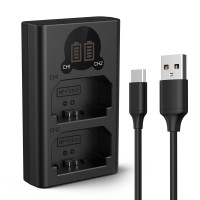
Charge your Sony NP-FZ100 batteries efficiently with the K&F FZ100 Dual Channel
14 €
on request
Exascend UHS-I SD Card Series512GB Catalyst
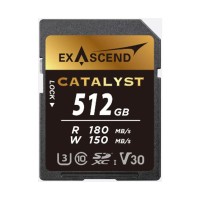
The Catalyst SDXC UHS-I memory card with V30 speed class reads at up to 180 MB/s
207 €
on request
Exascend Titanium SDXC UHS-I V30 128GB
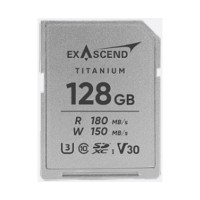
The Titanium SDXC UHS-I memory card with V30 speed class reads at up to 180 MB/s
102 €
on request
Exascend Industrial SD300 V30 C10 SD 6.0 256GB
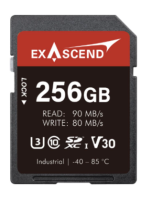
The Exascend EX256GSDV30-IDE is a 256 GB Industrial SDXC card (SD300 Series) with
285 €
on request
Exascend Industrial SD300 V30 C10 SD 6.0 8GB
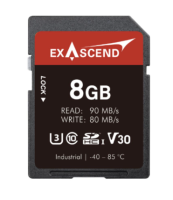
The Exascend Industrial SD300 V30 C10 SD 6.0 8GB (EX8GSDV30-PIDE) is a rugged SDXC
67 €
on request
Exascend UHS-II SD Card V90 Series256GB Catalyst
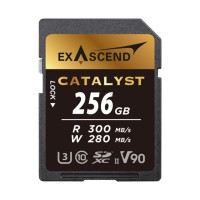
The Catalyst SDXC UHS-II memory card with V90 speed class reads at up to 300 MB/s
579 €
on request
Exascend Titanium SDXC UHS-I V30 256GB
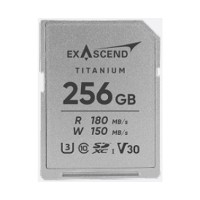
The Titanium SDXC UHS-I memory card with V30 speed class reads at up to 180 MB/s
161 €
on request
Exascend Industrial SD300 V30 C10 SD 6.0 128GB
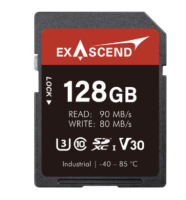
The Exascend EX128GSDV30-IDE is a 128 GB Industrial SDXC card (SD300 Series) with
155 €
on request
K&F FZ100 2000mAh Digital Camera Battery*1pc, for Sony Camera Charger
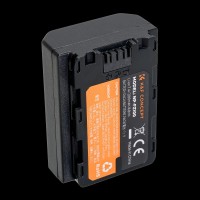
Never run out of power during your shoots with the K&F FZ100 2280mAh Lithium-ion
32 €
on request
Exascend UHS-I SD Card Series 1TB Catalyst
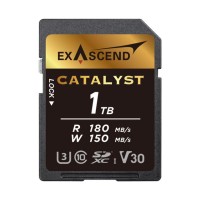
The Catalyst SDXC UHS-I memory card with V30 speed class reads at up to 180 MB/s
419 €
on request
Exascend Industrial SD300 V30 C10 SD 6.0 32GB
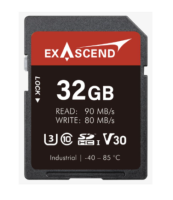
The Exascend Industrial SD300 V30 C10 SD 6.0 32GB (EX32GSDV30-IDE) is a rugged SDXC
69 €
on request
Exascend Industrial SD300 V30 C10 SD 6.0 64GB
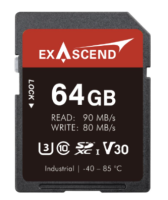
The Exascend EX64GSDV30-IDE is a 64 GB Industrial SD card (SD300 Series) with 3D
84 €
on request
Tilta NP-FZ100 Battery with USB-C Input (2400mAh) - Off White
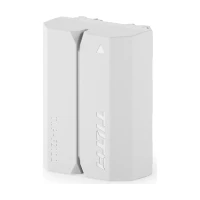
The Tilta NP-FZ100 replacement battery charges straight from a cable through its
47 €
In stock 1 pcs
SmallRig NP-FZ100 Camera Battery Charger 4087
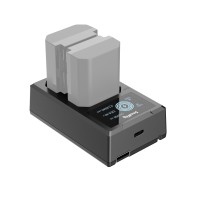
The SmallRig 4087 dual charger tops up two Sony NP-FZ100 batteries at once and shows
13 €
To be sent 1 pcs
Sony SF-E256 256 GB SDXC UHS-II V60
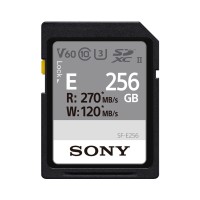
The Sony SDXC SF-E256 memory card with 256 GB capacity, UHS-II interface and V60
301 €
Backordered 1 pcs
Sony XLR-A4
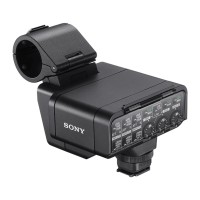
XLR Adapter for α™ Cameras with 96 kHz / 32-bit floating-point recording – connect
919 €
In stock 1 pcs
Sony FE 85mm f/1.4 GM II
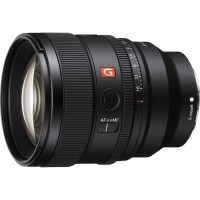
Sony FE 85mm F1.4 GM II (SEL85F14GM2) is a premium lens, offering a supreme blend
2 119 €
In stock 1 pcs
SmallRig Quick Release Mount Plate (Arca-Type Compatible) for AirTag MD4150
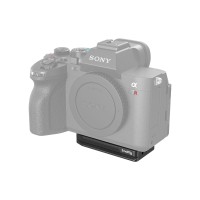
SmallRig MD4150 quick release plate with a built-in AirTag bay. The hidden compartment
29 €
To be sent 1 pcs
Sony TOUGH SF-M256T 256 GB SDXC UHS-II V60
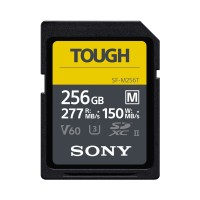
The Sony SDXC TOUGH SF-M256T memory card with 256 GB capacity, UHS-II interface and
169 €
Backordered 2 pcs
Viltrox 56mm T1.5 Cine Lens (Sony E-Mount)
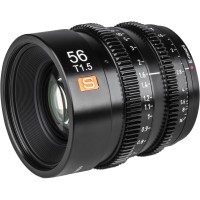
Promotion
Equipped with a fast T1.5 aperture, the Sony E-mount Viltrox 56mm T1.5 Cine Lens
451.11 €
456.5 €
14-30 days
Viltrox AF 13 mm f/1,4 (E Mount)
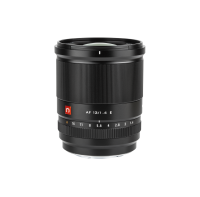
Viltrox AF 13mm F1.4 for Sony E is a fast ultra-wide APS-C prime. It offers a roughly
509 €
14-30 days
SanDisk Extreme PRO SDXC UHS-I 256GB 200MB/s
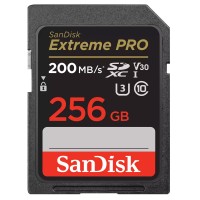
SanDisk Extreme PRO SDXC UHS-I 128GB
96 €
delivery unkown
Sony MRW-G3 CFexpress type A Card Reader
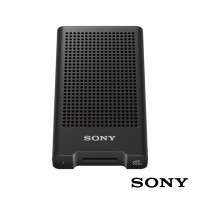
Sony MRW‑G3 is a high‑speed card reader designed for CFexpress Type A and SD UHS‑I/II
179 €
Backordered 1 pcs
Accsoon TopRig 100W 4-Bay NP-FZ100 Fast Charger
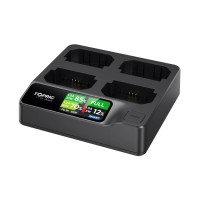
The Accsoon TopRig NP-FZ100 (ACC-BC-02) is a four-bay charger for Sony NP-FZ100 batteries
59 €
In stock 1 pcs
SmallRig Data Cable for DC5521 to NP-FZ100 Dummy Battery 2922B
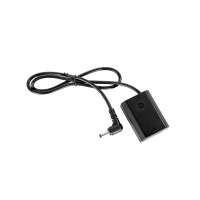
The SmallRig 2922B power cable runs 60 cm and feeds a Sony camera from an NP-F battery
32 €
on request
Sony CFexpress Type A CEA-G960T 960 GB
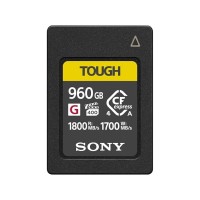
The Sony CFexpress Type A 960GB memory card provides professional performance and
749 €
on request
Sony CFexpress Type A CEA-G160T 160 GB
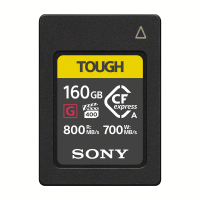
The Sony CEA-G160T is a 160 GB CFexpress Type A memory card for the Sony FX6, α7S
369 €
Backordered 1 pcs
Tilta Camera Cage for Sony FX3/FX30 V2 Pro Kit - Titanium Gray
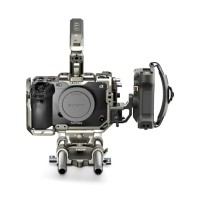
The Tilta Camera Cage for Sony FX3/FX30 V2 Pro Kit is the most complete of the three
326 €
In stock 1 pcs
Tilta Hot Shoe Top Plate for Sony FX3/FX30 V2 - Black
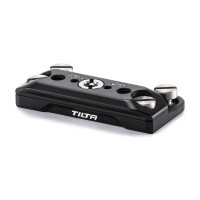
The Tilta TA-T16-HSTP-B is a compact top plate for the Tilta cage on the Sony FX3/FX30
18 €
Backordered 2 pcs
Sony XLR-H1 - XLR Handle Unit
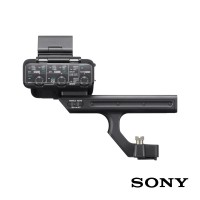
The Sony XLR-H1 is a compact XLR handle unit designed to enhance audio recording
769 €
14-30 days
Sony CFexpress Type A CEA-G1920T 1920 GB
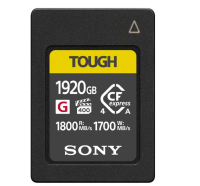
The Sony Tough CFexpress Type A 1920GB VPG400 memory card delivers ultra-fast performance
1 209 €
on request
Sony E 16-55 mm f/2,8 G
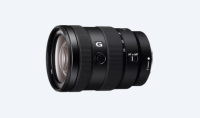
Sony's first APS-C 16-55mm (24-82.5mm Full-Frame equivalent) F2.8 constant-aperture
1 149 €
on request
Sony RM-DP7

Sony RM-DP7 is a 7-inch controller and monitor for compatible Cinema Line cameras.
3 409 €
on request
Sony FE 20-70mm F4 G (E-Mount)
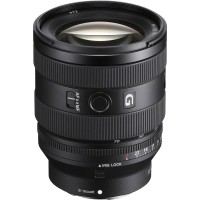
Sony 20-70mm f/4 G (SEL2070G) boasts a versatile zoom range, a remarkably compact
1 579 €
on request
Sony BC-ZD1 Battery Charger
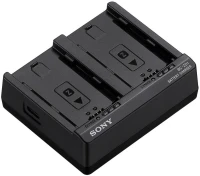
The Sony BCZD1 Battery Charger is a high speed dual charging solution designed for
139 €
on request
Sony RM-DP5

Sony RM-DP5 is a compact 5-inch controller and monitor for compatible Cinema Line
2 589 €
on request
Tamron 20-40mm F/2.8 Di III VXD (Sony E-Mount)
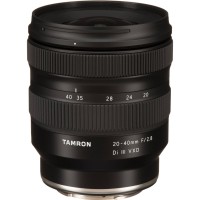
Promotion: -15%
Tamron 20-40mm F/2.8 Di III VXD (A062) is a fast-aperture standard zoom lens for
699 €
821.96 €
on request
SanDisk Extreme PRO SDXC 256GB 300MB/s V90 UHS-II
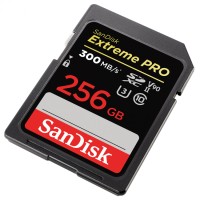
Product Features Up to 300MB/s write speeds help ensure your camera's buffer clears
382 €
delivery unkown
Lexar Pro 1800X SDHC/SDXC UHS-II 256GB
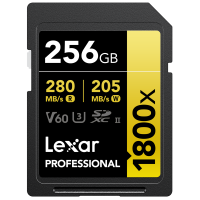
Designed for your DSLR or mirrorless camera, the Lexar® Professional 1800x SDXC™
230 €
14-30 days
Ulanzi Camera Cooling Fan For Sony / Canon / FUJIFILM Black Upgraded
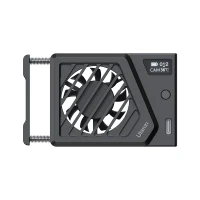
The Ulanzi CA25 Camera Cooling Fan is a fantastic investment, especially during the
60 €
on request
SWIT NP-FZ100 battery
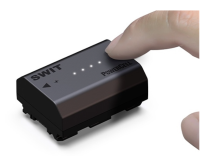
The SWIT PowerCell NP-FZ100 is a professional-grade rechargeable battery for Sony
59 €
on request
Tilta NP-FZ100 Charging Station Battery Kit (2 Batteries) - Off White
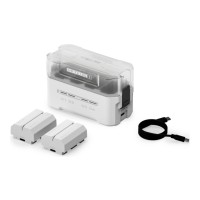
This kit pairs the Tilta charging station for NP-FZ100 batteries with two Tilta NP-FZ100
120 €
on request
Angelbird 128GB AV PRO SD MK2 V90 UHS-II U3 Class 10 SDXC Memory Card
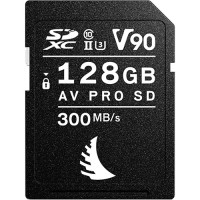
High Resolution, 4K+ Video Recording Memory Card Support the latest DSLR and mirrorless
355 €
on request
Lexar Pro SDXC Professional SILVER Plus 1066x UHS-I/U3/A2/4K R205/W150 (V30) 128GB
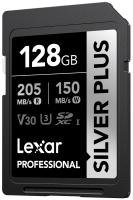
The Lexar Professional SILVER PLUS SDXC UHS-I card boasts exceptional read and write
104 €
3-5 days
Samyang AF 35-150mm F2-2.8 FE (Sony E)
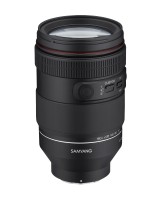
The Samyang AF 35-150mm F2-2.8 FE has a maximum aperture of F2 at its widest and
1 239 €
7-14 days
Deity C23 (Compatible with Sony FX3/FX30)
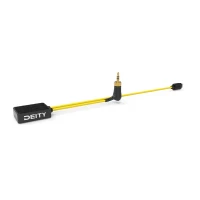
The Deity C23 (Locking 3.5mm to proprietary Sony Timecode Connector) is a locking
54 €
on request
Wise 512GB SDXC UHS-II V90 MK-IV Memory Card
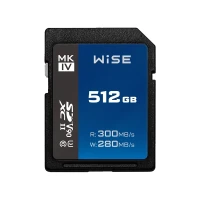
The Wise SDXC UHS-II V90 MK-IV series is the latest evolution in Wise's SD memory
689 €
on request
Wise SD-N 512GB SDXC UHS-II V90 Memory Card
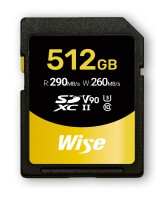
A new series of V90 standard SDXC UHS-II memory media from Wise Advanced are manufactured
689 €
new product, yet unavailable
Tilta Camera Cage for Sony FX3/FX30 V2 Basic Kit - Titanium Gray
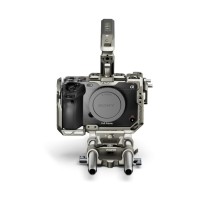
The Tilta Camera Cage for Sony FX3/FX30 V2 Basic Kit turns a compact body into a
217 €
on request
Tilta Camera Cage for Sony FX3/FX30 V2 Basic Kit - Black
Promotion: -8%
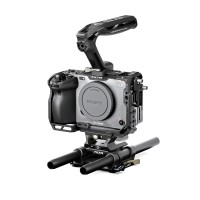
The Tilta Camera Cage for Sony FX3/FX30 V2 Basic Kit turns a compact body into a
179.81 €
194.93 €
on request
Metabones PL to Emount adapter T (Black Matt)
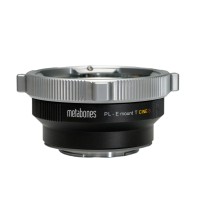
Arri PL Lens to Sony E-Mount camera/ camcorders. Aluminum Alloy and Brass Construction
409 €
14-30 days
Samyang 6 Lens V-AF Anamorphic Kit
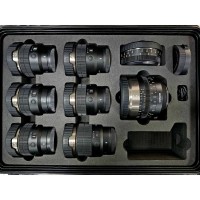
A set of all six Samyang V-AF series AF film lenses and accessories in a hard carrying
4 739 €
on request
Wise 1TB SDXC UHS-II V90 MK-IV Memory Card
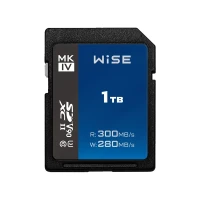
The Wise SDXC UHS-II V90 MK-IV series is the latest evolution in Wise's SD memory
1 219 €
on request
SWIT DB-FZ100
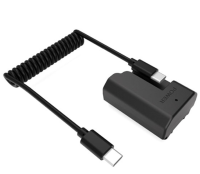
The SWIT DB-FZ100 is a SONY NP-FZ100 dummy battery with USB-C input, enabling continuous
35 €
on request
Wise 128GB SDXC UHS-II V90 MK-IV Memory Card
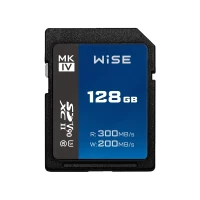
The Wise SDXC UHS-II V90 MK-IV series is the latest evolution in Wise's SD memory
239 €
on request
Tilta Camera Cage for Sony FX3/FX30 V2 Lightweight Kit - Black
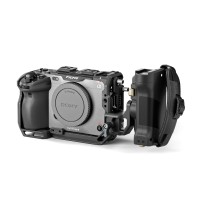
The Tilta Camera Cage for Sony FX3/FX30 V2 Lightweight Kit is the lightest of the
217 €
on request
FALCAM F22&F38&F50 Quick Release Camera Cage V3 (FOR SONY FX3/FX30)
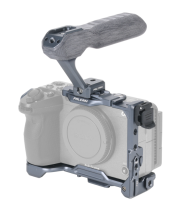
The FALCAM F22 & F38 & F50 Quick Release Camera Cage V3 for Sony FX3/FX30
829 €
on request
Angelbird 256GB AV PRO SD MK2 V90 UHS-II U3 Class 10 SDXC Memory Card
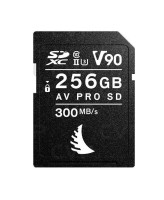
High Resolution, 4K+ Video Recording Memory Card Support the latest DSLR and mirrorless
449 €
on request
Tilta Full Camera Cage for Sony FX3/FX30 V2 - Titanium Gray
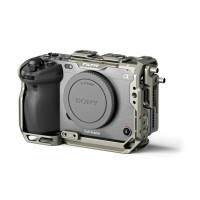
The Tilta Full Camera Cage for Sony FX3/FX30 V2 is the full cage on its own — no
119 €
on request
Wise 1TB SDXC UHS-II V60 Memory Card
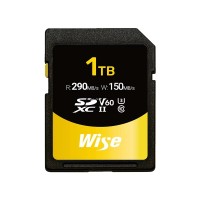
The 1TB UHS-II V60 card is part of Wise Advanced's SD-S product range. With its 290
319 €
on request
SWIT MA-55C2 dummy batériový adaptér pre Sony NP-FZ100
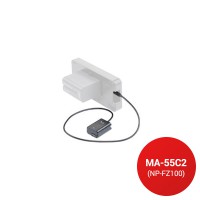
The SWIT MA-55C2 is a Sony NP-FZ100 dummy battery adapter for the SWIT CM-55C 4K
47 €
3-5 days
Wise 256GB SDXC UHS-II V90 MK-IV Memory Card
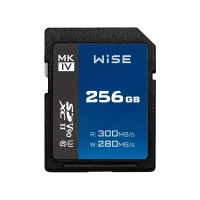
The Wise SDXC UHS-II V90 MK-IV series is the latest evolution in Wise's SD memory
387 €
on request
Sigma 14mm f/1,4 DG DN Art (E-Mount)
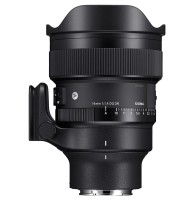
Sigma 14mm f/1.4 DG DN Art lens is the world’s widest f/1.4 single focal length lens
Call us for pricing information
Tilta Camera Cage for Sony FX3/FX30 V2 Lightweight Kit - Titanium Gray
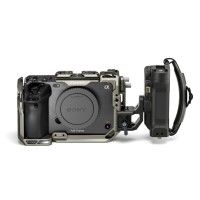
The Tilta Camera Cage for Sony FX3/FX30 V2 Lightweight Kit is the lightest of the
241 €
on request
SanDisk Extreme PRO SDXC 1TB 200MB/s V30 UHS-I
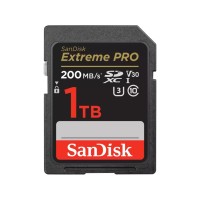
SanDisk Extreme PRO SDXC UHS-I Memory Card; Capacity: 1 TB Compatibility: compatible
378 €
on request
Tamron 35-150mm F/2-2.8 Di III VXD (Sony E-Mount)
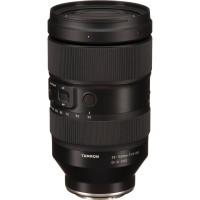
A fast-aperture telephoto zoom lens for Sony E-mount full-frame mirrorless cameras
1 749 €
on request
Sigma 50 mm f/1,4 DG DN A (Sony E)
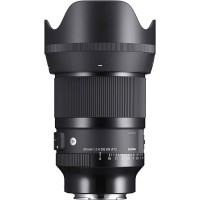
Next generation of the popular Sigma 50mm F1.4 DG HSM Art features superb optical
1 009 €
new product, yet unavailable
Alternative (4)
Alternative (4)
Sony FX3A
Promotion: -26% ends in: 75d: 08h: 56m
The Sony FX3A is a compact Cinema Line camera with a full-frame sensor, over 15 stops
Price from 3 690 €
In stock 2 pcs
Configuration
SONY ILME-FX30 (body + XLR handle)
Promotion: -15% ends in: 75d: 08h: 33m
Leap into the world of filmmaking... The FX30 is an ideal first cinema camera and
2 390 €
2 819 €
In stock 1 pcs
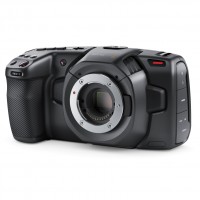
Blackmagic Design Pocket Cinema Camera 4K
Promotion
The Blackmagic Pocket Cinema Camera 4K is a handheld digital film camera with a 4/3
1 080.12 €
1 087.79 €
Backordered 1 pcs
Panasonic LUMIX GH7 (Body)
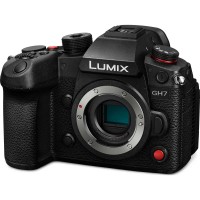
The LUMIX GH7, the flagship of the LUMIX G MFT range, impresses with a new 25.2MP
1 919 €
on request
DISCOUNTED SETS (1)
DISCOUNTED SETS (1)
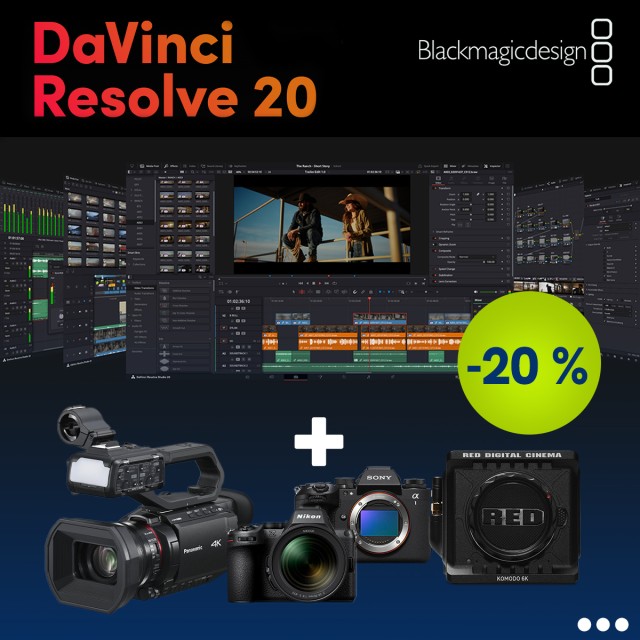
Blackmagic Design DaVinci Resolve Studio + camera
Set description
Blackmagic Design DaVinci Resolve Studio + camera
read moreless

News, training, and discounts from Syntex
Special offers and discounts for subscribers only · Free audio & video workshops · News and tips from the world of filmmaking
- Show all
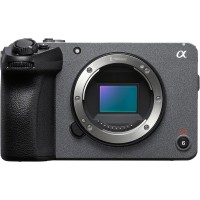
Sony FX30 (body)
Promotion: -17% ends in: 75d: 08h: 56mThe Sony ILME‑FX30 is a compact Cinema Line camera designed for creators who want1 890 €2 270.02 €In stock 2 pcs