
 CZ
 SK
 HU
 AT
 DE
 ES
 SI
 HR

Nothing in the basket.

- Search
-
Login

-
0
Comparison
Add products to compare, then they will appear here and you can compare parameters.
-
0
0 €
Sony FX5 vs FX3 vs FX30: which Cinema Line camera to choose
Sony FX5, FX3A and FX30 compared: sensor, RAW, XLR audio, rigging and a clear verdict on which to buy.
Sony's compact Cinema Line has three bodies that look almost identical but aim at different jobs. The Sony FX5 is the newcomer with a full-frame stacked sensor and internal X-OCN recording, the FX3A is the proven full-frame camera for small crews, and the FX30 is the entry ticket to the same system with a Super 35 sensor.
The question we hear most is: "Do I really need the FX5, or will an FX3 do?" We go through the differences in image, audio and on-set handling, flag the small catches (different batteries, a different XLR handle) and say who should buy which. The larger Sony FX6 is left out here; it suits a different way of working from these compact bodies.
 1 / 8
Sensor: full frame or Super 35
The key difference is sensor size. The FX5 and FX3A are full frame, the FX30 uses an APS-C sensor (Super 35, 23.3 × 15.5 mm). On the FX30 your lens's field of view narrows by roughly 1.5×, so a 35 mm behaves much like a 50 mm, and for a wide shot in a small flat you'll need wider glass.
Full frame makes shallow depth of field easier and gives more headroom in low light. The FX3A and FX5 are rated at over 15 stops of dynamic range, the FX30 at over 14 (all in S-Log3). The FX5 also has a stacked Exmor RS sensor with fast readout, which Sony says reduces rolling shutter on quick pans. All three share the Sony E-mount, so lenses move freely between them.
 2 / 8
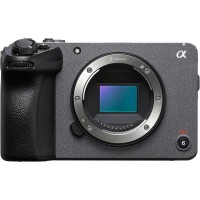
FX30: the way into Cinema Line
The Sony FX30 is the most affordable route to S-Log3, S-Cinetone, Cine EI and user LUTs. Its 4K is oversampled from 6K (up to 60 fps), so footage is clean and detailed. It has dual base ISO 800 and 2500, internal 10-bit 4:2:2 recording including All-Intra, and 16-bit RAW over HDMI for an external recorder.
Watch out for this: 4K at 120 fps is read from a smaller area of the sensor, so the image crops in further. And in the dark, full frame still has the edge. For YouTube, corporate video, daylight weddings or a first short film, though, it's a camera you can work with for years. The body alone weighs 562 g, and the XLR handle can be added later.
 3 / 8
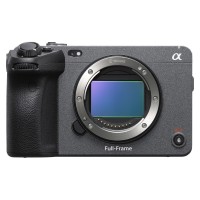
FX3A: full frame for small crews and gimbals
The Sony FX3A (sold by Sony as the FX3) is built for one- or two-person crews: full frame, 4K up to 120 fps (with roughly a 10% crop), DCI 4K in true 24p and S-Cinetone inherited from the FX9. The body weighs 630 g without battery, so it balances easily even on a smaller gimbal.
A big plus for fast work: five 1/4" threads in the body and three more on the XLR handle, which comes in the box. A monitor or wireless receiver screws straight on, no cage needed. The fan keeps 4K/60p recording going uninterrupted, so long interviews or talks are no problem. The trade-offs: a 3-inch screen, no viewfinder connector and a 12 MP sensor that is plenty for 4K but leaves no room for cropping.
 4 / 8
What the FX5 adds to the image
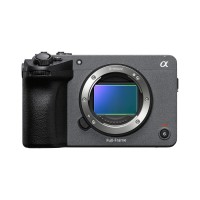
The Sony FX5 is the first compact Cinema Line body with internal RAW: 16-bit X-OCN (LT, C1, C2) goes straight to the card, no external recorder on the cage. Open Gate uses the whole 3:2 sensor in 5K at up to 60 fps, so one take gives you a widescreen version and a vertical cut for social media. 4K runs up to 120 fps; Sony promises 5K/120p and 4K/240p with firmware 2.0 (August 2027 or later).
Three base ISOs (800, 4000 and 12800) plus Dual Gain keep shadows clean from a sunny exterior to a candlelit wedding dance.
The catch: Open Gate works only in X-OCN, and X-OCN only in Cine EI mode. Budget for fast CFexpress Type A cards and drive space.
 5 / 8
FX5 at work: focus, controls, ports
AI-based autofocus recognises the eyes of people, animals and birds (the FX3A recognises only people in video), and in-body stabilisation adds Dynamic Active mode for walking shots. The controls come from CineAlta: the BIG6 screen, a multi-function dial and front and rear tally lamps. The 3.5-inch screen has a four-axis hinge, and the optional DVF-EL1 OLED viewfinder can be attached.
On the side you'll find full-size HDMI, two USB-C ports (USB PD power, timecode via an adapter) and 2.5 Gb/s wired LAN. It can stream over RTMP, RTMPS and SRT at up to 3840 × 2160. A fan with three modes keeps 5K/60p recording uninterrupted. Mind the batteries: the FX5 uses the new NP-SA100, while the FX3A and FX30 run on NP-FZ100.
 6 / 8
Audio: the XLR handle matters
For an interview on lavalier mics or a desk feed at a conference, the XLR handle is essential. The FX3A includes it: two XLR/TRS inputs with +48 V phantom power and up to four channels at 24-bit.
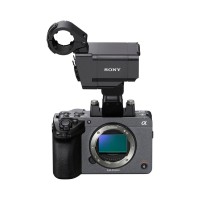
With the FX5 you choose between the body only and the kit with the XLR handle. The new XLR-H2 handle records up to four channels at 96 kHz / 32-bit float, leaving plenty of headroom in the edit when levels jump unexpectedly – applause, laughter, a shout. Note that the older XLR-H1 doesn't work on the FX5, the XLR-H2 won't fit the FX3A or FX30, and it can't be used together with the OLED viewfinder. Working with a sound recordist and a separate recorder? The body alone is enough.
 7 / 8
Rigging: the SmallRig HawkLock cage
The FX5 has five 1/4"-20 threads around the body and two underneath, so a small monitor screws on without a cage. A cage makes sense when you move the camera between tripod, gimbal and shoulder rig during the day. The SmallRig HawkLock for FX5 (6776) is a U-cage with a top NATO rail that you remove to fit the original XLR handle or viewfinder. HawkLock quick release and an Arca-Swiss plate speed up changeovers, and an HDMI clamp protects the monitor port.
The cage weighs 204 g and offers 1/4"-20 threads, ARRI 3/8"-16 locating holes, a cold shoe and a QD socket. With the top plate fitted, SmallRig confirms the Sony ECM-B1M, ECM-M1 and ECM-B10 mics; the ECM-W3, ECM-W3S and ECM-W2BT won't fit, according to the maker.
 8 / 8
Which camera to buy
The FX30 is for new filmmakers, YouTube creators and businesses that want a cinematic image at a lower price point and mostly shoot in good light.
The FX3A is for solo shooters and small crews, weddings, documentary and gimbal work: full frame, excellent low-light results, an XLR handle in the box and a cage-free rig.
The FX5 is for those who want internal RAW, Open Gate for several formats from one take, three base ISOs, LAN and streaming – typically commercials, music videos or a second camera alongside bigger Sony bodies; Sony tunes its colour to match the VENICE 2. If you'll record audio straight into the camera, go for the FX5 with the XLR handle from the start.
Who it makes sense for
The Sony FX30 is the best way into Cinema Line, and the FX3A remains the most versatile full-frame choice for small crews. Choose the Sony FX5 when you need internal RAW, Open Gate and professional connectivity – and if you'll record audio in camera, go straight for the kit with the XLR handle.
What we like about the design: The Sony FX5 combines internal 16-bit X-OCN, 5K Open Gate, three base ISOs and 32-bit float audio via the XLR handle in a compact full-frame body.
What to bear in mind: Open Gate works only in X-OCN, 5K/120p and 4K/240p arrive only with firmware 2.0, and the FX5 does not take the batteries or XLR handle of the FX3A or FX30.
Syntex.
Syntex editorial team. This comparison is based on the technical specifications and documentation from Sony and SmallRig; we have not tried the products ourselves for this article. Photos are manufacturer product images.
Date: 05. 11. 2026,
Category: Reviews
Related products
Sony FX3A
Promotion: -26% ends in: 55d: 09h: 37m
The Sony FX3A is a compact Cinema Line camera with a full-frame sensor, over 15 stops
Price from 3 690 €
In stock 2 pcs
Configuration
Sony FX30 (body)
Promotion: -17% ends in: 55d: 09h: 37m
The Sony ILME‑FX30 is a compact Cinema Line camera designed for creators who want
1 890 €
2 270.02 €
In stock 1 pcs
Sony FX5 (Body + XLR Handle Unit)
The FX5 is the uncompromising filmmaking tool you've been dreaming of. It offers
6 149 €
Backordered 4 pcs
Sony FX5 (body)
The FX5 is the uncompromising filmmaking tool you've been dreaming of. It offers
5 539 €
Backordered > 5 pcs
SmallRig "HawkLock" Cage for Sony FX5 6776

The SmallRig HawkLock cage for the Sony FX5 is the ideal solution for professional
106 €
In stock > 5 pcs