
 CZ
 SK
 HU
 AT
 DE
 ES
 SI
 HR

Nothing in the basket.

- Search
-
Login

-
0
Comparison
Add products to compare, then they will appear here and you can compare parameters.
-
0
0 €
Variable ND filter for video: how to choose and what to watch for
Choosing a variable ND filter: the 180° rule, X-cross, thread size, magnets, Black Mist and iPhone filters.
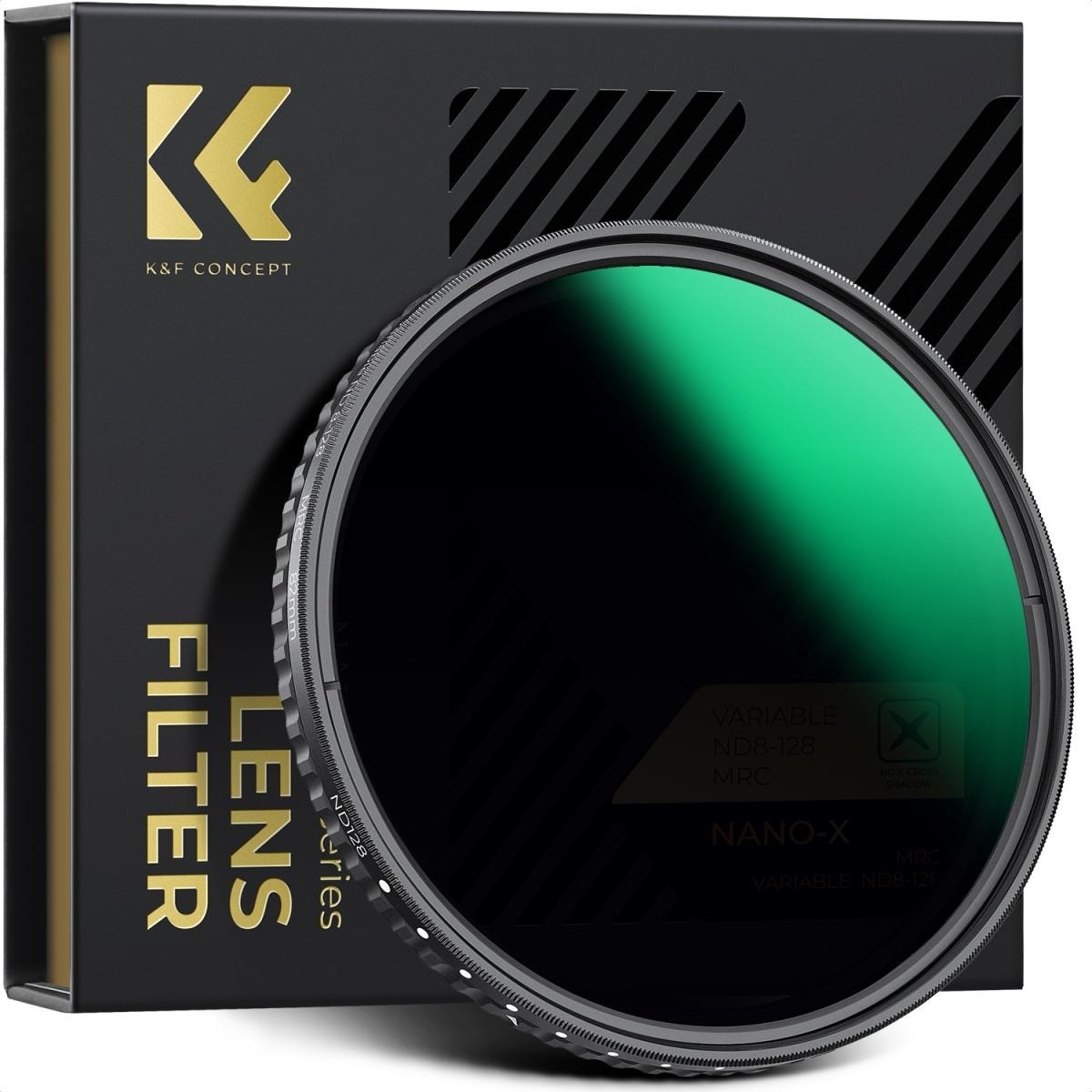
In sunshine there is almost always too much light for video. A photographer simply uses a faster shutter, but a filmmaker needs to hold around 1/50 s and keep the aperture open for a soft background. Outdoors, that's impossible without an ND filter. For most people shooting interviews, vlogs or weddings on a mirrorless camera, the sensible first choice is a limited-range variable ND such as the K&F Concept Nano-X ND8–ND128.
We'll cover how many stops you really need, why cheap variable NDs show a dark cross, how to choose the thread size, when a magnetic system is worth it, what Black Mist does and how to use an ND filter on an iPhone.
 1 / 8
Why video needs an ND filter
In video, shutter speed is set by motion, not by light. The 180° rule says the shutter should be roughly double the frame rate: 1/50 s at 25p, 1/100 s at 50p. Motion then has natural blur; at 1/2000 s it looks choppy, like action-camera footage.
In sunshine that clashes with a wide aperture. As a rough guide, at ISO 100 and f/2 a bright day calls for about 1/6400 s. To get down to 1/50 s you have to cut 7 stops of light – exactly what ND128 gives. Cameras that start at a higher base ISO in log need even more.
An ND filter is simply grey glass: it cuts light but shouldn't change colour or sharpness.
 2 / 8
Fixed or variable ND
A fixed ND has one value: ND8 cuts 3 stops, ND64 six, ND1000 ten. Each doubling of the number is one stop. Fixed filters usually give the cleanest image and never show a cross, but every time the light changes you have to swap or stack them.
A variable ND (VND) is two polarising filters in series; turning the front one smoothly changes how much light gets through. You can fine-tune exposure mid-shot – say, walking handheld out of the shade of trees into sunlight. For documentary, vlogs or weddings it's far more practical.
The Nano-X ND8–ND128 has ND8 to ND128 marked on the ring, so settings are easy to repeat. For a static shot on a tripod, a fixed ND still makes sense.
 3 / 8
X-cross and range
When the two polarisers in a VND are turned nearly perpendicular to each other, light no longer passes evenly and a dark X-shaped cross or blotches appear across the frame. It's most visible on wide-angle lenses and at the end of a wide range.
That's why better VNDs deliberately limit the range and have a ring with hard stops. According to K&F Concept, the Nano-X ND8–ND128 (3–7 stops) can't be turned into the cross position. The Nano-D ND2–ND400, by contrast, offers 1–9 stops in one filter, but the maker itself says a cross may appear at strong settings and disappears with further rotation.
Treat the last stops of a wide range as a reserve, not your everyday working setting.
 4 / 8
Colour cast and glass quality
Cheaper ND filters can tint the image – warm and brown, or towards magenta or green. At strong densities infrared light may also leak through, turning black clothing brownish on screen. With a VND the tint can even shift depending on how far the filter is turned.
That's why glass and coatings matter. According to the maker, the Nano-X uses Japanese AGC glass with 28 layers of coating and 0.2 % reflectance, which also helps against flare in backlight. Tilta quotes a full-spectrum FS coating for its Illusion range.
Practical tip: set white balance manually and check it after a big change in density, ideally against a grey card. A slight cast is easy to fix in post; a strong one much less so.
 5 / 8
Thread size and magnetic systems
You'll find the thread size on the lens or the lens cap (the ⌀ symbol, e.g. ⌀ 67). The rule is simple: buy the filter for your largest lens, current or planned, and fit it to smaller ones with a step-up ring, e.g. 67 → 77 mm. It doesn't work the other way – a smaller filter on a bigger lens crops the corners. A lens hood may not fit over the ring either.
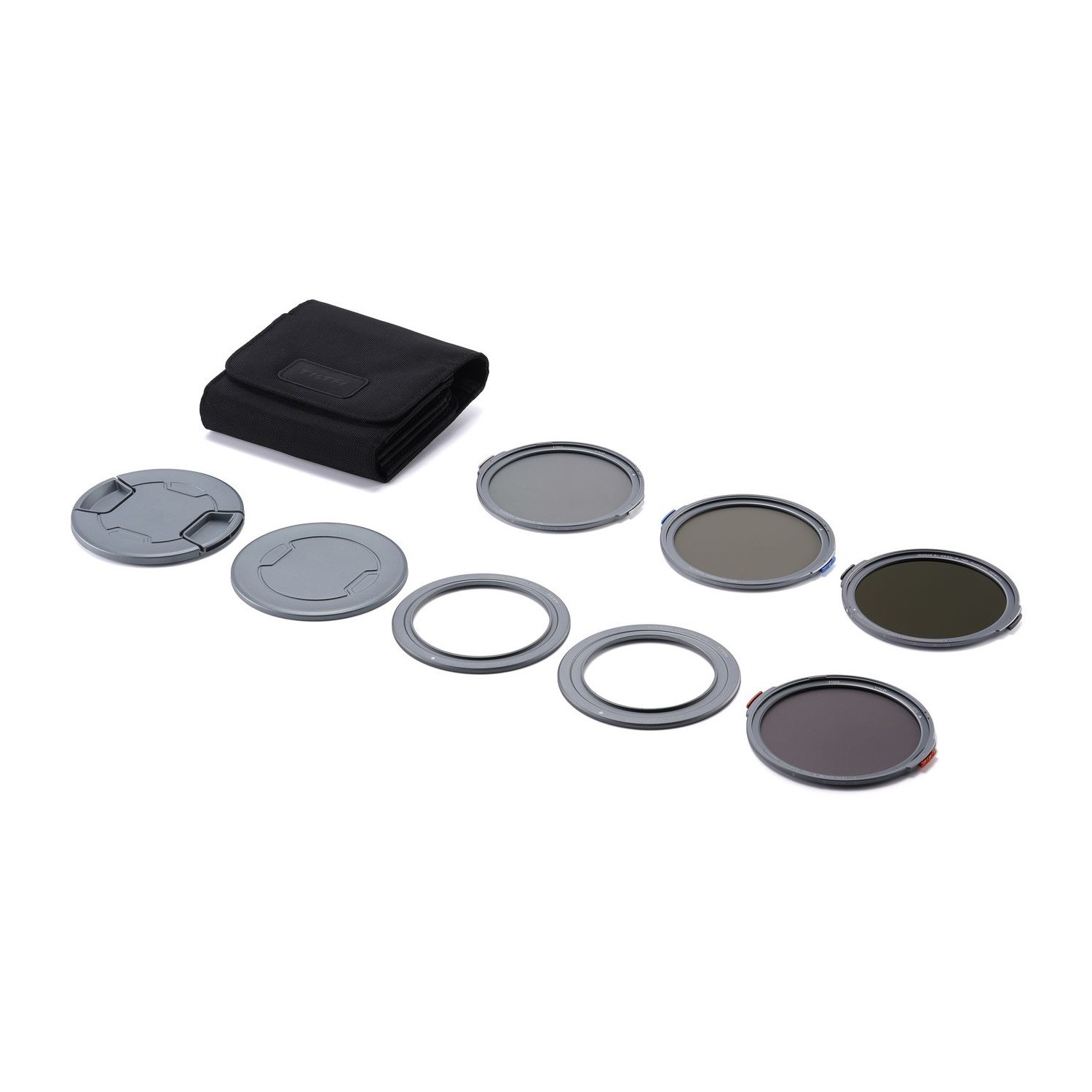
If you swap lenses often, a magnetic system saves time. A thin adapter ring screws onto each lens and the filter snaps on in a second – that's how the Nano-X Magnetic ND8–ND128 72 mm works. A screw-in filter is slow to change in a hurry or on a gimbal, and it can jam.
 6 / 8
Polarisation and Black Mist
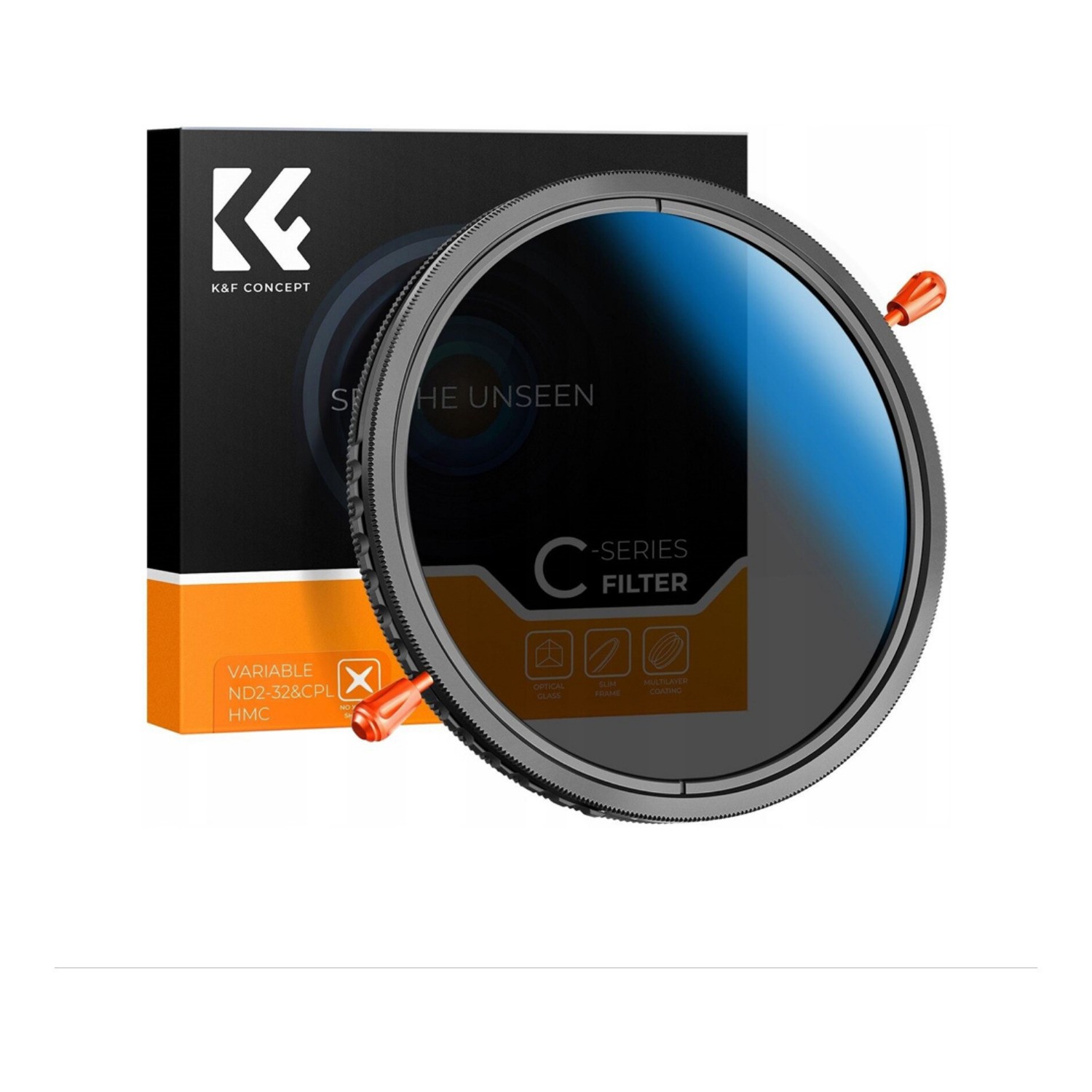
A polarising filter (CPL) cuts reflections on water, glass and foliage and deepens the sky. With an ordinary VND, though, density and polarisation change together. Combined filters such as the K&F C Series ND2–ND32 + CPL 77 mm let you adjust each separately.
The Tilta Illusion Ultimate Kit works along similar lines: the magnetic CPL with the VND adapter gives 1–5 stops, the CPL + ND32 version 6–10. A third CPL has Black Mist 1/4 built in.
Black Mist gently blooms highlights, lowers contrast and softens digital sharpness on skin. You'll see it most in backlight and around lamps or night lights, and hardly at all in a flat, overcast scene. It can't be removed in post, so use it deliberately.
 7 / 8
ND filter for iPhone
An iPhone has a fixed aperture, so in sunshine it controls exposure only with shutter speed and ISO. The result is very short shutter speeds and choppy motion. An ND filter lets you hold a cinematic 1/50 s – but only in an app where you set the shutter manually, such as Blackmagic Camera.
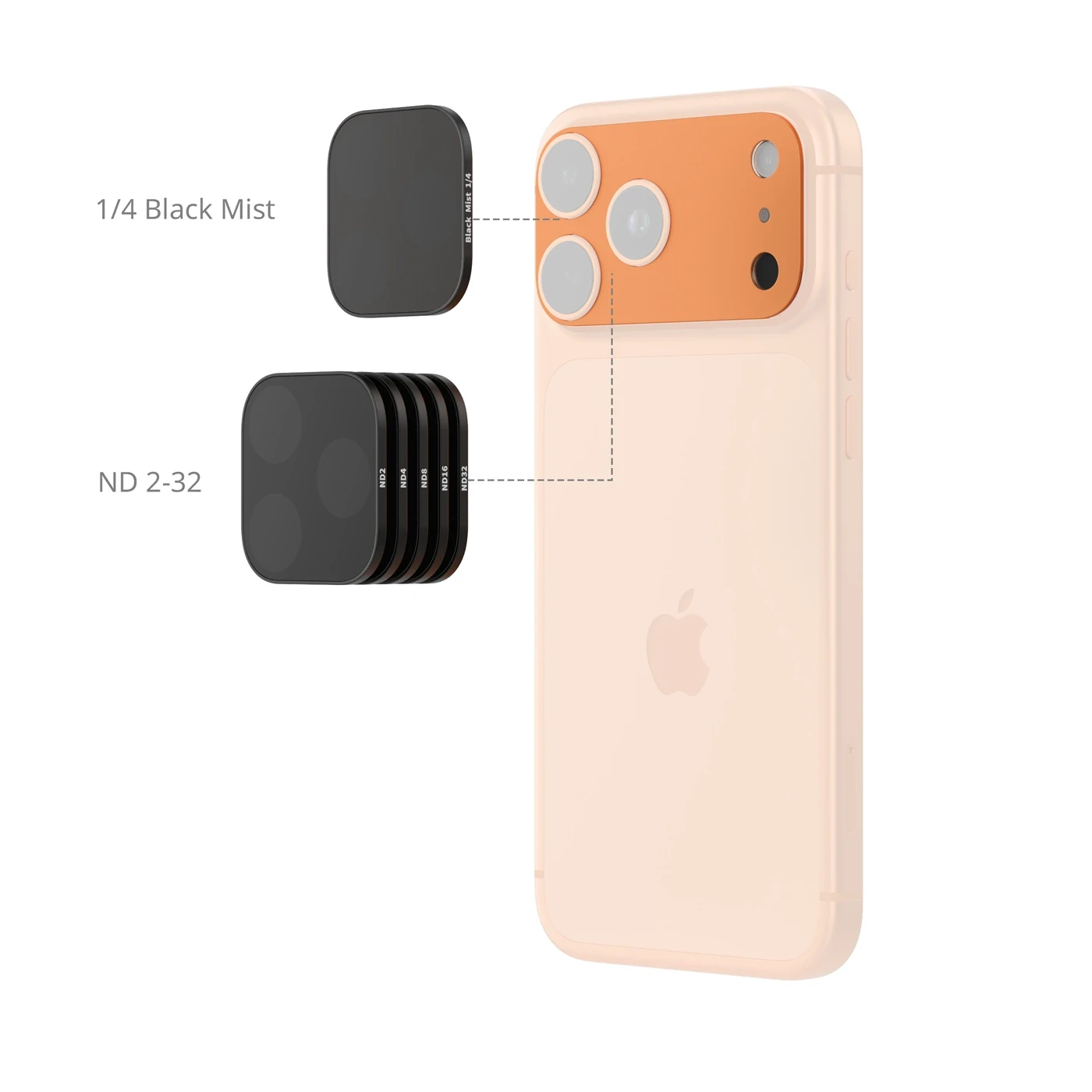
The SmallRig Square ND & Black Mist for iPhone 17 Pro has a magnetic frame that sits on the camera module and also protects it. The kit includes five ND filters from 1 to 5 stops and a Black Mist 1/4. In harsh sun it helps that the magnet holds two filters stacked; on the 0.5× ultra-wide, though, SmallRig advises no more than two to avoid dark corners.
 8 / 8
What to buy for whom
First VND for a camera: the Nano-X ND8–ND128 in your largest lens's thread size. The 3–7 stop range covers a typical sunny day with an open aperture, and the hard stops keep you out of the cross.
Very fast lens, log at high base ISO, snow or beach: the Nano-D ND2–ND400 – more headroom, at the cost of a possible cross at the end of the range.
Reflections on water, windows and cars: the C Series ND2–ND32 + CPL; its 1–5 stop range suits a slightly stopped-down aperture or late afternoon.
Several lenses and quick swaps: the Nano-X Magnetic, or the complete Tilta Illusion system.
iPhone 17 Pro: the SmallRig Square ND & Black Mist.
Who it makes sense for
For most camera-based shooting the safest choice is the K&F Concept Nano-X ND8–ND128 in your largest lens's thread size: it holds 1/50 s in sunshine and keeps you clear of the X-cross. If you swap lenses a lot, the magnetic Nano-X Magnetic or the Tilta Illusion kit saves time, while iPhone 17 Pro owners should go for the SmallRig Square ND & Black Mist.
What we like about the design: The limited ND8–ND128 range with hard stops covers a typical sunny day at an open aperture and prevents the dark cross that spoils footage on cheap variable NDs.
What to bear in mind: A variable ND won't handle extreme light beyond 7 stops or long exposures, and you need the right thread size, using a step-up ring for smaller lenses.
Syntex.
Syntex editorial team. This guide is based on specifications and documentation from K&F Concept, Tilta and SmallRig and on general exposure principles; we did not test the products ourselves for this article. Exposure examples are approximate calculations.
Date: 05. 11. 2026,
Category: Reviews
Related products
K&F Concept Nano-X Variable ND Filter ND8–ND128 without X-Cross, 55 mm
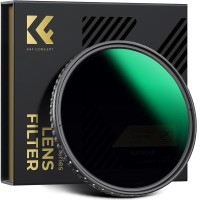
Nano-X Variable ND Filter ND8–ND128 without X-Cross 55 mm, changes the amount of
55 €
In stock 1 pcs
K&F Concept Nano-X magnetic variable ND filter ND8–ND128 72 mm

Nano-X Magnetic — variable ND filter 72 mm, changes the amount of light steplessly
99 €
In stock 3 pcs
K&F Concept Nano-D variable ND filter ND2–ND400 82 mm

Nano-D variable ND filter ND2–ND400 82 mm, changes the amount of light steplessly
66 €
In stock 3 pcs
K&F Concept C Series variable ND filter ND2–ND32 + CPL 2-in-1 77 mm
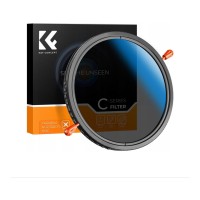
C Series — variable ND filter 77 mm, changes the amount of light steplessly as you
58 €
In stock 2 pcs
SmallRig Square ND & Black Mist Filter Kit for iPhone 17 Pro (Orange) 6072
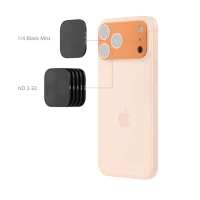
A magnetic filter set for the iPhone 17 Pro: five ND filters from 1 to 5 stops plus
76 €
In stock 5 pcs
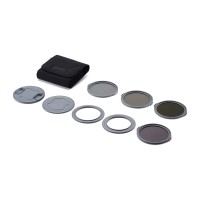
Tilta Illusion Magnetic Filter Ultimate Kit (1-10 Stops VND, CPL, Black Mist)
Promotion: -10% ends in: 23d: 10h: 34m
The Tilta Illusion Magnetic Filter Ultimate Kit (1–10 Stop) is a complete cinematic
303.83 €
337.59 €
In stock 1 pcs