
 CZ
CZ SK
SK HU
HU AT
AT DE
DE ES
ES SI
SI HR
HR
Nothing in the basket.

- Search
-
Login

-
0
Comparison
Add products to compare, then they will appear here and you can compare parameters.
-
0
0 €
News
The new firmware adds support for AU-VEXT1 Extension Unit, ProRes 4444 (HD) in the MAIN recorder, support for PREREC in ProRes recording mode, CODEX V-RAW Recorder compatibility, support for anamorphic lenses and Image Flip-Flop (SUB recorder), and more.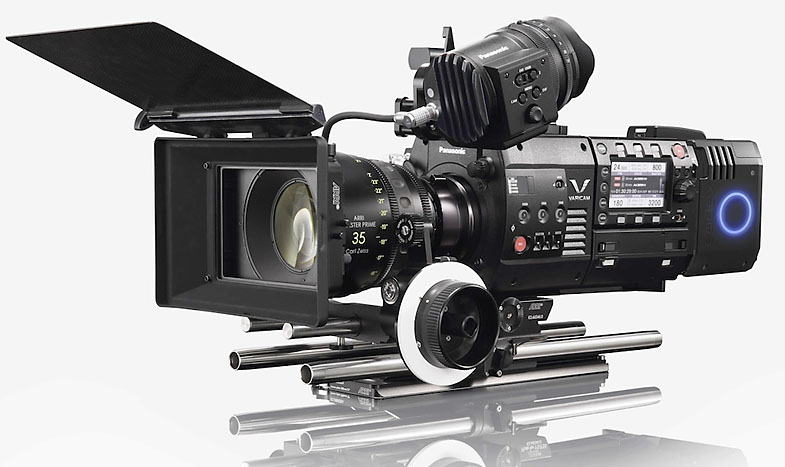
Date: 07. 07. 2015,
Category: News
FULL ARTICLE
Following in the footsteps of the breakthrough AG-DVX100, the new AG-DVX200 debuts as the world’s first 4/3-type large format, 4K/60p camcorder to feature an integrated zoom lens, this Fall. The DVX200 captures stunning imagery by virtue of LEICA DICOMAR 4K 13x zoom lens combined with an advanced large format 4K imager and the blending of aesthetics like shallow focus, attractive Bokeh, and an amazing 12 stop dynamic range made possible by the VariCam style V-Log L processing. More information has been published here.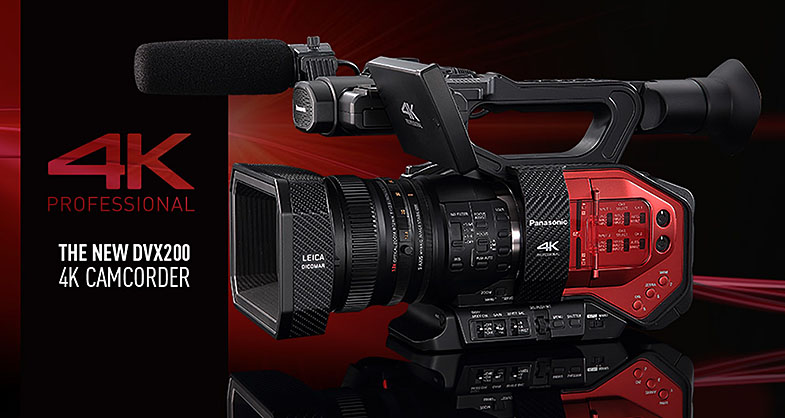
Date: 06. 07. 2015,
Category: News
FULL ARTICLE
Press Release
Blackmagic Design announced that a variety of its products were used on some of the summer season’s biggest blockbusters and most anticipated films. DPs, VFX artists and colorists around the world continue to rely on Blackmagic Design to help deliver professional results.
Blackmagic digital film cameras were used to shoot scenes and stunt work in blockbusters such as Mad Max: Fury Road and Avengers: Age of Ultron. Fusion Studio was used for compositing and to help create action sequences for Spy and Barely Lethal. And DaVinci Resolve was used to grade highly anticipated films such as Tomorrowland and Magic Mike XXL.
5 Flights Up, Magic Mike XXL and Ricki and the Flash were graded by Joe Gawler of Harbor Picture Company with DaVinci Resolve;
Avengers: Age of Ultron DP Ben Davis used multiple Blackmagic Pocket Cinema Cameras to film stunt scenes;
Barely Lethal and Spy were composited by Jeremy Nelson of Flash Film Works with Fusion Studio;
Best of Enemies was graded by Andrew Balis for Different by Design with DaVinci Resolve;
Diary of a Teenage Girl and Love & Mercy were graded by Tom Poole of Company 3 with DaVinci Resolve;
Lego Brickumentary was graded by Chad Herschberger with DaVinci Resolve;
Mad Max: Fury Road DP John Seale used Blackmagic Cinema Cameras for select scenes;
Manglehorn was graded by Alex Bickel of Color Collective with DaVinci Resolve;
Results was graded by Brandon Thomas of TBD Post with DaVinci Resolve;
Slow West DP Robbie Ryan used Blackmagic Pocket Cinema Camera for additional shooting, with color grading done by Rob Pizzey of Goldcrest Post using DaVinci Resolve;
Tangerine was graded by Luke Cahill of Different by Design with DaVinci Resolve;
The Nightmare was graded by Andrew Balis of Wildfire Finishing with DaVinci Resolve;
The Overnight was graded by Aaron Peak of Wildfire Finishing with DaVinci Resolve;
Tomorrowland was graded by Stephen Nakamura of Company 3 with DaVinci Resolve.

Press Photography
Product photos of Blackmagic Cinema Camera, Pocket Cinema Camera, Fusion Studio and DaVinci Resolve are available at www.blackmagicdesign.com/press/images.
About Blackmagic Design
Blackmagic Design creates the world’s highest quality video editing products, digital film cameras, color correctors, video converters, video monitoring, routers, live production switchers, disk recorders, waveform monitors and real time film scanners for the feature film, post production and television broadcast industries. Blackmagic Design’s DeckLink capture cards launched a revolution in quality and affordability in post production, while the company’s Emmy™ award winning DaVinci color correction products have dominated the television and film industry since 1984. Blackmagic Design continues ground breaking innovations including 6G-SDI and 12G-SDI products and stereoscopic 3D and Ultra HD workflows. Founded by world leading post production editors and engineers, Blackmagic Design has offices in the USA, UK, Japan, Singapore and Australia. For more information, please go to www.blackmagicdesign.com.
Date: 01. 07. 2015,
Category: News
FULL ARTICLE
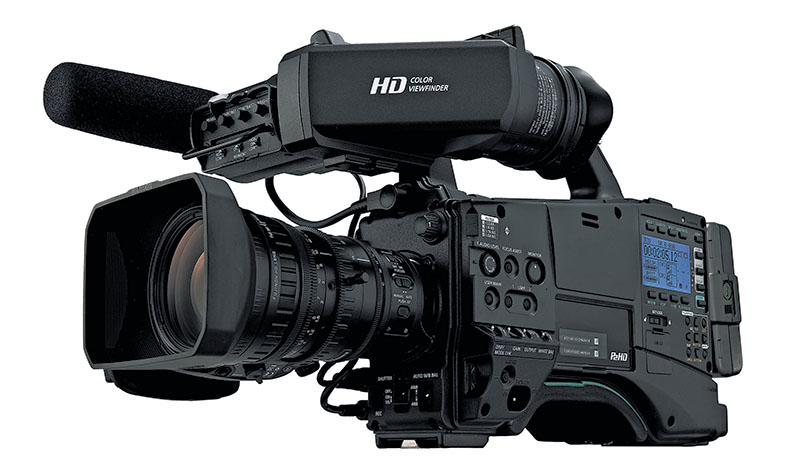
New features:
– Enhanced FTP transfer function for P2 Cast.
– Enhanced streaming function (Support for QoS mode, support for external servers and LiveU, assignment of the following operations to RET SW on the lens).
– Streaming Start/Stop, Rec During Upload, Uploaed List.
– Wi-Fi: Support for Direct mode and USB-N53 (an ASUS product).
– LTE: Support for SIM-lock-free dongle.
– Support for AK-HRP200 serial connection (AK-HRP200 Ver.5.01-00-0.07).
– Proxy for SD format (480i/576i): LOW 2CH MOV only.
– One Clip REC function for AVC-LongG format.
– Assignment of Setup Menu Items (interval setting for Interval REC, etc.) to USER buttons.
– Support for Camera Control APP for iPad.
Related links:
Operating Instructions download
List of supported network USB modems
Available record formats and codecs
Qualified computer environment for network features
Date: 30. 06. 2015,
Category: News
FULL ARTICLE
Certified SSDs for Blackmagic Production Camera 4K (June 2015)
The following SSDs are recommended for 4K RAW and ProRes captures:
Angelbird AV Pro 250 GB
Angelbird AV Pro 500 GB
Digistor 1TB SSD 4K Professional Video Series (DIG-PVD1000, pre-formatted ExFat)
Kingston HyperX Savage 120 GB (SHSS37A/120G)
Kingston HyperX Savage 240 GB (SHSS37A/240G)
Kingston HyperX Savage 480 GB (SHSS37A/480G)
Kingston HyperX Savage 960 GB (SHSS37A/960G)
Samsung 256 GB 850 Pro (MZ-7KE256BW, spacer required)
Samsung 512 GB 850 Pro (MZ-7KE512BW, spacer required)
Samsung 1 TB 850 Pro (MZ-1T0BW, spacer required)
Sandisk Extreme Pro 240GB (SDSSDXPS-240G-G25)
Sandisk Extreme Pro 480GB (SDSSDXPS-480G-G25)
Sandisk Extreme Pro 960GB (SDSSDXPS-960G-G25)
Wise Cinema CMS-0240 240 GB
The following SSDs are recommended 4K and 1080 Apple ProRes (HQ) 422 captures:
ADATA XPG SX900 256GB (ASX900S3-256GM-C)
Angelbird 240GB AV Pro
Angelbird 480GB AV Pro
Digistor 240GB SSD Professional Video Series (DIG-PVD240S, pre-formatted ExFat)
Digistor 480GB SSD Professional Video Series (DIG-PVD480S, pre-formatted ExFat)
Intel 530 Series 180GB SSD (SSDSC2BW180A401)
Intel 530 Series 240GB SSD (SSDSC2BW240A401)
Kingston 240 GB HyperX 3K (SH103S3/240G)
Kingston 480 GB HyperX 3K (SH103S3/480G)
Kingston 240 GB SSDNow KC300 (SKC300S37A/240G)
Kingston 480 GB SSDNow KC300 (SKC300S37A/480G)
OWC 120 GB Mercury Extreme Pro 6G (OWCSSD7P6G120)
OWC 240 GB Mercury Extreme Pro 6G (OWCSSD7P6G240)
OWC 480 GB Mercury Extreme Pro 6G (OWCSSD7P6G480)
PNY CL4100 240 GB (SSD7SC240GCL4)
PNY CL4100 480 GB (SSD7SC480GCL4)
PNY Prevail 240 GB (SSD9SC240GCDA-PB)
PNY Prevail 480 GB (SSD9SC480GCDA-PB)
PNY XLR8 480GB (SSD9SC480GMDA-RB)
Sandisk Extreme 240GB (SDSSDX-240G-G25)
Sandisk Extreme 480GB (SDSSDX-480G-G25)
Transcend 256 GB SSD370 (TS256GSSD370)
Transcend 512 GB SSD370 (TS512GSSD370)
Transcend 1 TB SSD370 (TS1TSSD370)
Transcend 256 GB SSD720 (TS256GSSD720)
Important Notes About SSD Speed
Some models of SSD can’t save video data at the speed the manufacturer claims. This is due to the disk using hidden data compression to attain higher write speeds. This data compression can only save data at the manufacturer’s claimed speed when storing data such as blank data or simple files. Video data includes video noise and pixels which are more random so compression will not help, therefore revealing the true speed of the disk.
Some SSDs can have up to 50% lower write speed than the manufacturer’s claimed speed. So even though the disk specifications claim an SSD has speeds fast enough to handle video, in reality the disk isn’t fast enough when used to store video data for real time capture. However, this mostly affects HD capture and often these disks can still be used for playback.
Use Blackmagic Disk Speed Test to accurately measure whether your SSD will be able to handle uncompressed video capture and playback. Blackmagic Disk Speed Test uses data to simulate the storage of video so you get results similar to what you’ll see when capturing video to a disk. During Blackmagic testing, we have found newer, larger models of SSD and larger capacity SSDs are generally faster.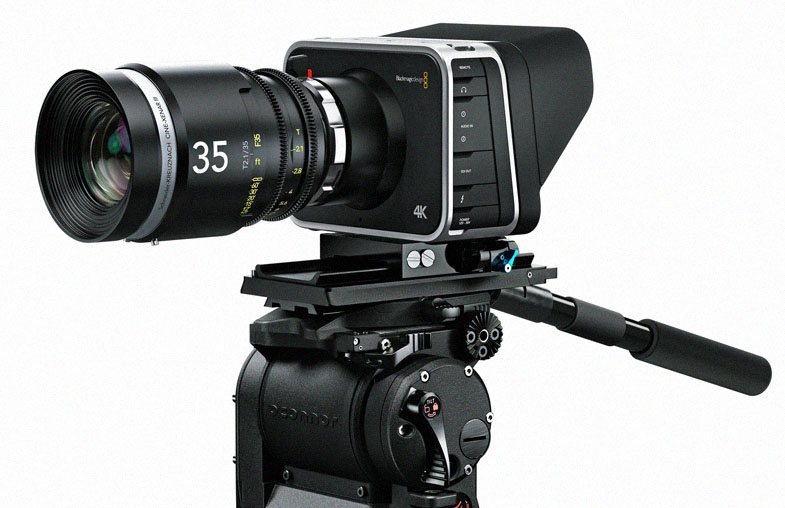
Date: 30. 06. 2015,
Category: News
FULL ARTICLE