



Press Release
Blackmagic Design announced that Marvel’s “Avengers: Age of Ultron” 2nd Unit shot extensively on the Pocket Cinema Camera. Joss Whedon’s highly anticipated sequel to “Marvel’s The Avengers” was lensed by cinematographer Ben Davis (“Guardians of the Galaxy”).
When Tony Stark tries to jumpstart a dormant peacekeeping program, things go awry and Earth's mightiest heroes are put to the ultimate test, as the fate of the planet hangs in the balance. As the villainous Ultron emerges, it is up to the Avengers to stop him from enacting his terrible plans, and soon uneasy alliances and unexpected action pave the way for an epic adventure.
The film differs quite significantly from the original Avengers movie. “The first was about a coming together, whereas this film is about a coming apart, which is reflected in the tone of the script,” explains Ben. “The narrative of the film is far more dark and menacing, so the visual approach was grittier, darker and more earthbound.”
“Avengers: Age of Ultron” features an extensive amount of 2nd Unit work and Davis required a small, high quality digital film camera for the film’s stunt sequences. “I was a big fan of what Anthony Dodd-Mantle had achieved on “Rush” using small camera platforms, especially when it came to mounting them in unusual places and the shots he was able to achieve,” he reveals. “I decided to get a Pocket Cinema Camera in for testing after bumping into DIT friend of mine who’d recently purchased a one, and was raving about it. For me, it was a no-brainer really, it was all about the latitude and size. Suddenly I had a small camera which not only output a 12-bit RAW image, but it also had a latitude that was getting up to and around the level of high end digital cinema film cameras.”
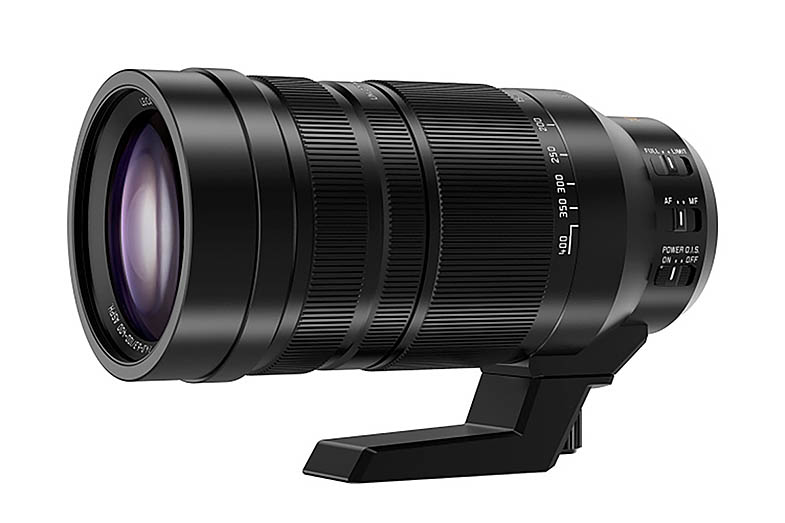
“There are two large battle sequences in particular during the film, the first is at the beginning and the second features in the third act, and we very much wanted these to be shot as a war correspondent would cover news in a conflict zone. What we needed was a lightweight camera that we could then distribute around the set during the filming of battle sequences that would give us more than twelve frames of good quality HD material that we could match with our main camera package. For this we used eight Pocket Cinema Cameras paired with either a 14mm pancake lens or a 12-35mm zoom, which we then mounted to impact points around the set. Say for example a truck was being blown up and thrown through the air and we wanted to capture it landing on top of a car, we would put one of the Pocket Cinema Cameras in a small metal housing and put it in the car. Another instance involved mounting the Blackmagic camera to a tank, because we could literally strap it one on the end of a magic arm and bolt it to almost anywhere we wanted it to be on the tank.”
“When I got the Pocket Cinema Cameras in I thought they would be a nice to have, however I ended up using these far more than I ever thought we would,” concludes Ben. “The appealing thing about this camera is its size to quality ratio. The footage is usable for a much longer cut time than previous incarnations of small camera platforms and so the camera does in fact become far more useful.”

Press Photography
Product photos of the Blackmagic Pocket Cinema Camera are available at www.blackmagicdesign.com/press/images.
About Blackmagic Design
Blackmagic Design creates the world’s highest quality video editing products, digital film cameras, color correctors, video converters, video monitoring, routers, live production switchers, disk recorders, waveform monitors and real time film scanners for the feature film, post production and television broadcast industries. Blackmagic Design’s DeckLink capture cards launched a revolution in quality and affordability in post production, while the company’s Emmy™ award winning DaVinci color correction products have dominated the television and film industry since 1984. Blackmagic Design continues ground breaking innovations including 6G-SDI and 12G-SDI products and stereoscopic 3D and Ultra HD workflows. Founded by world leading post production editors and engineers, Blackmagic Design has offices in the USA, UK, Japan, Singapore and Australia. For more information, please go to www.blackmagicdesign.com.
Until June 30th, 2015, any EDIUS Neo user (versions 1 to 3.5) or EDIUS Pro user (versions 1 to 6.5) is able to upgrade to EDIUS 7.5 for just 299 EUR. This update will also include a free update to the next major version of EDIUS when it is available. The upgrade is provided in serial key format only, not as a packaged product. Upon purchase, users download the software and enter a serial number that they get with their upgrade. This is a limited-time promotion, ending June 30th, 2015!
Press Release
Blackmagic Design announced that the Fédération Française de Tennis (FFT) video production team will monitor all of the action at this year’s French Open using eight Blackmagic MultiView 16s. The purpose built 3.2 meter by 1.3 meter video wall provides a complete preview of all the action as it happens at Le Stade Roland Garros, Paris’ international tennis venue.
As part of a major video production upgrade for the venue, four of the hardware multi viewers will be used all year round in order to monitor 1080i50 signals across all 20 courts at Roland Garros, including smaller FFT tournaments and training analysis. During major championships, such as the French Open Gram Slam tournament and Davis Cup meetings, the additional four MultiView 16s provide the FFT team with a full overview of every camera feed being produced by up to 40 international sports broadcasters on site, as well as outputs of video systems such as keyers and video walls.
“Blackmagic’s hardware multi viewers replace several full IP mosaics and SDI video quads that we previously used for monitoring. As well as assisting in our overall upgrade of our inhouse production capabilities from SD to HD, the multi viewers also allow us to be more flexible by taking video outputs straight from our SDI video routers to see whatever we need directly up on our screens,” explains Christophe Chatain, head of AV, FFT. “Whilst most of our sources for this Grand Slam tournament are HD, as is the case with other international events, the fact that we can support Ultra HD monitoring in the future, and select how we view those inputs; either full screen or 2x2, 3x3 or 4x4 means we have a flexible, reliable monitoring solution that is future proofed.”
The FFT has also recently installed two Blackmagic Smart Videohub 40x40 routers as part of its upgrade of the venue’s audiovisual infrastructure. The first is used to distribute video feeds between the stadium’s multiple control rooms via optical fiber out to giant screens for spectators or to the venue’s IPTV network while the other manages all of the incoming sources for the video wall in the master control room, routing the MultiView 16 inputs and outputs.
“As the only Grand Slam tournament played on clay, the French Open is a major international tennis event, attracting sell out crowds and broadcasters from across the globe, so it goes without saying that our on court coverage has to be flawless, and the production team has to have its finger on the pulse as the drama unfolds,” concludes Christophe. “The installation of Blackmagic Design’s routing and monitoring equipment delivers a reliable and seamless video production workflow that enables us to provide broadcast standard video coverage of some of tennis’ most exciting matches, from the very best in the sport.”

Press Photography
Product photos of MultiView 16, Smart Videohub 40x40 and all other Blackmagic Design products, are available at www.blackmagicdesign.com.
About Blackmagic Design
Blackmagic Design creates the world’s highest quality video editing products, digital film cameras, color correctors, video converters, video monitoring, routers, live production switchers, disk recorders, waveform monitors and real time film scanners for the feature film, post production and television broadcast industries. Blackmagic Design’s DeckLink capture cards launched a revolution in quality and affordability in post production, while the company’s Emmy™ award winning DaVinci color correction products have dominated the television and film industry since 1984. Blackmagic Design continues ground breaking innovations including 6G-SDI and 12G-SDI products and stereoscopic 3D and Ultra HD workflows. Founded by world leading post production editors and engineers, Blackmagic Design has offices in the USA, UK, Japan, Singapore and Australia. For more information, please go to www.blackmagicdesign.com.
NewTek TriCaster Advanced Edition is an option available for TriCaster Mini through TriCaster 8000, capable of elevating productions to new heights of connectivity, creativity, and efficiency. More than 60 new major capabilities and enhancements in TriCaster Advanced Edition help multiply audiences, streamline repetitive tasks, and make productions more riveting in an ever-more-connected world. TriCaster Advanced Edition is available now as a one-time purchase.
Grass Valley, a Belden Brand, is launching EDIUS 8, the latest version of its editing platform designed for production and broadcast news. Version 8 features multiple new capabilities, including refreshed GUI, Canon XF-AVC support, a new workflow clip management tool, accelerated 4K H.264 playback and an aggressive development program to introduce many new creative tools over the coming months.
EDIUS offers best-in-class camera support to allow editors to concentrate on the story, not the technology. Plus, EDIUS 8 is the first nonlinear editing system to support Canon's recently announced XF-AVC video format which is at the heart of the new 4K XC10 camcorder. EDIUS 8 also includes a new GV browser tool to manage video and still image content on your PC, prior to importing into EDIUS for editing.
EDIUS delivers exceptional performance using Intel's Quick Sync Video—providing editors with super-fast H.264 export capabilities—great for dealing with smartphone footage and repurposing for uploads to social media channels, including YouTube—and amazing playback, even when editing 4K material.
EDIUS 8 will be available in two versions, EDIUS Pro and EDIUS Workgroup. EDIUS Pro is targeted at production professionals looking for flexible editing that offers speed and the ability to handle any file format with a range of creative tools. EDIUS Workgroup is aimed at collaborative news and sports editing for broadcasters, and can be fully integrated with the GV STRATUS video production and content management system, or other third-party media asset management tools and server offerings.
EDIUS Pro 8 and EDIUS Workgroup 8 will ship towards the end of June 2015.