
 CZ
CZ SK
SK HU
HU AT
AT DE
DE ES
ES SI
SI HR
HR
Nothing in the basket.

- Search
-
Login

-
0
Comparison
Add products to compare, then they will appear here and you can compare parameters.
-
0
0 €
News
At the InterBEE 2017 in Tokyo, Japan, Blackmagic Design announced several new and updated products, including:
6G‑SDI Mini Converters
New broadcast quality 6G–SDI mini converters for converting SDI to HDMI and HDMI to SDI. These new models include more advanced features and new lower prices than the previous 3G‑SDI and 4K models that they replace. The new Mini Converter HDMI to SDI 6G (125 EUR ex. VAT), and Mini Converter SDI to HDMI 6G (159 EUR ex. VAT) support SDI to HDMI or HDMI to SDI in all formats up to 2160p30, and are now available!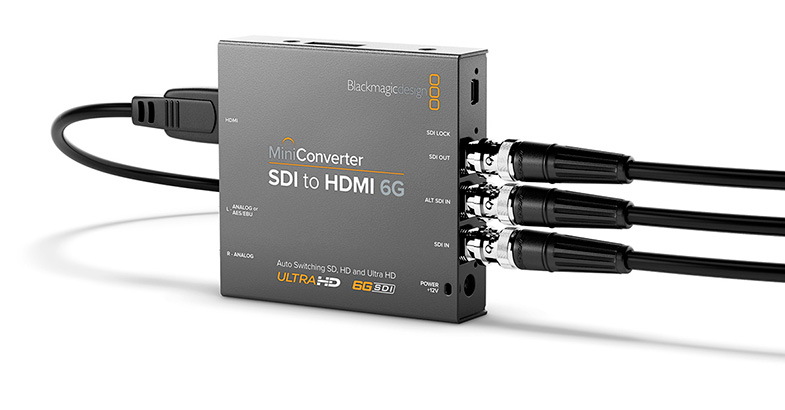
Lower price for USB-powered Micro Converters!
Blackmagic Design also announced new lower-cost USB-powered Micro Converters, repacked without the power supply so customers can use the power supplies they already own. The new repackaged Micro Converter HDMI to SDI (35 EUR ex. VAT), and the Micro Converter SDI to HDMI (39 EUR ex. VAT) are available now. The existing models, which include the micro converter and an AC power supply, have also been reduced in price. The Micro Converter HDMI to SDI wPSU can now be purchased for 47 EUR ex. VAT, and Micro Converter SDI to HDMI wPSU can now be purchased for 50 EUR ex. VAT.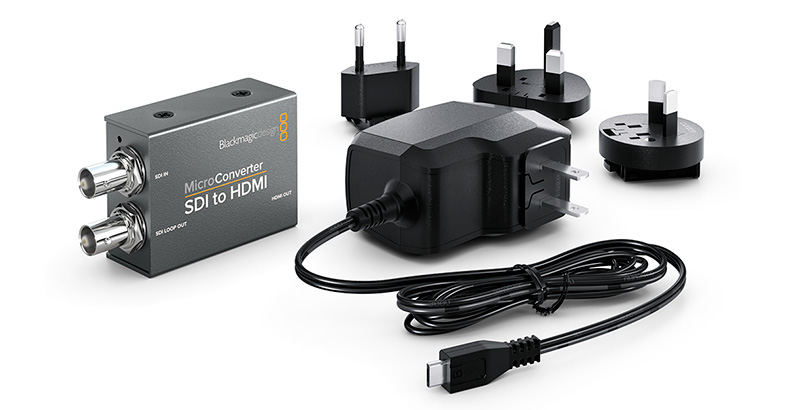
Blackmagic Camera 4.7 Update for Micro Studio and Micro Cinema Cameras
The newly Blackmagic Camera 4.7 Update for Blackmagic Micro Studio Camera 4K and Blackmagic Micro Cinema Camera adds new video formats, dramatically improved sensor performance, new gain settings, RAW output via SDI, and new control options for operating the cameras remotely. The update gives Blackmagic Micro Studio Camera 4K customers new 720p format support at 50, 59.94 and 60 frames per second. It also improves image processing on the Blackmagic Micro Studio Camera 4K (additional 2 stops), supports PTZ communication through VISCA; and also adds new S.Bus commands to both the Micro Studio Camera 4K and the Micro Cinema Camera. Customers using the Blackmagic Micro Cinema Camera also get timecode output support via HDMI, along with record start and stop triggers on HDMI output.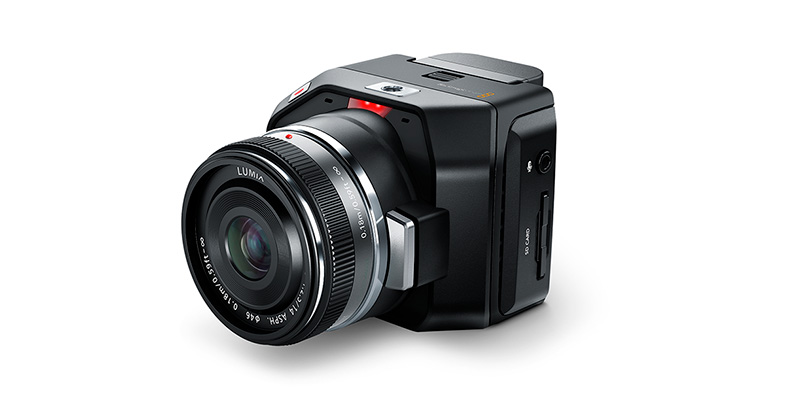
DeckLink 8K Pro with Quad Link 12G‑SDI
Blackmagic Design's DeckLink 8K Pro is a new high performance capture and playback card featuring quad link 12G‑SDI to allow real time high resolution 8K workflows. The DeckLink 8K Pro breaks new ground in high quality as it supports all film and video formats from SD all the way up to 8K DCI, 12‑bit RGB 4:4:4, plus it also handles advanced color spaces such as Rec. 2020 for higher dynamic range. DeckLink 8K also handles a massive 64 channels of audio, stereoscopic 3D, high frame rates and more. DeckLink 8K Pro will be available in early January for 555 EUR ex. VAT. In addition, Blackmagic Design has also announced a new low price of 765 EUR ex. VAT for DeckLink 4K Extreme 12G.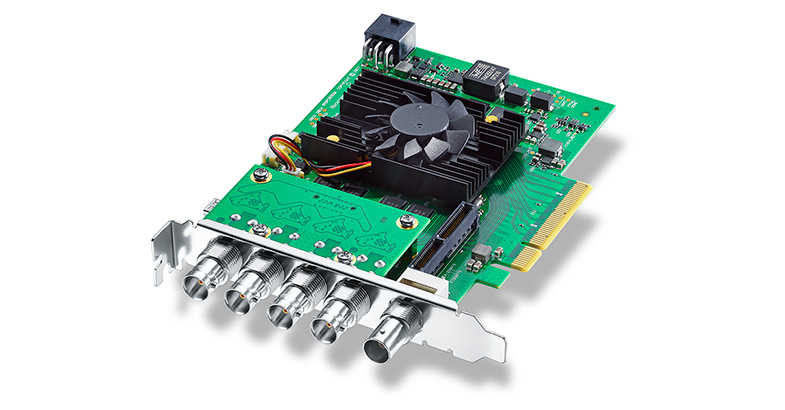
Date: 15. 11. 2017,
Category: News
FULL ARTICLE
What CFast cards should I use with the Blackmagic URSA Mini and URSA Mini Pro cameras?
The following CFast 2.0 cards are recommended for 2160p RAW up to 30 fps:
Angelbird AVpro CF XT 256GB
Angelbird AVpro CF XT 512GB
KomputerBay 3400x CFast 2.0 Card 64GB
KomputerBay 3400x CFast 2.0 Card 128GB
KomputerBay 3600x CFast 2.0 Card 64GB
Lexar Professional 3500x 128GB
Lexar Professional 3500x 256GB
Lexar Professional 3600x 128GB
Lexar Professional 3600x256GB
SanDisk Extreme Pro. SDCFSP-128G-x46D 128GB
SanDisk Extreme Pro. SDCFSP-256G-x46D 256GB
Transcend CFX650. TS128GCFX650 128GB
Transcend CFX650. TS256GCFX650 256GB
Transcend CFX650. TS128GCFX650BM 128GB
Transcend CFX650. TS256GCFX650BM 256GB
Wise CFast 2.0 3400x 128GB
Wise CFast 2.0 3400x 256GB
Wise CFast 2.0 3500x 512GB
The following CFast 2.0 cards are recommended for 4K RAW up to 30 fps but have been discontinued by the manufacturer:
Angelbird AVpro CF 160GB
Angelbird AVpro CF 240GB
Lexar Professional 3400x 128GB
Lexar Professional 3400x 256GB
The following CFast 2.0 cards are recommended for 2160p ProRes 422 HQ up to 60 fps:
Angelbird AVpro CF XT 256GB
Angelbird AVpro CF XT 512GB
KomputerBay 3400x CFast 2.0 Card 64GB
KomputerBay 3400x CFast 2.0 Card 128GB
KomputerBay 3600x CFast 2.0 Card 64GB
Lexar Professional 3500x 64GB
Lexar Professional 3500x 128GB
Lexar Professional 3500x 256GB
Lexar Professional 3600x 128GB
Lexar Professional 3600x 256GB
SanDisk Extreme Pro. SDCFSP-128G-x46D 128GB
SanDisk Extreme Pro. SDCFSP-256G-x46D 256GB
Silicon Power CFX310 256GB
Transcend CFX650. TS128GCFX650 128GB
Transcend CFX650. TS256GCFX650 256GB
Transcend CFX650. TS128GCFX650BM 128GB
Transcend CFX650. TS256GCFX650BM 256GB
Wise CFast 2.0 3400x 128GB
Wise CFast 2.0 3400x 256GB
Wise CFast 2.0 3500x 512GB
The following CFast 2.0 cards are recommended for 4K ProRes 422 HQ up to 60 fps but have been discontinued by the manufacturer:
Angelbird AVpro CF 160GB
Angelbird AVpro CF 240GB
Lexar Professional 3400x 32GB
Lexar Professional 3400x 64GB
Lexar Professional 3400x 128GB
Lexar Professional 3400x 256GB
What SD cards should I use with the Blackmagic URSA Mini Pro?
The following SD cards are recommended for recording up to 2160p30 ProRes HQ:
Angelbird AV Pro 300MB/s UHS-II 64GB
Angelbird AV Pro 300MB/s UHS-II 128GB
Delkin Devices UHS-II 250MB/s SDHC 32GB
SanDisk Extreme Pro UHS-II 280MB/s SDHC 32GB
SanDisk Extreme Pro UHS-II 280MB/s SDXC 64GB
SanDisk Extreme Pro UHS-II 300MB/s SDHC 32GB
SanDisk Extreme Pro UHS-II 300MB/s SDXC 128GB
Sony SF-G64 300MB/s UHS-II 64GB
Sony SF-G128 300MB/s UHS-II 128GB
Toshiba Exercia Pro UHS-II 270MB/s SDXC 64GB
Transcend Ultimate UHS-II 180MB/s SDXC 64GB
Wise 285MB/s UHS-II SDXC 64GB
The following SD cards are recommended for RAW Lossless recording up to 1080p30:
Angelbird AV Pro 300MB/s UHS-II 64GB
Angelbird AV Pro 300MB/s UHS-II 128GB
Delkin Devices UHS-II 250MB/s SDHC 32GB
Lexar Professional 2000x UHS-II 300MB/s SDHC 32GB
Lexar Professional 2000x UHS-II 300MB/s SDXC 64GB
SanDisk Extreme Pro UHS-I 95MB/s SDXC 64GB
SanDisk Extreme Pro UHS-I 95MB/s SDXC 128GB
SanDisk Extreme Pro UHS-II 280MB/s SDXC 64GB
Sony SF-G64 300MB/s UHS-II 64GB
Sony SF-G128 300MB/s UHS-II 128GB
Toshiba Exercia Pro UHS-II 270MB/s SDXC 64GB
Toshiba Exercia Pro UHS-II 270MB/s SDXC 128GB
Toshiba Exercia Pro UHS-II 270MB/s SDXC 256GB
Transcend Ultimate UHS-II 180MB/s SDXC 64GB
The following SD cards are recommended for recording up to 1080p60 ProRes HQ:
Angelbird AV Pro 300MB/s UHS-II 64GB
Angelbird AV Pro 300MB/s UHS-II 128GB
Delkin Devices UHS-II 250MB/s SDHC 32GB
Lexar Professional 2000x UHS-II 300MB/s SDHC 32GB
Lexar Professional 2000x UHS-II 300MB/s SDXC 64GB
Lexar Professional 1000x UHS-II 150MB/s SDXC 64GB
SanDisk Extreme Pro UHS-I 95MB/s SDXC 64GB
SanDisk Extreme Pro UHS-I 95MB/s SDXC 128GB
SanDisk Extreme Pro UHS-II 280MB/s SDHC 32GB
SanDisk Extreme Pro UHS-II 280MB/s SDXC 64GB
SanDisk Extreme Pro UHS-II 300MB/s SDXC 64GB
SanDisk Extreme Pro UHS-II 300MB/s SDXC 128GB
Sony SF-G64 300MB/s UHS-II 64GB
Sony SF-G128 300MB/s UHS-II 128GB
Toshiba Exercia Pro UHS-II 270MB/s SDXC 64GB
Toshiba Exercia Pro UHS-II 270MB/s SDXC 128GB
Toshiba Exercia Pro UHS-II 270MB/s SDXC 256GB
Transcend Ultimate UHS-II 180MB/s SDXC 64GB
Wise 285MB/s UHS-II SDXC 64GB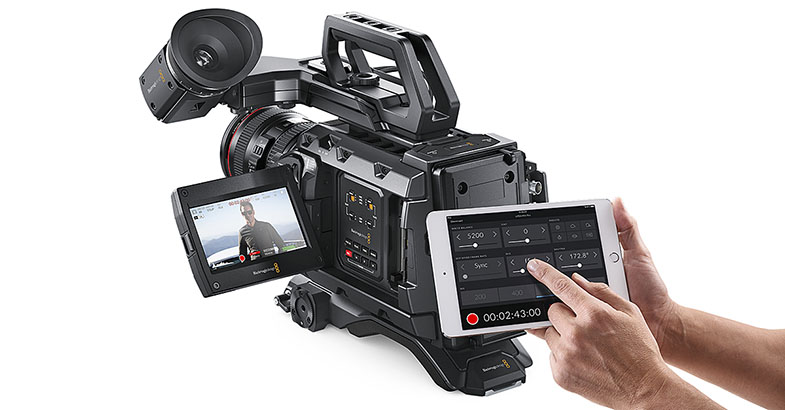
Date: 14. 11. 2017,
Category: News
FULL ARTICLE
This software update adds support for video scopes on the Edit page, user preference presets, improved text rendering, the ability to drag a DaVinci Resolve .drp project file directly into the project manager, and to generate and rediscover optimized proxies in collaborative projects. On the Color page, there is now support for groups in collaborative projects and improved display node graph functionality. For Fairlight Audio, this update adds new linked group support for audio tracks, enhanced AC-3 audio decoding on Mac and Windows. In addition, this update adds support for RED IPP2 color processing and GoPro CineForm as caching and optimized media formats, render cache improvements, and a new Project Server application along with general performance and stability enhancements. The full list of improvements is here.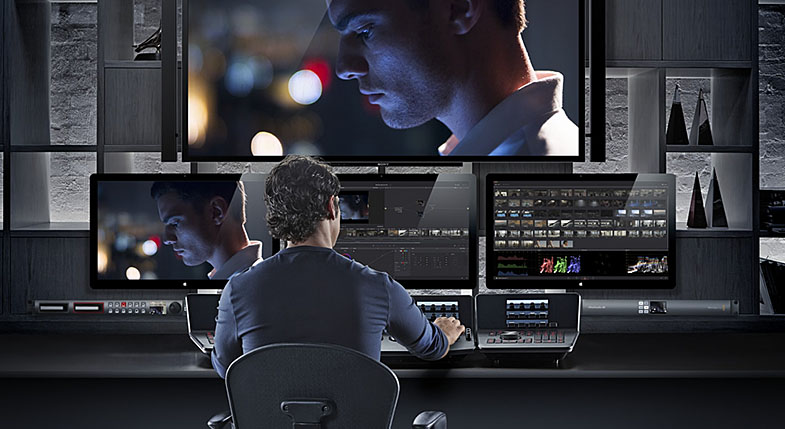
Date: 13. 11. 2017,
Category: News
FULL ARTICLE
Titler Pro 6 helps users get a quick start and easily create stunning 3D titles with complex animations for any budget. Save time and access over 200 built-in styles and templates. Choose one as a starting point to customize inside the Title Designer, which now includes the entire lineup of NewBlue's effects and transitions. Be more efficient with the multi-title management system that lets users manage dozens of titles at once. Whether it's navigating from title to title or making edits to multiple titles at once, Titler Pro 6 brings a new level of efficiency to every editor's workflow!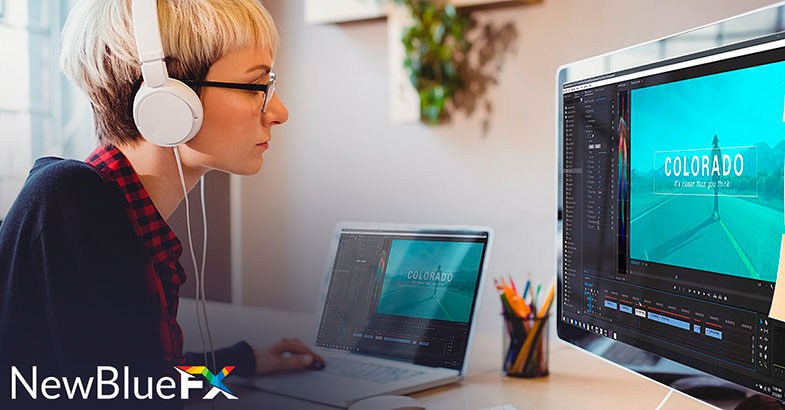
Date: 10. 11. 2017,
Category: News
FULL ARTICLE
Documentary filmmaker, Griffin Hammond, recently made a video about our new SGM-250CX Compact Cine Microphone. He put it up against his long-owned Rode NTG-3 microphone, which retails for 3 times as much, and found the sound quality to be pretty much equal. But don’t just take his word for it. Check out the video. Can you hear a $500 difference? Aside from the terrific sound quality and value, other features of the SGM-250CX such as its compact size, excellent side-rejection, attached XLR cable and included shock mount, make it a great choice for on-camera mounting with mirrorless cameras, like the Panasonic GH5, or cinema cameras like the Sony FS7, BlackMagic Ursa Mini or the Panasonic EVA1.
Date: 09. 11. 2017,
Category: News
FULL ARTICLE