
 CZ
CZ SK
SK HU
HU AT
AT DE
DE ES
ES SI
SI HR
HR
Nothing in the basket.

- Search
-
Login

-
0
Comparison
Add products to compare, then they will appear here and you can compare parameters.
-
0
0 €
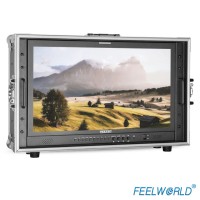
Feelworld P238-9HSD-CO
SKU: P238-9HSD-CO
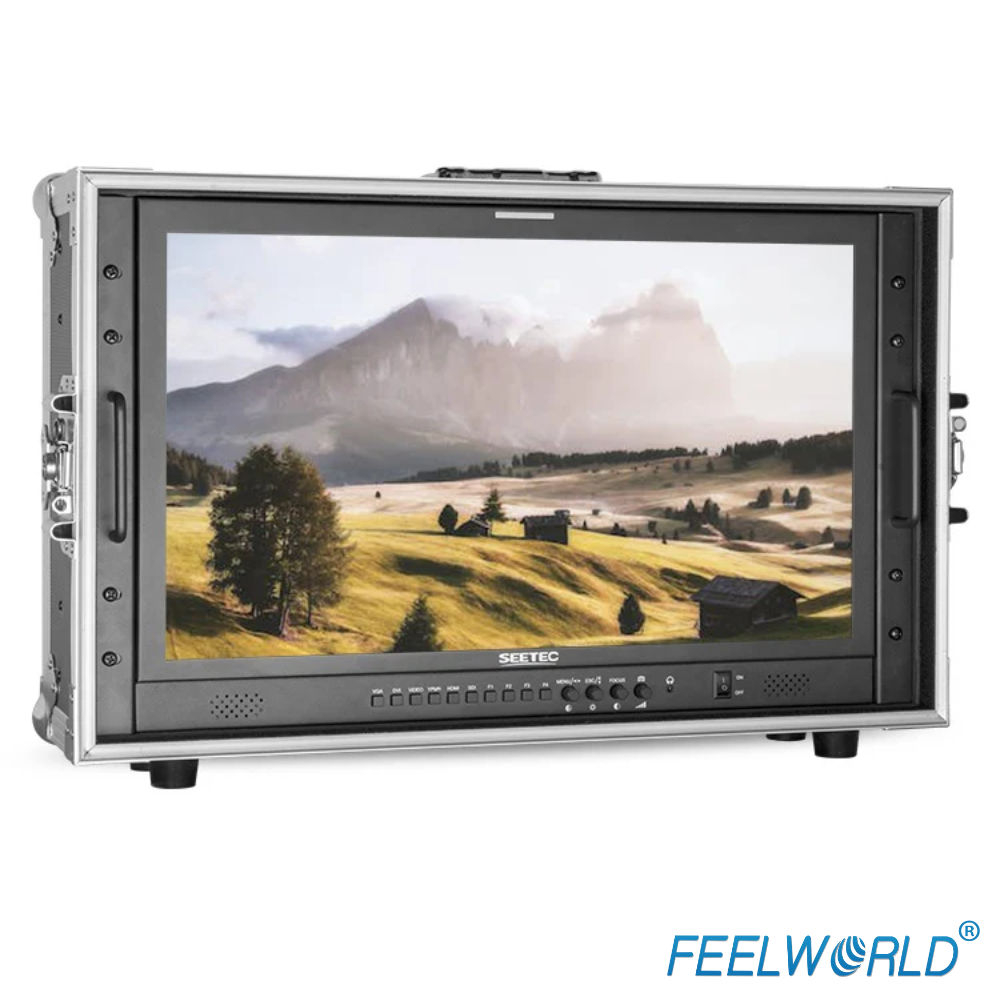
The SEETEC P238-9HSD-CO is a 23.8" Full HD director monitor permanently seated in an aviation aluminium case — nothing to pack before a move, and ready as soon as the covers come off. The 1920 × 1080 IPS panel covers 72% of the NTSC colour space, follows the Rec.709 standard, is calibrated at the factory, and a 178° viewing angle keeps colour true for people…
1 219 € with VAT
1 007.44 € without VAT
Personal pickup: Tomorrow from 09:00
Shipment day: Tomorrow
Shipment day: Tomorrow
In stock 1 pcs
Praha 1 pcs
Praha 1 pcs
Top accessories for Feelworld P238-9HSD-CO
PremiumCord optical fiber High Speed with Ether. 4K@60Hz kabel 3m, M/M, gold-plated connectors
The Optical HDMI 2.0 Ultra High-Speed 4K@60Hz cable is used to connect two audio/video
38 €
In stock > 5 pcs
Infinitek L-4.5CHWS Flexible 4K UHD, 12G-SDI Cable, BNC-BNC 4m
Canare L-4.5CHWS flexible and durable 75 ohm 4,2 mm "Low Loss" koaxial SD/HD/3G/12G-SDI
27 €
on request
Product description
SPECIFICATIONS
PACKAGE CONTENT
Product description
The SEETEC P238-9HSD-CO is a 23.8" Full HD director monitor permanently seated in an aviation aluminium case — nothing to pack before a move, and ready as soon as the covers come off. The 1920 × 1080 IPS panel covers 72% of the NTSC colour space, follows the Rec.709 standard, is calibrated at the factory, and a 178° viewing angle keeps colour true for people standing off to the side. The rear carries 3G-SDI, HDMI up to 4K UHD, component YPbPr, composite video, DVI-I and L/R audio inputs, each with a loop-through output. The tally lights up red, green or yellow at the front and at the rear. Power comes from the supplied adapter, from an XLR connector or from a battery on the factory-fitted V-mount plate.
A 23.8" director monitor in an aluminium case
A big screen that arrives on set ready to work
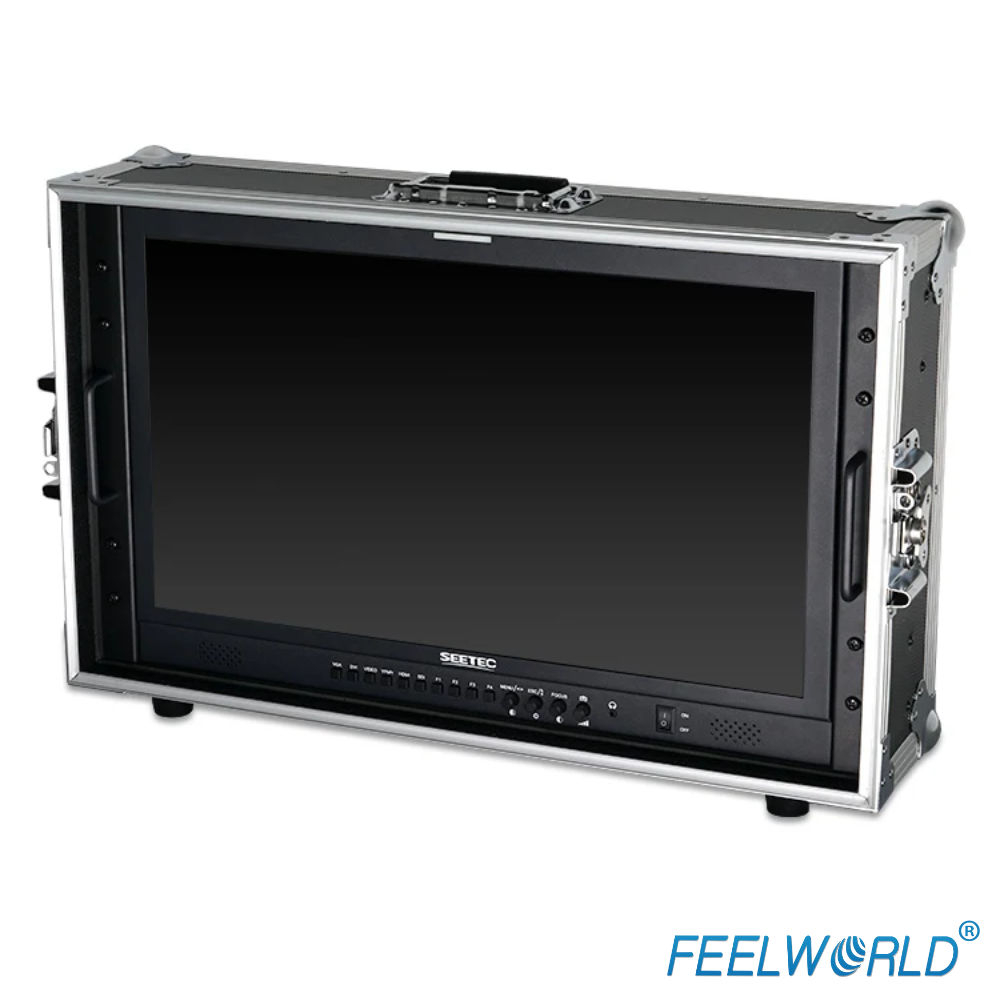
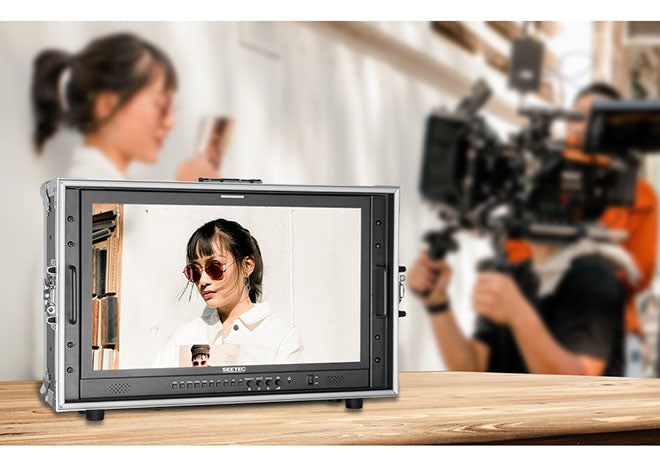
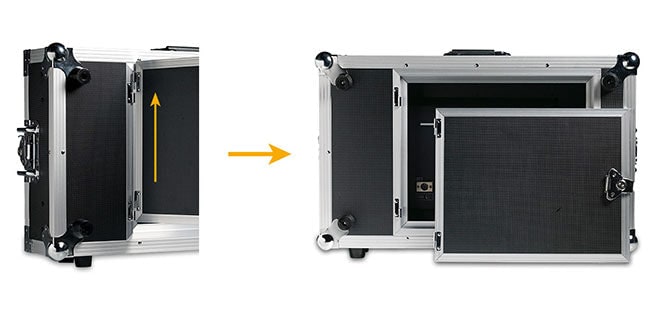
The P238-9HSD-CO is not an on-camera monitor but a director monitor — a large screen the director, the client and the sound recordist can all watch at once. The panel is permanently seated in an aviation aluminium case: nothing needs packing before a move, it travels in the same shell it works in, and it is ready moments after the front cover comes off.
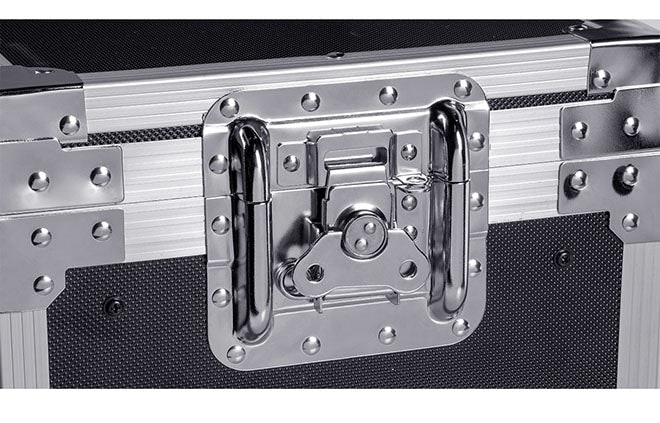
The case has damping feet on the corners, aluminium extrusions around the edges, and butterfly locks holding the front and rear covers. They come off without tools, so the monitor goes from travel state to working state in moments and closes up just as quickly.
The monitor itself, without the case, measures 567 × 372 × 46.7 mm and weighs 5.9 kg — the case around it naturally adds to both. It suits the OB van, the gallery, the set and the car park outside the venue, anywhere an ordinary studio monitor would have to travel in a second crate.
A Full HD IPS panel with Rec.709 colour
178° viewing angle and factory calibration
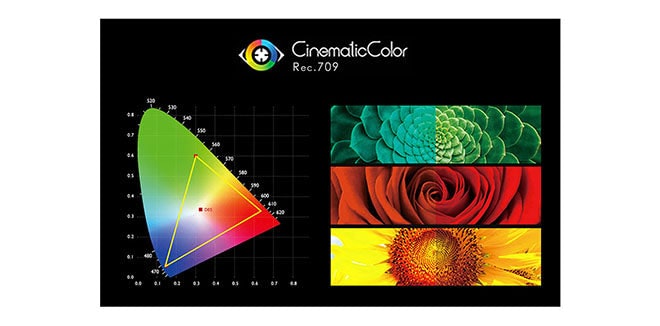
The IPS panel runs 1920 × 1080 and shows 16.7 million colours (8-bit). It covers 72% of the NTSC colour space, a 1000:1 contrast ratio holds detail in both highlights and shadows, and 250 cd/m² of brightness suits a director monitor used indoors and in shade.
Colour follows the professional Rec.709 standard and every unit is calibrated with a measuring instrument at the factory. You see the colours as they are instead of guessing at them later in post.
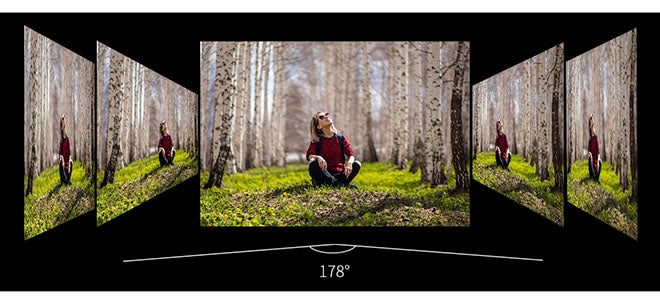
The viewing angle is 89° to each side horizontally and vertically, so 178° in total. The picture stays true for people standing off to the side as well — and that matters more on a screen the whole crew watches than on an on-camera monitor.
Assist tools and controls within reach
Focus, channel check and four custom shortcuts
Focus peaking outlines whatever is sharp in red, and against a monochrome image it shows at a glance. Check field shows the picture in the red, green, blue or grey channel alone, pixel-to-pixel displays the signal without rescaling, and camera mode adapts the picture for working with a stills camera.
On top of that: a centre marker, safe areas at 80, 85, 90, 93 and 96% plus a 2.35:1 marker, image flip horizontally, vertically or both at once, image freeze, zoom of the whole picture or of a crop up, down and sideways, and a custom colour temperature. Zoom and aspect ratio selection do not work on a 4K input.
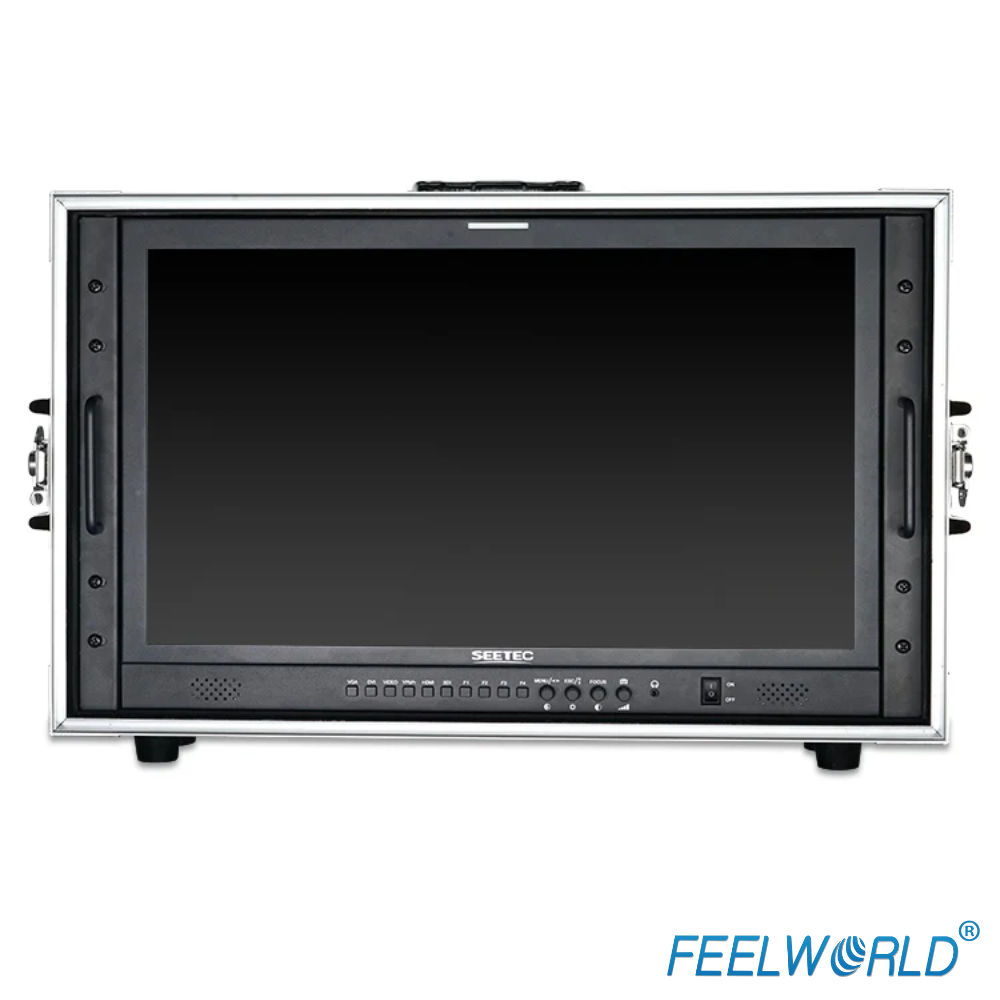
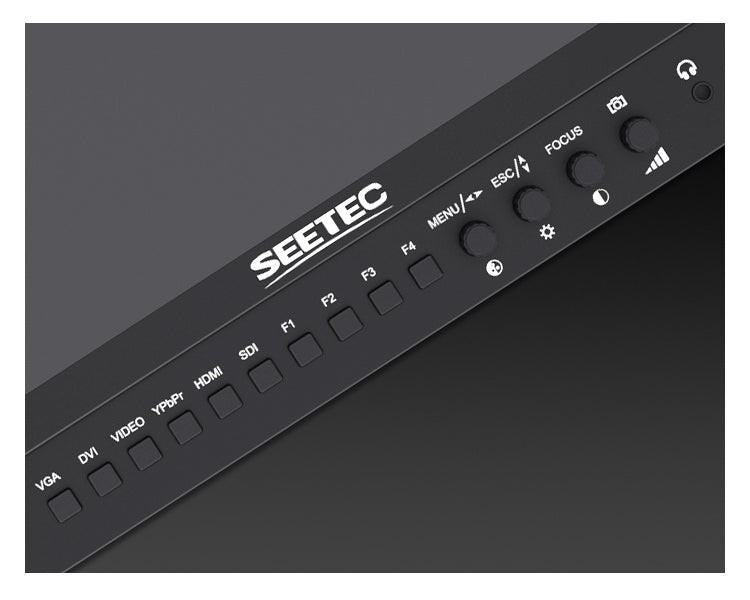
A row of source buttons sits on the front — VGA, DVI, VIDEO, YPbPr, HDMI and SDI — so the source switches with one press, and four F1 to F4 shortcuts take whatever you use most. Knobs on the front panel change brightness, contrast or volume without going into the menu. The menu comes in ten languages: Chinese simplified and traditional, English, Spanish, Japanese, German, French, Portuguese, Dutch and Turkish.
Inputs and outputs for HD, SD and analogue
3G-SDI, 4K HDMI, component, composite and DVI-I
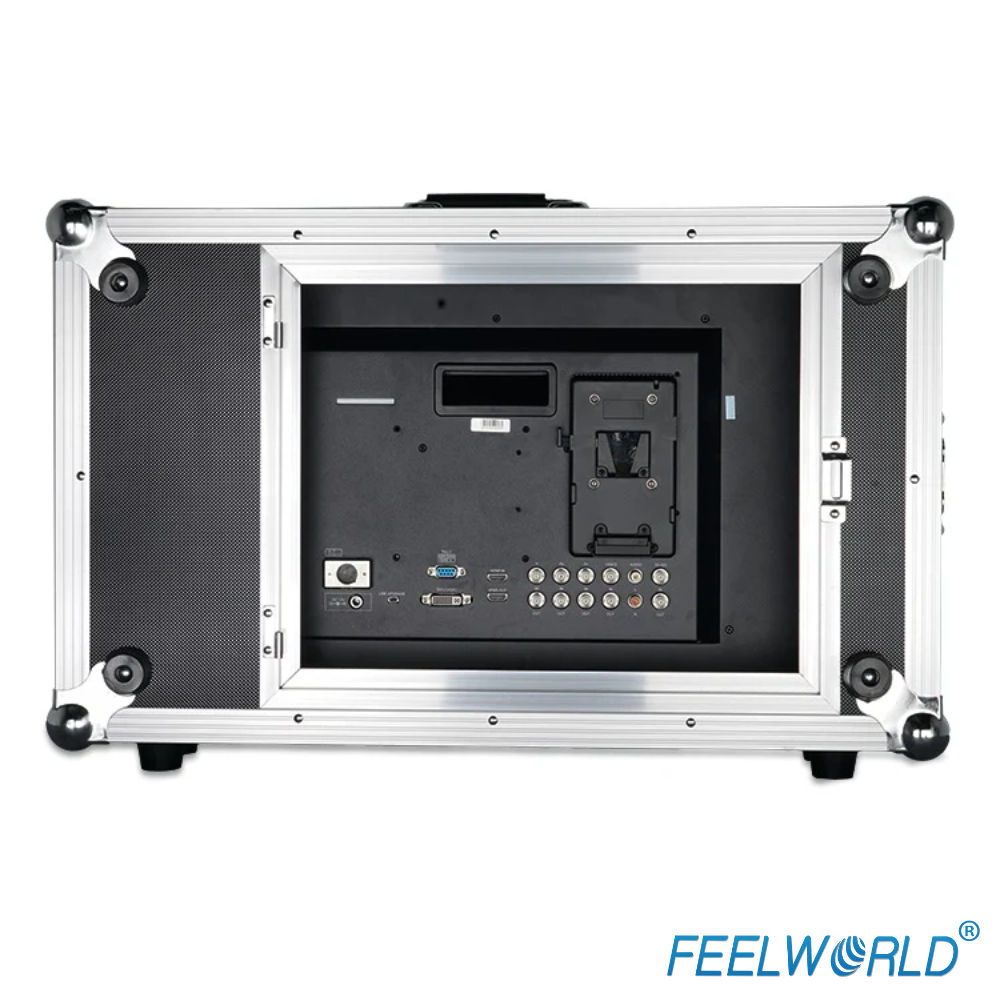
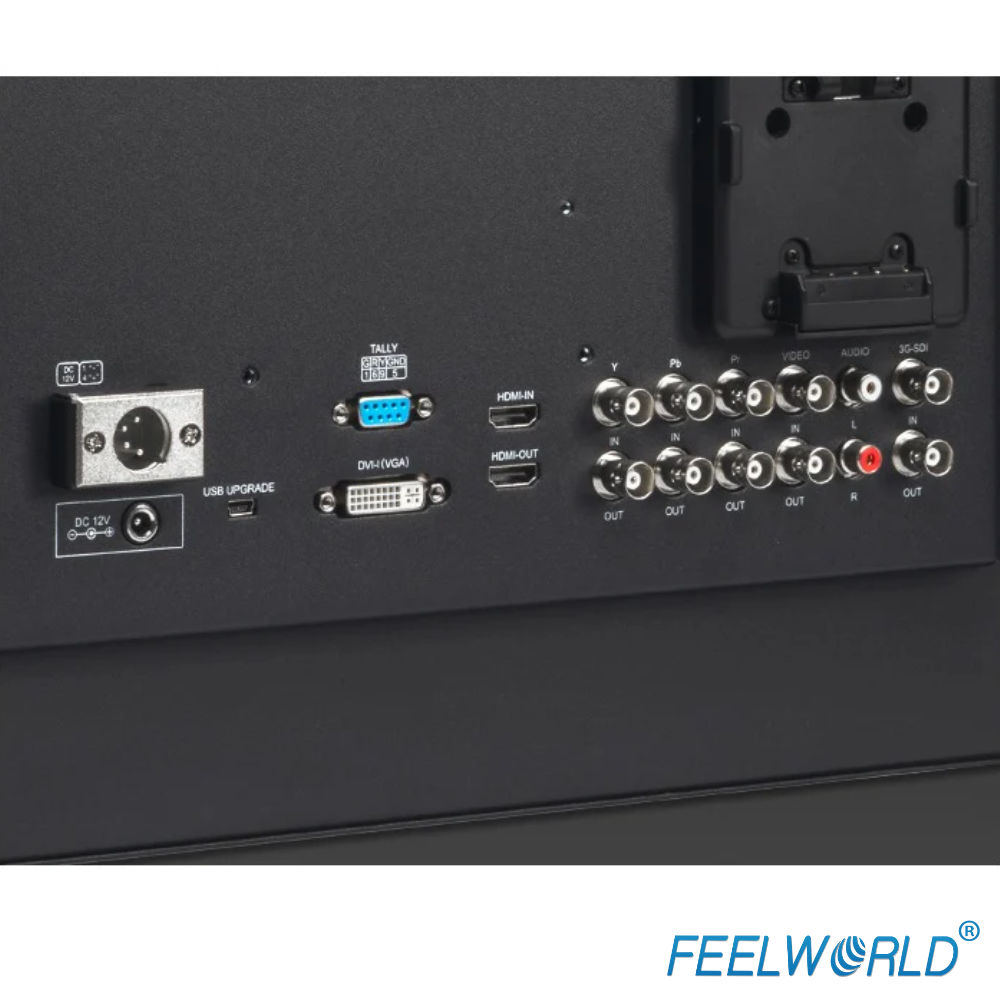
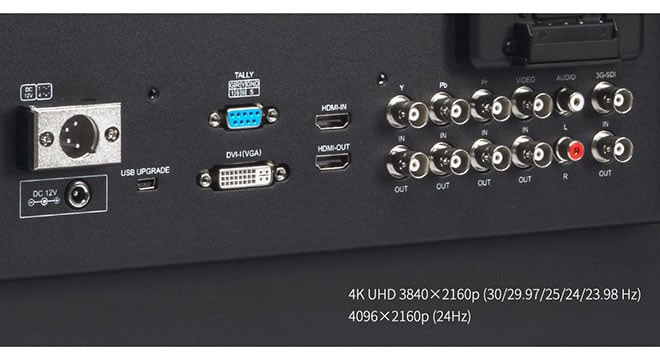
The rear carries a 3G-SDI input on BNC, HDMI, component YPbPr on three BNC connectors, composite video on BNC, DVI-I and L/R audio on two RCA sockets side by side. The monitor handles a current camera and gear that has served the studio for years alike.
Loop-through outputs for 3G-SDI, HDMI, YPbPr and composite video pass the signal on unchanged — to another monitor, to a recorder or to the edit suite. Over HDMI it accepts up to 4K UHD 3840 × 2160 at 30 Hz and 4096 × 2160 at 24 Hz; over 3G-SDI, 1080p up to 60 frames per second.
Audio comes from a built-in speaker and a 3.5 mm stereo headphone output on the front panel. The USB socket on the rear panel is for firmware updates.
Tally and power
Three-colour signalling, adapter, XLR or V-mount
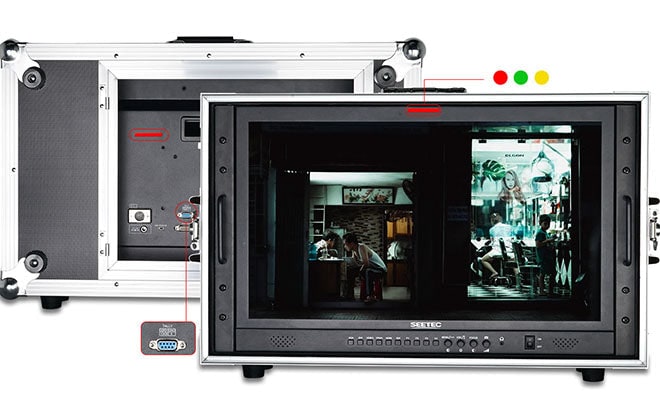
The tally lights up red, green or yellow at the front and at the rear, so the crew can tell when you are recording, when you are on air and which camera is cued up on the switcher preview. It connects through a nine-pin connector on the rear panel, and a tally kit is included.
Power comes from the DC 12 V barrel socket or from a four-pin XLR connector; the supplied power adapter delivers 3 A. The input voltage range is 9 to 24 V and consumption is 24 W at most.
A V-mount battery plate is factory-fitted on the rear, so the monitor runs off a battery too. An Anton Bauer (Gold Mount) battery plate is optional and is not included. Batteries are not included.
A case that never needs packing
Butterfly locks, a handle and a sun-hood
Butterfly locks in polished steel hold the front and rear covers. They release without tools, and the monitor is then reachable from both sides — the picture at the front, the connectors and the battery plate at the back.
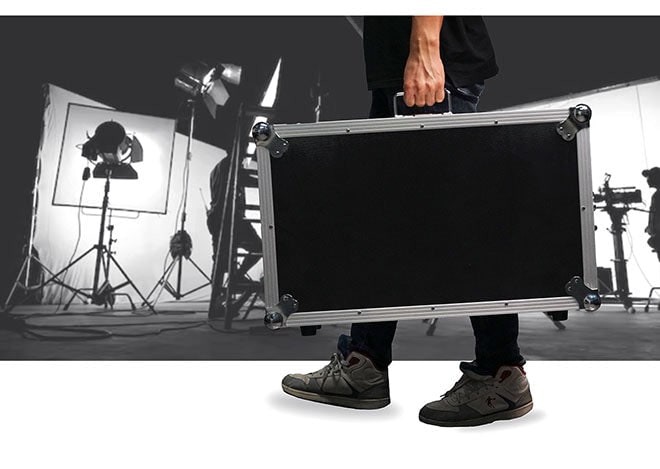
The handle on top is wide and softly shaped, so the case carries in one hand even on the longer walk from the car to the set. Aluminium extrusions, corner feet and riveted corners hold the whole thing together through ordinary handling in the field.
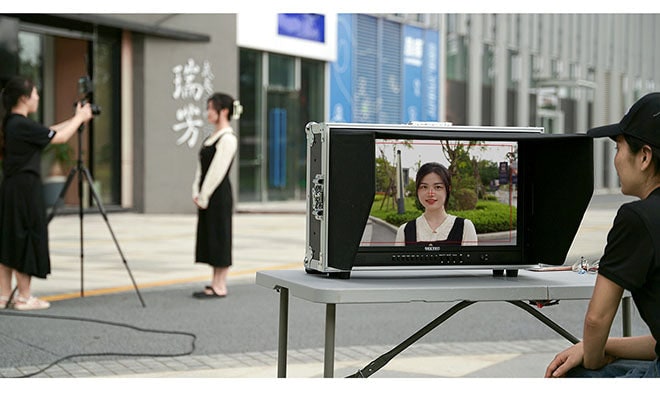
The monitor has a removable sun-hood that shades the screen from above and from both sides; the manufacturer intends it for shooting outdoors. The monitor works from −10 to 50 °C and stores from −20 to 60 °C.
PACKAGE CONTENT
- P238-9HSD-CO monitor
- Mini HDMI cable
- V-mount battery plate (factory-fitted on the unit)
- 3 A power adapter
- Tally kit
- Aluminium case
- Operation manual
SPECIFICATIONS
- Model: P238-9HSD-CO
- Screen size: 23.8" IPS
- Resolution: 1920 × 1080 pixels
- Pixel pitch: 0.2745 × 0.2745 mm
- Aspect ratio: 16:9
- Brightness: 250 cd/m²
- Contrast ratio: 1000:1
- Colours: 16.7 million (8-bit)
- Colour gamut: 72% NTSC, Rec.709 standard, calibrated at the factory
- Backlight: LED
- Viewing angle: 178° — 89°/89° horizontal, 89°/89° vertical
- Inputs: 1× 3G-SDI (BNC), 1× HDMI, 3× component YPbPr (BNC), 1× composite video (BNC), 1× DVI-I, 2× audio L/R (RCA)
- Outputs: loop-through — 1× 3G-SDI (BNC), 1× HDMI, 3× component YPbPr (BNC), 1× composite video (BNC)
- Audio: built-in speaker, 3.5 mm headphone output on the front panel
- SDI formats: 480i, 576i, 720p (23.98 to 60), 1080i (50/59.94/60), 1080p (23.98 to 60 including 24sF and 23.98sF)
- HDMI formats: 480i, 576i, 480p, 576p, 720p, 1080i, 1080p, 4K UHD 3840 × 2160p (23.98/24/25/29.97/30 Hz) and 4096 × 2160p (24 Hz)
- Tally: three-colour (red, green, yellow) front and rear, nine-pin connector on the rear panel
- Video assist: focus peaking, check field (red, green, blue, grey), pixel to pixel, camera mode, centre marker, safe areas 80/85/90/93/96% and 2.35:1, image flip (horizontal, vertical, both), image freeze, zoom of the whole picture or a crop, aspect ratio selection, custom colour temperature — zoom and aspect ratio do not work on a 4K input
- Menu languages: 10
- Power: 9 to 24 V DC, 24 W at most — DC 12 V barrel socket or four-pin XLR, 3 A power adapter supplied
- Battery plate: V-mount, factory-fitted on the unit; Anton Bauer (Gold Mount) battery plate optional, not included (batteries not included)
- Firmware update: USB socket on the rear panel
- Case: aviation aluminium, removable front and rear covers on butterfly locks, handle on top
- Monitor dimensions: 567 × 372 × 46.7 mm (without the case)
- Monitor weight: 5.9 kg (without the case)
- Operating temperature: −10 to 50 °C
- Storage temperature: −20 to 60 °C
WE RECOMMEND
The following accessories go with the Feelworld P238-9HSD-CO. They are picked according to the connectors and power supply the product actually has.
HDMI cables – Cables with a full-size HDMI type A connector for linking the monitor to a camera, a switcher or a computer.
SDI cables – Flexible BNC-to-BNC coaxial cables to the gallery or to the camera; the monitor accepts 3G-SDI.
Parameters
| Manufacturer: | Feelworld |
| Category: | Studio Monitors |
Main parameters
| Size | 23.8" |
| Monitor inputs | HDMI · 4K HDMI · Composite Video · 3G-SDI · DVI · Component YPbPr/RGB |
| Luminosity | 250cd/m2 |
| Panel resolution | 1920x1080 |
| Monitor power supply | V-Mount · Gold Mount · 12V XLR · 12V |
Other parameters
| Tally | Yes |
| Other features | Resilient |
GPSR
TB EC REP EUROPEAN SL
Business address: Calle Marcelo Usera 60, LC. Madrid 28026 Spain
ACCESSORIES (2)
ACCESSORIES (2)
PremiumCord optical fiber High Speed with Ether. 4K@60Hz kabel 3m, M/M, gold-plated connectors
The Optical HDMI 2.0 Ultra High-Speed 4K@60Hz cable is used to connect two audio/video
38 €
In stock > 5 pcs
Infinitek L-4.5CHWS Flexible 4K UHD, 12G-SDI Cable, BNC-BNC 4m
Canare L-4.5CHWS flexible and durable 75 ohm 4,2 mm "Low Loss" koaxial SD/HD/3G/12G-SDI
27 €
on request
Alternative (5)
Alternative (5)
Blackmagic Design SmartView 4K G3
Promotion
Blackmagic Design SmartView 4K G3 is an Ultra HD broadcast monitor with both 12G‑SDI
1 383.16 €
1 389.08 €
In stock 1 pcs
Desview D21-HB
D21 Broadcast monitor. D21 can be used with corner supports to achieve vertical screen
1 209 €
In stock 1 pcs
Lilliput RM-503S 5" 3G-SDI/HDMI Rackmount Monitor
The RM-503S 5" 3G-SDI/HDMI Rackmount Monitor from Lilliput features three 5" LED
1 069 €
14-30 days
Feelworld Seetec ATEM173S 17.3" Multiview Monitor HDMI/SDI
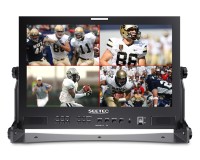
The ATEM173S is a 17.3" HDMI/SDI variant of the popular ATEM156 HDMI multiview monitor
1 099 €
on request
Lilliput BM150-4KS
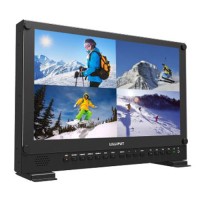
The Lilliput BM150-4KS Carry-On 4K Broadcast Monitor is a 15.6" UHD 4K monitor built
1 209 €
on request
News, training, and discounts from Syntex
Special offers and discounts for subscribers only · Free audio & video workshops · News and tips from the world of filmmaking
- Show all
Feelworld P238-9HSD-CO
The SEETEC P238-9HSD-CO is a 23.8" Full HD director monitor permanently seated in1 219 €In stock 1 pcs