
 CZ
CZ SK
SK HU
HU AT
AT DE
DE ES
ES SI
SI HR
HR
Nothing in the basket.

- Search
-
Login

-
0
Comparison
Add products to compare, then they will appear here and you can compare parameters.
-
0
0 €
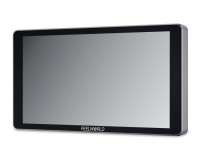
Feelworld P6X

SKU: P6X
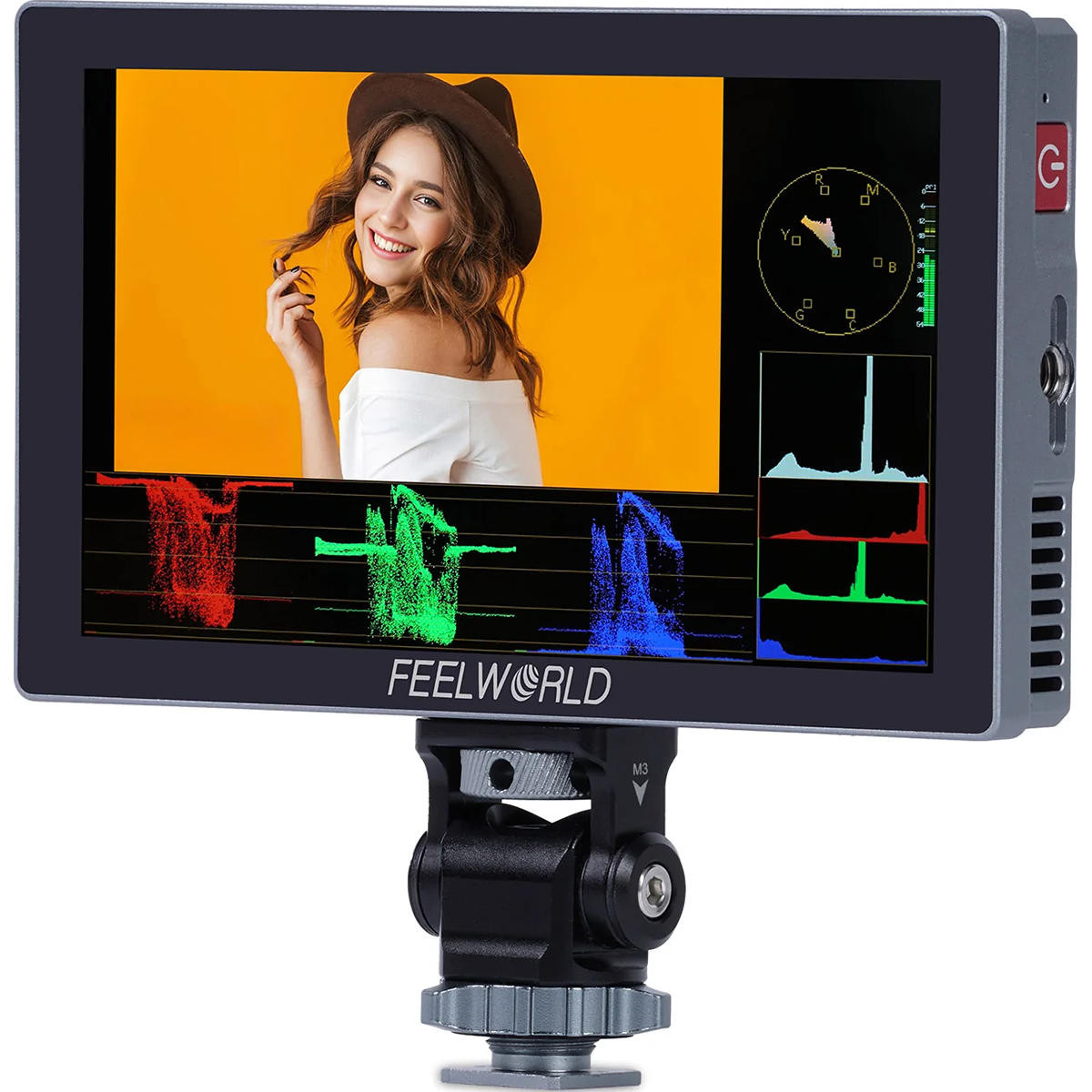
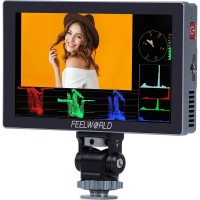
P6X is a 5.5" camera monitor with 1000 cd/m2 brightness and 1920×1080 resolution, aluminum body, touchscreen, 4K HDMI input/output and weighs only 249g.
187 € with VAT
154.55 € without VAT
Availability
on request
Top accessories for Feelworld P6X
SmallRig Desktop Shooting Magic Arm with Crab Clamp Kit 4766
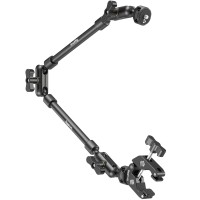
A desktop overhead setup: a 56 cm articulated magic arm, a crab clamp with swivelling
40 €
Backordered > 5 pcs
SmallRig NP-F970 USB-C Rechargeable Camera Battery (Black) (4469)
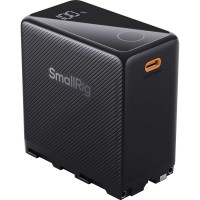
NP-F970-type battery with a 10500mAh/76.65wh capacity for extended usage, USB-C and
94 €
In stock > 5 pcs
Viltrox Battery NP-F750
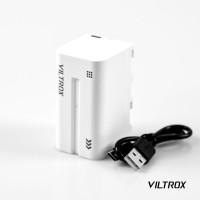
The Viltrox NP-F750 is a high-capacity, rechargeable NP-F-type Li-ion battery for
32 €
Backordered > 5 pcs
Viltrox NP-F550
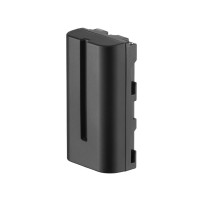
The Viltrox NP-F550 is a compact, rechargeable NP-F-type Li-ion battery for compatible
28 €
In stock > 5 pcs
SmallRig Ultra Slim 4K Mini HDMI cable 35cm (3040)
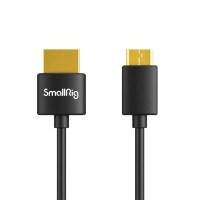
A 35 cm ultra-slim 4K HDMI cable (Mini HDMI to full HDMI) for a camera rig. HDMI
12 €
To be sent 5 pcs
SmallRig NP-F970 Camera Battery Charger 4086
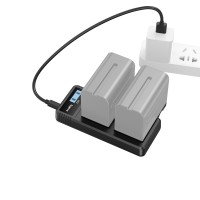
SmallRig 4086 dual-slot charger for Sony NP-F550 to NP-F970 batteries. It charges
13 €
In stock > 5 pcs
SmallRig Ultra Slim 4K HDMI Cable (D to A) 35cm 3042B
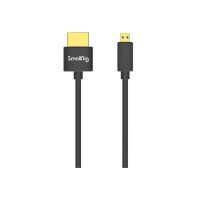
The SmallRig 3042B cable links a camera's micro HDMI (D) port to the full-size HDMI
12 €
Backordered > 5 pcs
K&F Concept 11-inch Magic Arm with Super Clamp and ARRI Locating Pins
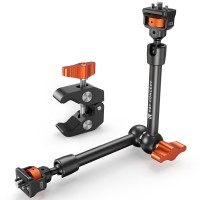
The K&F Concept kit combines a 11″ magic arm with two ball heads and a super
35 €
Backordered 1 pcs
SmallRig Articulating Arm with Double Ballheads( 1/4’’ Screw) 2070B
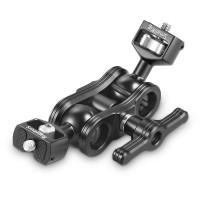
The SmallRig 2070B articulating arm carries a ball head with a 1/4"-20 screw at each
59 €
Backordered > 5 pcs
Product description
SPECIFICATIONS
PACKAGE CONTENT
Product description
P6X is a 5.5" camera monitor with 1000 cd/m2 brightness and 1920×1080 resolution, aluminum body, touchscreen, 4K HDMI input/output and weighs only 249g.
5.5" on-camera monitor
Full HD 1920 × 1080 at 1000 cd/m², 249 grams
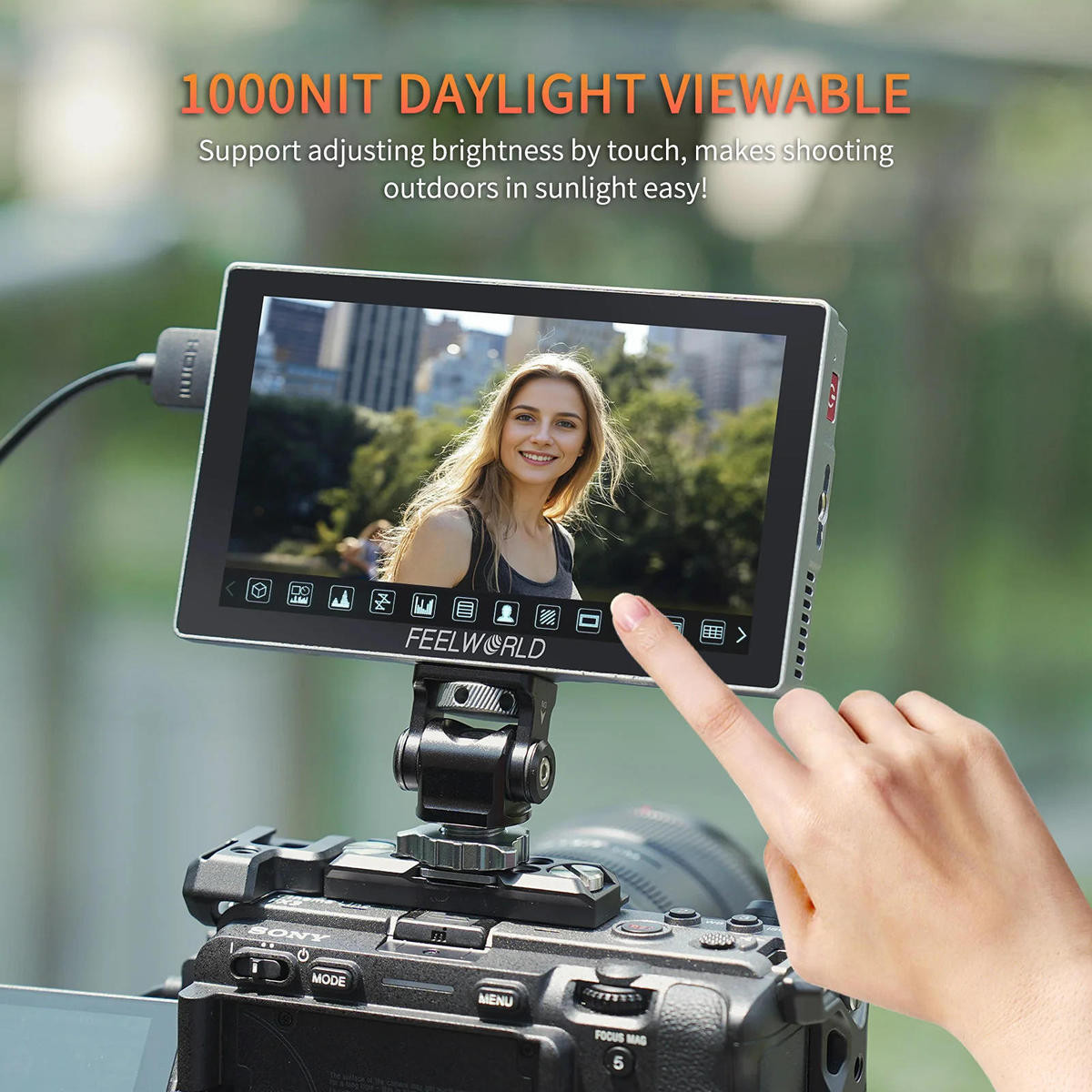
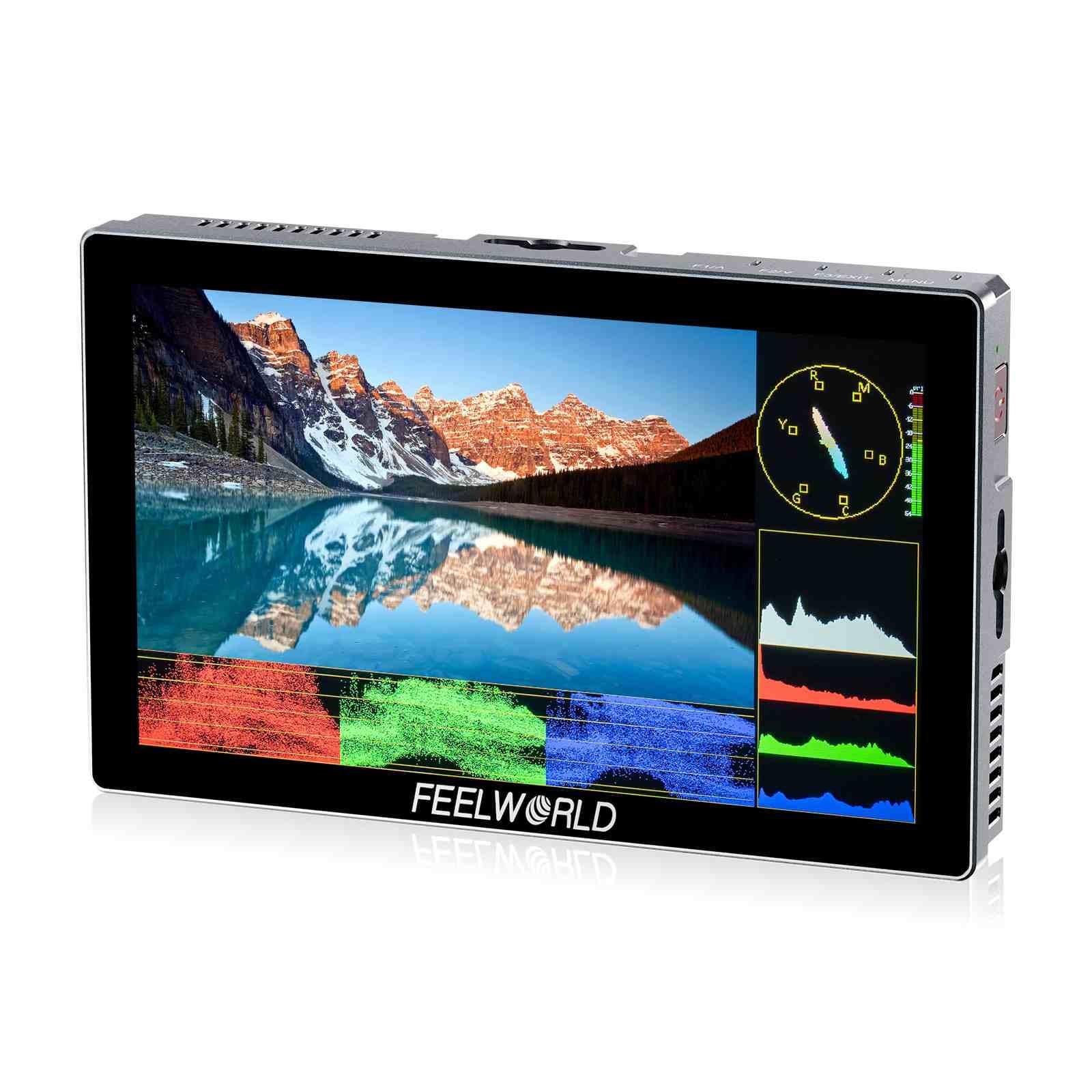
The P6X is a palm-sized field monitor. The IPS panel runs 1920 × 1080 at 1000 cd/m², so it stays readable outdoors in the sun; the body is machined from aluminium and the whole unit weighs 249 grams — light enough that a gimbal or a small mirrorless will not notice it. At 138.5 × 84.5 × 22 mm it fits the side pocket of a camera bag.
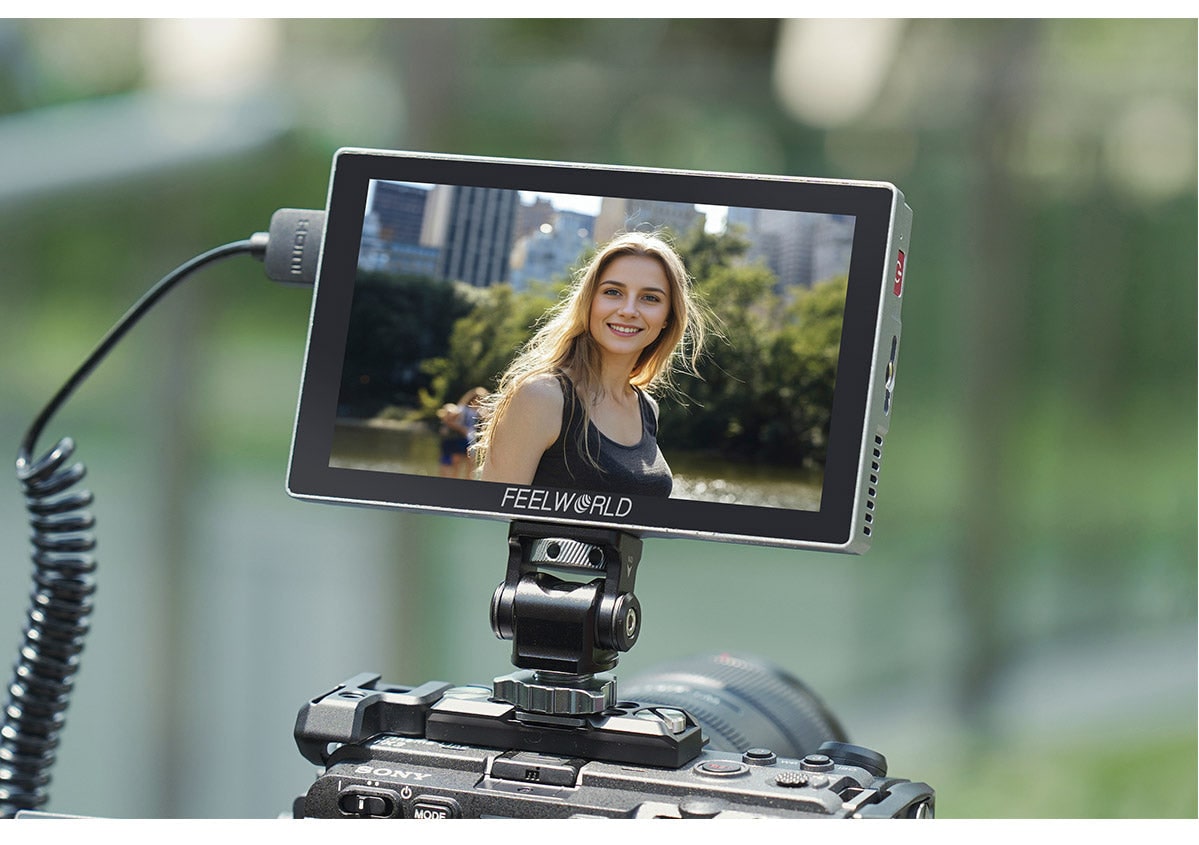
Touch and buttons alike
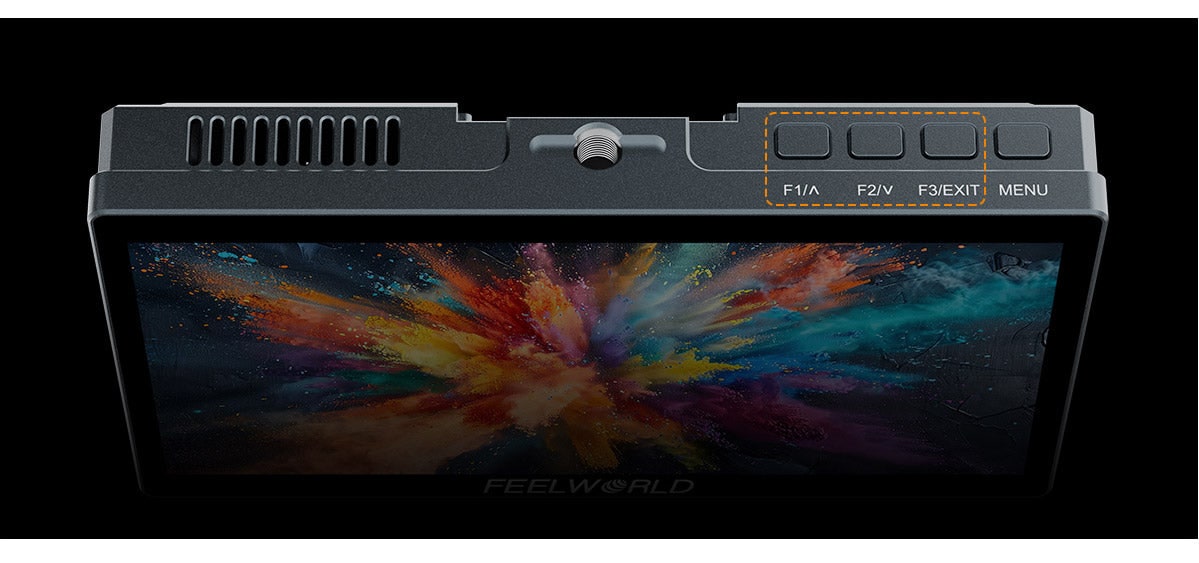
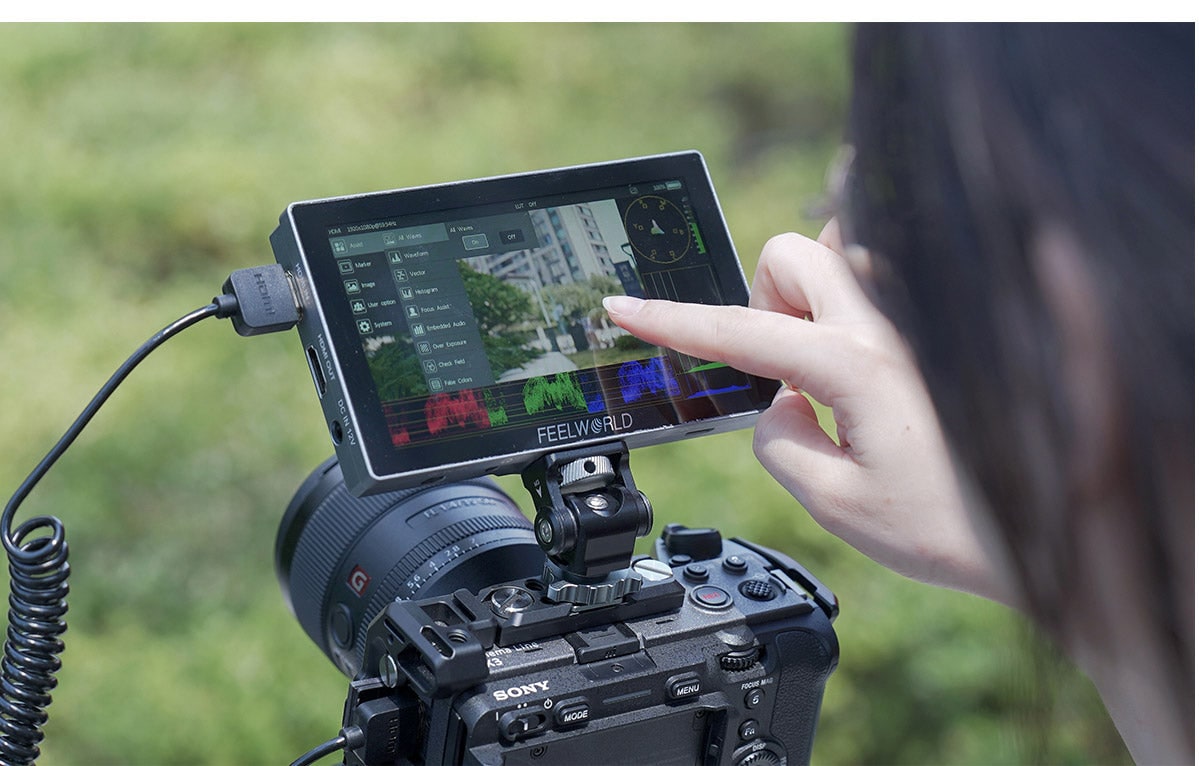
Three programmable shortcuts, four saved menu presets
It is driven by touch: swipe the left half of the screen for brightness, the right half for monitoring volume. If you prefer to work by feel, there are four buttons on top — three of them take whichever functions you need that day and recall them with a single press. The whole menu setup can be saved into four presets and switched between takes. The menu speaks eleven languages.
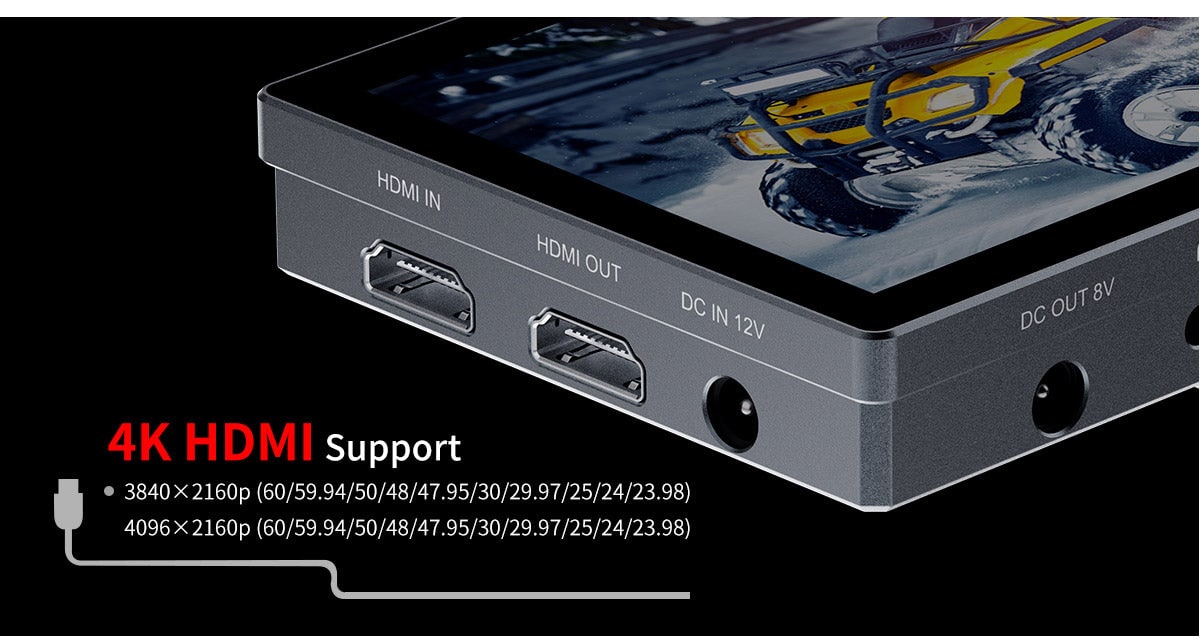
4K HDMI in and out
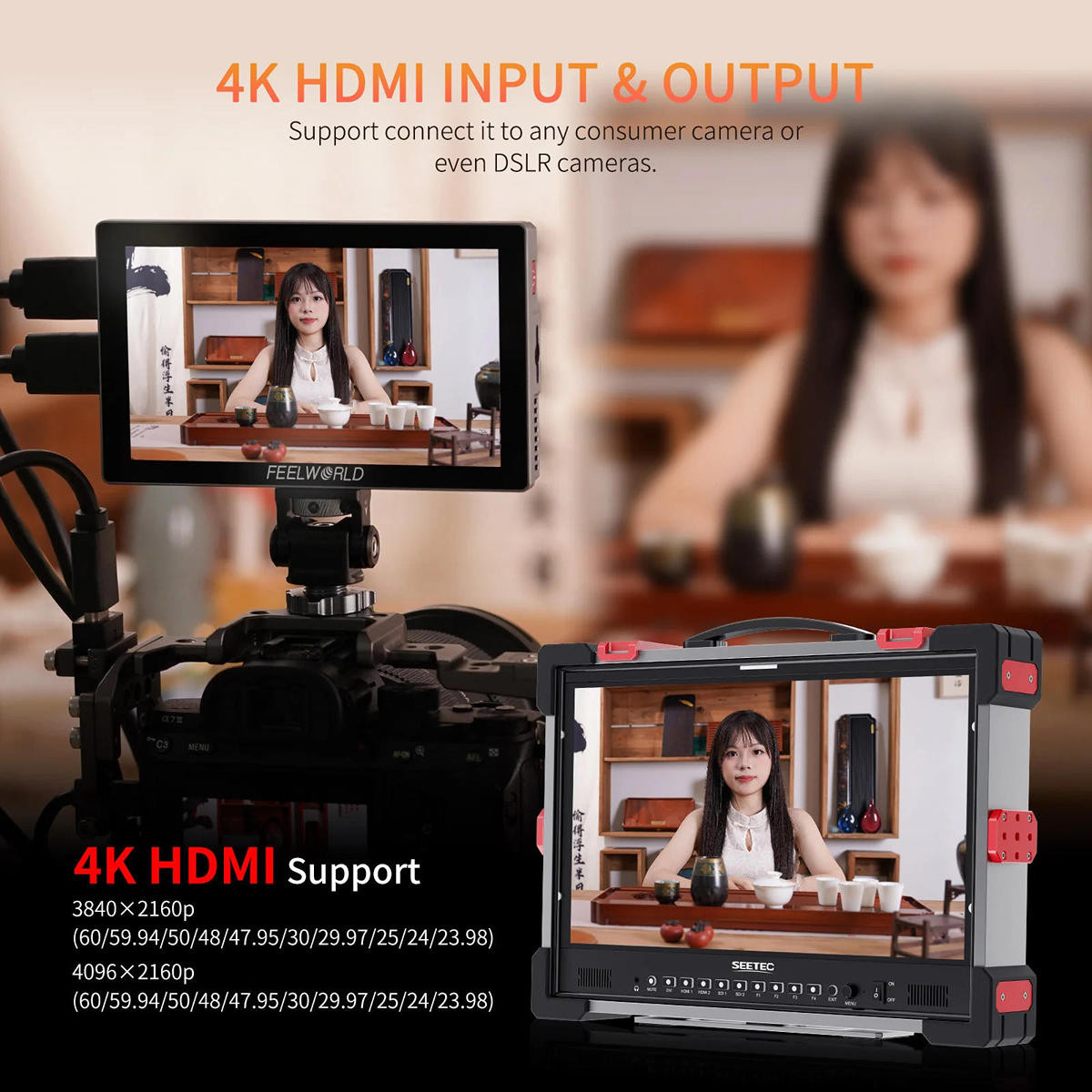
Loop-through up to 4096 × 2160 at 60 fps
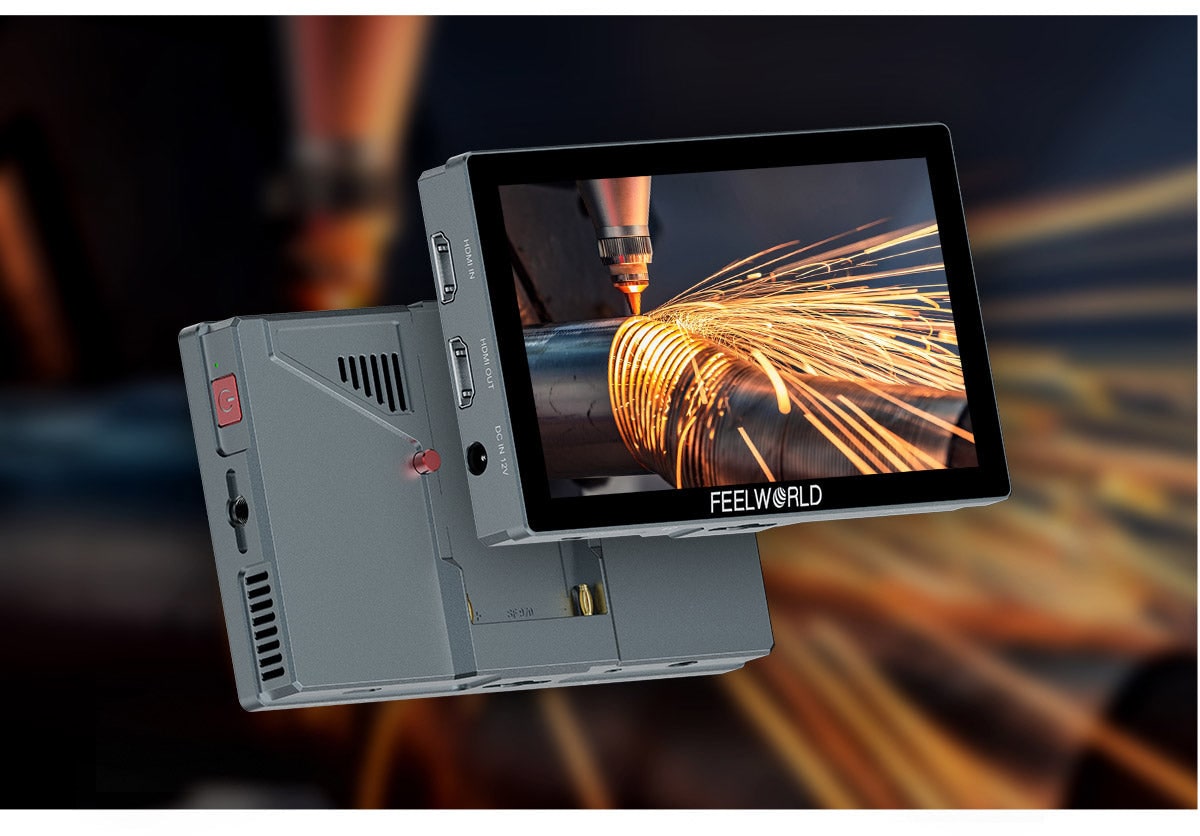
Both the HDMI input and the output handle 4096 × 2160 and 3840 × 2160 at sixty frames per second, so the P6X does not only show the signal but passes it on — to a recorder, to a stream, or to a second monitor for the director. Beside the connectors sits a 3.5 mm headphone output for the audio embedded in the HDMI.
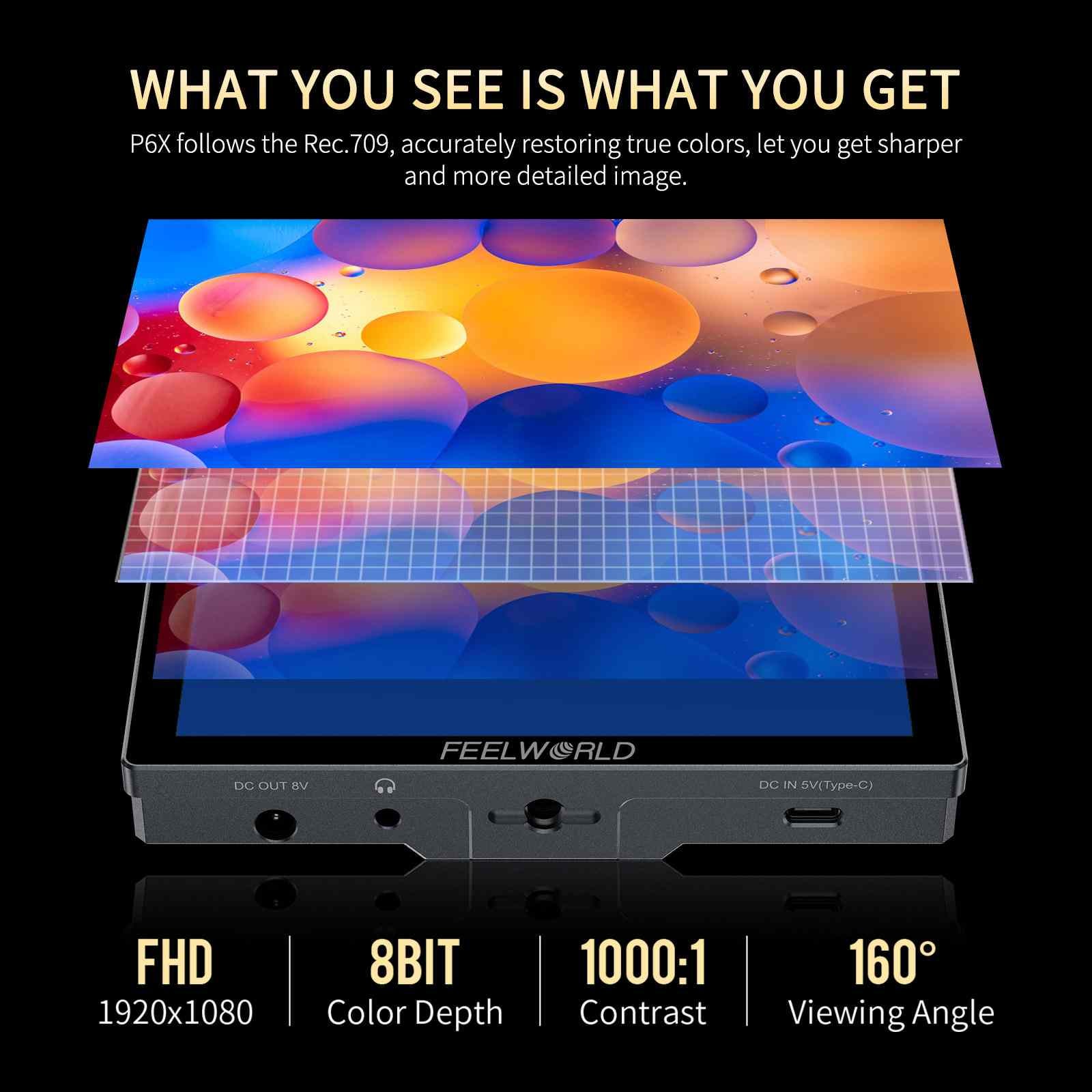
Colours that match reality
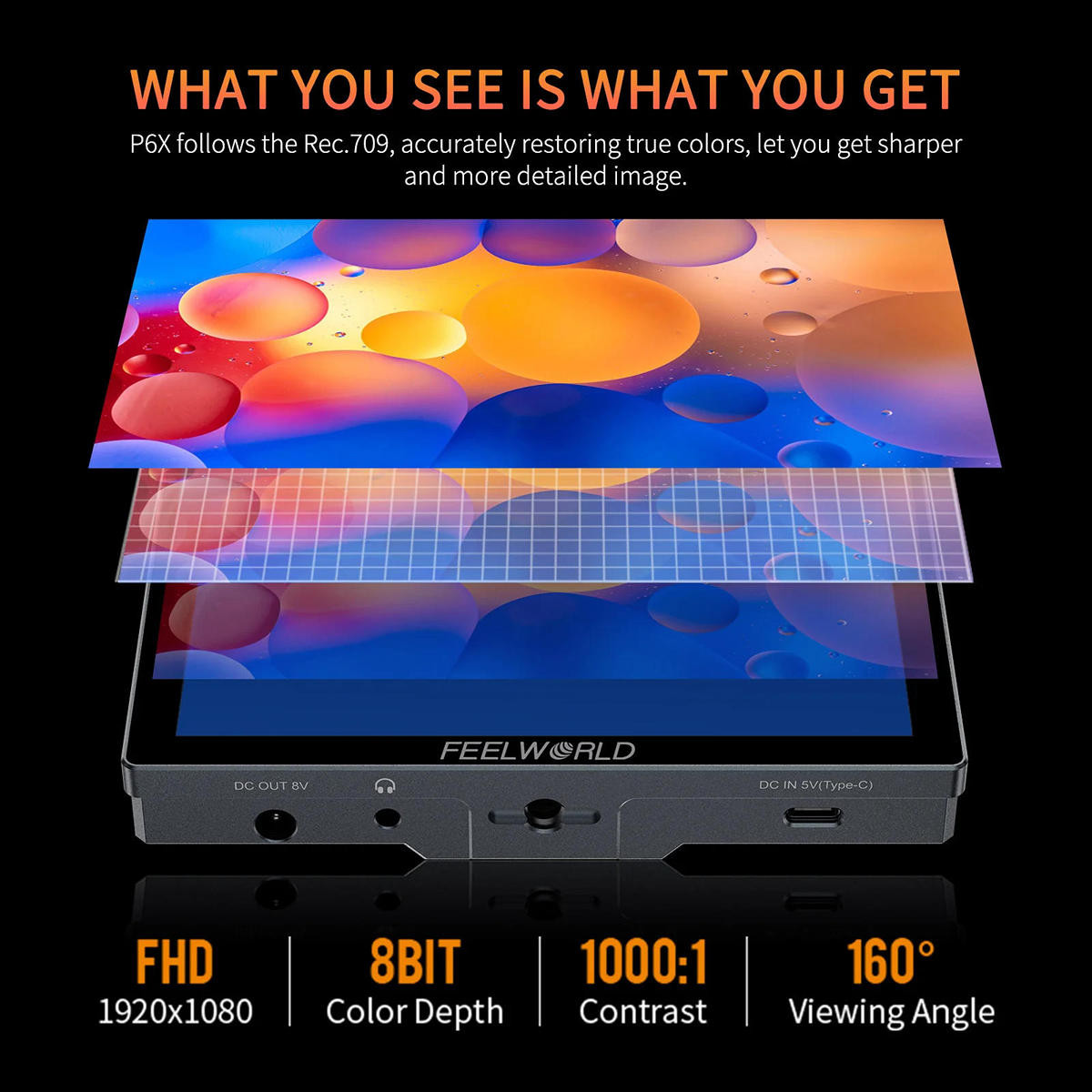
Rec.709, 8-bit depth, 1000:1 contrast
The panel is set to the Rec.709 standard, so the picture on set matches what you open in the edit. The 160° viewing angle means the colours hold even when someone checks the frame over your shoulder.
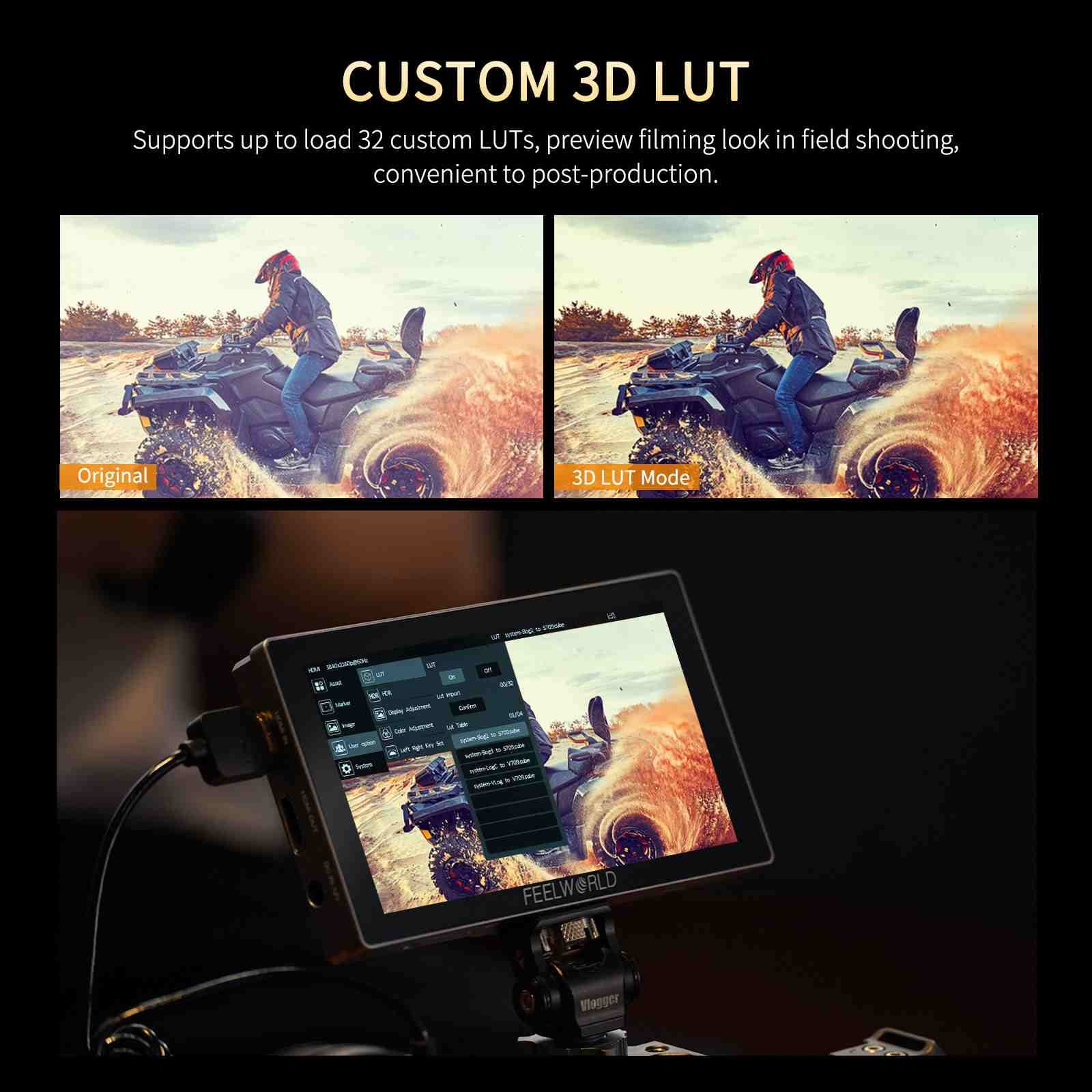
Custom 3D LUTs and HDR preview
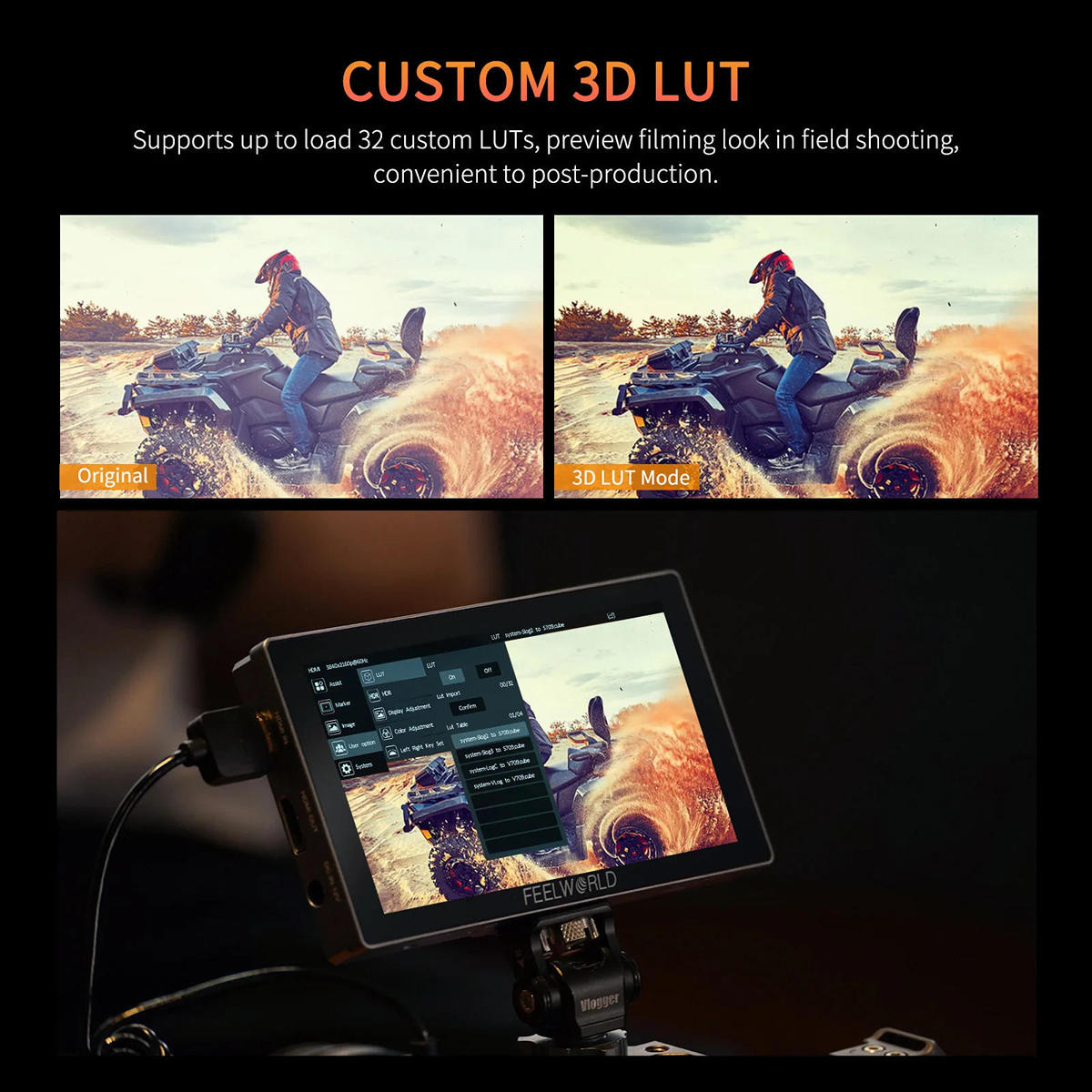
Up to 32 tables loaded over USB
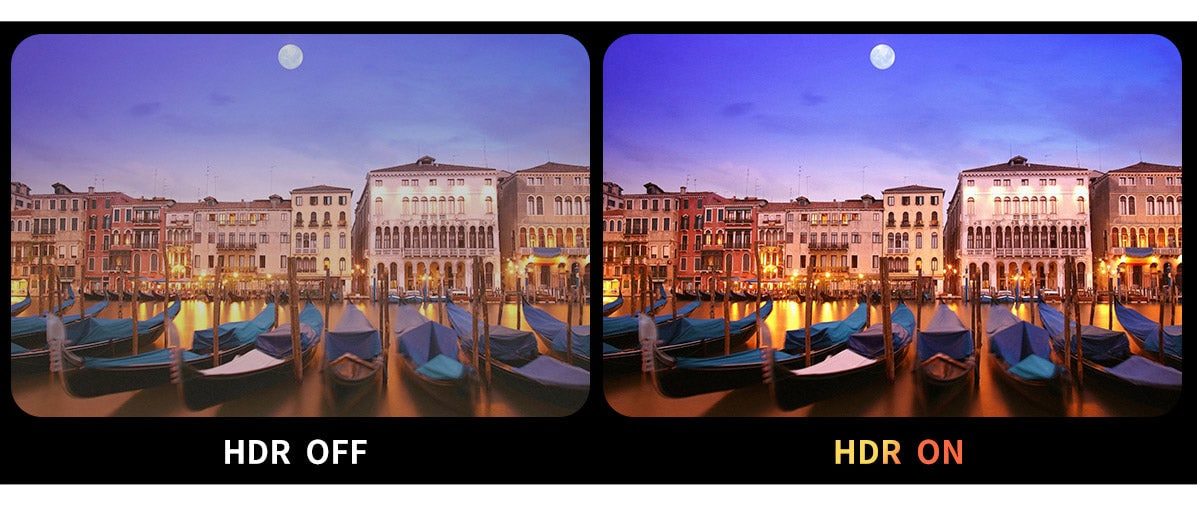
Up to 32 custom .cube tables fit in the monitor, on top of four built-in DE-log LUTs. Files transfer from a USB flash drive through the Type-C adapter that comes in the box. HDR preview offers three HLG modes, so highlights and shadows on the screen look the way they look in the room.
Scopes built into the monitor
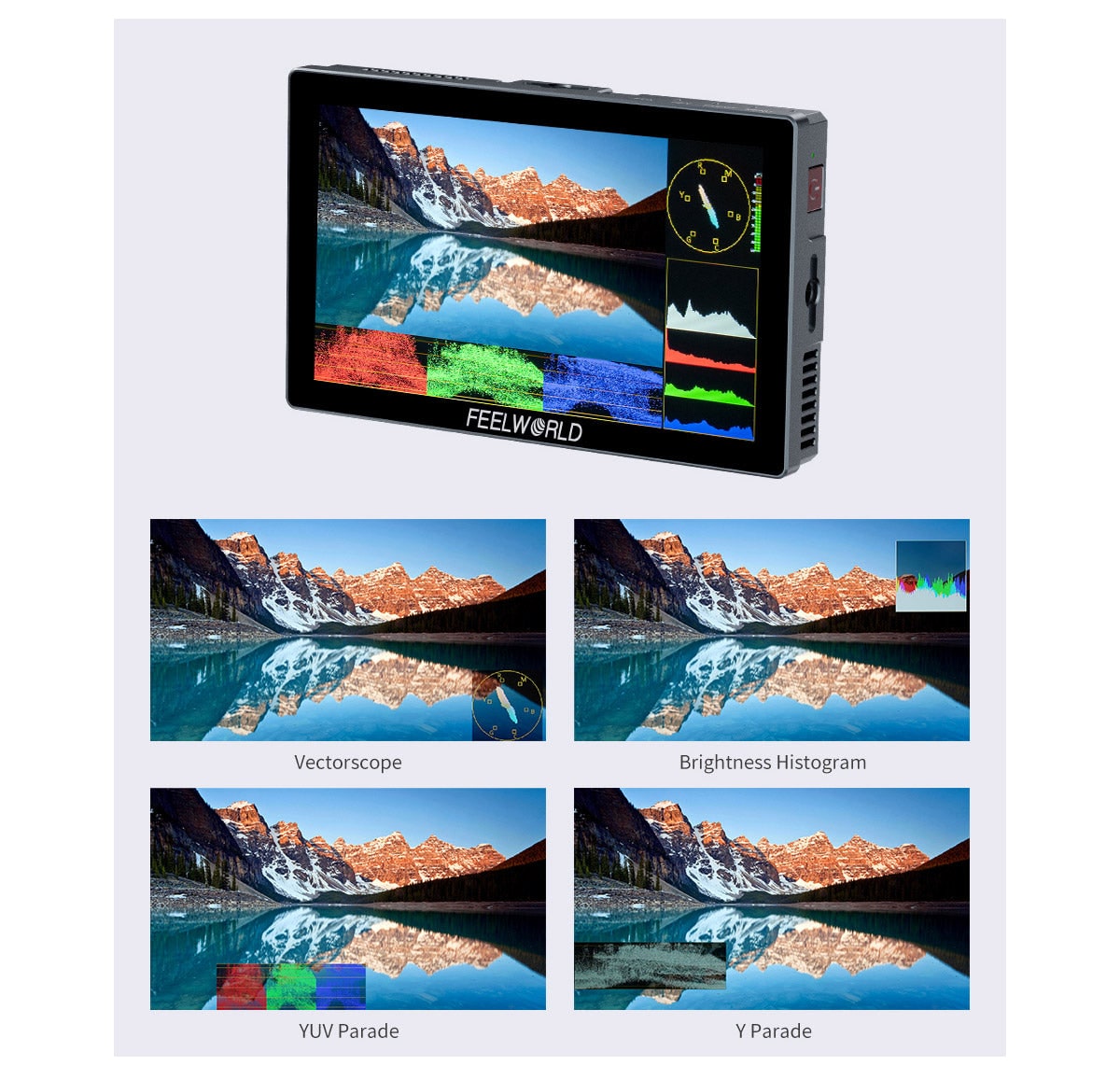
Waveform, vector scope, histogram and audio metering
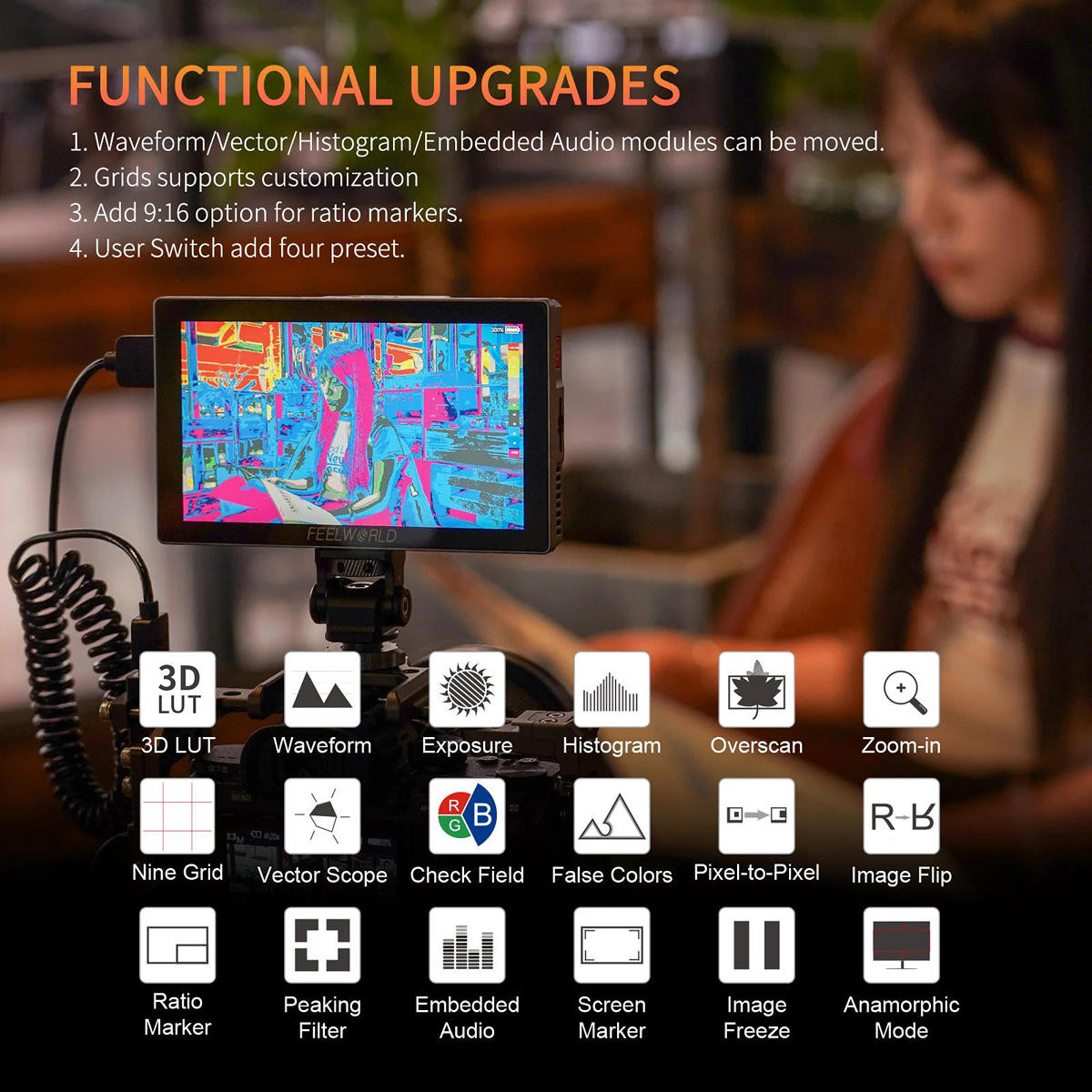
Waveform in RGB Parade, YUV Parade and Y Parade, a vector scope, a brightness histogram and audio level and phase meters. Each scope switches on separately and can be moved around the frame, or one command brings them all up at once — no separate measuring box needed on set.
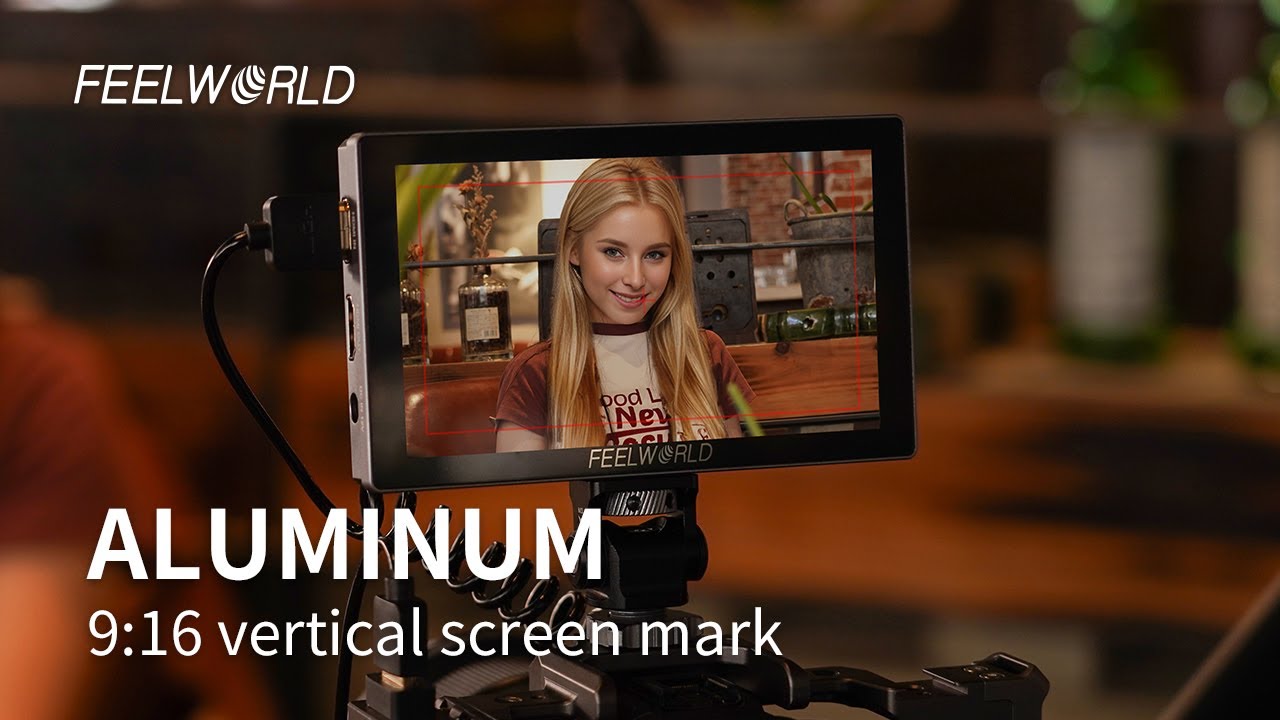
Alongside them: peaking, false colours, zebra, check field, nine grid, safe-area and aspect markers including a vertical 9:16 for social platforms, anamorphic mode, image flip and pixel to pixel.
Power from anywhere — and power out to the camera
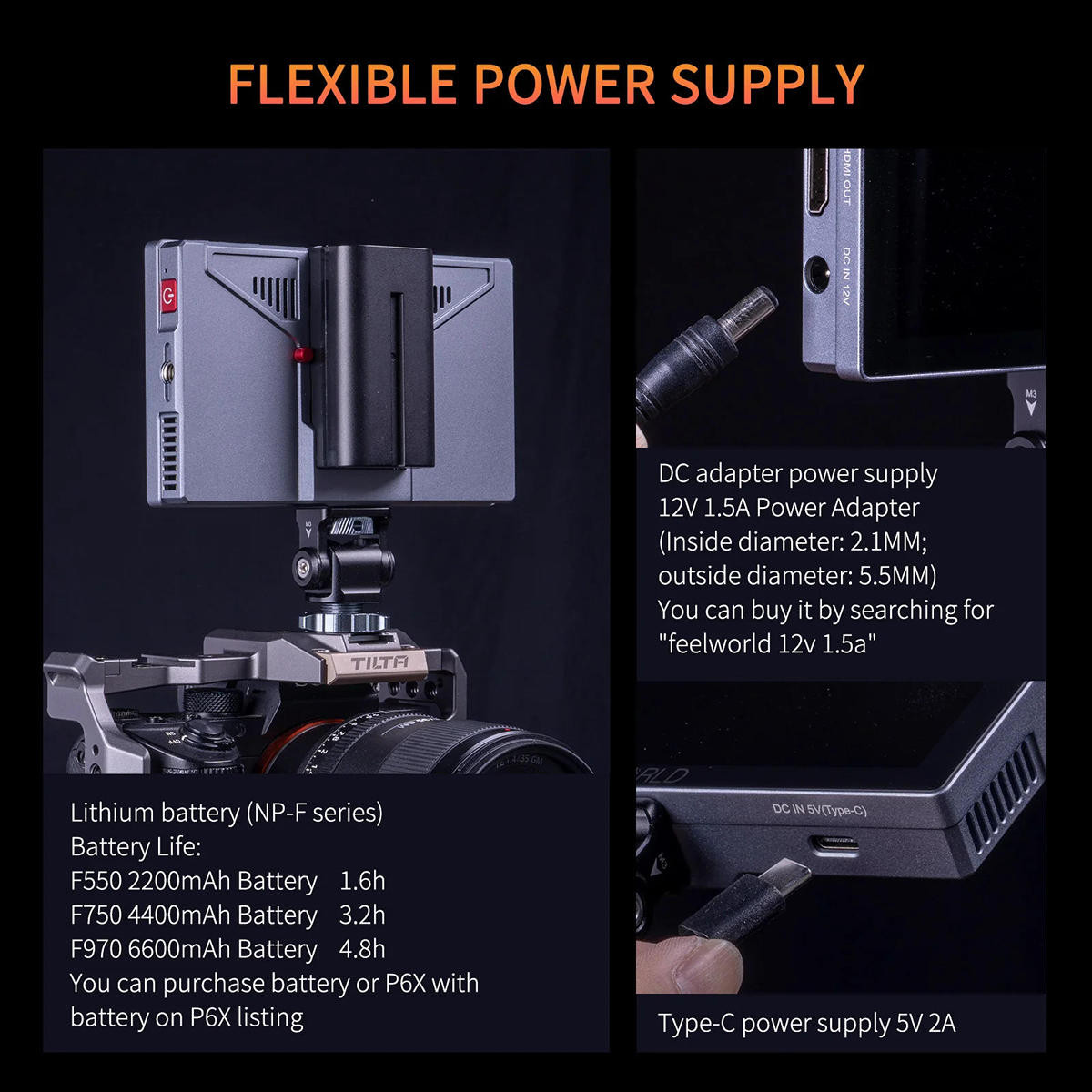
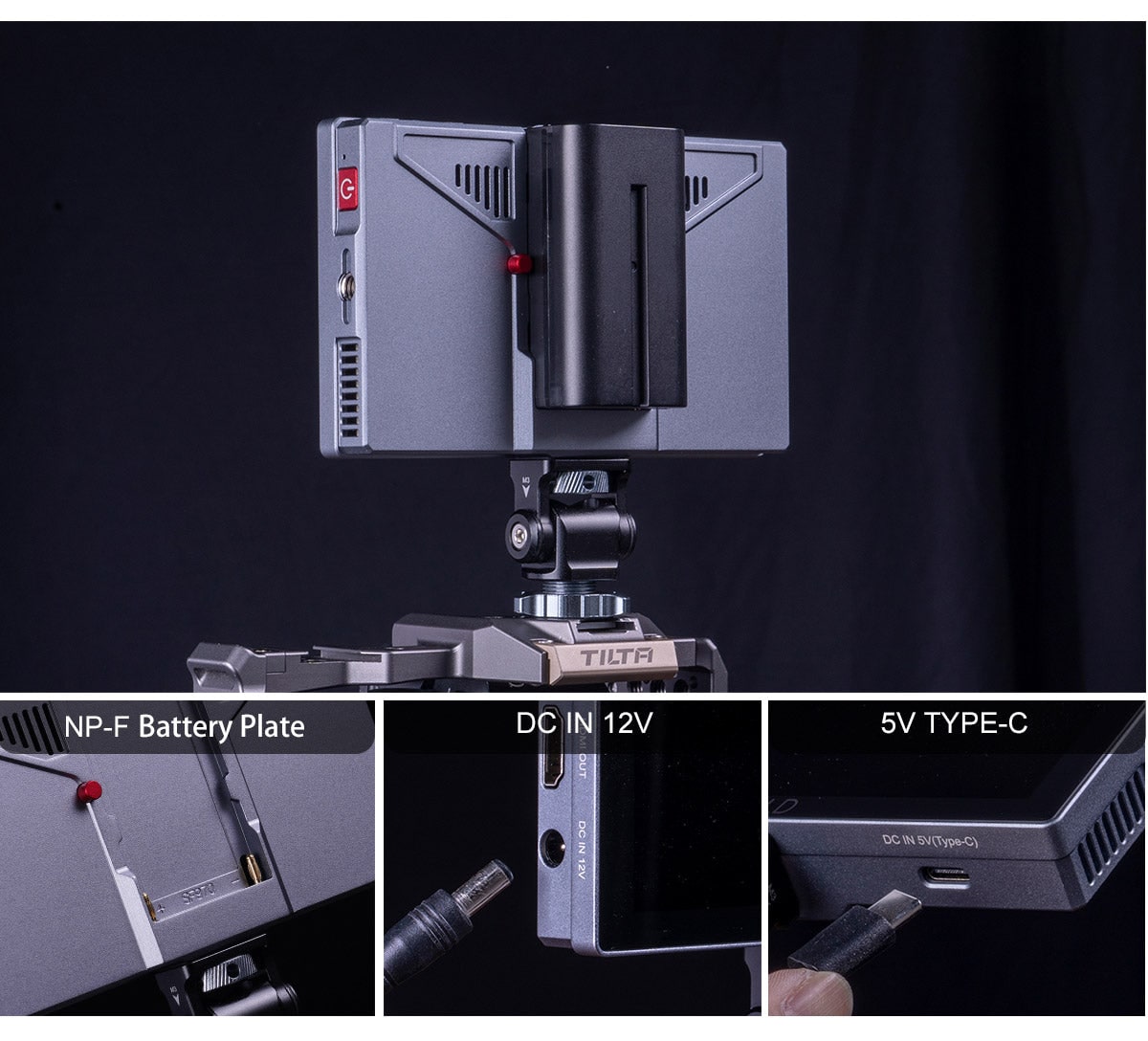
NP-F, DC 12 V or USB-C, 8 V output
The back carries an NP-F battery plate: an F550 lasts about 1.6 hours, an F750 about 3.2 and an F970 around 4.9. Instead of a battery you can run a 12 V mains adapter or a power bank over USB-C (5 V / 2 A minimum). The DC 8 V output works the other way and powers the camera — with a dummy-battery cable, one battery then feeds both. The battery, the mains adapter and that cable are not supplied with the monitor.
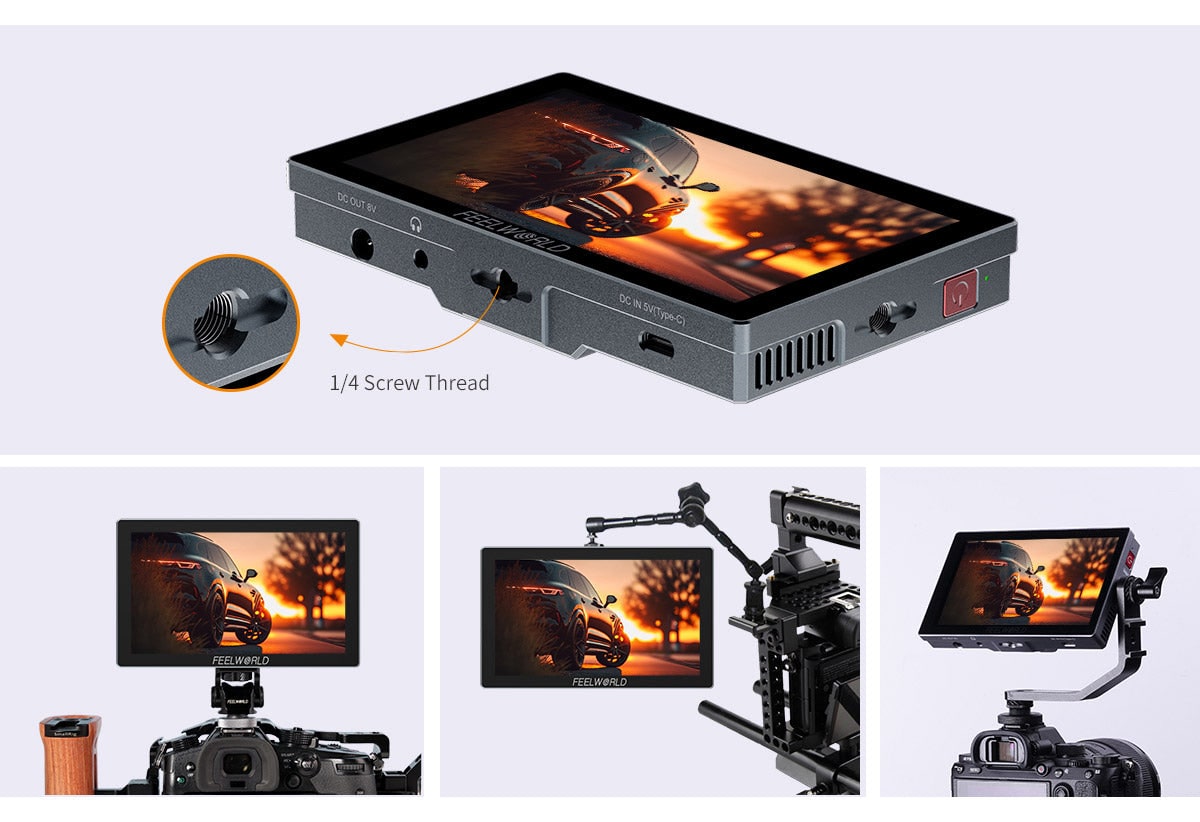
Three 1/4" threads take a mount — top, bottom and right side. A mini hot-shoe adapter with 180° tilt and 360° rotation is in the box, so you can see the screen from behind the camera too.
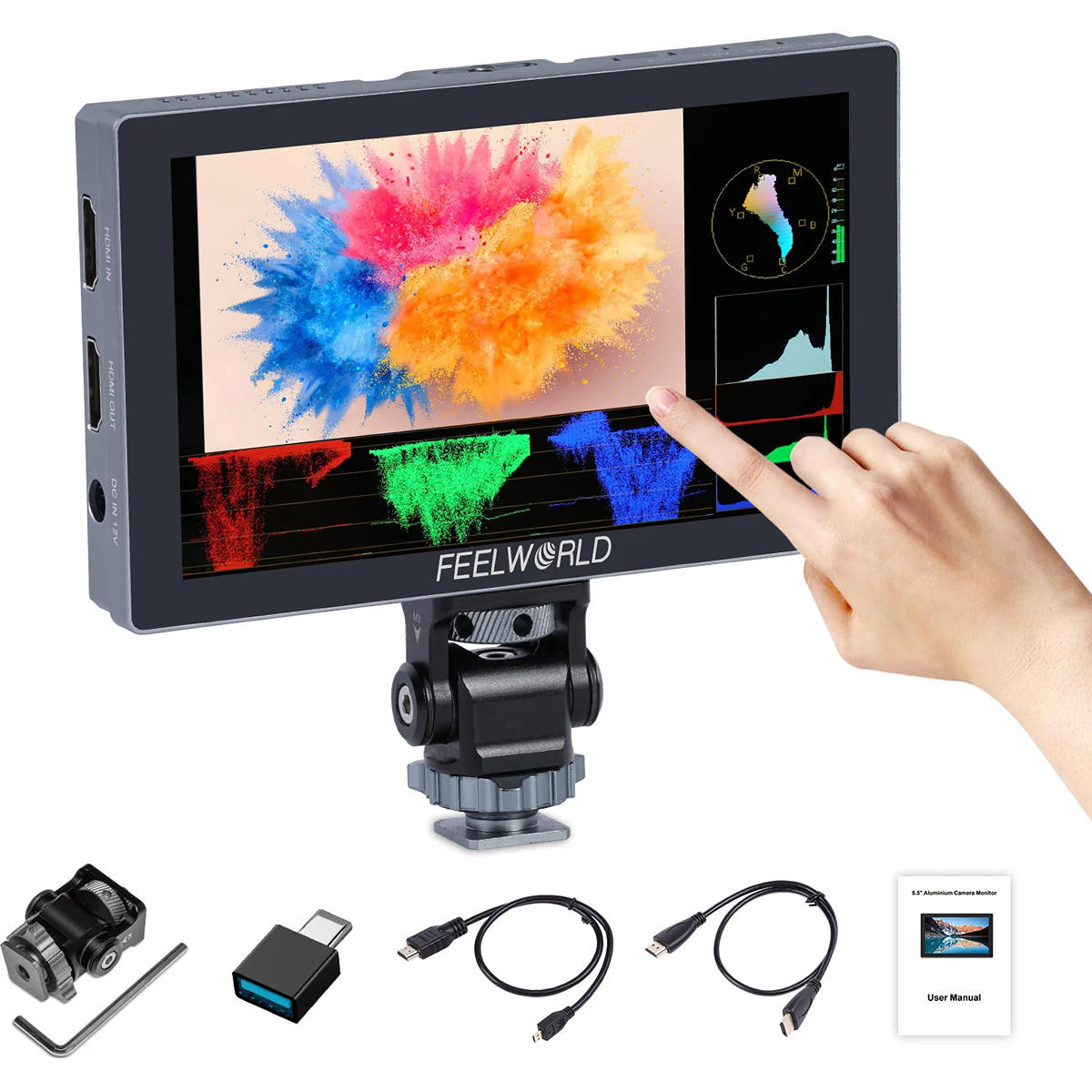
PACKAGE CONTENT
- P6X monitor
- A–A HDMI cable
- Micro HDMI cable
- Mini hot shoe mount with hex wrench
- Type-C to USB adapter
- Sunshade with frame
- Manual
- NP-F battery and mains adapter are not included
SPECIFICATIONS
- Model: P6X
- Screen size: 5.5" IPS
- Resolution: 1920 × 1080 pixels
- Pixel pitch: 0.069 × 0.069 mm
- Aspect ratio: 16:9
- Brightness: 1000 cd/m²
- Contrast ratio: 1000:1
- Colour depth: 8-bit
- Backlight: LED
- Viewing angle: 80°/80° (L/R), 80°/80° (U/D)
- Inputs: 1× HDMI 2.0, 1× DC 12 V (barrel 5.5 × 2.1 mm, a 1.5 A adapter is recommended), 1× USB-C 5 V (2 A minimum)
- Outputs: 1× HDMI 2.0, 1× DC 8 V (barrel 5.5 × 2.1 mm)
- Audio: 3.5 mm stereo headphone output
- HDMI formats: 480i/576i/480p/576p · 1080i (60/59.94/50) · 720p and 1080p (60/59.94/50/30/29.97/25/24/23.98) · 3840 × 2160p and 4096 × 2160p (60/59.94/50/48/47.95/30/29.97/25/24/23.98)
- Video assist: 3D LUT (32 custom + 4 DE-log), HDR (HLG1–3), waveform (RGB/YUV/Y Parade), vector scope, histogram, peaking, false colours, zebra, check field, nine grid, markers including 9:16, anamorphic mode, image flip, pixel to pixel, embedded audio
- Menu languages: 11
- Power input: NP-F battery (plate in the body), DC 7–24 V or USB-C 5 V
- Running time: F550 about 1.6 h · F750 about 3.2 h · F970 about 4.9 h
- Power consumption: ≤ 10 W
- Mounting: 1/4"-20 thread on top, bottom and right side
- Body: machined aluminium
- Working temperature: −20 °C to 50 °C
- Storage temperature: −30 °C to 60 °C
- Unit size: 138.5 × 84.5 × 22 mm
- Unit weight: 249 g
WE RECOMMEND
The following accessories go with the Feelworld P6X. They are picked according to the connectors and power supply the product actually has.
HDMI cables – Thin, flexible cables with micro and mini HDMI connectors for hooking up a camera.
- Atomos Spirálový kabel 4K Full HDMI - Micro HDMI 30/60 cm
- Atomos Spirálový kabel Full HDMI - Mini HDMI
- SmallRig ultra tenký (Ultra Slim) 4K Micro HDMI na Full HDMI kabel (D to A) 35cm 3042B
- SmallRig Ultra tenký kabel 4K Mini HDMI 35 cm (3040)
NP-F batteries – Spare batteries of the Sony NP-F series — NP-F550, NP-F750 and NP-F970.
- Viltrox baterie NP-F550
- Viltrox Battery NP-F750
- SmallRig NP-F970 USB-C Rechargeable Camera Battery (Black) (4469)
Chargers – Chargers for NP-F series batteries.
Mounts and arms – Articulating arms and mounts with a 1/4″ thread for a cage, a tripod or a desk.
Parameters
| Manufacturer: | Feelworld |
| Category: | Camera monitors |
Main parameters
| Size | 5.5" |
| Monitor inputs | HDMI |
| Luminosity | 1000cd/m2 |
| Panel resolution | 1920x1080 |
| Monitor power supply | Sony NP-F · USB-C |
Other parameters
| Other features | Lightweight · Touchscreen · HDR · 3D LUT correction · Power output |
| High Brightness (NITS) | Yes |
GPSR
TB EC REP EUROPEAN SL
Business address: Calle Marcelo Usera 60, LC. Madrid 28026 Spain
ACCESSORIES (9)
ACCESSORIES (9)
SmallRig Desktop Shooting Magic Arm with Crab Clamp Kit 4766
A desktop overhead setup: a 56 cm articulated magic arm, a crab clamp with swivelling
40 €
Backordered > 5 pcs
SmallRig NP-F970 USB-C Rechargeable Camera Battery (Black) (4469)
NP-F970-type battery with a 10500mAh/76.65wh capacity for extended usage, USB-C and
94 €
In stock > 5 pcs
Viltrox Battery NP-F750
The Viltrox NP-F750 is a high-capacity, rechargeable NP-F-type Li-ion battery for
32 €
Backordered > 5 pcs
Viltrox NP-F550
The Viltrox NP-F550 is a compact, rechargeable NP-F-type Li-ion battery for compatible
28 €
In stock > 5 pcs
SmallRig Ultra Slim 4K Mini HDMI cable 35cm (3040)
A 35 cm ultra-slim 4K HDMI cable (Mini HDMI to full HDMI) for a camera rig. HDMI
12 €
To be sent 5 pcs
SmallRig NP-F970 Camera Battery Charger 4086
SmallRig 4086 dual-slot charger for Sony NP-F550 to NP-F970 batteries. It charges
13 €
In stock > 5 pcs
SmallRig Ultra Slim 4K HDMI Cable (D to A) 35cm 3042B
The SmallRig 3042B cable links a camera's micro HDMI (D) port to the full-size HDMI
12 €
Backordered > 5 pcs
K&F Concept 11-inch Magic Arm with Super Clamp and ARRI Locating Pins
The K&F Concept kit combines a 11″ magic arm with two ball heads and a super
35 €
Backordered 1 pcs
SmallRig Articulating Arm with Double Ballheads( 1/4’’ Screw) 2070B
The SmallRig 2070B articulating arm carries a ball head with a 1/4"-20 screw at each
59 €
Backordered > 5 pcs
Alternative (6)
Alternative (6)
PORTKEYS PT6 6" 4K HDMI Touchscreen Monitor
Promotion: -13%
Portkeys PT6 is a lightweight 5.2-inch touchscreen on-camera monitor with Full HD
161.49 €
186.34 €
In stock > 5 pcs
Portkeys PT5 III
The Portkeys PT5 III is a compact 5.4-inch touchscreen camera monitor with 800 nits
186 €
To be sent 1 pcs
Shimbol M5
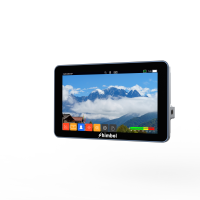
Experience your 4K HDR videos with precision on the Shimbol M5 5.5" 3D LUT 4K HDMI
186 €
In stock 1 pcs
Feelworld F6 Plus V2
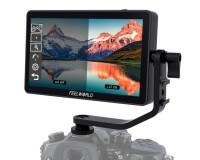
Promotion: -13%
Feelworld F6 Plus V2 is a 6“ touch screen camera field monitor with IPS FHD 1920x1080
180.51 €
207.9 €
Backordered 2 pcs
Feelworld P6XL (Built in battery)
The Feelworld P6XL (Built in battery) is a compact 6-inch Full HD on-camera monitor
220 €
on request
Lilliput A5 5" 4K HDMI Full HD On-Camera Monitor
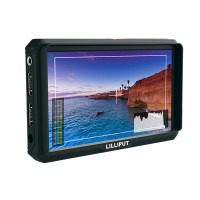
This compact, lightweight, fully-featured A5 5" On-Camera Monitor from Lilliput is
168 €
14-30 days


News, training, and discounts from Syntex
Special offers and discounts for subscribers only · Free audio & video workshops · News and tips from the world of filmmaking
- Show all
Feelworld P6X
P6X is a 5.5" camera monitor with 1000 cd/m2 brightness and 1920×1080 resolution,187 €on request