



Another Portkeys treat in stock: the KeygripIntelligent Camera Remote, which features a switch for quick ISO, shutter and aperture settings (on the front of the handle) and a 9-position joystick for easy navigation through the camera menu! Thanks to Bluetooth and Wi-Fi interfaces, many cameras can be controlled wirelessly (e.g. Blackmagic Pocket Cinema Camera 4K/6K!) or use one of the optional cables (LANC etc.) for cameras without BT/Wi-Fi support. The body of the controller is made of durable aluminum alloy and the handle is made of oak wood for maximum durability and comfort. There is also a great readable 0.9" OLED display, battery status display (2x 18650; included with charger), rosette for mounting the controller on cameras, etc. Yum!

Panasonic will launch a new 85mm f/1.8lens for the L-Mount in December, plus three more unspecified f/1.8 lenses with identical size and control positions in the coming months. In addition to these models, a telephoto 70-300mm zoom lens is also in development, which will also expand the LUMIX S series lens line-up in the future.

Panasonic has released firmware updates for its LUMIX S series cameras as well as the ultra-compact G100. Updates for the S1H (2.2), S1R (1.6), S1 (1.6) and S5 (2.0) will be available free of charge from 24 November 2020 and will bring improved autofocus features; the same day's release of FW 1.1 for the DC-G100 will bring compatibility with LUMIX Webcam Software (in beta).
Enhanced autofocus features for the LUMIX S series
Lumix S1, S1R and S1H will gain advanced autofocus technology and performance from the new LUMIX S5. The AF update includes improved person and motion detection technology. In addition to the eye, face and body, the head is now separately identified and tracked in real time. The camera tracks a person even when they move quickly, turn their head, turn their body and tilt their head, even at a great distance from the camera. Innovative DFD technology has refined the continuous autofocus (AFC) system to better track small or fast-moving subjects. All AF enhancements are available in both shooting and movie modes.
Updates also include:

Next update for LUMIX DC-S1 in the first half of 2021
With the planned FW 2.0 update for LUMIX S1, the user will be able to manually adjust Dual Native ISO values. Further expansion of functions is subject to the purchase of DMW-SFU2. New features will include anamorphic recording mode, time code insertion and V-Log recording. The upgrade will unlock the ability to record in 5.9K/C4K quality and internal 10-bit 4K 60/50p video recording with 4:2:2 color sampling. Another enhancement will be the ability to record video using the Atomos Ninja V monitor/recorder in 5.9K/4K/Anamorphic (4:3) 3.5K 12-bit RAW over HDMI.
Battery compatibility between LUMIX GH5/GH5S and G9
The LUMIX GH5 / GH5S / G9 are now compatible with the new DMW-BLK22 battery type (launched together with the DC-S5). Compatibility with the original DMW-BLF19 battery that was supplied with the above models remains, of course.
DC-G100/G110 FW 1.1
With the free FW update to version 1.1, the DC-G100/G110 gains compatibility with LUMIX Webcam Software (beta).
PRESS RELEASE
12. november 2020
Blackmagic Design - represented on the Czech and Slovak markets by Syntex - has introduced a new version 17 of DaVinci Resolve
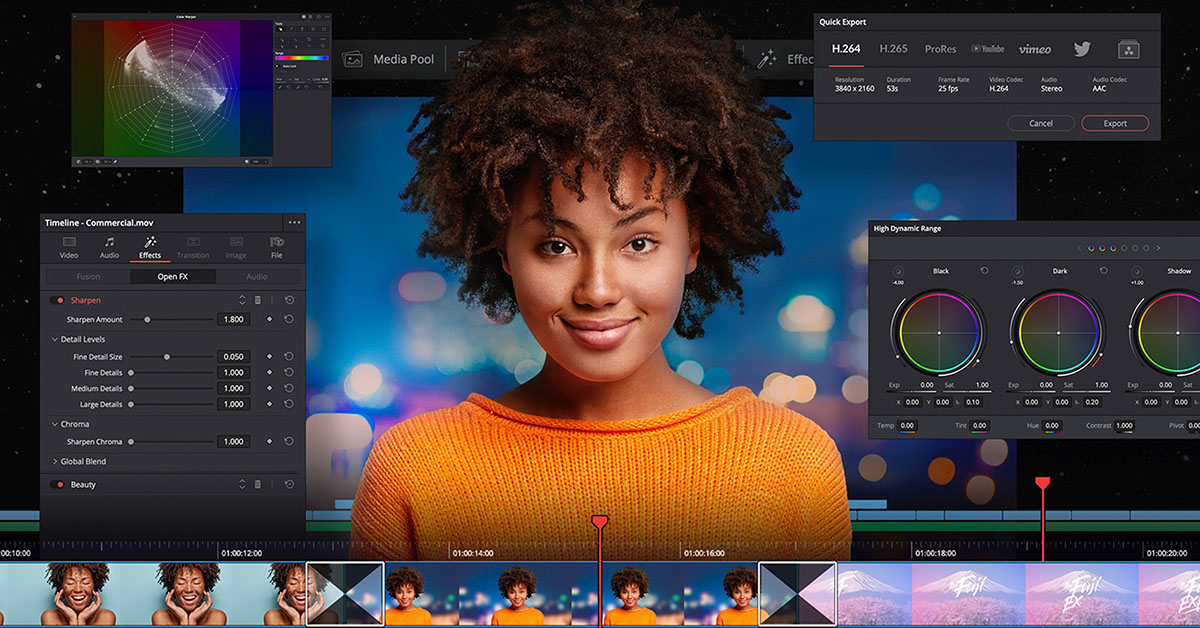
for editing and post-production of audio/video material. DaVinci Resolve 17 is a major update with more than 300 new and improved features including tools for colour correction of HDR material, redesigned functions for primary colour correction, new generation of Fairlight technology for audio editing allowing to work with up to 2,000 tracks in real time, new options for media bin sorting, etc.The public beta of DaVinci Resolve 17 is available on the Blackmagic Design website.

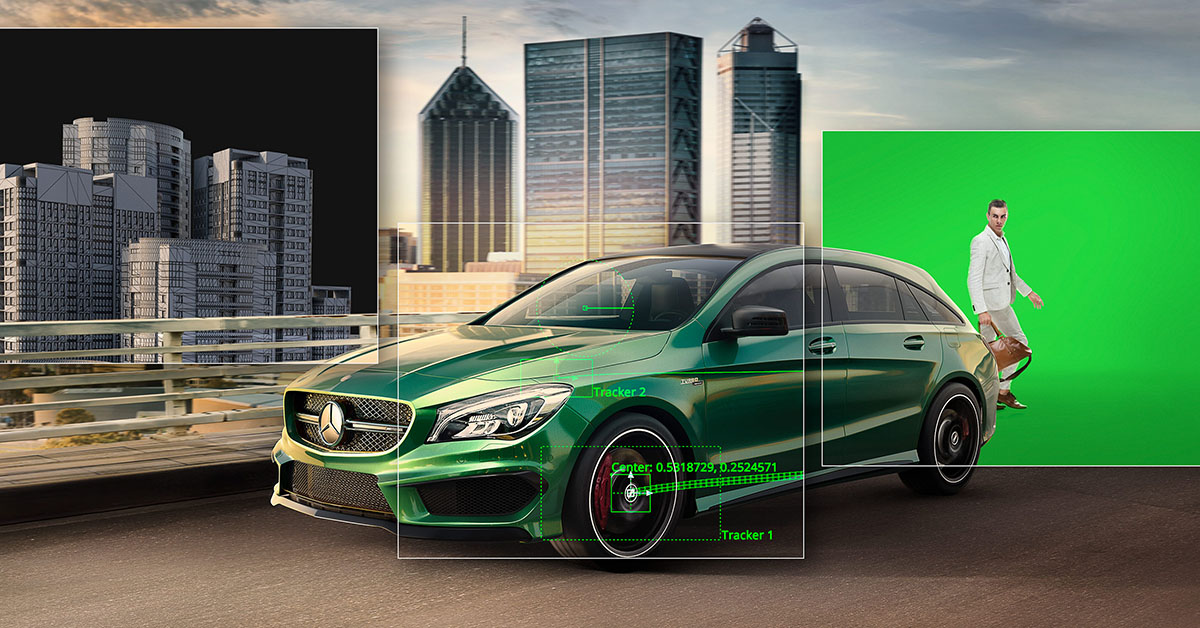
DaVinci Resolve 17 is a major update bringing over 100 new features and over 200 enhancements. The Color section for color correction includes new features for processing HDR videos, redesigned tools for primary color correction, automatic masks based on artificial intelligence algorithms, and many more new features! The Fairlight section offers optimized features for creating selections using keyboard and mouse, as well as the new Fairlight Audio Core architecture including new FlexBus technology supporting over 2,000 tracks. The video editing sections have been enhanced with new metadata displays, zooming on audio tracks for more accurate editing, automatic shot recomposition features, and other new features. You can also now use the Fusion section compositions as subtitles or blending effects in both the Cut and Edit sections, for example.
Color section
DaVinci Resolve 17 includes fantastic new features for colorists, including improved mask creation, better metering tools, support for 17-point LUT tables, and much more! New color editing features for HDR videos allow you to more accurately adjust the ranges of primary color correction tools, including features to adjust exposure and saturation for each zone individually. Also completely new are the deformation grid-based corrections allowing two parameters - color and saturation - to be adjusted simultaneously. The adjustment is done by dragging the grid control points.
Version 17 also brings considerable simplification in the area of selective corrections of human silhouettes. The Magic Mask tool uses the DaVinci Neural Engine core to automatically create masks of entire characters or body parts. Of course, it is possible to manually adjust the mask afterwards, as well as automatically track the movement of the target subject.
The color management system has also seen significant improvements. DaVinci Wide Gamut and DaVinci Intermediate are versatile working color spaces that go beyond BT.2020, ARRI Wide Gamut and ACES AP1 to guarantee completely lossless editing of any material.
Fairlight section
DaVinci Resolve 17 introduces the largest update in the history of the Fairlight section for audio post-production. The audio track editing features have been upgraded along the lines of the Fairlight Audio Editor, as well as the Fairlight Audio Core itself, making better use of the capabilities of the CPU and the optional Fairlight Audio Accelerator card. The result is the ability to process up to 2,000 audio tracks in real time including equalizer, dynamics and up to 6 plug-ins per track! And the new FlexBus architecture introduces up to 26 channels of wide, versatile buses that can be independently layered and linked to process even very demanding projects in a straightforward manner.
The new Transient Analysis tool is able to detect single words of dialogue tracks, percussion instruments or sound effects. The result is vertical markers in the audio track view that can be easily navigated with the cursor keys, making subsequent editing much easier.
Fairlight Audio Core and FlexBus technologies allow large projects with thousands of tracks to be processed on a single workstation. In the past, processing similarly complex jobs was only possible with several linked computers. DaVinci Resolve also offers features for multiple users to collaborate on the same project, including a Fairlight section.
Cut section
The new Cut section for fast cutting of video material guarantees even more efficient work with imported material. A new metadata display in the bin simplifies file sorting based on scenes, shots, cameras, etc. In conjunction with the Source Tape function, this is the fastest way to select material for cutting.
Also new is a larger display of audio tracks during editing, or a function for fast conversion of 16:9 HD or Ultra HD material into square or vertical format for social networks (Instagram, etc.). The DaVinci Neural Engine core automatically identifies faces and changes the shot composition according to the target format.
Searching for effects, interlaces or captions is also now faster thanks to the simultaneous display of multiple icons. To preview an effect in the Viewer window, simply hover your cursor over any item in the effects list...
You can also now import projects created with ATEM Mini Pro ISO and further edit them using the Sync Bin function with multiview display. Of course, you can use imported HD ISO footage or original Blackmagic RAW files from cameras to complete your project in Ultra HD resolution.
Edit section
Among the enhancements to the Edit video editing section are especially new features for creating and managing independent proxy media, for example for easy project portability or performance enhancement. Proxy files can be saved at resolutions up to 1/16 of the original resolution and in H.264, H.265, ProRes or DNxHR codecs. They can be created internally or externally using third-party tools.
The new Auto Align tool can be used to synchronize multi-camera sequences according to both time code and audio track content. In addition, time tracks can be converted into multi-camera and composite clips.
The new HSL and Luma Keyer Resolve FX 3D plug-ins allow direct color/luma keying of material in the Edit and Cut section timelines. Alpha channels of Resolve FX and Open FX plug-ins, integral alpha channel files and external files serving as masks are also supported. The Render in Place command is then used to calculate any portion of the timeline.
Before the material is inserted into the timeline, it can now be pre-edited - e.g., setting RAW parameters, adding LUT corrections, changing audio tracks, image size and frame rate, etc. Users can also import/export individual timelines or bins for wider collaboration possibilities within studios. Timeline and bin files can be easily shared, e.g. via email.
Working with half-shots has also been improved - DaVinci Neural Engine technology is able to reconstruct progressive images from half-shot material or remove 3:2 pulldown in real time.
Fusion section
Post-production Fusion section compositions can now be saved as templates for use in Edit or Cut sections, with which timeline markers can now also be shared. New animation curve modifiers find use when changing the length of sequences. And the ability to view/play audio tracks will make it easier to accurately time animations.
In addition, 27 GPU-accelerated Resolve FX effects have been implemented, including noise reduction or image focus functions taken from the Color section. Bookmarks at the tree structure view will simplify working with large projects; as well as the ability to vertically display the nodal structure. New toolbar customization options allow you to create customized tool templates for different purposes.
Other improvements
DaVinci Resolve 17 includes additional improvements in the areas of format and export support, consistent timeline browsing functionality across all sections of the program, better metadata support, new algorithms for resampling an image when zooming in/out, the ability to share Smart bins, GPU acceleration for other Resolve FX plug-ins, etc. Another major new feature is the implementation of revolutionary multi-user collaboration features in the free version of DaVinci Resolve!
Format support
Extended file format support includes decoding of QuickTime PNG, uncompressed RGB 8-bit and YUV 10-bit AVI or split Panasonic 8K SHV media. DaVinci Resolve 17 also supports metadata for individual frames from Blackmagic, ARRI, RED and Sony cameras, and also decodes and displays EXR metadata for each frame.
Availability
The public beta of DaVinci Resolve 17 is available on the Blackmagic Design website.
Photos for print
For photos of all Blackmagic Design products, visit www.blackmagicdesign.com/press/images.
About Blackmagic Design
Blackmagic Design's products are the industry leaders in video editing, digital cinema cameras, color correctors, video monitoring, signal switchers, disc recorders, waveform monitors and film restoration software, in film, post-production and television. Blackmagic Design's DeckLink series of video recording cards have started a revolution in quality and accessibility. DaVinci's line of color video editing products have dominated the film and television market since 1984 and have been awarded Emmy™ awards, the television equivalent of the Academy Awards. Blackmagic Design continues to create innovative products in the field of stereoscopic production and 4K video processing. Blackmagic Design was founded by specialists in post-production and video editing and has offices in the U.S.A., the United Kingdom, Japan, Singapore and Australia. For more information, visit www.blackmagicdesign.com.
About Syntex
Syntex, a Prague-based company, was founded in 1994 to distribute products and solutions for computer-to-video animation transcription, computer graphics, professional editing and video processing. It is one of the pioneers in the Czech Republic and has established itself as a reliable and strong partner in the field of digital image and sound processing. Syntex is dedicated to product distribution, technical support and consulting in many sectors of video and audio production and post-production. Since 1999, a subsidiary company, based in Bratislava, Slovakia, has been available to customers in Slovakia. Syntex is a distributor of Blackmagic Design products for the Czech and Slovak markets. See www.syntex.cz for more information.
Blackmagic Design announced DaVinci Resolve Speed Editor, a new keyboard for DaVinci Resolve's cut page that allows a new and dramatically faster editing solution that’s a combination of integrated hardware and software. This means the editor can work much faster because, unlike a mouse, the DaVinci Resolve Speed Editor has a control for each edit function and can perform multiple tasks at the same time. In addition, for a limited time, every customer who purchases DaVinci Resolve Studio from a Blackmagic Design reseller will get the DaVinci Resolve Speed Editor included free of charge!
DaVinci Resolve Speed Editor is available immediately from Blackmagic Design resellers worldwide for 255 EUR ex. VAT.
Traditional edit software uses thousands of clips to organize their media, so customers need to constantly click and drag clips to edit. That’s too slow for work such as TVCs, news, promos and training videos. However old tape based linear editing had the advantage of all media being played from a videotape, so customers could simply fast forward and rewind to see all their shots. Now the cut page has a modern version of the videotape and it’s called the "source tape". Simply push the source button and use the search dial to scroll through all their media. Plus, the current clip is highlighted live in the bin. After the edit the viewer will stay in the source tape so customers can move to the next shot faster.
Entering in and out points is the most used function in editing, so the speed editor keyboard includes large in and out point buttons that customers can easily locate by feel. That’s perfect for two handed editing where users are using their right hand for transport control and their left hand is placing in and out points and performing edits. Customers can simply scroll along with the search dial and place in and out points anywhere customers want. Once the in and out points are set, just reach their fingers up to the edit function buttons to perform the edit. The in and out points can also be used to focus the source tape. Then customers can change the source tape back to the whole bin by pressing the escape key.
Editing with a keyboard is different to editing with a mouse, so the cut page editing functions have been upgraded to take advantage of the speed of a keyboard. The edit functions are intelligent and use the "smart indicator" in the timeline to work out where to insert, so most of the time customers don't need to place in or out points in the timeline to do an edit. They are located just above the in and out keys, so are easy to locate by feel. Plus each time customers edit, the cut page won't waste time switching over to the timeline, allowing customers to stay in the source tape and visually browse, placing clips continuously. That's much faster as customers can just keep throwing clips into the timeline.
With a large high quality search dial built into the panel, customers get an extremely accurate way to trim shots. With the search dial being such a physically large control, it completely transforms how it feels to trim shots. Plus it’s much faster too. The trim buttons will change the search dial into a trim control and customers simply hold the trim buttons and rotate the search dial. This means customers can select various trim modes with their left hand while adjusting the trim with their right. It's extremely fast and the smart indicator in the timeline will let customers know which edit users are trimming. Just move along the timeline and live trim edits. It’s a whole new way to work.
Editing software can be slow at adding transitions to edits because customers have to click and drag effects down into the timeline. However, with the DaVinci Resolve Speed Editor, customers can just press a button to switch them on and off. It’s really fast as customers can scroll down the timeline adding or removing effects. The smart indicator in the timeline will let customers know which edit point will be affected, and customers can move the timeline to move the edit point in focus. The cut key will remove any effect on an edit point in the timeline. Pressing dissolve adds a dissolve to the edit point using the default duration. Pressing the smooth cut button adds a smooth cut so customers can eliminate jump cuts.
The DaVinci Resolve Speed Editor eliminates the large QWERTY keyboard for a smaller more portable design, so the function button area includes only the controls customers need for editing. Some of the enhanced function keys on the DaVinci Resolve Speed Editor are not even available on the full sized editor keyboard. Plus, some keys have an alternative function where customers can press and hold or double press to get a second function using the same key. That means customers need less keys for a more portable design, but it still retains a lot of editing power. The keys are in a separate group so customers can find the key customers need by feel and operate faster than a regular keyboard.
The escape key is positioned to the top left so it's easy to locate, as it’s the most common key for reversing some functions. A good example is the sync bin and if customers select a camera, customers can go back to the multiview by selecting this escape key. Plus, if customers double press it, it works as undo.
The sync bin is a new style of multi-cam and it allows customers to find shots that are sync'd to the current shot in the timeline. That lets customers find cutaways using a familiar multiview interface. Then use the camera keys to select an alternative shot, and source overwrite to edit it into the timeline.
The audio level key lets customers quickly set audio levels of clips by holding the key and adjusting the level using the search dial. That's a fast way to set audio levels while editing. Double pressing the key lets customers add a marker, and double pressing and holding allows customers to set the marker color.
The full screen button is highlighted red so customers can find it quickly and switch to a full screen view of their viewer. That’s great for presenting their edit to clients. Plus if customers double press the full view button, it will go into full screen view and play from just before their most recent edit.
The transition button is similar to the cut and smooth cut buttons, however it will add a custom transition of their choice from a pallet of all the available DaVinci Resolve transitions. If customers press and hold the transition button users will see the pallet appear allowing selection of the one customers want.
The split button will instantly cut the clip in the timeline at the current playback point. If users are positioned on a split in a clip, then pressing the split button will remove the split. If customers press and hold, customers can use the search dial to move the current clip up and down the timeline.
Pressing snap will turn on snapping in the timeline. Snapping on the speed editor is different, as it’s not magnetic so it’s more subtle. It works by momentarily pausing jog at the edit points so it's nicer to use. Or if customers press and hold, the search dial will let customers adjust the viewer size.
Ripple delete removes the current clip at the playback point then ripples the timeline to fill the space left by the deleted clip. This eliminates any blank spaces in the timeline. Customers can use it with split to remove parts of shots customers don't want. Plus, it will also reduce their timeline duration.
The camera number section lets customers select the cameras when using the cut page sync bin. Plus, if customers press a camera number while turning the search dial, the selected camera will be applied to the timeline in real time as customers jog forward. This feature is called live override and on the speed editor panel customers can do it momentarily by holding the camera button, or customers can latch it on using the live override button. When live override is latched on, the buttons light up and customers can select cameras just like a production switcher. Customers will see a multiview and customers can just cut from camera to camera. Plus, this section even has the video only and audio only buttons for greater editing control.

The DaVinci Resolve Speed Editor model includes built in Bluetooth so customers can use the keyboard without messy wires, and customers can even use it in conjunction with their regular computer keyboard. That’s perfect for using it with a laptop. Customers can also use the keyboard via USB if required and the USB connection will also charge the internal battery. With Bluetooth and a built in battery, the keyboard is extremely portable.
DaVinci Resolve Speed Editor Features
Source tape allows faster clip searching.
Large trim in and out buttons.
New keyboard modes for intelligent editing.
Buttons to allow search dial to live trim.
Buttons to change transition type.
Integrated search dial control.
Keypad for direct timecode entry.
Press Photography
Product photos of the Blackmagic Video Assist 3G, as well as all other Blackmagic Design products, are available at www.blackmagicdesign.com/media/images.
About Blackmagic Design
Blackmagic Design creates the world’s highest quality video editing products, digital film cameras, color correctors, video converters, video monitoring, routers, live production switchers, disk recorders, waveform monitors and film restoration software for the feature film, post production and television broadcast industries. Blackmagic Design’s DeckLink capture cards launched a revolution in quality and affordability, while the company’s Emmy™ award winning DaVinci color correction products have dominated the television and film industry since 1984. Blackmagic Design continues ground breaking innovations including stereoscopic 3D and 4K workflows. Founded by world leading post production editors and engineers, Blackmagic Design has offices in the USA, United Kingdom, Japan, Singapore, and Australia. For more information, please check www.blackmagicdesign.com. Thunderbolt and the Thunderbolt logo are trademarks of Intel Corporation in the U.S. and/or other countries.