
 CZ
CZ SK
SK HU
HU AT
AT DE
DE ES
ES SI
SI HR
HR
Nothing in the basket.

- Search
-
Login

-
0
Comparison
Add products to compare, then they will appear here and you can compare parameters.
-
0
0 €
Feelworld D101-PLUS

SKU: D101-PLUS
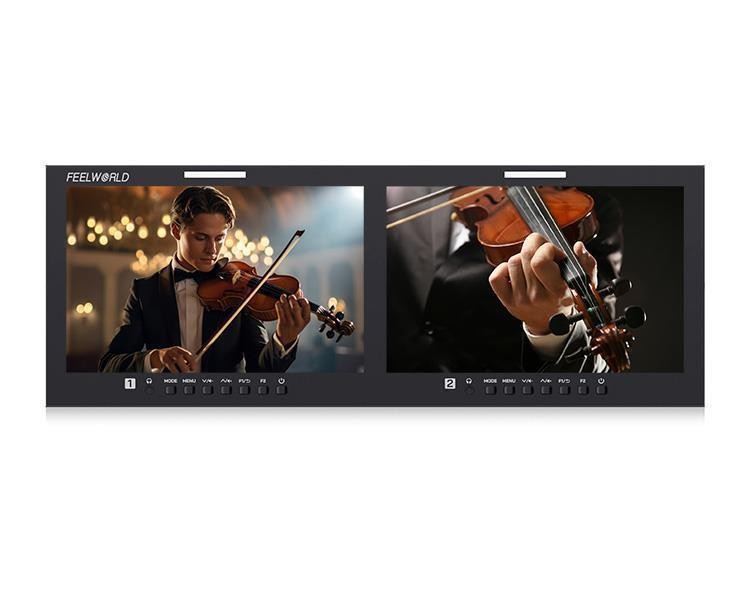
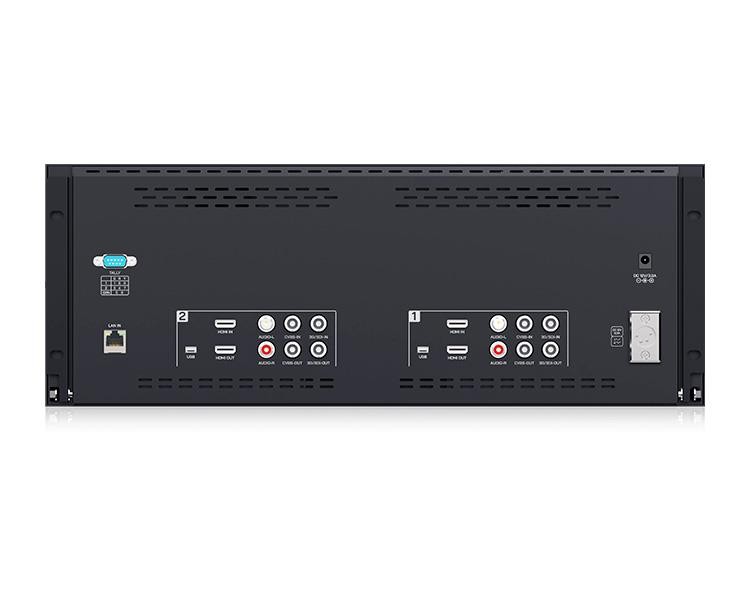
A dual 10.1" director monitor for a 4RU rack. Two independent 1920 × 1200 IPS panels at 500 cd/m² and 1500:1, each with its own 3G-SDI, HDMI and composite BNC input. Three-colour tally, control from a computer over LAN and up to 32 custom 3D LUTs. This is not an on-camera monitor — it belongs in a rack, an OB van or a gallery desk.
819 € with VAT
676.86 € without VAT
Availability
on request
Top accessories for Feelworld D101-PLUS
Infinitek L-4.5CHWS 1m FLEX 12G-SDI cable BNC-BNC
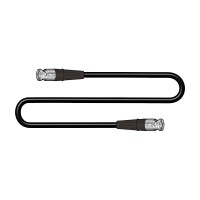
Canare L-4.5CHWS flexible and durable 75 ohm 4,2 mm "Low Loss" koaxial SD/HD/3G/12G-SDI
15 €
In stock > 5 pcs
Infinitek L-4.5CHWS 10m FLEX 12G-SDI cable BNC-BNC
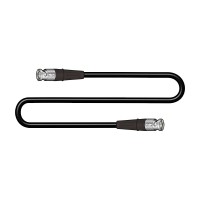
Canare L-4.5CHWS flexible and durable 75 ohm 4,2 mm "Low Loss" koaxial SD/HD/3G/12G-SDI
50 €
To be sent 2 pcs
Infinitek L-4.5CHWS 5m FLEX 12G-SDI cable BNC-BNC
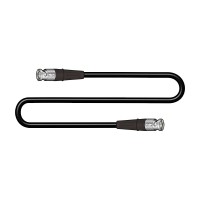
Canare L-4.5CHWS flexible and durable 75 ohm 4,2 mm "Low Loss" koaxial SD/HD/3G/12G-SDI
31 €
To be sent > 5 pcs
SmallRig Ultra Slim 4K Mini HDMI cable 35cm (3040)
A 35 cm ultra-slim 4K HDMI cable (Mini HDMI to full HDMI) for a camera rig. HDMI
12 €
To be sent 5 pcs
SmallRig Ultra Slim 4K HDMI Cable (D to A) 35cm 3042B
The SmallRig 3042B cable links a camera's micro HDMI (D) port to the full-size HDMI
12 €
Backordered > 5 pcs
Product description
SPECIFICATIONS
PACKAGE CONTENT
Product description
A dual 10.1" director monitor for a 4RU rack. Two independent 1920 × 1200 IPS panels at 500 cd/m² and 1500:1, each with its own 3G-SDI, HDMI and composite BNC input. Three-colour tally, control from a computer over LAN and up to 32 custom 3D LUTs. This is not an on-camera monitor — it belongs in a rack, an OB van or a gallery desk.
Dual 10.1" director monitor for a 4RU rack
Two independent screens in one chassis
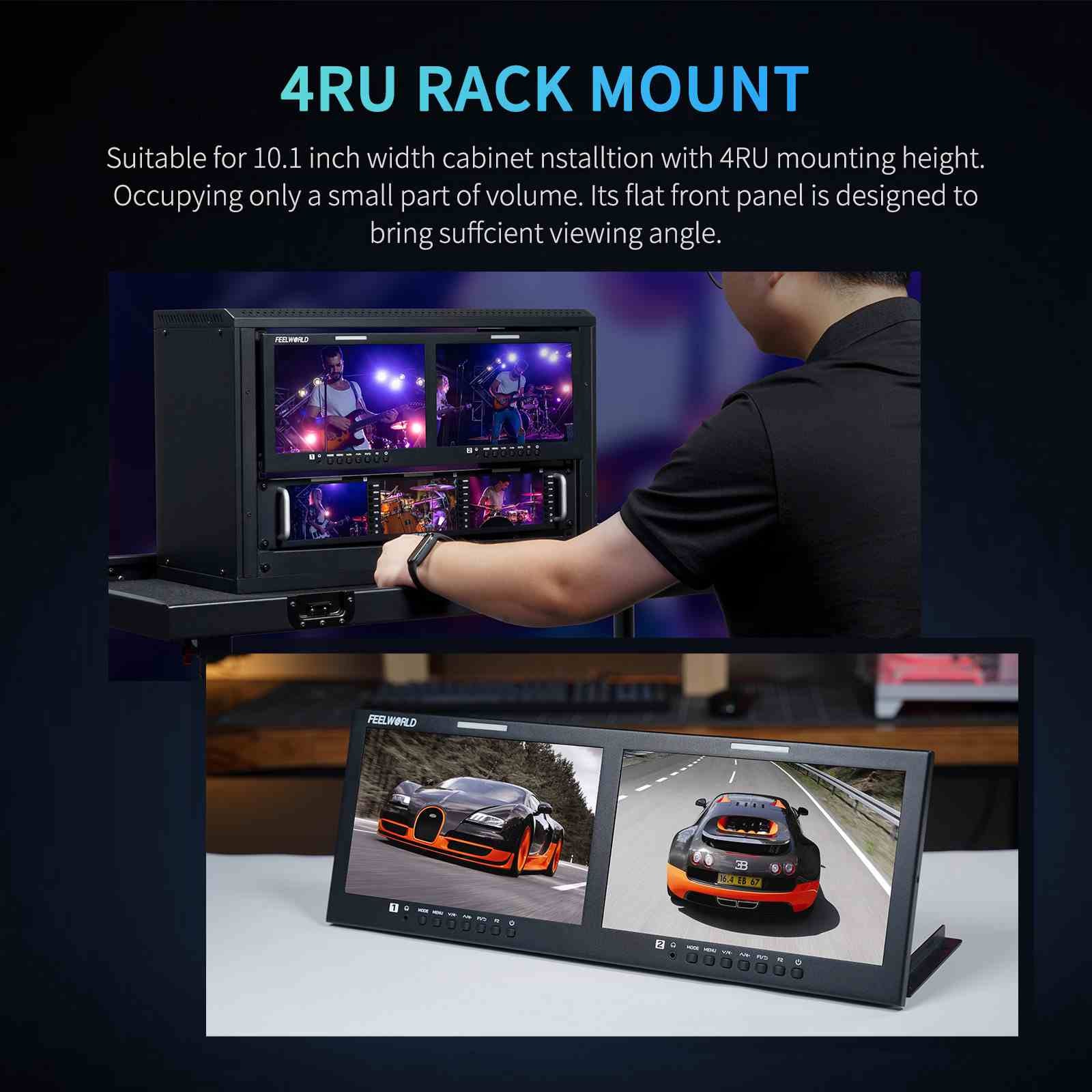
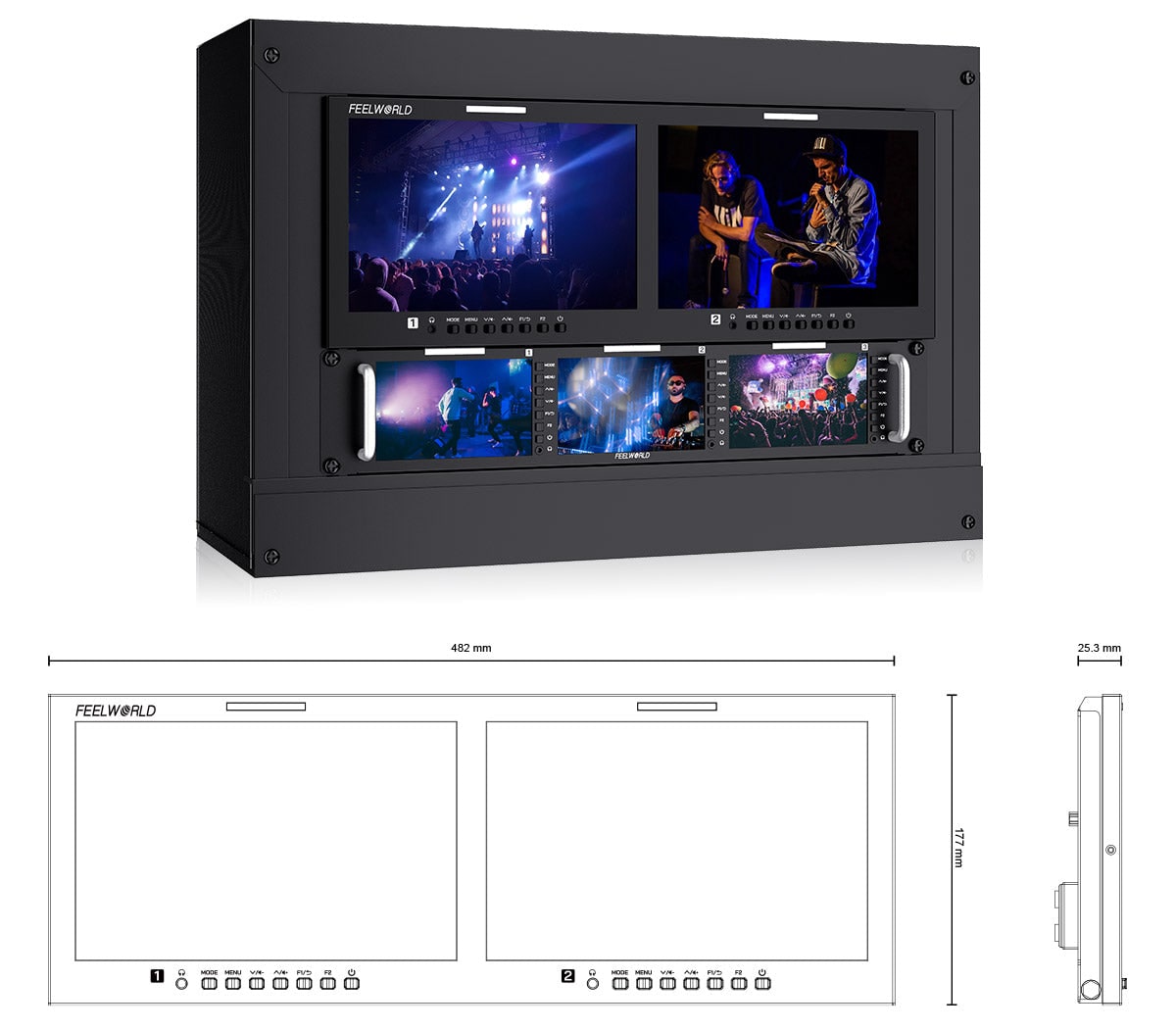
The D101 PLUS is not an on-camera monitor. It is a rack monitor: the 4RU chassis bolts into a standard nineteen-inch cabinet — a monitor wall, an OB van or a rolling stand — and carries two entirely separate ten-inch screens side by side.
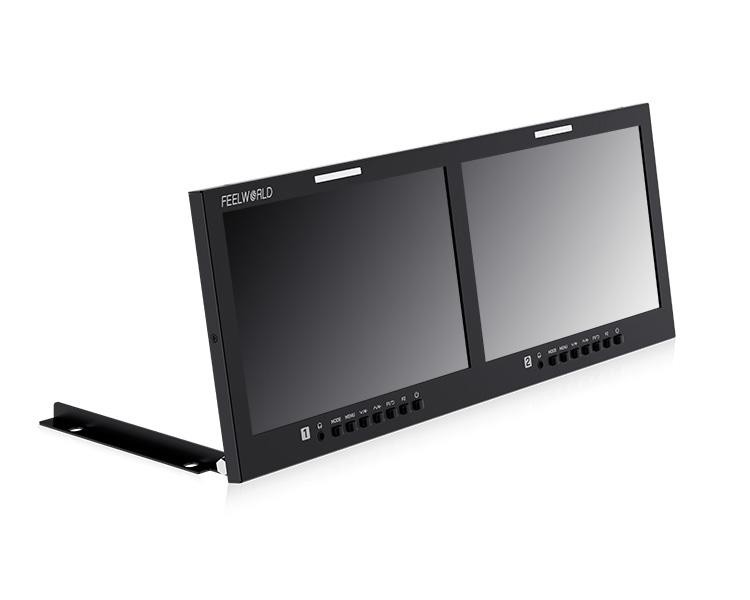
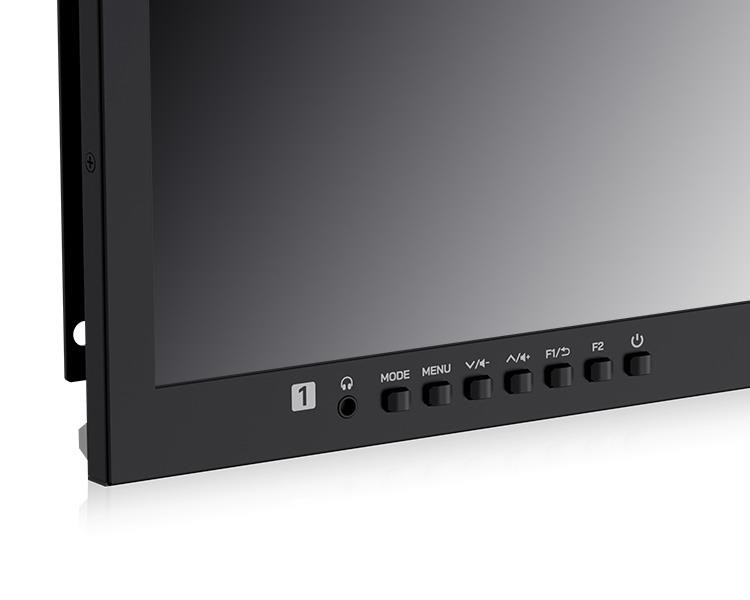
Each panel has its own inputs, outputs, buttons and tally light, so one chassis watches two different cameras. The unit measures 482 × 177 × 25 mm and weighs 2 kg. If you would rather not bolt it into a rack, two metal feet fold out at the back and it stands on a desk.
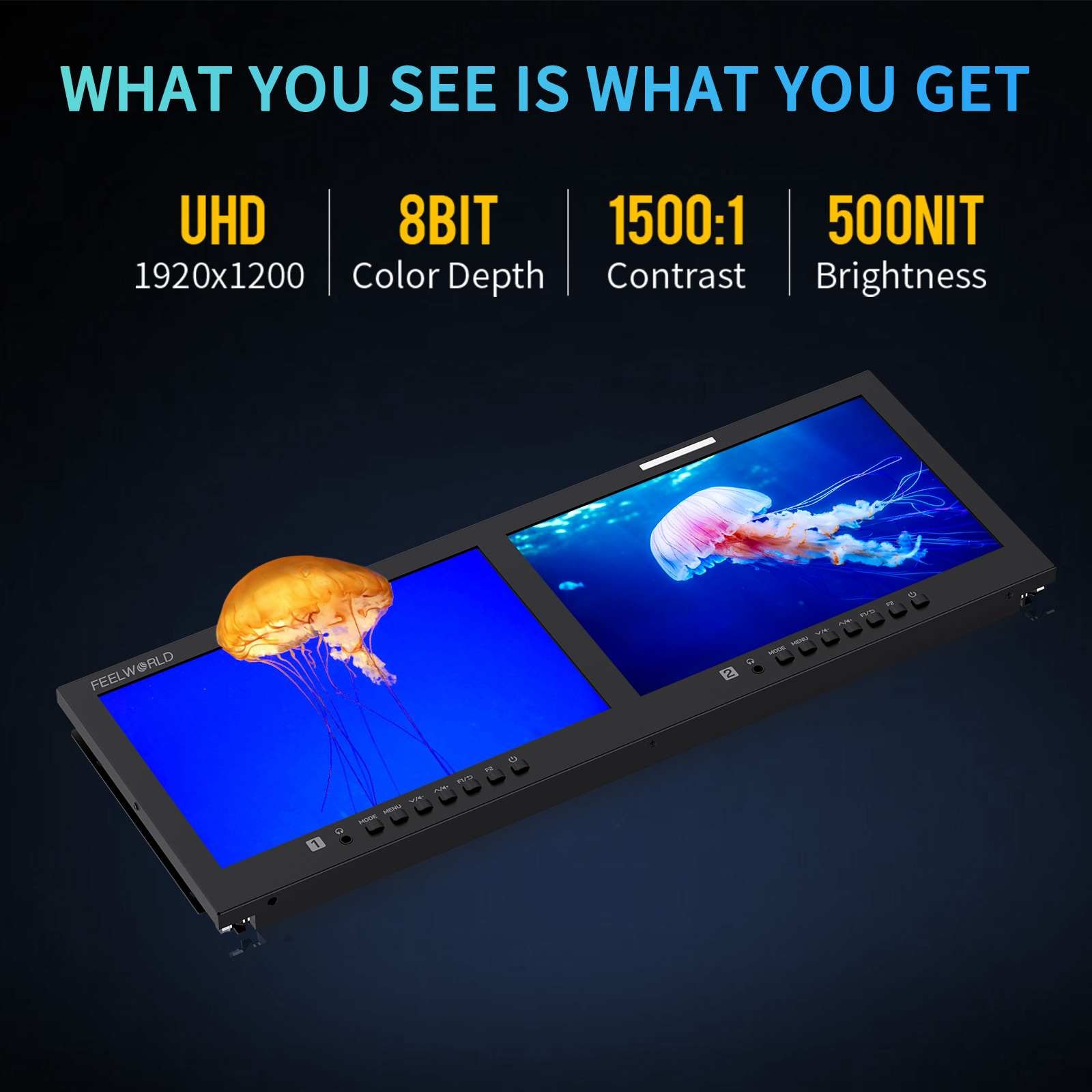
1920 × 1200 on both panels
500 cd/m² brightness, 1500:1 contrast
Both screens are IPS at 1920 × 1200 with a 16:10 aspect ratio — a 16:9 picture leaves room for a line of status data underneath. Colour depth is 8 bit, that is 16.7 million colours, contrast is 1500:1 and the dot pitch 0.1128 mm.
Viewing angles are 80° each way horizontally and vertically, 160° in total, so colour holds even when several people watch from the side. 500 cd/m² is an indoor figure: ample for a gallery, a van or a studio, while shooting in direct sun calls for an on-camera monitor above 1000 nits.
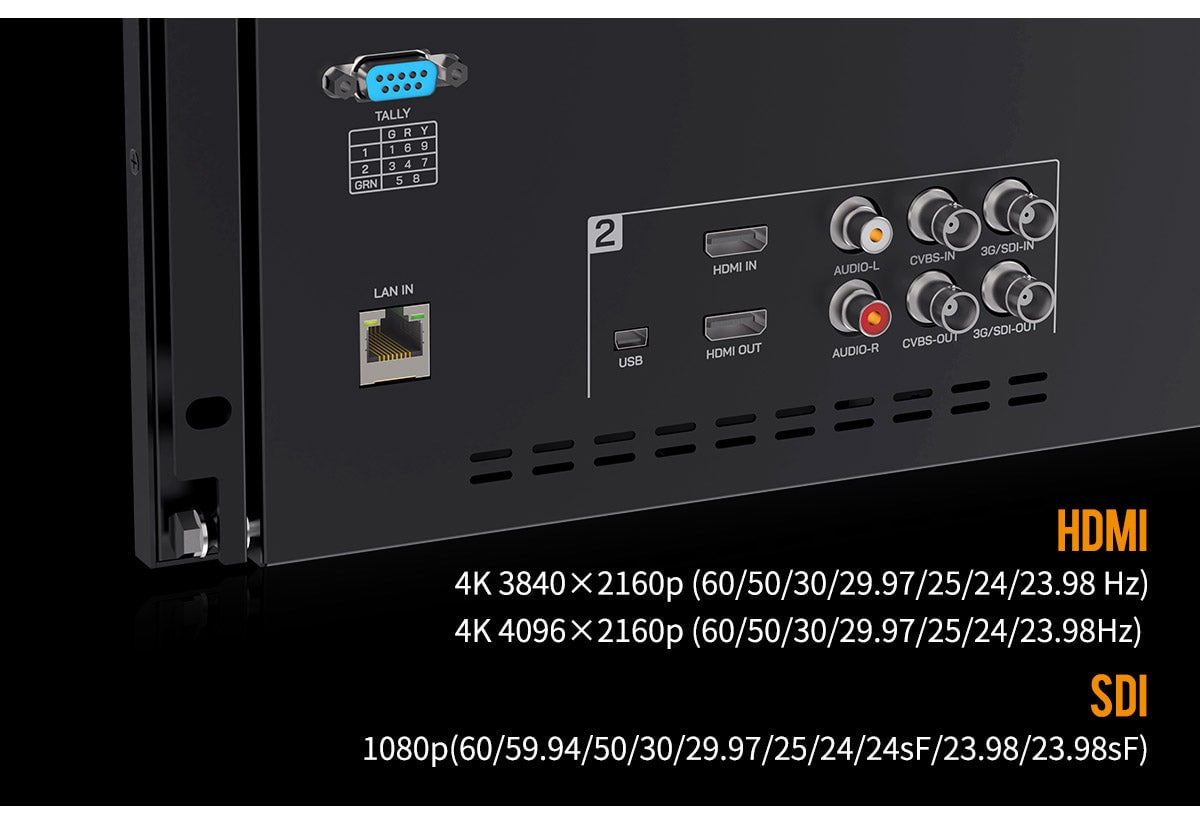
Separate inputs and outputs for each screen
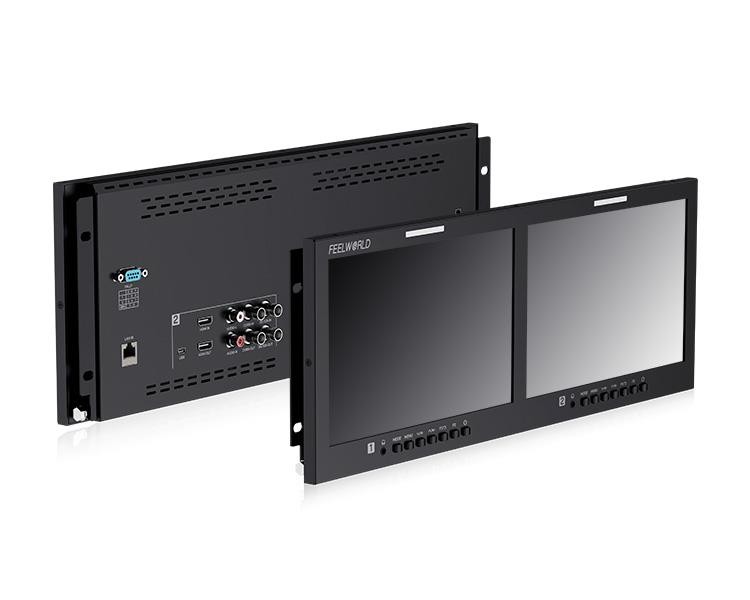
Every panel has its own set of connectors: 3G-SDI in and out on BNC, HDMI in and out, composite video in and out on BNC, and a pair of RCA jacks for analogue L/R audio. Each panel also has its own headphone output.
Over HDMI the monitor takes 4K 3840 × 2160 and 4096 × 2160 at 60, 50, 30, 25 and 24 frames; over SDI it takes 1080p up to 60 frames including the 24sF and 23.98sF segmented modes. The composite input recognises PAL and NTSC on its own.
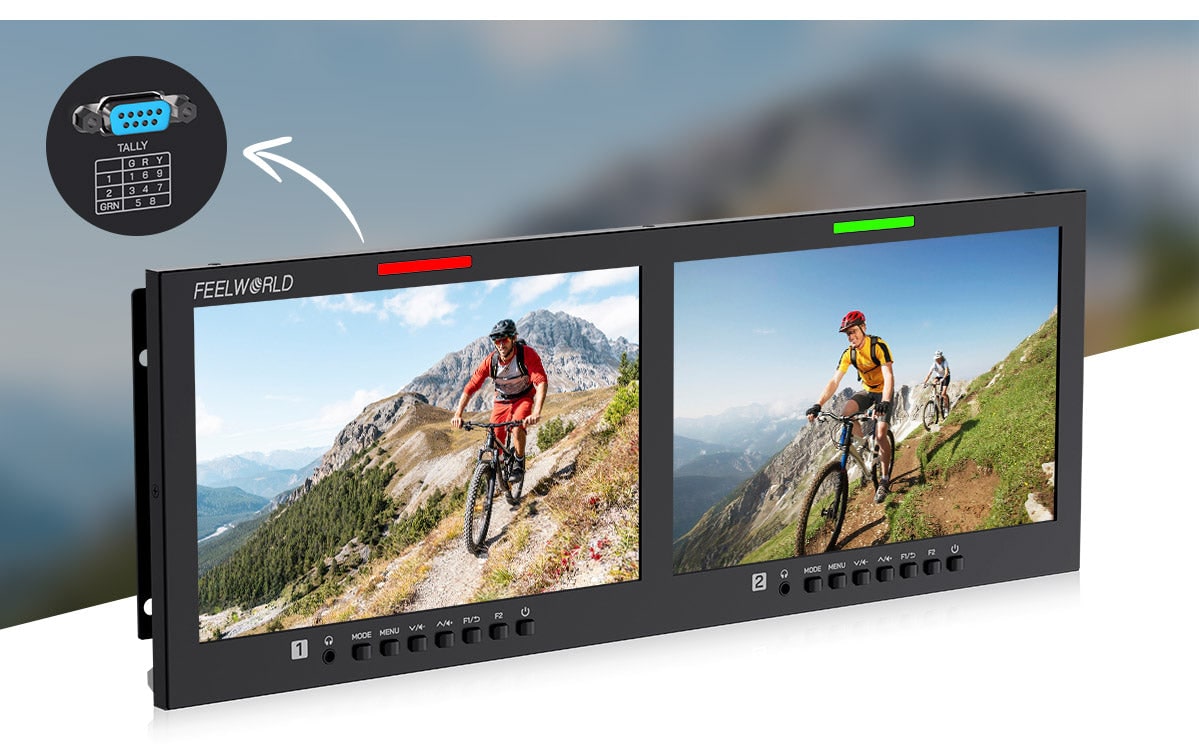
Three-colour tally on the front
A tally light sits above each screen and shows red, green or yellow — on air, preview and recording. During a live show the crew can see which camera is live without asking anyone.
It connects at the back through a standard parallel pin connector, so it drops into an ordinary gallery desk with no converters. The tally kit with a screw terminal block is included in the box.
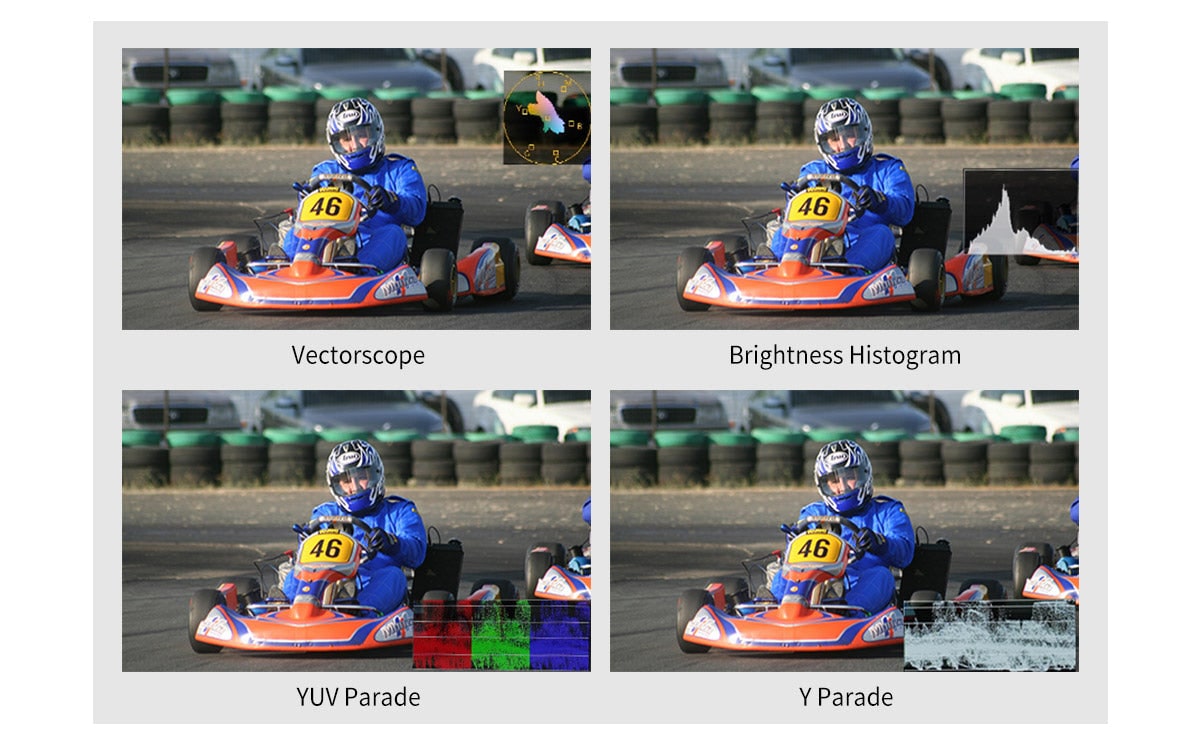
Scopes instead of a separate expensive unit
Waveform, vectorscope, histogram, audio
The monitor has built-in tools that are normally bought separately: waveform in RGB, YUV and Y, a vectorscope, a histogram (RGB1, RGB2, Y) and audio phase and level displays. Each one can be switched on by itself, or a single button opens all of them at once.
On top of that there is focus assist with red, green or blue peaking, check field, over-exposure warning, false colour, pixel to pixel, centre and ratio markers, image flip and freeze, 2× to 16× zoom, 1.33× to 2× anamorphic de-squeeze and custom colour temperature. Under an SDI signal the monitor also shows LTC and VITC time code.
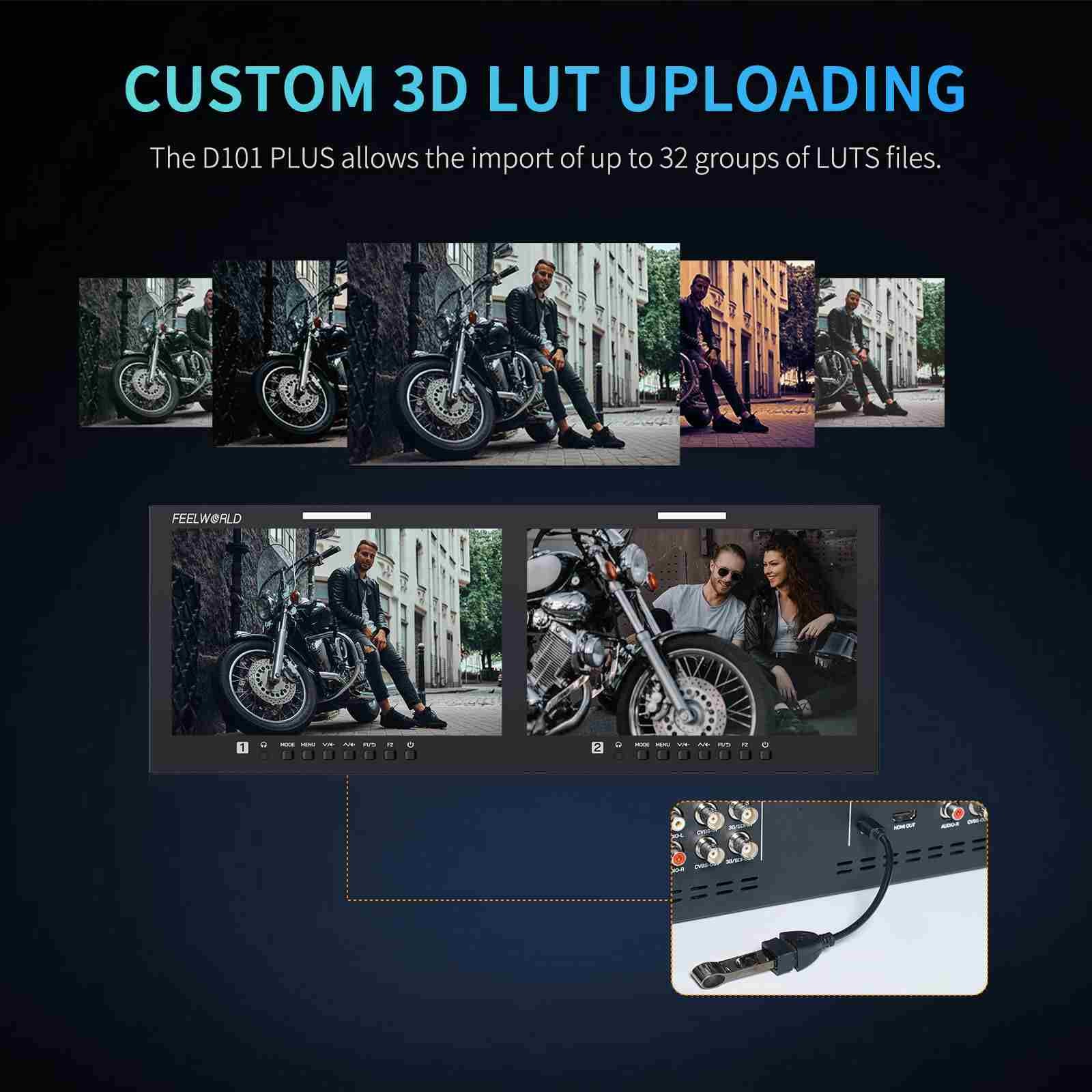
Up to 32 custom 3D LUTs
Up to thirty-two custom .cube files load into memory, so you see the target look while shooting instead of imagining it. Alongside custom LUTs the monitor carries built-in LOG conversions.
The files go into the root directory of a USB flash drive, which connects to the monitor with the supplied mini USB to USB cable. The flash drive itself is not included.
Control from a computer over LAN
One program for a whole monitor wall
There is an RJ-45 socket at the back. The monitor joins the network and is then driven from a computer with the maker’s software: input switching, brightness, contrast, saturation, sharpness, hue, backlight, volume and the function buttons. Each monitor is addressed by its IP address, so one seat serves a whole wall without walking over to it.
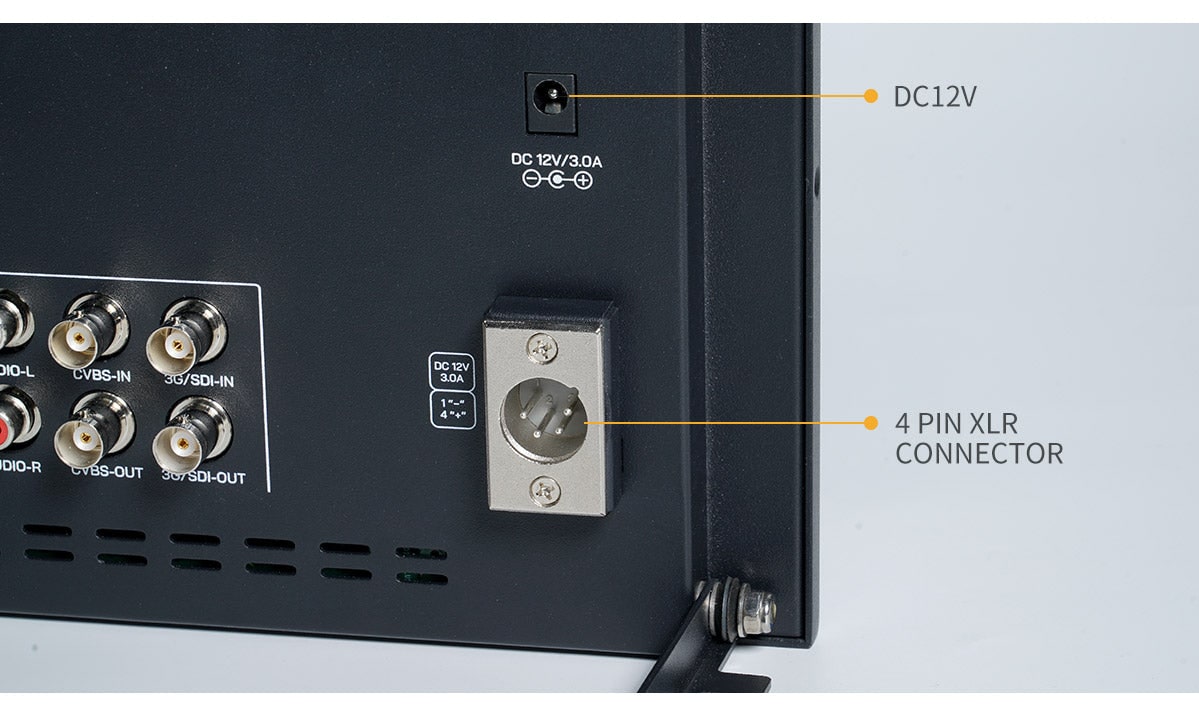
Power is flexible: either the DC socket for a 5.5 × 2.1 mm coaxial plug, or a professional four-pin XLR. The monitor takes 9 to 24 V and draws up to 24 W; a 3 A mains adapter is in the box. The menu speaks eleven languages.
PACKAGE CONTENT
- D101 PLUS monitor
- 3 A power adapter
- Tally kit
- Mini USB to USB cable
- Operation manual
SPECIFICATIONS
- Model: D101 PLUS
- Screen size: 2× 10.1" IPS
- Resolution: 1920 × 1200 pixels, 16:10 aspect ratio
- Dot pitch: 0.1128 × 0.1128 mm
- Brightness: 500 cd/m²
- Contrast ratio: 1500:1
- Colour depth: 8 bit (16.7 million colours)
- Backlight: LED
- Viewing angle: 80°/80° horizontal, 80°/80° vertical
- Inputs (each screen): 1× 3G-SDI (BNC), 1× HDMI, 1× composite video (BNC), 2× RCA audio L/R
- Outputs (each screen): 1× 3G-SDI (BNC), 1× HDMI, 1× composite video (BNC)
- Audio: embedded audio, headphone output on each screen
- SDI formats: 720p (60/59.94/50/30/29/25/24/23.98), 1080i (60/59.94/50), 1080p (60/59.94/50/30/29.97/25/24/24sF/23.98/23.98sF)
- HDMI formats: 480i/576i/480p/576p, 720p and 1080i/1080p up to 60p, 4K 3840 × 2160p and 4096 × 2160p (60/50/30/29.97/25/24/23.98)
- Composite input: PAL and NTSC, auto-detected
- Video assist: waveform (RGB, YUV, Y), vectorscope, histogram (RGB1, RGB2, Y), up to 32 custom 3D LUTs, focus assist, check field, over exposure, false colour, pixel to pixel, centre and ratio markers, image flip and freeze, 2× to 16× zoom, over and under scan, 1.33× to 2× anamorphic, aspect ratio selection, custom colour temperature, LTC and VITC time code over SDI
- Tally: built-in red / green / yellow indicator, parallel pin connector at the back
- Remote control: LAN (RJ-45), computer software, several monitors from one seat
- Menu languages: 11
- Power: DC 9–24 V (5.5 × 2.1 mm coaxial plug) or four-pin XLR
- Power consumption: up to 24 W
- Working temperature: −10 to 60 °C
- Mounting: 4RU in a 19" rack, or on a desk on fold-out feet
- Dimensions: 482 × 177 × 25 mm
- Weight: 2048 g
WE RECOMMEND
The following accessories go with the Feelworld D101-PLUS. They are picked according to the connectors and power supply the product actually has.
HDMI cables – Thin, flexible cables with micro and mini HDMI connectors for hooking up a camera.
- Atomos Spirálový kabel 4K Full HDMI - Micro HDMI 30/60 cm
- Atomos Spirálový kabel Full HDMI - Mini HDMI
- SmallRig ultra tenký (Ultra Slim) 4K Micro HDMI na Full HDMI kabel (D to A) 35cm 3042B
- SmallRig Ultra tenký kabel 4K Mini HDMI 35 cm (3040)
SDI cables – Flexible 12G-SDI coaxial cables for connecting a camera or a switcher.
Parameters
| Manufacturer: | Feelworld |
| Category: | Camera monitors |
Main parameters
| Size | 10.1" |
| Monitor inputs | HDMI · Composite Video · 3G-SDI |
| Luminosity | 500cd/m2 |
| Panel resolution | 1920x1200 |
| Monitor power supply | 12V XLR |
Other parameters
| Other features | rack · Tally · 3D LUT correction |
GPSR
TB EC REP EUROPEAN SL
Business address: Calle Marcelo Usera 60, LC. Madrid 28026 Spain
ACCESSORIES (5)
ACCESSORIES (5)
Infinitek L-4.5CHWS 1m FLEX 12G-SDI cable BNC-BNC
Canare L-4.5CHWS flexible and durable 75 ohm 4,2 mm "Low Loss" koaxial SD/HD/3G/12G-SDI
15 €
In stock > 5 pcs
Infinitek L-4.5CHWS 10m FLEX 12G-SDI cable BNC-BNC
Canare L-4.5CHWS flexible and durable 75 ohm 4,2 mm "Low Loss" koaxial SD/HD/3G/12G-SDI
50 €
To be sent 2 pcs
Infinitek L-4.5CHWS 5m FLEX 12G-SDI cable BNC-BNC
Canare L-4.5CHWS flexible and durable 75 ohm 4,2 mm "Low Loss" koaxial SD/HD/3G/12G-SDI
31 €
To be sent > 5 pcs
SmallRig Ultra Slim 4K Mini HDMI cable 35cm (3040)
A 35 cm ultra-slim 4K HDMI cable (Mini HDMI to full HDMI) for a camera rig. HDMI
12 €
To be sent 5 pcs
SmallRig Ultra Slim 4K HDMI Cable (D to A) 35cm 3042B
The SmallRig 3042B cable links a camera's micro HDMI (D) port to the full-size HDMI
12 €
Backordered > 5 pcs
Alternative (5)
Alternative (5)
Portkeys BM5IV WR
The Portkeys BM5IV WR is a professional 5.5" touchscreen camera monitor with a 10-bit
829 €
In stock 1 pcs
ATOMOS SHINOBI 7RX
The Shinobi 7RX combines a large 7" HDR display with a maximum brightness of 2200
969 €
In stock 3 pcs
Atomos Ninja (2023)
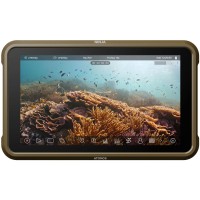
The Atomos Ninja (2023) is a 5.2-inch HDMI HDR monitor-recorder that combines accurate
729 €
In stock 2 pcs
Lilliput Q7-12G 7" HD 12G-SDI/HDMI 2.0 Ultra-Bright On-Camera Monitor
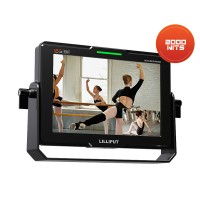
Add crisp daylight viewing to your video or photography shoot with the Q7-12G 7"
729 €
In stock 1 pcs
Lilliput A13
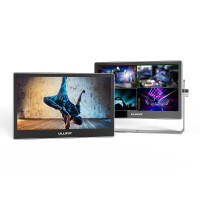
Meet the A13, an exceptional display featuring a 13.3-inch OLED panel with a dazzling
849 €
To be sent 1 pcs
News, training, and discounts from Syntex
Special offers and discounts for subscribers only · Free audio & video workshops · News and tips from the world of filmmaking
- Show all
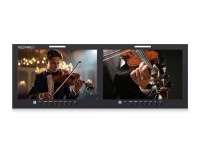
Feelworld D101-PLUS
A dual 10.1" director monitor for a 4RU rack. Two independent 1920 × 1200 IPS panels819 €on request