
 CZ
CZ SK
SK HU
HU AT
AT DE
DE ES
ES SI
SI HR
HR
Nothing in the basket.

- Search
-
Login

-
0
Comparison
Add products to compare, then they will appear here and you can compare parameters.
-
0
0 €
Tilta Float Handheld Gimbal Support System - V Mount
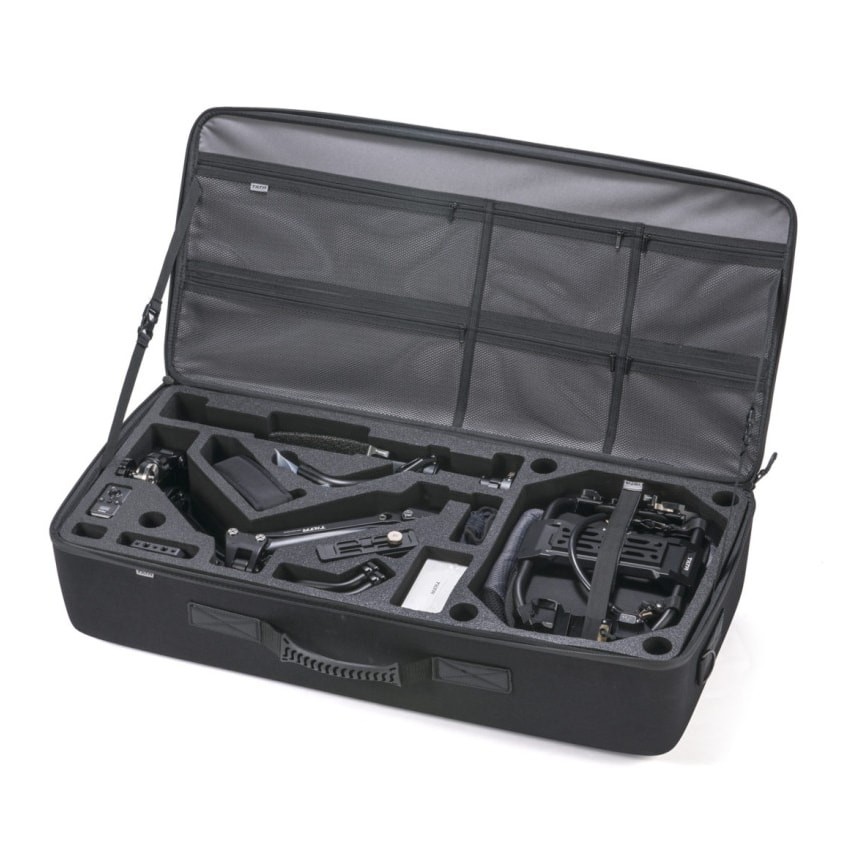
SKU: GSS-T01-V
Tilta Float moves the weight of the gimbal off your arms and onto your body: a support vest, a spring-loaded arm and a retractable carbon post carry a rig of up to 10 kg and add a fourth axis of stabilisation. The wireless thumb controller drives the DJI RS 2, RS 3 Pro and RS 4 Pro, and power comes from a V-Mount, Gold Mount or DJI TB50 battery or the gimbal…
1 639 € with VAT
1 354.55 € without VAT
Availability
Backordered 1 pcs - 06.11.2026
Top accessories for Tilta Float Handheld Gimbal Support System - V Mount
Tilta Security Bracket for DJI RS 4
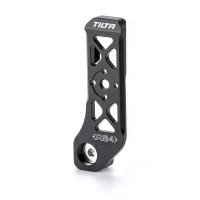
The Tilta Security Bracket for DJI RS 4 is a security bracket that secures the connection
11 €
In stock 5 pcs
Tiltaing Mini Table Top Tripod
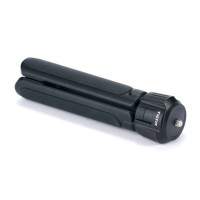
The Tiltaing Mini Table Top Tripod is an aluminium tabletop tripod that doubles as
23 €
In stock 2 pcs
Tilta Float System Baby Pin Docking Adapter
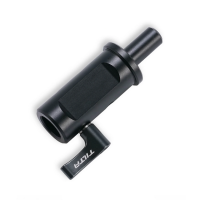
The Tilta GSS-T01-PDA docking adapter adds a standard 5/8" (16 mm) baby pin to the
23 €
In stock 2 pcs
Tilta Wireless Thumb Controller for RS 2 - Black
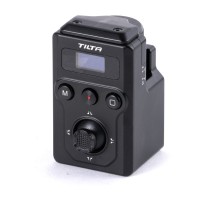
The Tilta GSS-T01-WTC wireless thumb controller drives a DJI RS 2 or RS 3 Pro gimbal
156 €
In stock 1 pcs
Remote Control Receiver Module for RS 2
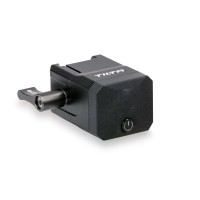
This Remote Control Receiver Module for RS 2 pairs with the RS 2 Remote Control Kit
115 €
on request
Tilta Manfrotto Quick Release Plate Adapter for Tilta Float Stabilizing Arm
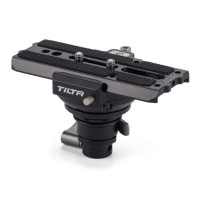
The Tilta GSS-T01-QPA adapter mounts a camera or a dual handle bracket straight onto
180 €
on request
Tilta Float System Post
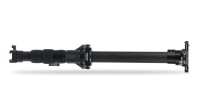
The Tilta GSS-T01-PST Float System Post is a lightweight, telescopic carbon-fiber/aluminum
350 €
on request
Tilta Float System Carrying Case

The Tilta GSS-T01-CC Carrying Case is a premium, semi-rigid protective case custom-designed
204 €
on request
Tilta Float System V Mount Battery Plate
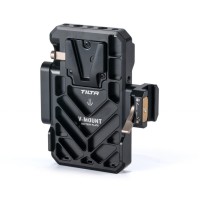
This V mount battery plate attaches to the base of the post of the Tilta Float System
83 €
on request
Tilta Float System Support Vest
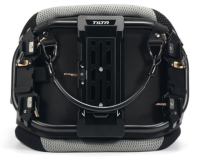
The Tilta GSS-T01-SV Float System Support Vest provides stable, comfortable torso
549 €
on request
Product description
SPECIFICATIONS
PACKAGE CONTENT
Product description
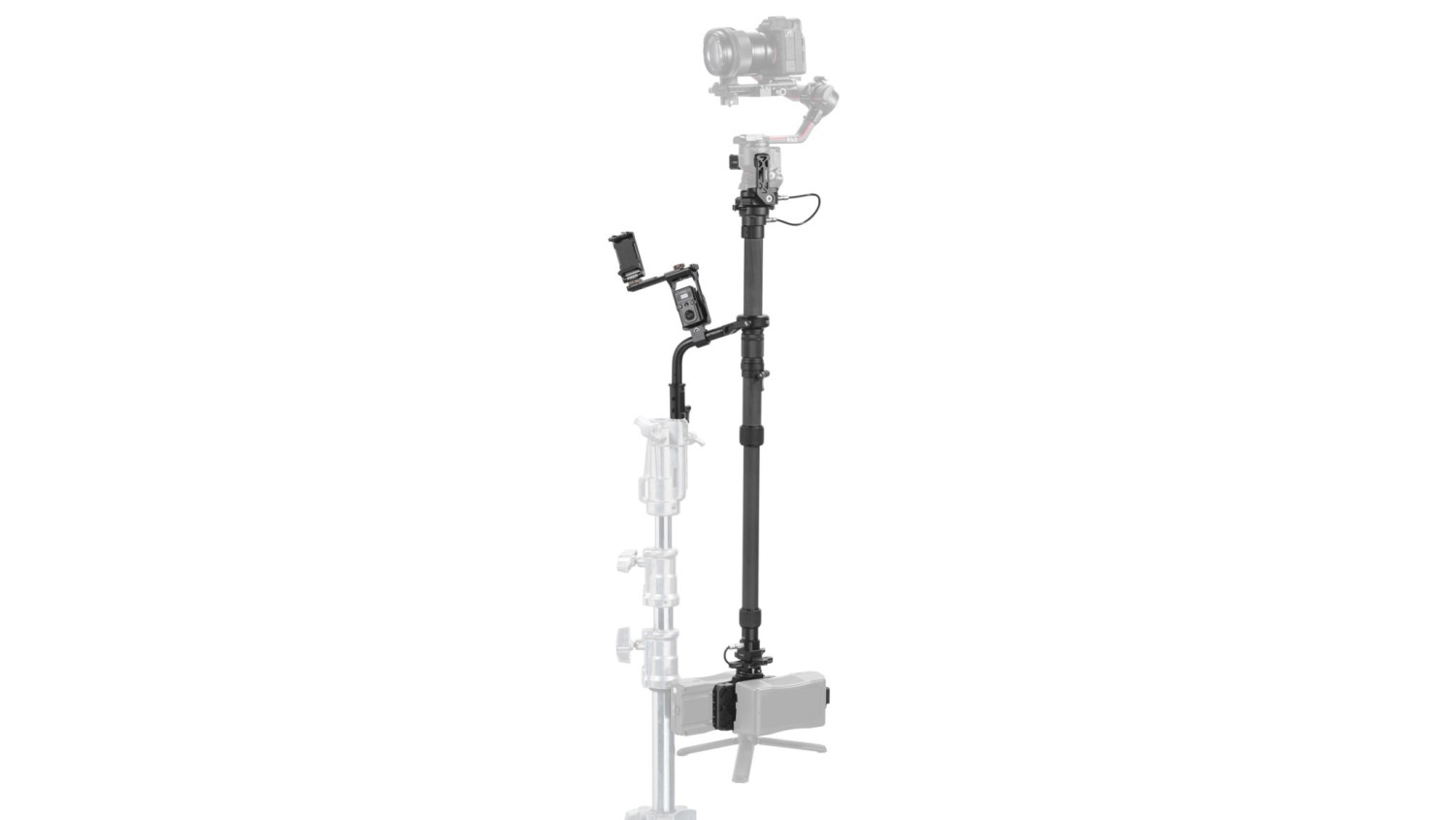
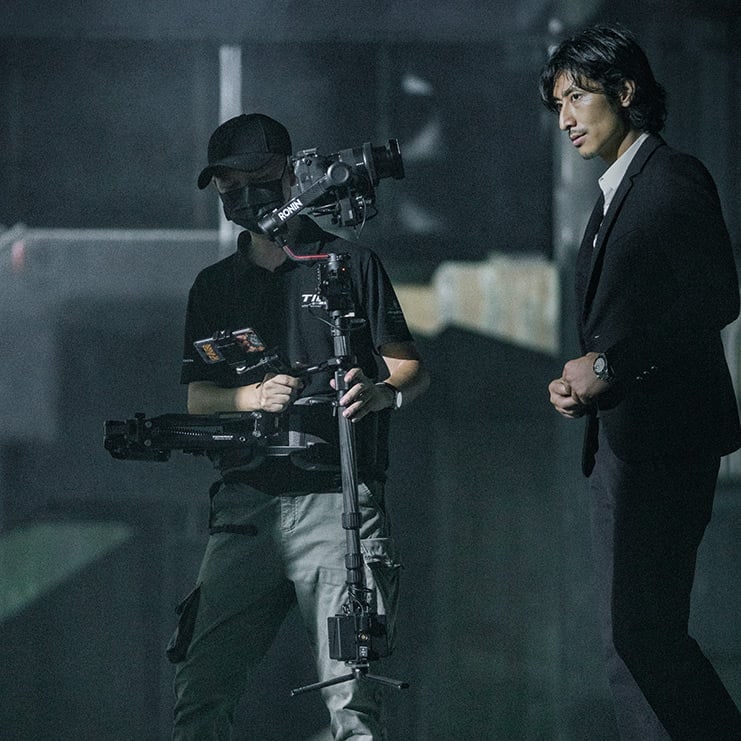
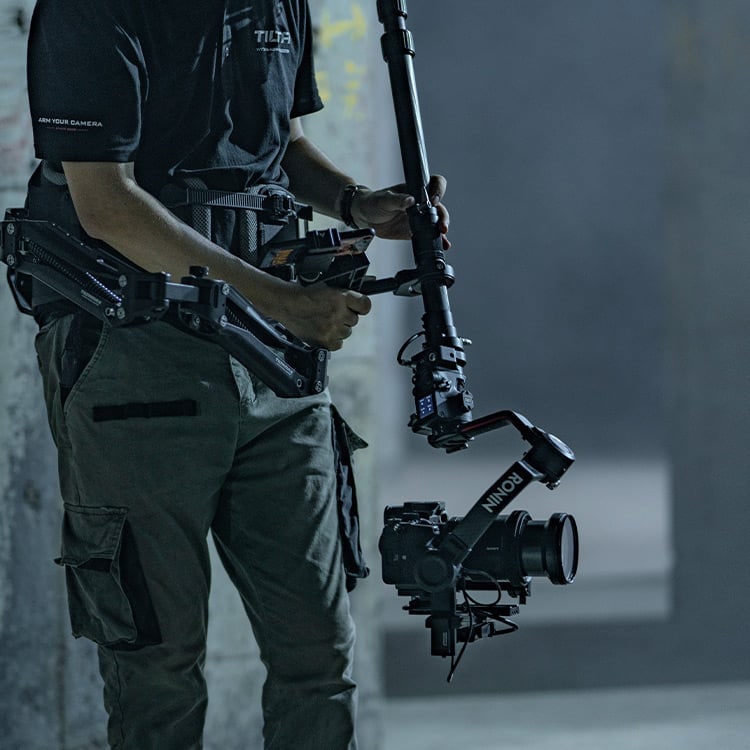
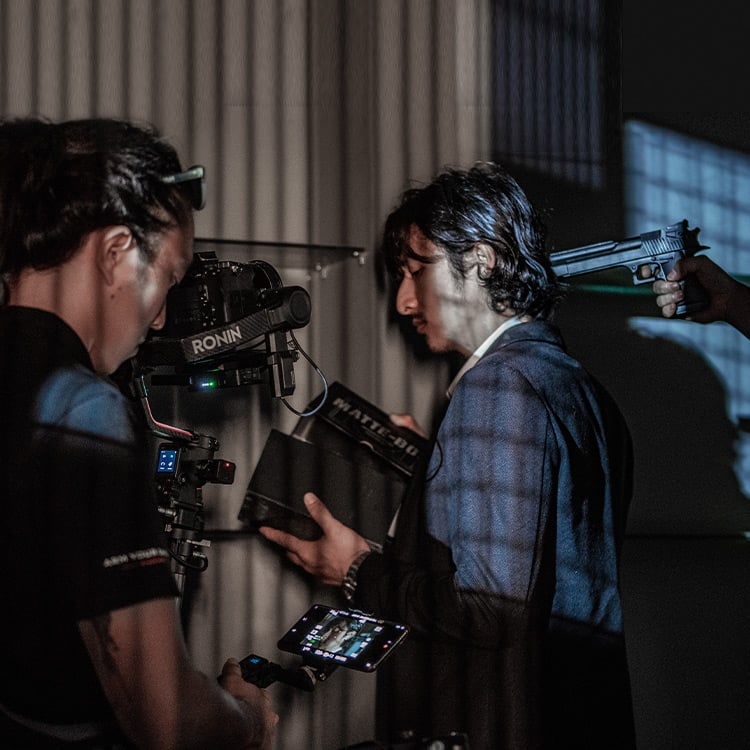
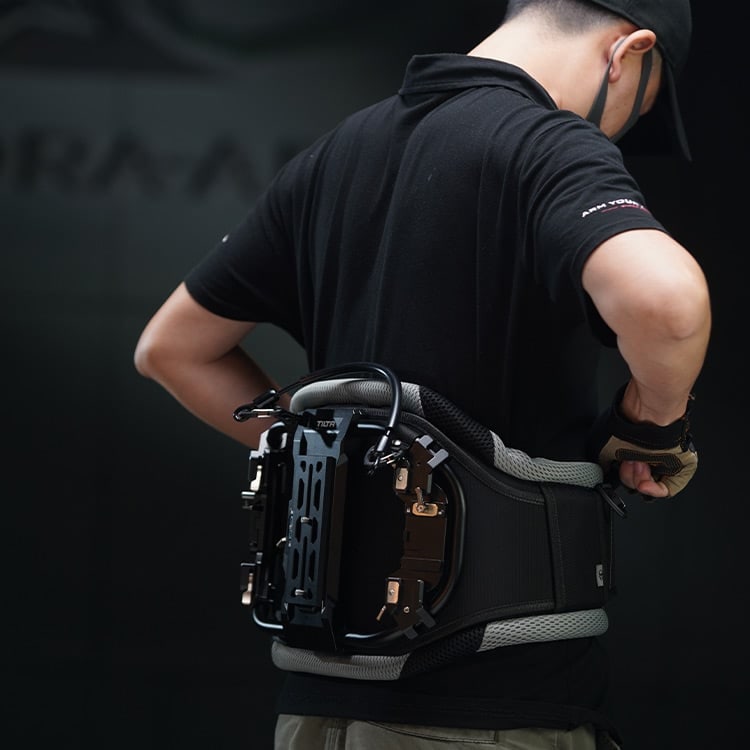
Tilta Float moves the weight of the gimbal off your arms and onto your body: a support vest, a spring-loaded arm and a retractable carbon post carry a rig of up to 10 kg and add a fourth axis of stabilisation. The wireless thumb controller drives the DJI RS 2, RS 3 Pro and RS 4 Pro, and power comes from a V-Mount, Gold Mount or DJI TB50 battery or the gimbal grip. Arm and monitor bracket switch from left to right, so the system suits both hands.
Key features
Flexible
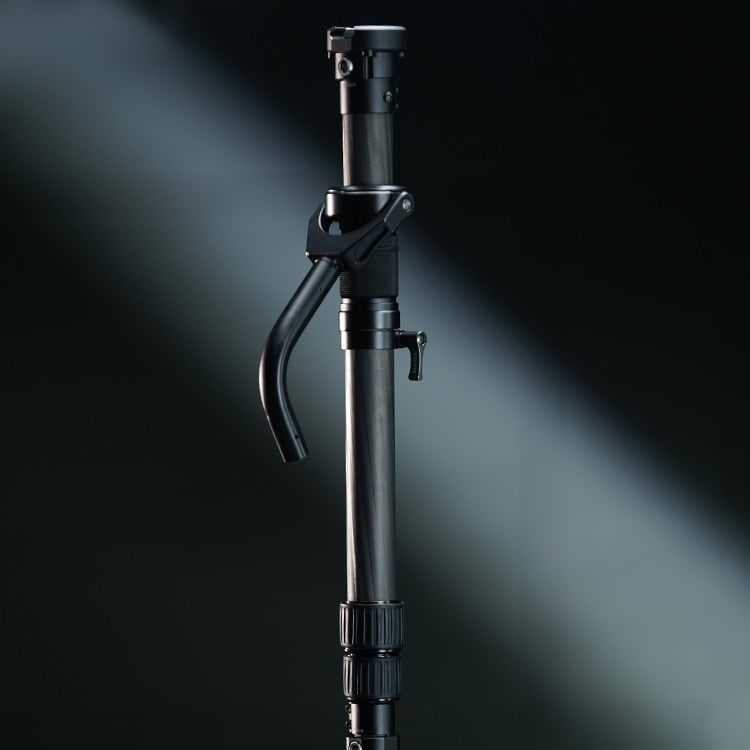
Easy switching between high and low angles. NATO rail connections on both the top and bottom ends. Compatible with all gimbals and power supply equipment. The retractable post can function as a monopod or extension.
Retractable post
A carbon-fibre post. Wear-proof and lightweight.
Wireless control for precise operation
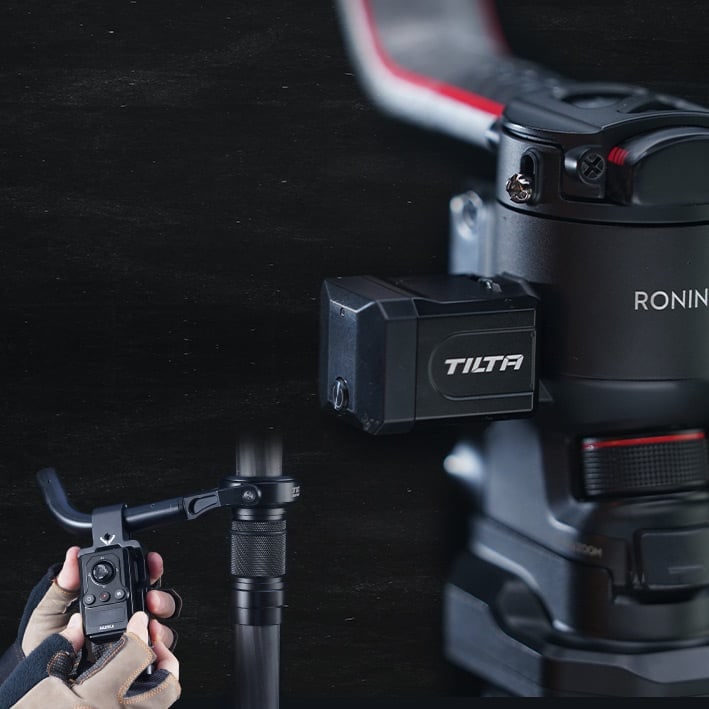
Fully authorised DJI internal communication protocol. Precisely control the RS2 through the wireless control receiver module.
Universal design, easily switch from left to right
Quick assembly design. Both the arm and the monitor bracket support left and right operation. Compatible with various gimbal brands.
More protection for secure operation
The modular camera and battery can be carried on the back of the vest. Operate safely with the guidance of the safety strap and enhanced anti-collision design.
Easy balancing, quick and precise
A simplified balancing process. Compatible with a wide range of accessories. Adjustable weight depending on the setup, with quick and precise control.
Continuous power: four supply options
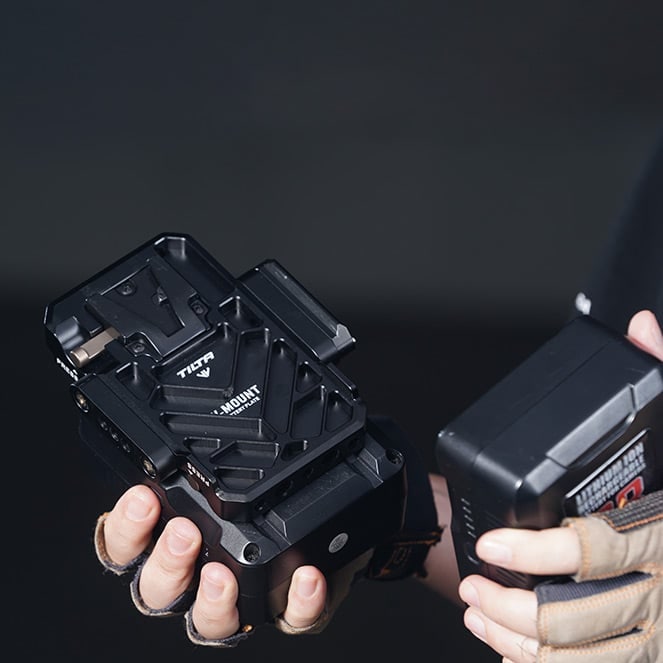
Power through an external V-mount or Gold Mount battery, the DJI battery grip or TB50 batteries. A tidy, cordless build that is compact and portable.
Compact and portable
A highly portable design for quick assembly and long-distance transportation.
What the Float works with
The Float carries any gimbal under the weight limit that mounts on a 1/4″-20 screw and powers over 2-pin LEMO or from its own battery. Wireless control, however, covers only the DJI RS 2, RS 3 Pro and RS 4 Pro. Tilta advises against gimbals larger than what counts as handheld — even under 10 kg, the system struggles with a body physically bigger than the DJI Ronin RS series.
Powering the gimbal
The gimbal can be powered from four sources: a V-Mount, Gold Mount or DJI TB50 battery, or the RS 2 battery grip itself. The Float has a single power output of its own — the 2-pin LEMO meant for the RS 2. The internal cable in the post is rated for 14.8 V and 3 A and tolerates 6 A at peak.
The wireless thumb controller
The supplied controller mounts on the cold shoe of the monitor bracket, runs on 2.4 GHz and reaches 50 to 70 metres depending on the surroundings. It drives the gimbal as well as a Nucleus-M or Nucleus Nano follow focus motor. It runs on a single GoPro Hero 5–8 battery, which is not included; the USB-C port is there for future firmware updates, not for power. The M key only switches the mode — it cannot mimic the gimbal’s own function.
PACKAGE CONTENT
- Tilta Float System Arm (GSS-T01-ARM) — 1×
- Tilta Float System Post (GSS-T01-PST) — 1×
- Power Supply Base Plate for RS 2 with cable (TGA-PBP + TCB-DTP-2LE-40) — 1×
- Tilta Float System V-Mount Battery Plate (GSS-T01-BPV) — 1×
- 2-Pin LEMO to 2-Pin LEMO Cable, 20 cm (TCB-2LE-2LE-20) — 1×
- Tilta Float System Support Vest (GSS-T01-SV) — 1×
- Wireless Thumb Controller for RS 2 (GSS-T01-WTC) — 1×
- Wireless Control Receiver Module for RS 2 (TGA-WCR) — 1×
- Tilta Float System Monitor Bracket (GSS-T01-MB) — 1×
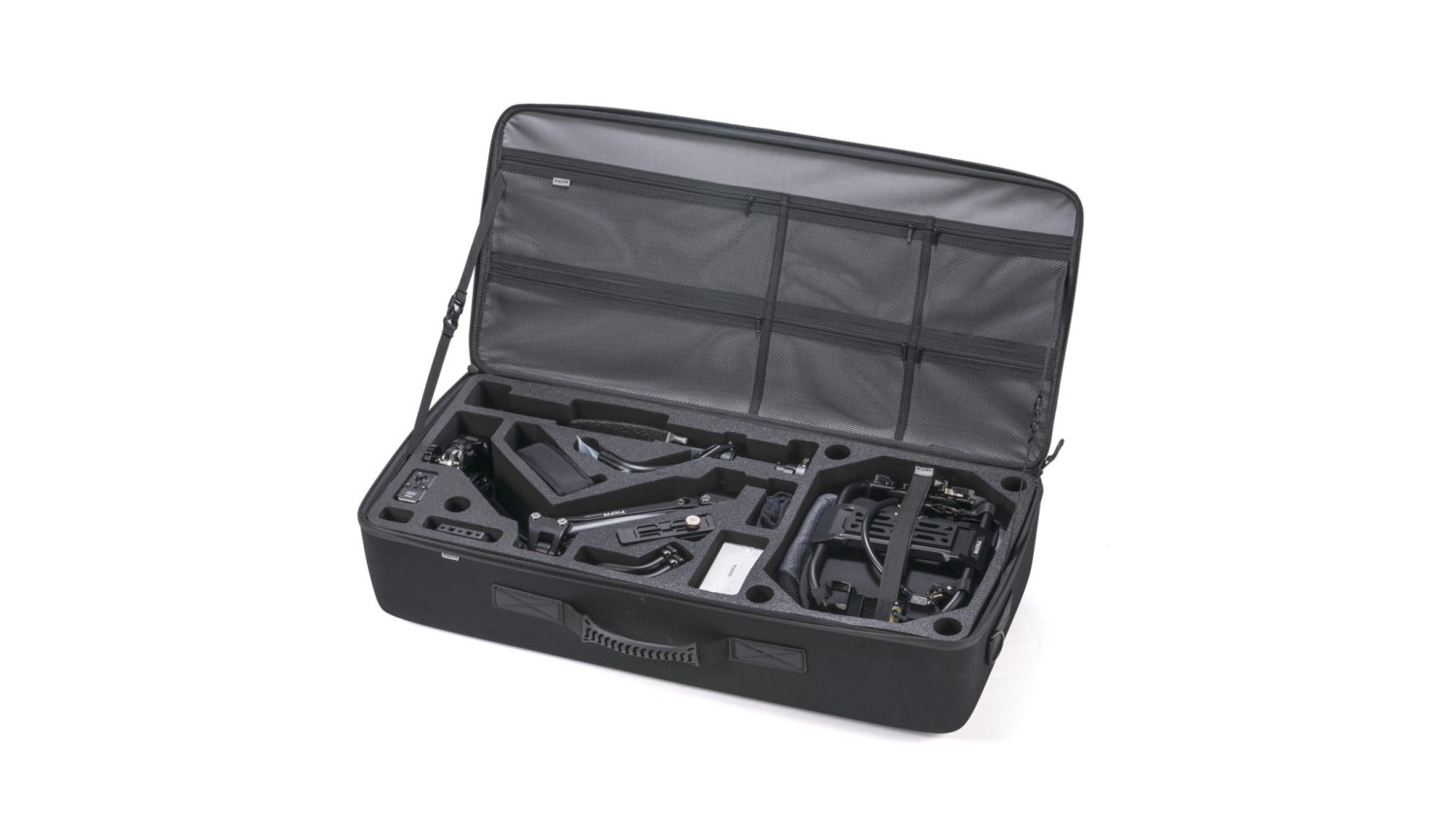
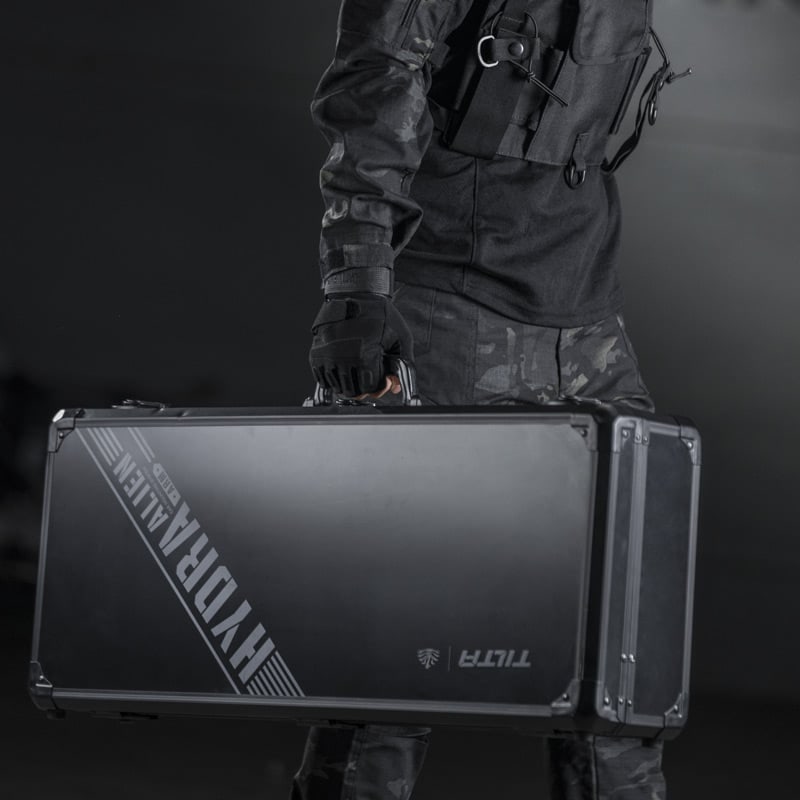
- Tilta Float System Carrying Case (GSS-T01-CC) — 1×
- Adjustable Cold Shoe Phone Mounting Bracket, black (TA-PMB-B) — 1×
- Tool Kit for Tilta Float System (GSS-T01-TK) — 1×
- Cross NATO Rail Post Mount (GSS-T01-CPM) — 1×
- Baby Pin Docking Adapter (GSS-T01-PDA) — 1×
SPECIFICATIONS
- Type: support system for a handheld gimbal (vest, arm, post)
- Dimensions: 835 × 345 × 210 mm
- Weight: 10 kg (net weight 7.5 kg)
- Payload: 10 kg
- Vertical travel of the arm: 800 mm
- Arm weight: 2.27 kg
- Connector pin diameter: 12 mm
- Post: carbon fibre and aluminium, 500–1000 mm long
- Post mount: NATO
- Power input and output: 2-pin LEMO, 14.8 V / 6 A max.
- Vest: 600–1200 mm circumference, built-in Tilta 15 mm quick-release baseplate
- Thumb controller: cold shoe, 2.4 GHz, 50–70 m range, 1× GoPro Hero 5–8 battery (not included)
- Gimbal power: V-Mount, Gold Mount or DJI TB50 battery, or the RS 2 grip
- Material: carbon fibre, aluminium, plastic, nylon fabric
- Colour: black
WE RECOMMEND
The Tilta Float is an advanced stabilization system designed for the DJI RS series of gimbals, which transfers the weight of the equipment to the operator’s body and enables smooth, cinematic movements. For optimal performance, it is essential to complement the system with lightweight components for focusing, monitoring, and mounting elements that utilize NATO standards and 15mm rod systems.
Matte Boxes and Accessories - Lightweight systems for light control and filtering that don’t weigh down the gimbal.
- TILTA MB-T16 MIRAGE MATTE BOX
- Tilta 80mm Cinema Adapter Ring for Tilta Mirage
- 77mm Adapter Ring for Tilta Mirage V2
Focus and Control - Components for precise manual or wireless lens control during movement.
- Potkeys Keygrip/LH5H Tilta Nucleus N Cable
- Tilta Tiltaing Pocket Follow Focus
- Tilta Seamless Focus Gear Ring for 59mm to 61mm Lenses
Mounting Elements and Adapters - Expansion elements for attaching accessories to the Float system and gimbal.
- TILTAING Handle Dovetail attachment for Type 1 Side Handles - Tilta Grey
- Tilta 1/4"-20 Mounting Screw to NATO Rail Adapter
- Tilta 15mm Rod Holder to NATO Rail Attachment - Black
- Tilta Security Bracket for DJI RS 4
Cables and Monitoring - Connectors for video transmission and powering external monitors.
Tools and Fasteners - Essential accessories for mounting, balancing, and maintaining the entire camera rig.
Parameters
ACCESSORIES (12)
ACCESSORIES (12)
Tilta Security Bracket for DJI RS 4
The Tilta Security Bracket for DJI RS 4 is a security bracket that secures the connection
11 €
In stock 5 pcs
Tiltaing Mini Table Top Tripod
The Tiltaing Mini Table Top Tripod is an aluminium tabletop tripod that doubles as
23 €
In stock 2 pcs
Tilta Float System Baby Pin Docking Adapter
The Tilta GSS-T01-PDA docking adapter adds a standard 5/8" (16 mm) baby pin to the
23 €
In stock 2 pcs
Tilta Wireless Thumb Controller for RS 2 - Black
The Tilta GSS-T01-WTC wireless thumb controller drives a DJI RS 2 or RS 3 Pro gimbal
156 €
In stock 1 pcs
Remote Control Receiver Module for RS 2
This Remote Control Receiver Module for RS 2 pairs with the RS 2 Remote Control Kit
115 €
on request
Tilta Manfrotto Quick Release Plate Adapter for Tilta Float Stabilizing Arm
The Tilta GSS-T01-QPA adapter mounts a camera or a dual handle bracket straight onto
180 €
on request
Tilta Float System Post
The Tilta GSS-T01-PST Float System Post is a lightweight, telescopic carbon-fiber/aluminum
350 €
on request
Tilta Float System Carrying Case
The Tilta GSS-T01-CC Carrying Case is a premium, semi-rigid protective case custom-designed
204 €
on request
Tilta Float System V Mount Battery Plate
This V mount battery plate attaches to the base of the post of the Tilta Float System
83 €
on request
Tilta Float System Support Vest
The Tilta GSS-T01-SV Float System Support Vest provides stable, comfortable torso
549 €
on request
Tilta Float System Monitor Bracket
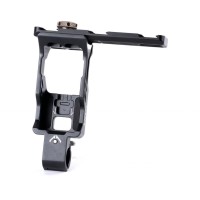
This Monitor Bracket is designed to be mounted to the yoke of the Tilta Float in
71 €
on request
Tilta Float System Gold Mount Battery Plate
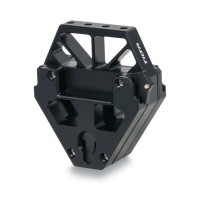
This battery plate attaches to the bottom of the Float System?s post to allow you
120 €
on request


News, training, and discounts from Syntex
Special offers and discounts for subscribers only · Free audio & video workshops · News and tips from the world of filmmaking
- Show all
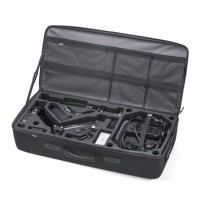
Tilta Float Handheld Gimbal Support System - V Mount
Tilta Float moves the weight of the gimbal off your arms and onto your body: a support1 639 €Backordered 1 pcs