
 CZ
CZ SK
SK HU
HU AT
AT DE
DE ES
ES SI
SI HR
HR
Nothing in the basket.

- Search
-
Login

-
0
Comparison
Add products to compare, then they will appear here and you can compare parameters.
-
0
0 €
Skaarhoj ETH-SDI Link
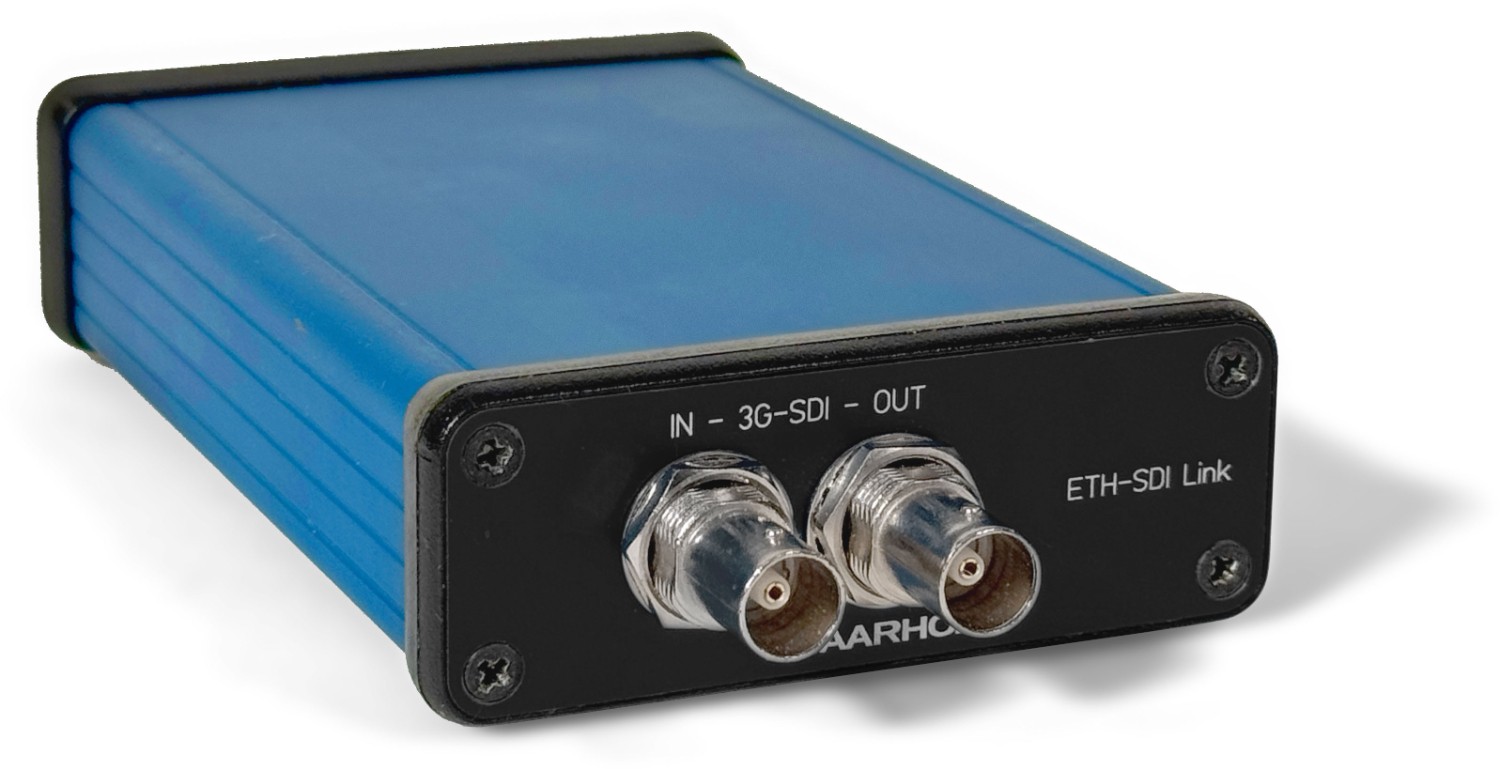
SKU: ETH-SDI-LINK-V2
ETH-SDI Link receives TCP or UDP camera control data over Ethernet and embeds it in its 3G-SDI output. You control Blackmagic Design cameras with SKAARHOJ panels without an ATEM switcher, even remotely. Powered via PoE.
1 199 € with VAT
990.91 € without VAT
Availability
on request
Product description
SPECIFICATIONS
PACKAGE CONTENT
Product description
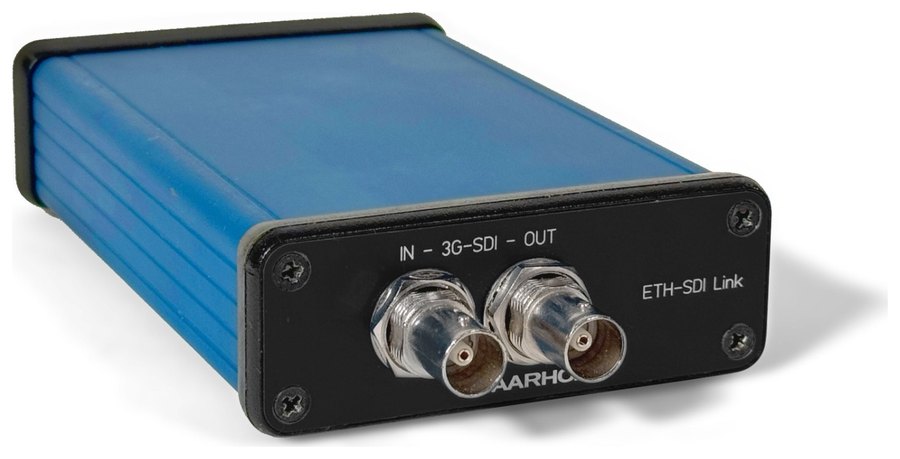
ETH-SDI Link receives TCP or UDP camera control data over Ethernet and embeds it in its 3G-SDI output. You control Blackmagic Design cameras with SKAARHOJ panels without an ATEM switcher, even remotely. Powered via PoE.
SKAARHOJ ETH-SDI Link is a bridge between Ethernet-based control systems and SDI-embedded control workflows. It receives camera control information over the network and forwards it to the SDI output, so SKAARHOJ controllers can drive Blackmagic Design cameras without an ATEM switcher. The SDI input carries the return video, and data from several RCPs can be merged onto a single SDI wire.
Camera control from IP to SDI
Camera control data from Ethernet straight into SDI – for studios, OB vans and remote production.
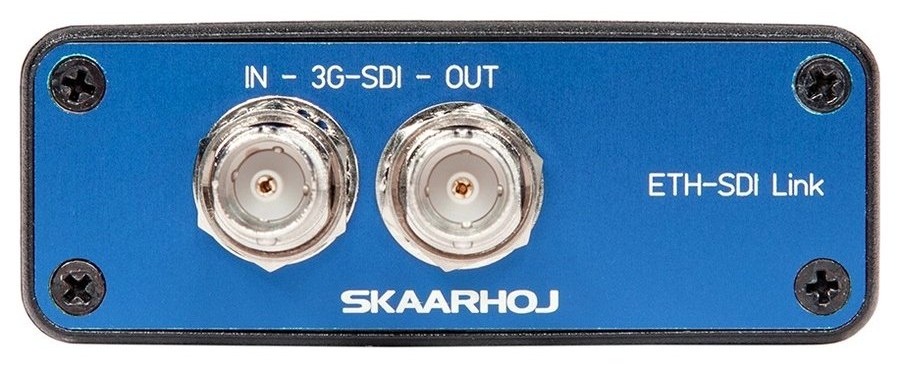
TCP/UDP → SDI3G-SDI in and outNo ATEM requiredPoE poweredMade in Denmark
Camera control without ATEM
ETH-SDI Link embeds the control data directly in the SDI signal to the camera. SKAARHOJ RCPs or the Blackmagic Camera Control Panel can drive an URSA Broadcast G2, for example, with no ATEM switcher.
Fewer cables in the control room
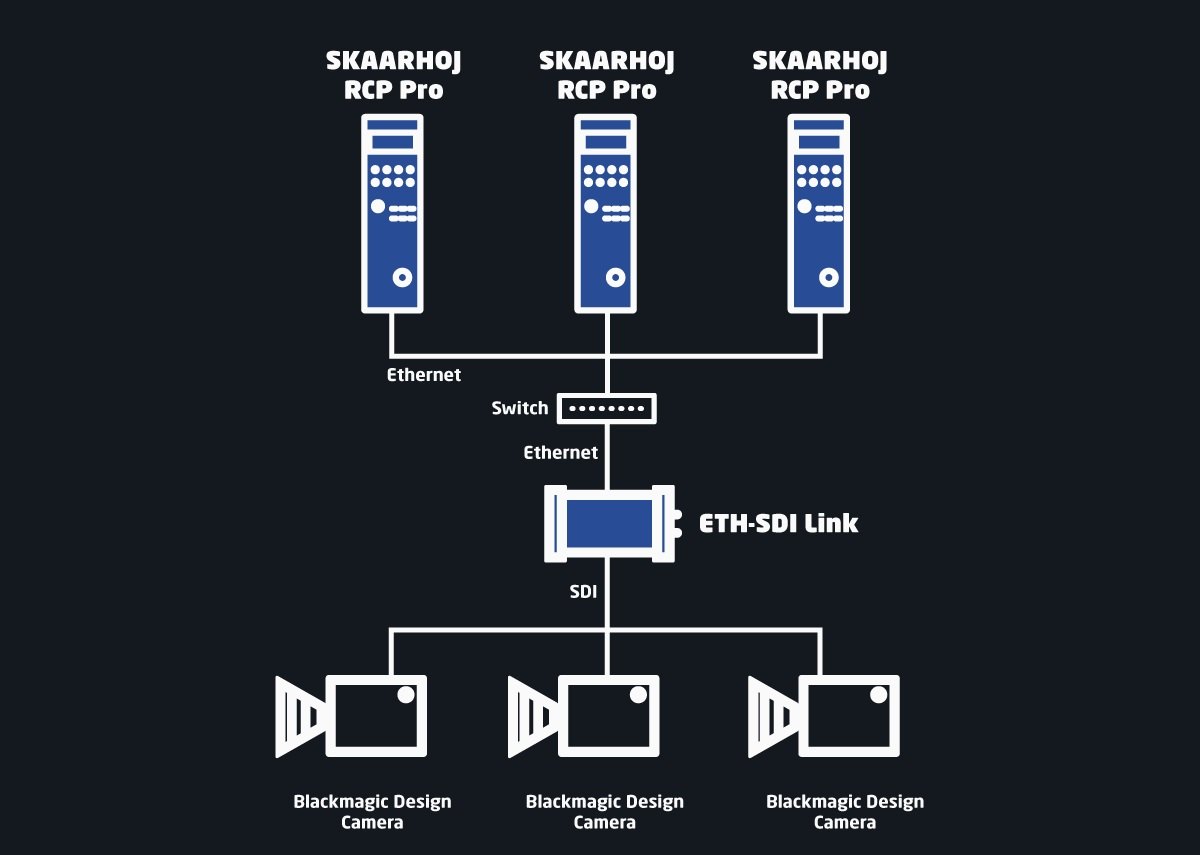
Network data from several RCPs is merged onto a single SDI wire. The setup becomes tidier and the cabling simpler.
Truly remote production
Control cameras in real time where running SDI cables is impractical or impossible. The control data travels over the network and ETH-SDI Link hands it to the camera on site.
Network and SDI in one setup
ETH-SDI Link joins modern IP control with established SDI infrastructure. Existing equipment stays in place while camera control reaches across the whole network.
TCP and UDP
Receives camera control data in both protocols over 100 Mbit/s Ethernet.
Return video
SDI input for the return feed, SDI output with embedded control data.
One cable
Power and data over PoE (IEEE 802.3af), with a DC input as an alternative.
Built to last
Compact, robust design for demanding broadcast use, designed and made in Denmark.
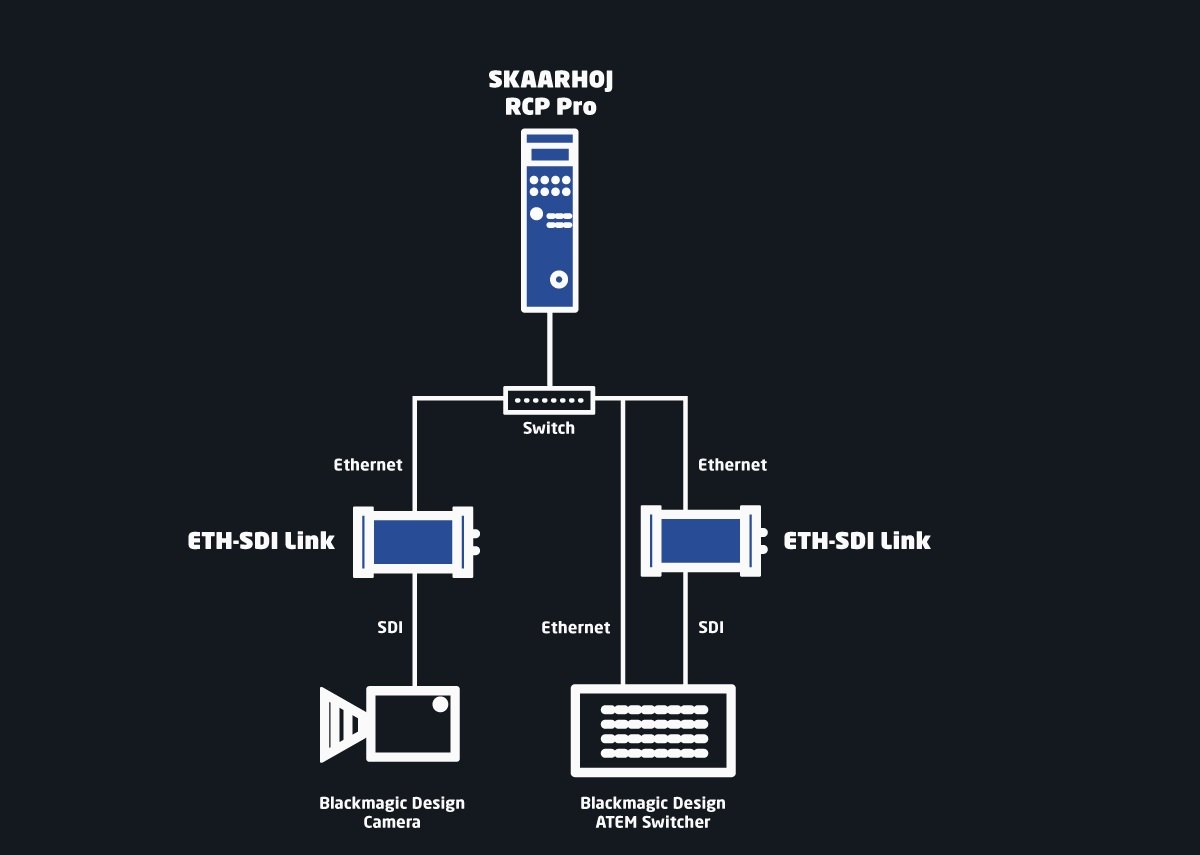
One controller for camera and switcher. A SKAARHOJ RCP Pro sends data over the network to two ETH-SDI Link units: one embeds it in SDI for a Blackmagic Design camera, the other feeds an ATEM switcher.
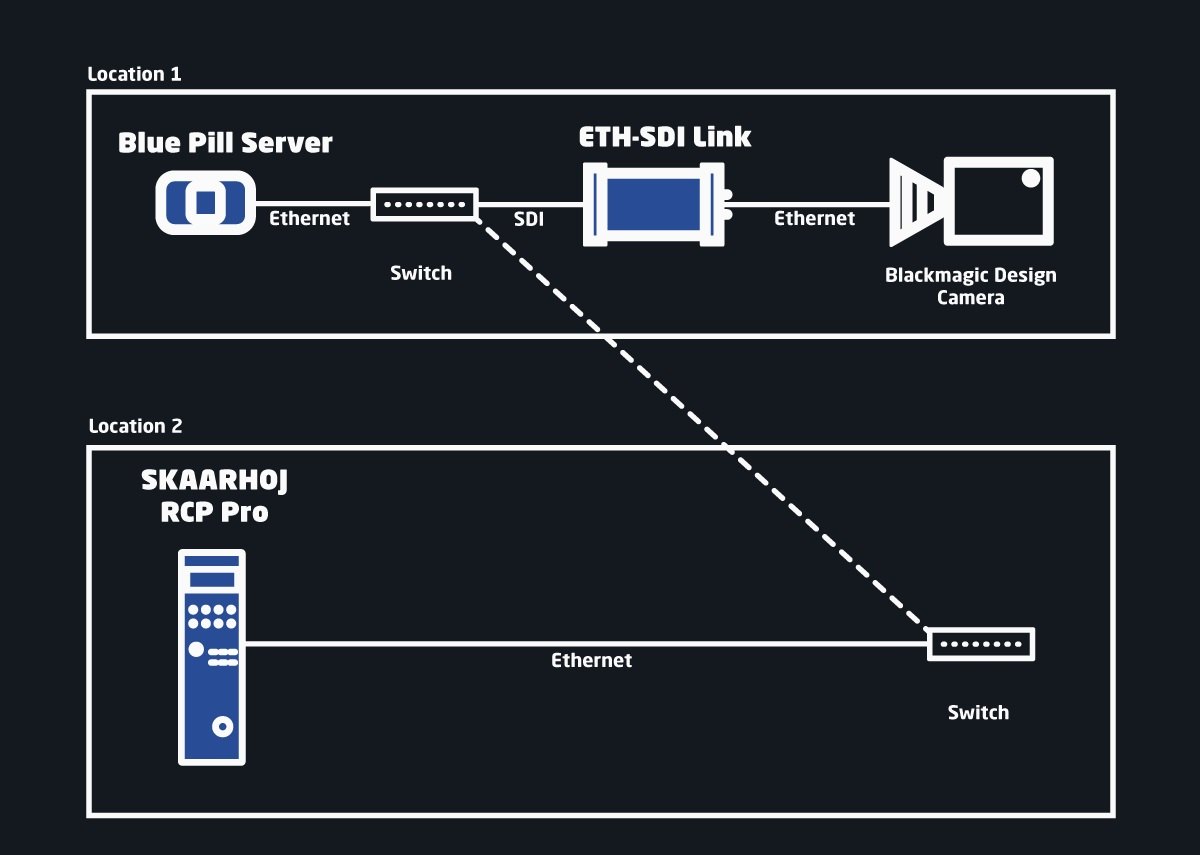
Control cameras from another location. A Blue Pill Server with an ETH-SDI Link and a camera works at the first location, while an RCP Pro at the second location is connected to them over the network.
Three controllers, one SDI cable. Data from three RCP Pro controllers passes through a switch and is merged by ETH-SDI Link onto a single SDI line to three Blackmagic Design cameras.
PACKAGE CONTENT
- SKAARHOJ ETH-SDI Link ×1
SPECIFICATIONS
- Brand: SKAARHOJ
- Model: ETH-SDI Link, ETH-SDI-LINK-V2
- Type: Ethernet to SDI camera control bridge
- Protocols: TCP, UDP
- Connections: 2 × BNC 3G-SDI (in, out), 1 × RJ45 Ethernet 100 Mbit/s
- Power: PoE (IEEE 802.3af) or DC input
- Operating conditions: 0 to 40 °C, humidity up to 90 %
- Storage conditions: −20 to 45 °C, humidity up to 90 %
- Weight: 256 g
- Made in: Denmark
News, training, and discounts from Syntex
Special offers and discounts for subscribers only · Free audio & video workshops · News and tips from the world of filmmaking
- Show all
Skaarhoj ETH-SDI Link
ETH-SDI Link receives TCP or UDP camera control data over Ethernet and embeds it1 199 €on request
Nikon Wireless Remote Controller WR-R11b
The Nikon WR-R11b Wireless Remote Controller is a wireless transmitter/receiver that182 €on request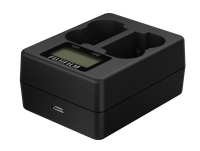
Fujifilm BC-W235 Dual Battery Charger for NP-W235,
The Fujifilm BC-W235 Dual Battery Charger efficiently charges two NP-W235 batteries70 €on request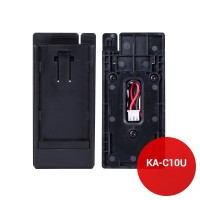
SWIT KA-C10U | Sony BP-U battery mount for LC-D421
Battery Mount Plate, Snap-on type installation, 2-pin cable plug-into LC-D421 charger,30 €To be sent 5 pcs
Lilliput H7S 7" 4K HDMI/3G-SDI Ultra-Bright On-Camera Monitor
Promotion: -12%Monitor your 4K camera images with the Lilliput H7S 7″ on-camera monitor. Its 3G-SDI295.4 €337.59 €In stock 1 pcs