
 CZ
CZ SK
SK HU
HU AT
AT DE
DE ES
ES SI
SI HR
HR
Nothing in the basket.

- Search
-
Login

-
0
Comparison
Add products to compare, then they will appear here and you can compare parameters.
-
0
0 €
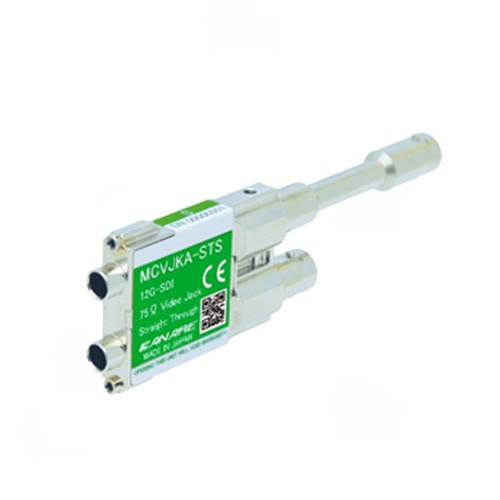
Canare MCVJKA-STS 12G-SDI Staggered Dual Video Jack, Straight Through
SKU: MCVJKA-STS
Canare dual video jack for 12G-SDI to a video patch panel, in a "Straight Through" configuration: when no patch plug is inserted, both the upper and lower BNC connectors are terminated with an internal 75 Ω resistor. Dust cover; secured with two screws.
72 € with VAT
59.5 € without VAT
Personal pickup within 90 minutes
Shipment day: Tomorrow
Shipment day: Tomorrow
In stock > 5 pcs
Praha > 5 pcs
Praha > 5 pcs
Product description
SPECIFICATIONS
PACKAGE CONTENT
Product description
Canare dual video jack for 12G-SDI to a video patch panel, in a "Straight Through" configuration: when no patch plug is inserted, both the upper and lower BNC connectors are terminated with an internal 75 Ω resistor. Dust cover; secured with two screws.
The Canare MCVJKA-STS is a dual 12G-SDI video jack—a single channel of a video patch panel. It features a “staggered” design, meaning the rows are offset; as a result, standard-size BNC connectors can be used on the rear panel even though the front panel is densely populated.
The letter “S” in the model number stands for “Straight Through.” When no patch plug is inserted into the jack, both the upper and lower BNC connectors are terminated with a 75 Ω resistor and are not interconnected. This differs from the MCVJKA-STW (Normal Through) version, where the upper and lower BNC connectors are interconnected in the idle state.
Compared to the previous generation MCVJK-ST*, the MCVJKA has better return and insertion loss as well as better channel isolation; it is slightly lighter (64 g vs. 67 g); and the BNC connector is oriented vertically, making the locking groove easier to see and allowing the plug to be inserted and removed more easily. A cover protects the jack against dust and debris; it is secured to the panel with two screws.
The manufacturer notes that only Canare micro video patch cables may be inserted into the jack—video plugs and patch cables from other manufacturers cannot be used.
PACKAGE CONTENT
- 1× Canare MCVJKA-STS 12G-SDI Staggered Dual Video Jack, Straight Through
MCVJ-DC patch cables and dust caps are sold separately.
SPECIFICATIONS
- Type: dual video jack with staggered rows, for video patch panels
- Format: 12G-SDI
- Impedance: 75 Ω
- Design: Separate termination (Straight Through, S) — both upper and lower BNC connectors terminated with a 75 Ω resistor
- Return loss per SMPTE ST 2082-1: ≥ 15 dB up to 1.5 GHz · ≥ 10 dB up to 3.0 GHz · ≥ 7 dB up to 6.0 GHz · ≥ 4 dB up to 12.0 GHz
- Rear: Standard-size BNC connectors
- Dust protection: shutter
- Mounting: two screws
- Weight: 64 g
- Patch cables: Canare micro video patch cables only
- Sales unit: 1 pc
- Manufacturer’s catalog number: MCVJKA-STS
Parameters
Parameters
| Manufacturer: | Canare |
| Category: | Video connectors |
Main parameters
| Typ konektoru | BNC |
| Pohlaví konektoru | Female / samice |
| Způsob montáže | Panelový |
News, training, and discounts from Syntex
Special offers and discounts for subscribers only · Free audio & video workshops · News and tips from the world of filmmaking
- Show all
Canare MCVJKA-STS 12G-SDI Staggered Dual Video Jack, Straight Through
Canare dual video jack for 12G-SDI to a video patch panel, in a "Straight Through"72 €In stock > 5 pcs
Syrp Magic Carpet PRO Short Track 600 mm
A 600 mm short track from the Magic Carpet PRO system. The tracks can be connected439 €on request
Canare BCJ-JRU 75 Ohm BNC Jack-to-Jack Flush-Mount Panel Receptacle
75 Ω BNC feed-through panel jack with recessed flange: female BNC connectors on both5.5 €In stock > 5 pcs
Avenger C-Stand 25 With Sliding Leg In Black Finish
Turtle base chrome plated steel stand in black finish with 3 sections and 2 risers.229 €3 pcs in stock at the supplier
Manfrotto ADAPTER 5/8F TO 1 1/8F 0932 FF3257
The Manfrotto FF3257 Adapter is a professional studio accessory that connects 5/8"117 €on request