
 CZ
CZ SK
SK HU
HU AT
AT DE
DE ES
ES SI
SI HR
HR
Nothing in the basket.

- Search
-
Login

-
0
Comparison
Add products to compare, then they will appear here and you can compare parameters.
-
0
0 €
Tilta Hydra Motorized Slider Pro Kit
SKU: HDA-T04-A
The Tilta Hydra HDA-T04-A Pro Kit motorised slider is the complete rig for shooting from a moving vehicle — a slider with 1.8 metres of travel and a shock-absorbing arm rated for 30 kg in one package. It attaches to the vehicle through the front tow hook, the tow hitch or 50 mm Speed Rail tubes with suction cups, and the camera head sits on…
13 419 € with VAT
11 090.08 € without VAT
Availability
on request
Top accessories for Tilta Hydra Motorized Slider Pro Kit
Tilta Hydra Alien Mini Ultimate Kit - Forest Green
A Tilta kit in forest green that handles shooting from a moving car and handheld
253 €
Backordered 5 pcs
Tilta Mitchell Mount Adapter for Hydra Motorized Slider

The Tilta Mitchell Mount Adapter for the Hydra Motorized Slider converts the slider's
91 €
on request
Tilta Hydra Shock Absorbing Arm Pro Kit
Increase the stability of your shots with the Tilta Hydra Shock Absorbing Arm Pro
5 679 €
on request
Product description
SPECIFICATIONS
PACKAGE CONTENT
Product description
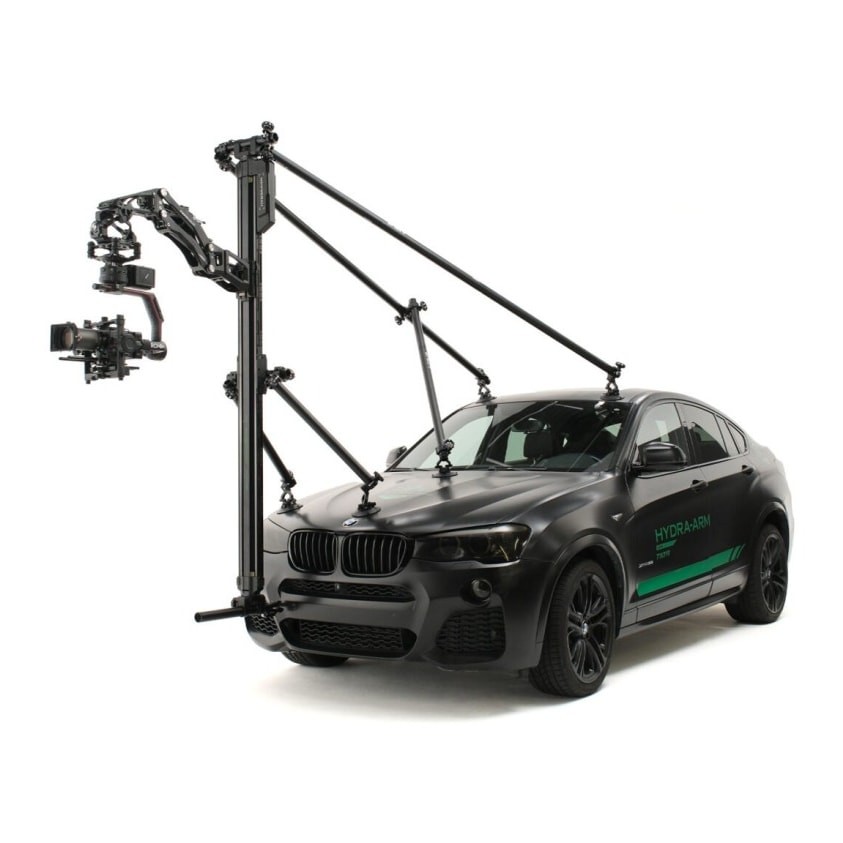
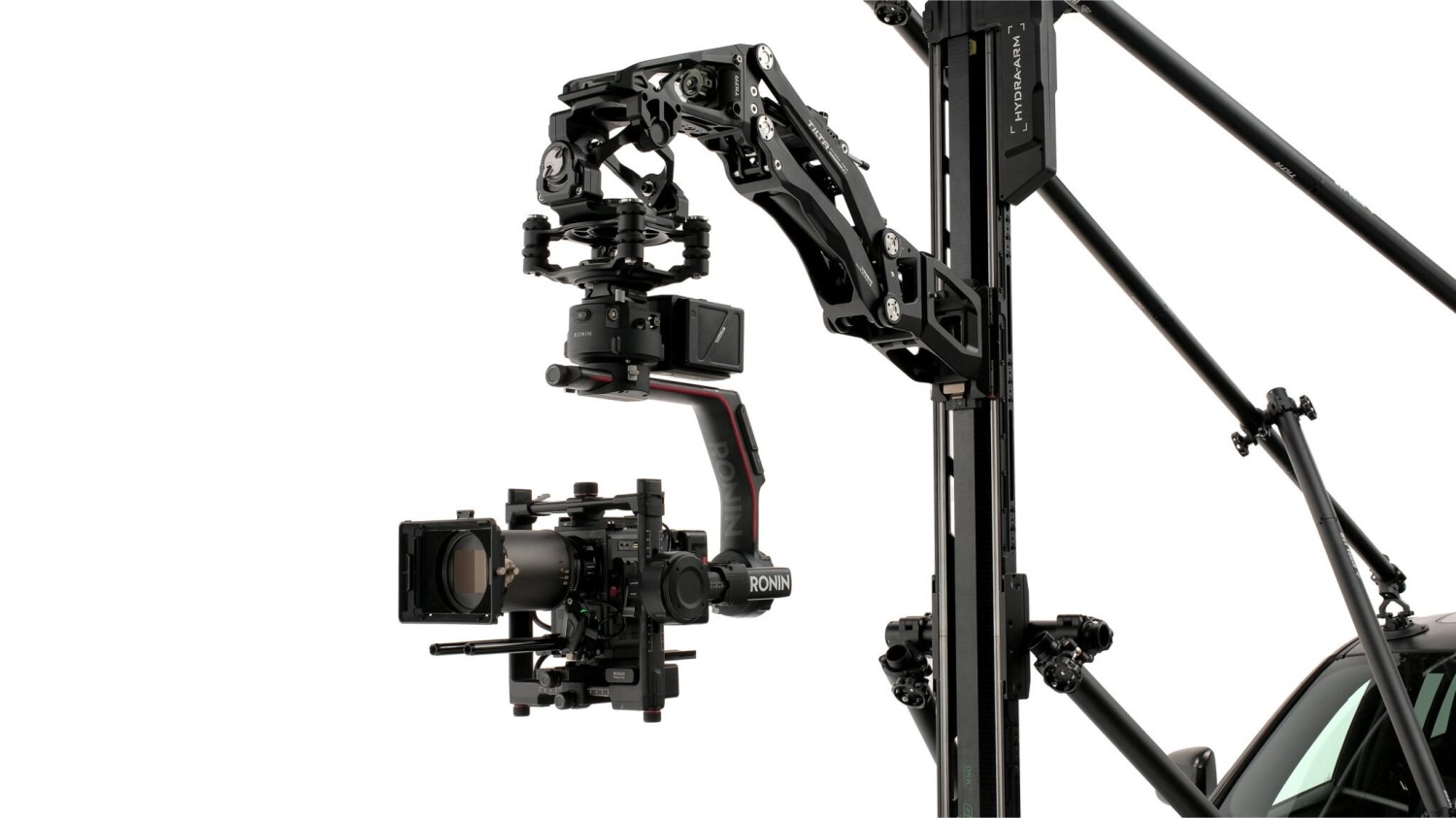
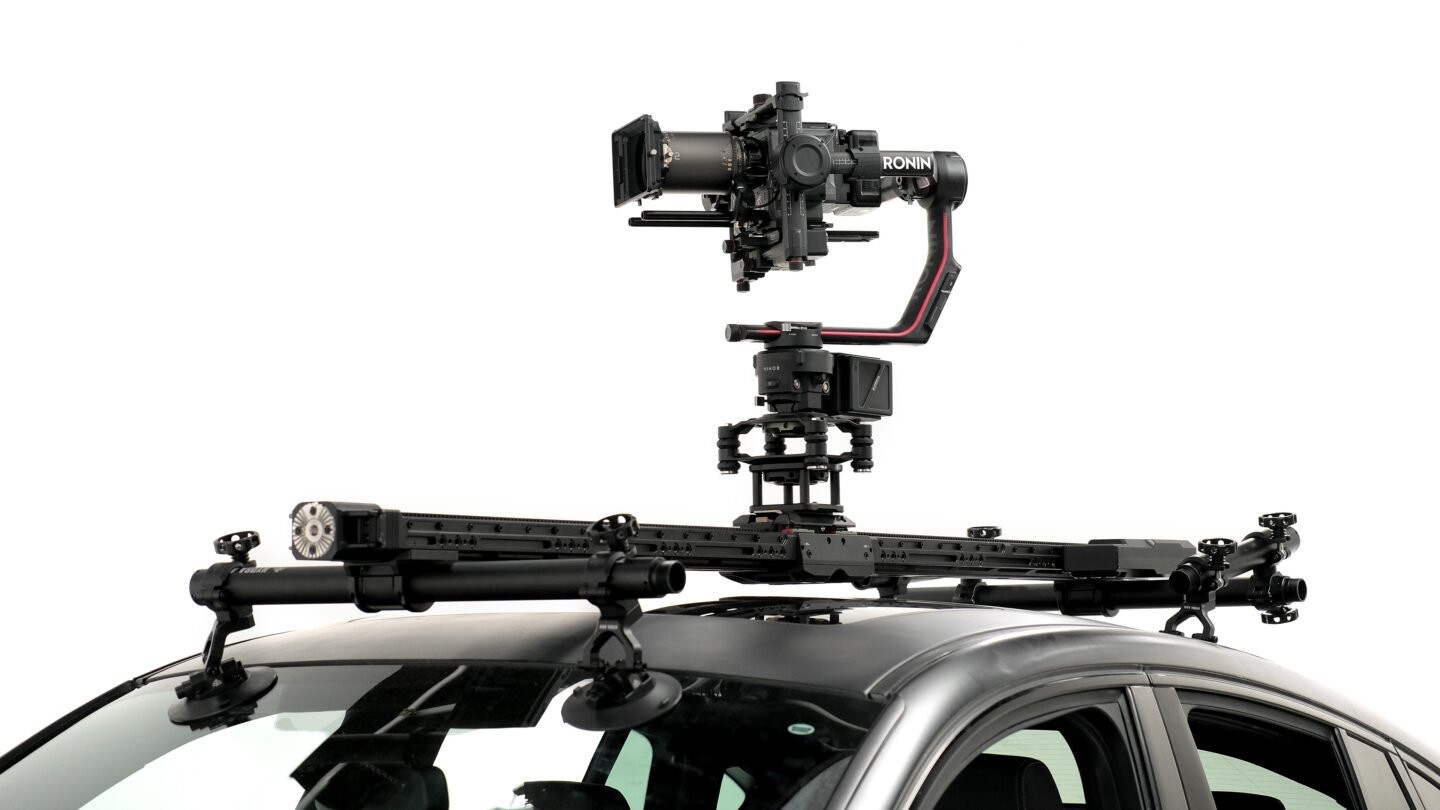
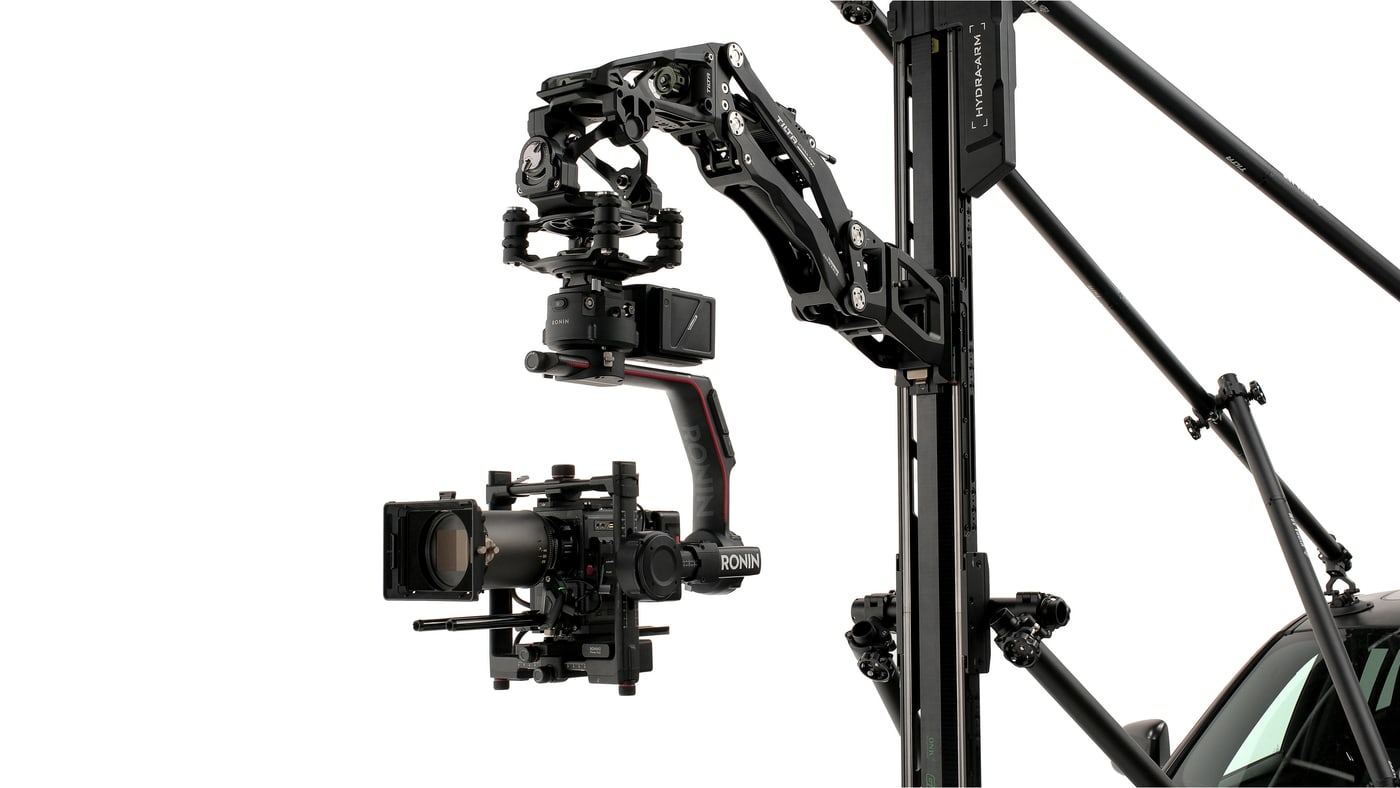
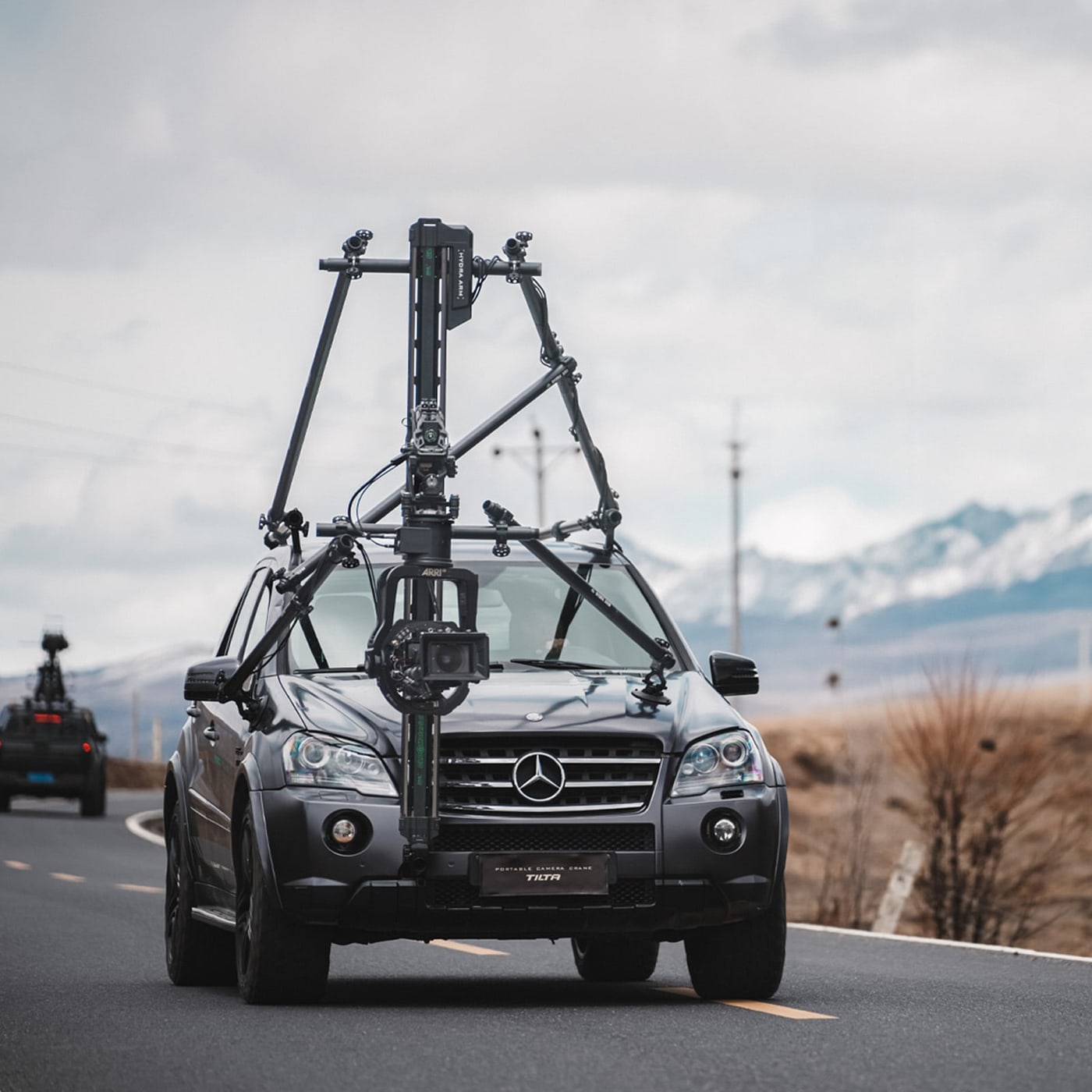
The Tilta Hydra HDA-T04-A Pro Kit motorised slider is the complete rig for shooting from a moving vehicle — a slider with 1.8 metres of travel and a shock-absorbing arm rated for 30 kg in one package. It attaches to the vehicle through the front tow hook, the tow hitch or 50 mm Speed Rail tubes with suction cups, and the camera head sits on a Mitchell mount, so a Ronin 2, a Movi XL or an ARRI SRH-3 all fit. It is driven by cable or wirelessly from the cabin, including programmed end points A and B. Four V-Mount batteries power it, it works from −30 to 80 °C and it travels in three cases.
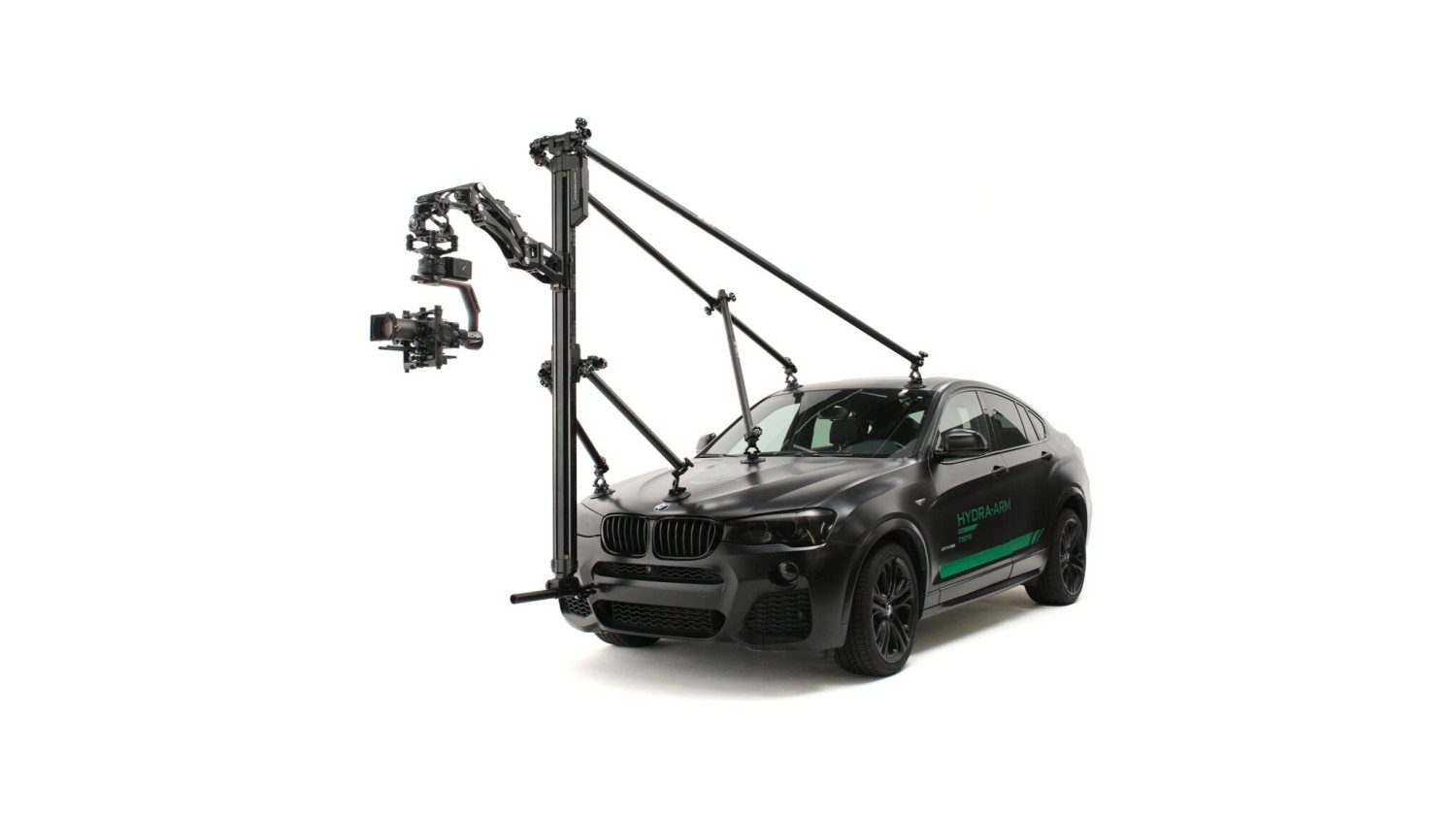
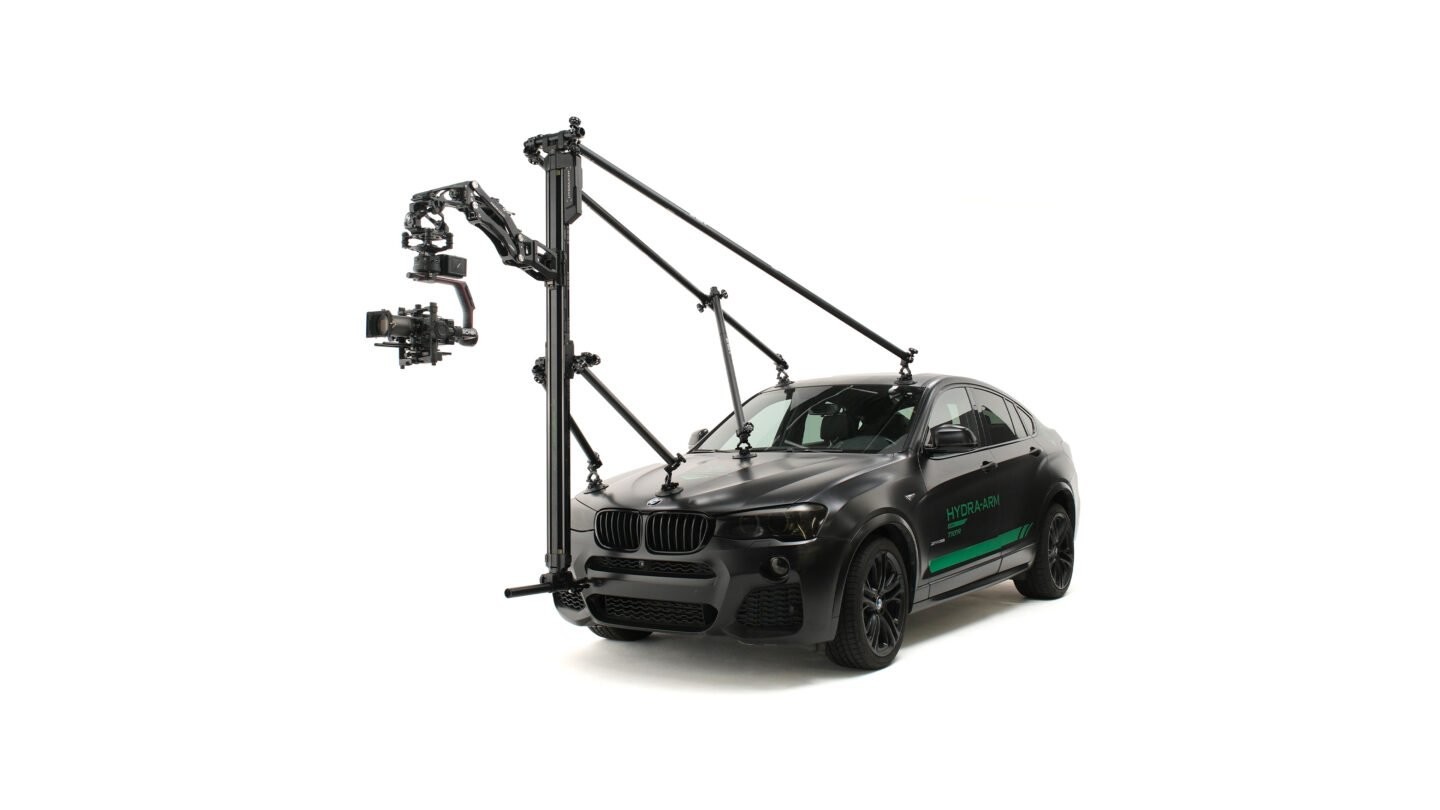
Tilta Hydra Motorized Slider Pro Kit (HDA-T04-A) is the complete rig for shooting from a moving vehicle: a motorised slider with 1.8 m of travel and a shock-absorbing arm rated for 30 kg. It attaches to the vehicle through the front tow hook, the tow hitch or 50 mm Speed Rail tubes with suction cups, the camera head sits on a Mitchell mount, and the whole rig travels in three cases.
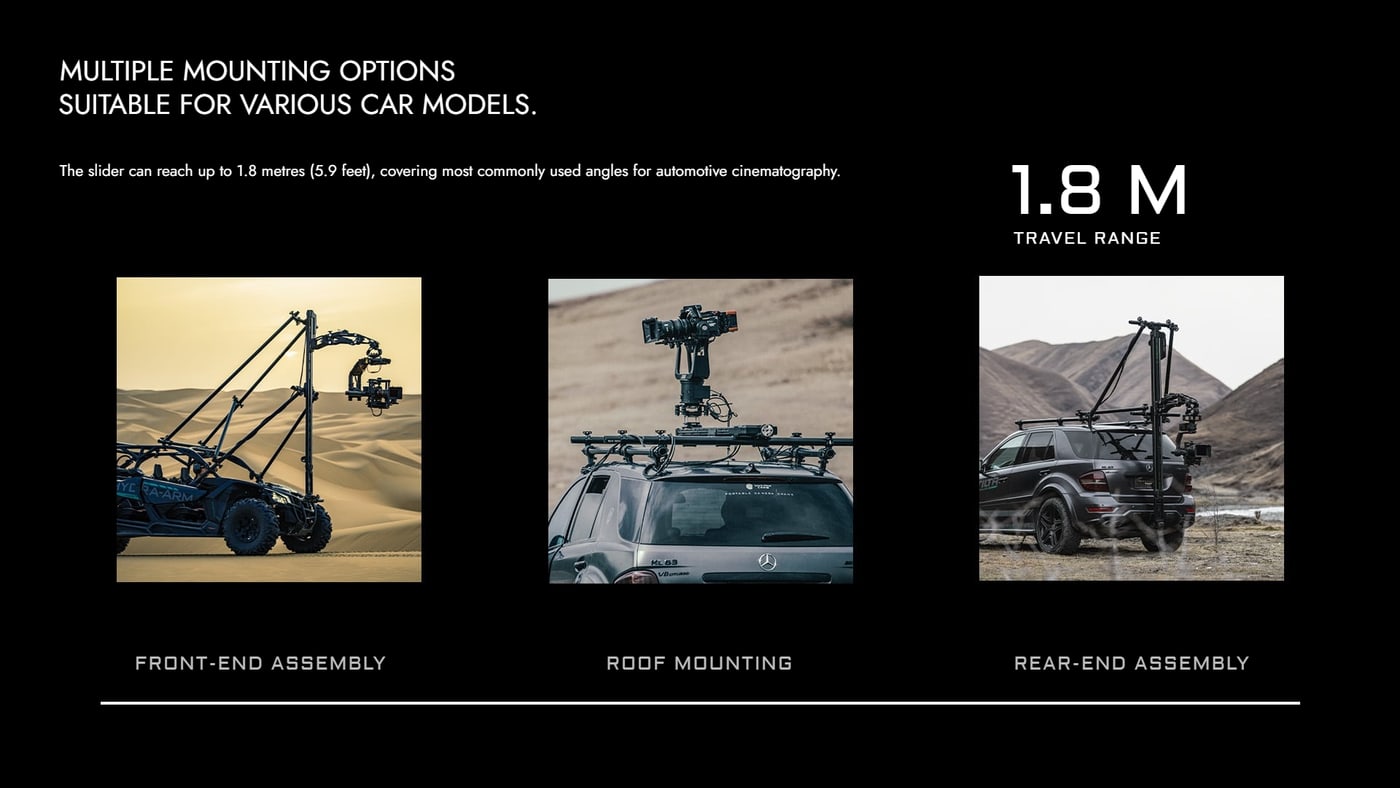
Three ways to mount it, 1.8 metres of travel
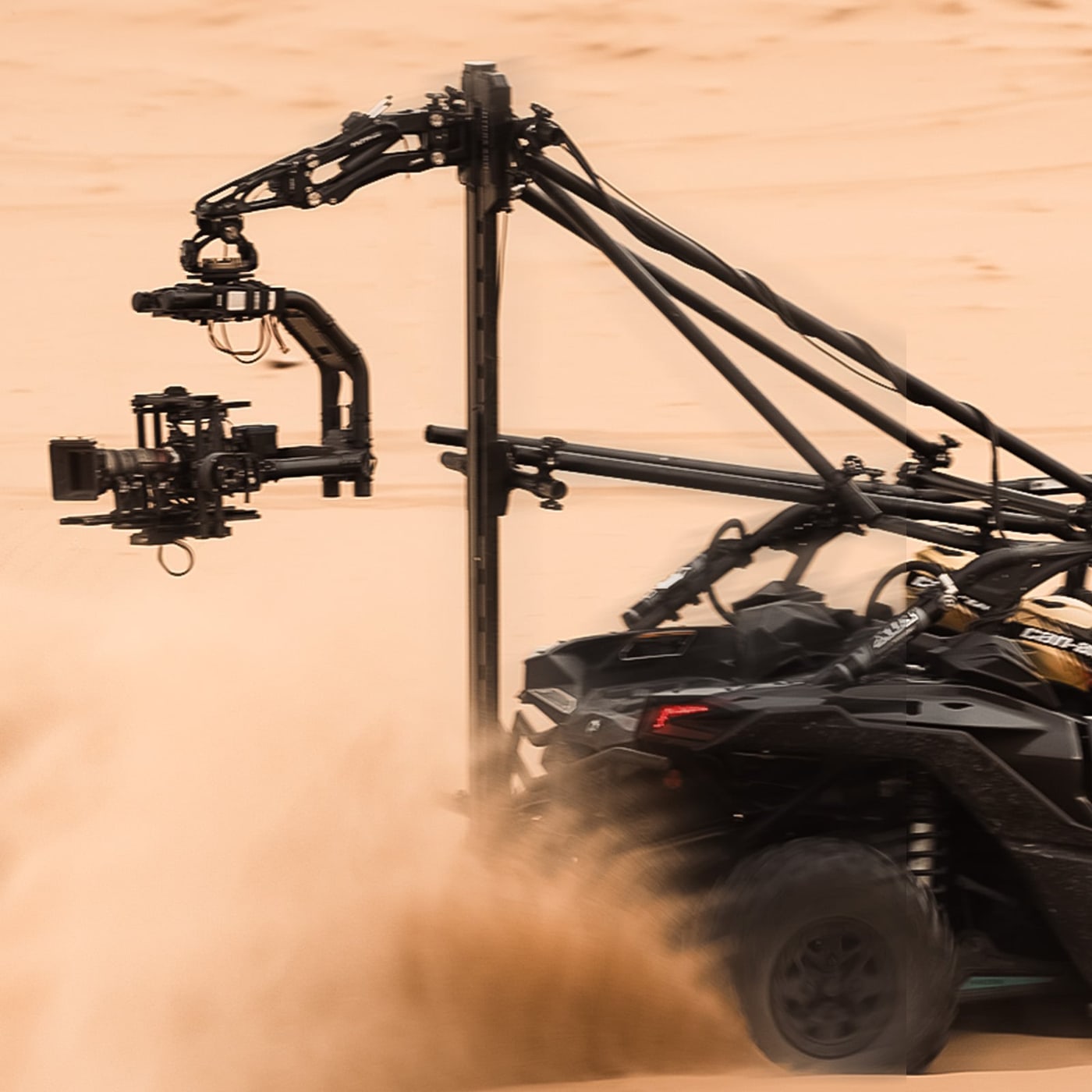
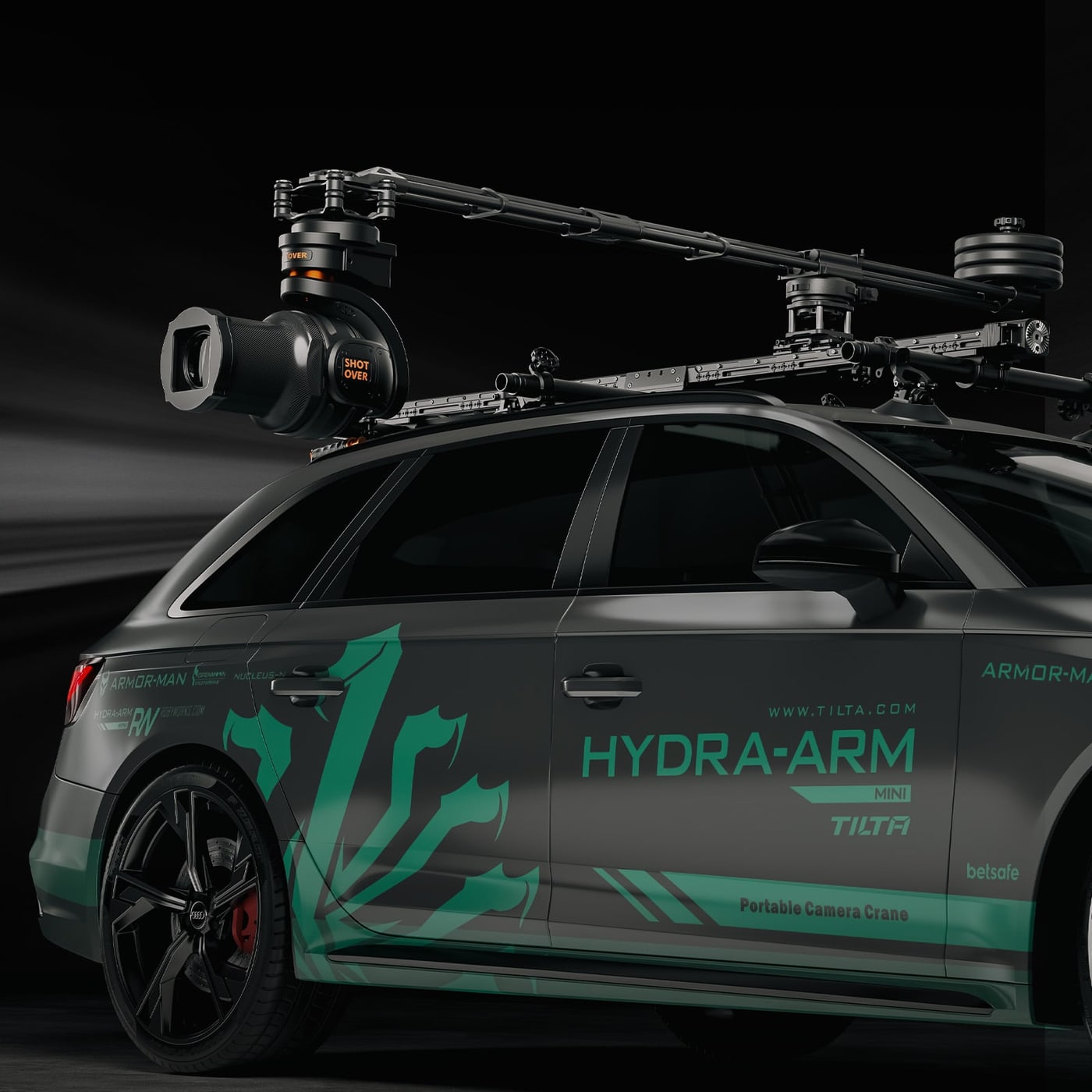
The rig attaches to the vehicle in three ways: at the front through the front tow hook adapter, on the roof through 50 mm Speed Rail tubes with mounting suction cups, or at the rear through the tow hitch adapter. Travel is 1.8 m (5.9 ft), which the manufacturer says covers most of the angles used in automotive cinematography — from just above the tarmac to a high shot over the roof.
The full travel in four seconds
The slider covers the full travel from its highest to its lowest point in four seconds; the manufacturer quotes a descent rate of 0.45 m/s. Speed and damping are set on the control module, so the same move can be repeated take after take.
Control handle and A/B points
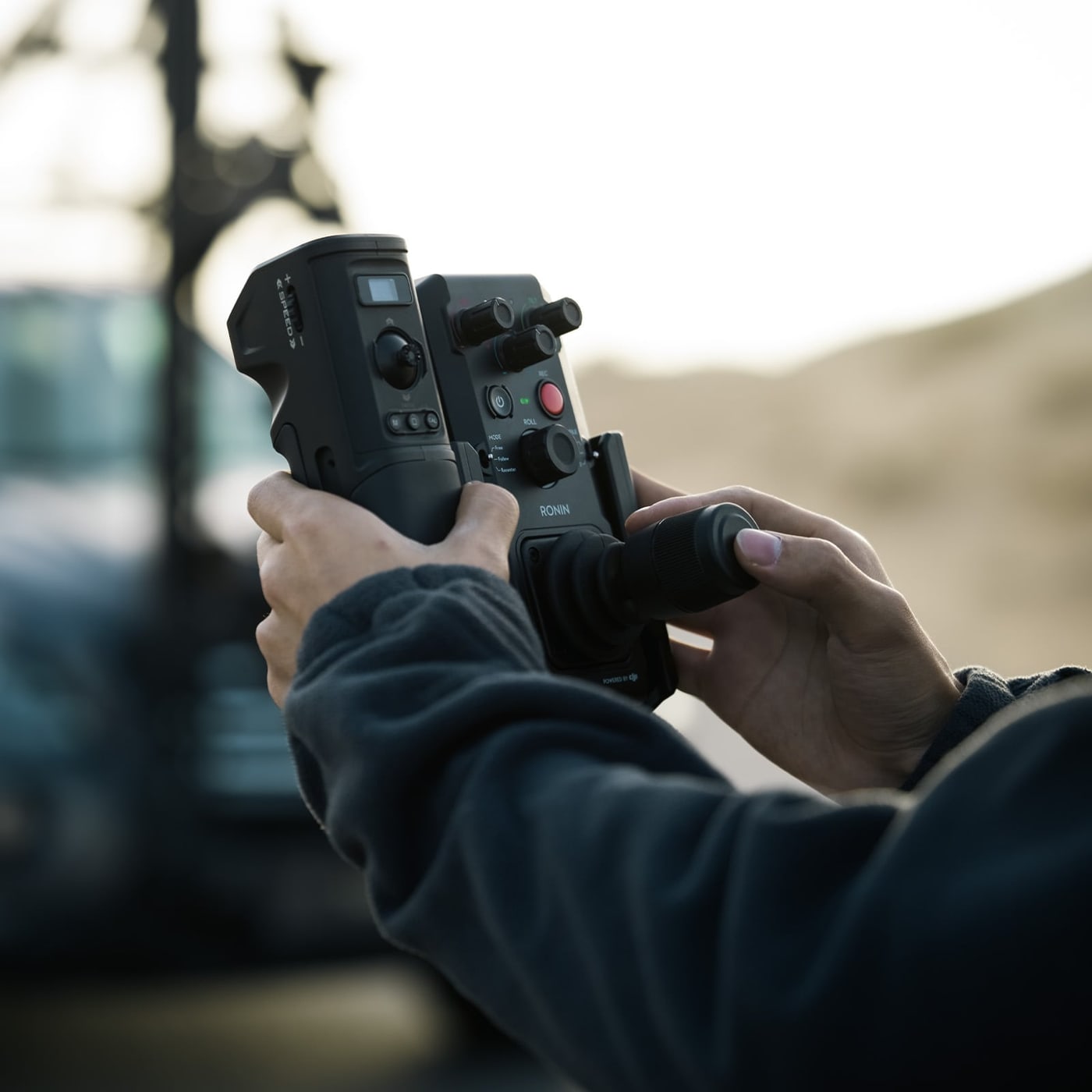
A control handle and a control module are included. The slider is driven by cable or wirelessly from inside the vehicle — you set speed, damping and two end points, A and B, between which it then runs on its own at given time intervals, with no operator input. The system is prepared for future firmware updates.
Four V-Mount batteries for a full day
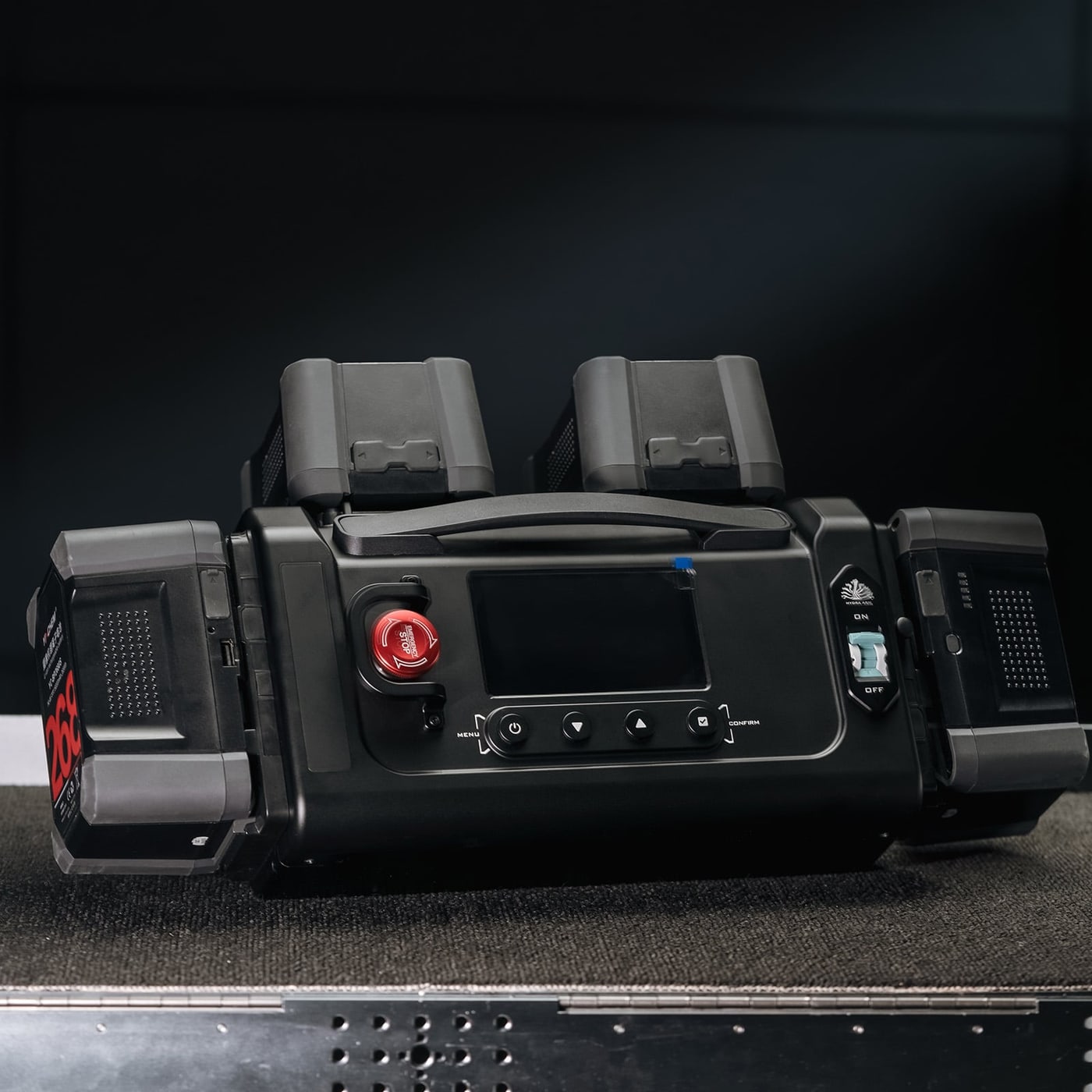
The whole system runs on four 14.8 V V-Mount batteries — no vehicle supply, no generator. With four 270 Wh (18,600 mAh) batteries the manufacturer says it lasts a normal shooting day without a swap; real runtime depends on load, temperature and how often the slider moves.
Mitchell mount: fits most remote heads
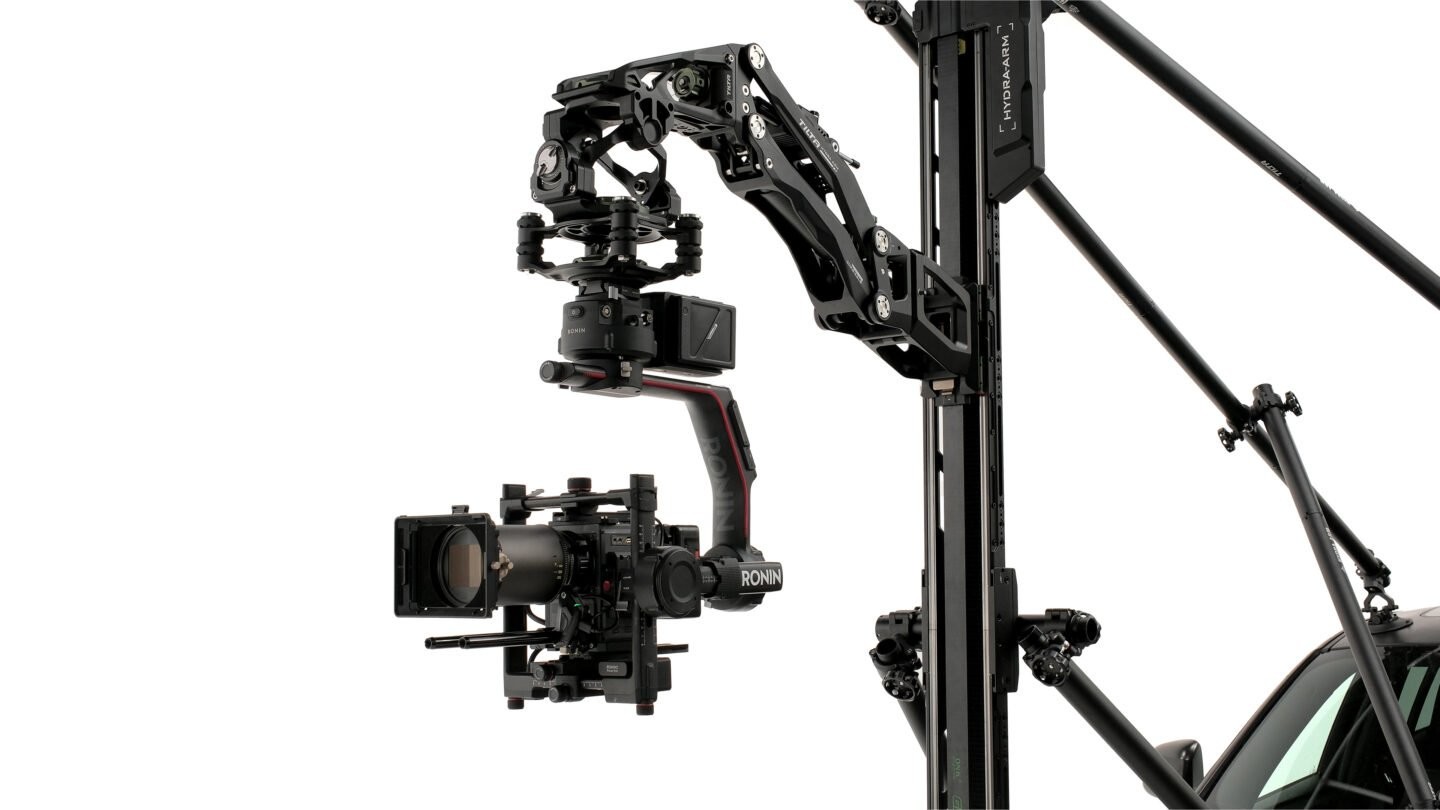
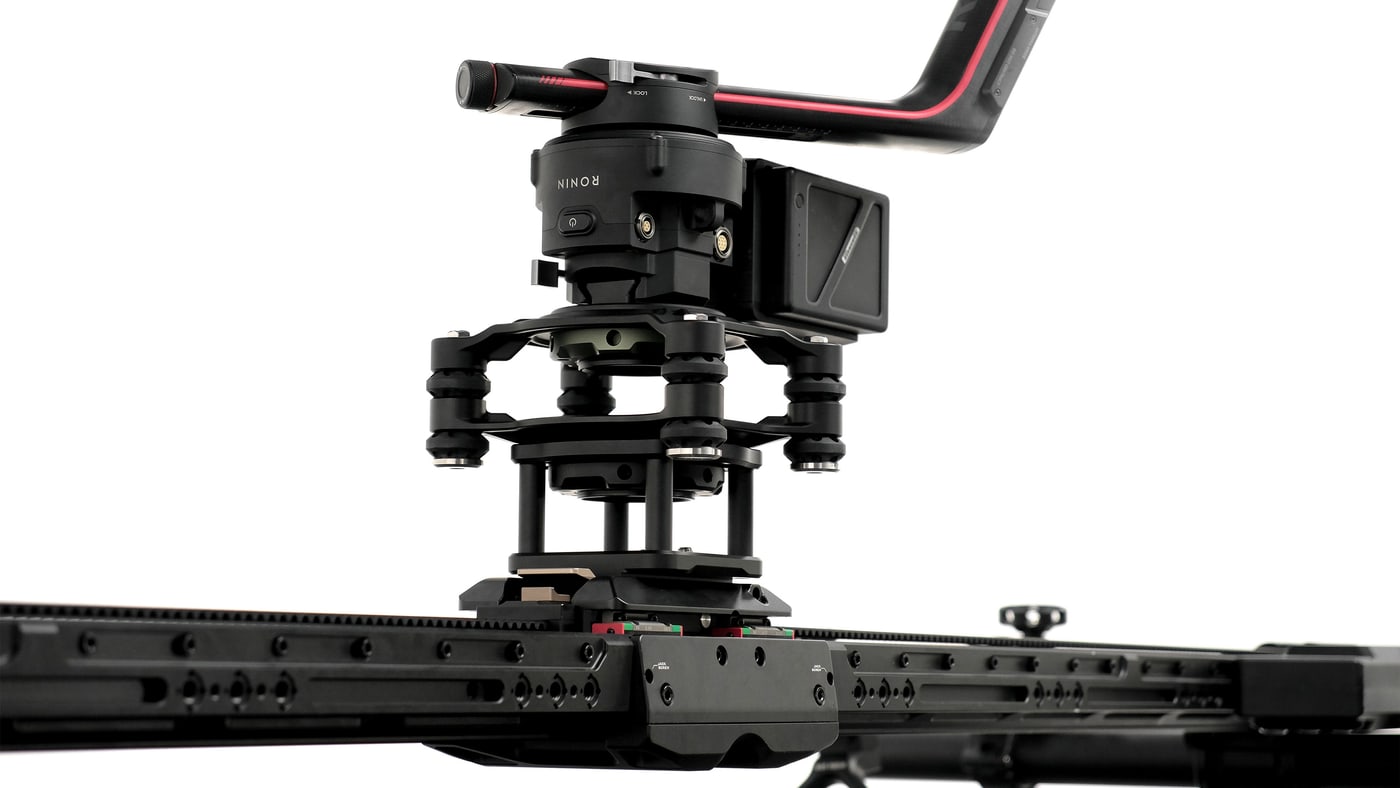
The camera head attaches through a Mitchell mount, the standard most remote heads are built around. Tilta lists Movi XL, Maximus 7, Flight Head, DJI Ronin 2, Shoot Over F1, ARRI SRH-3 and the Scorpio Stabilized Remote Head 4 Axis, plus the GFM and Maxi shock absorbers. The DJI Ronin 2 mounting plate is included.
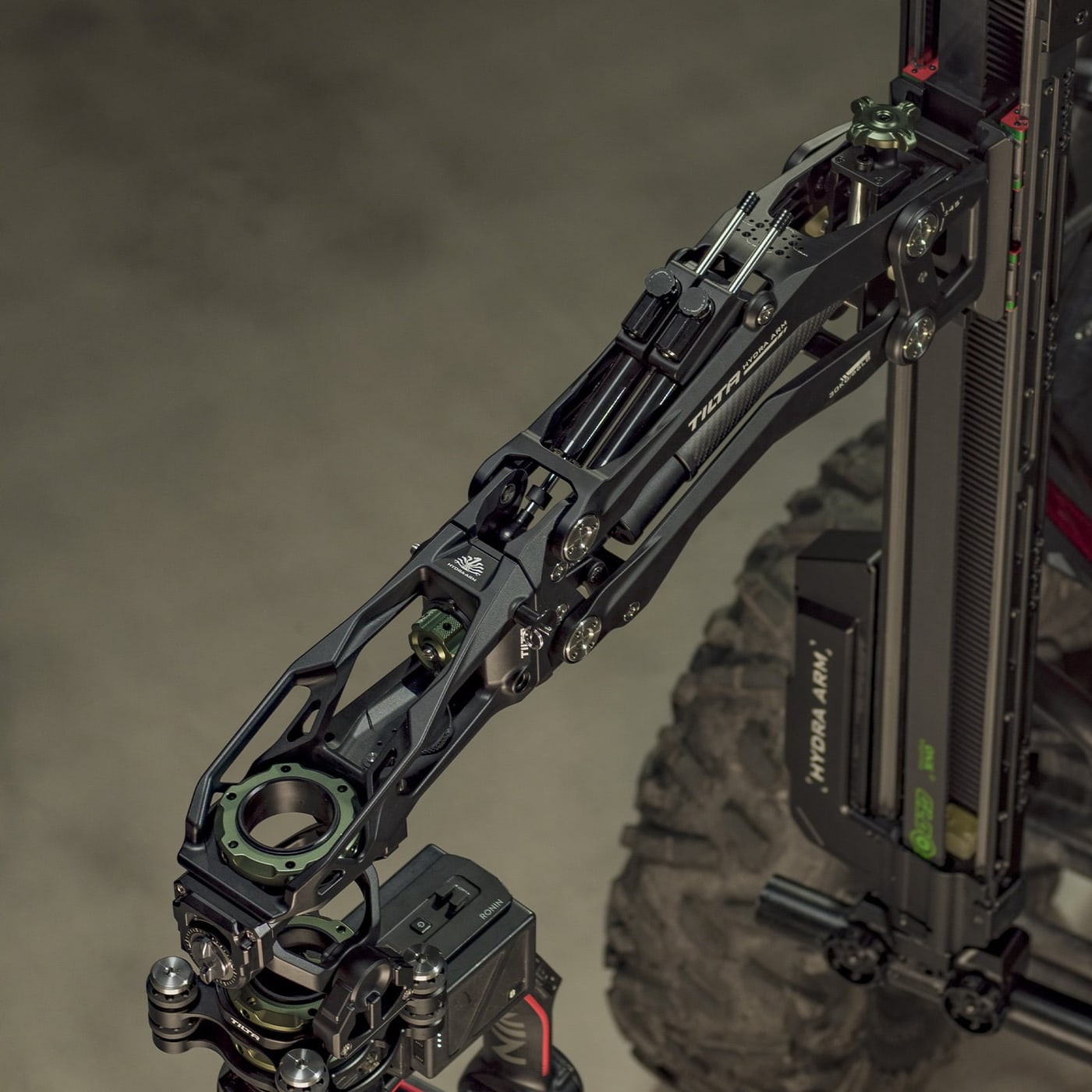
Tension springs taken from the Steadicam
The shock-absorbing arm works with tension springs taken from the Steadicam design. The movement is therefore more linear and smoother than on arms relying on a damper alone, and the arm carries a camera with a stabilised head up to 30 kg. Spring preload can be tuned to the weight of the rig.
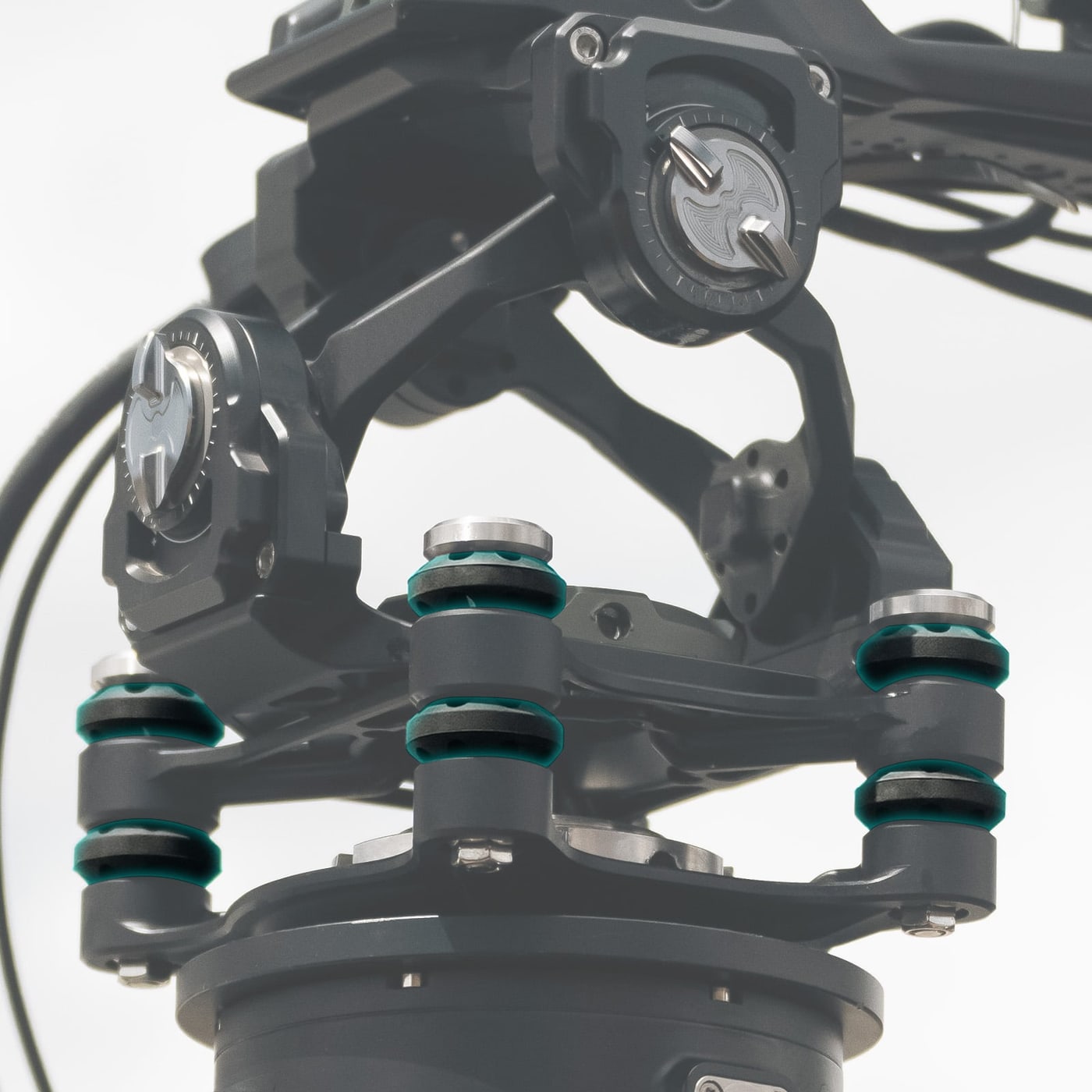
Honeycomb EPDM rubber damping blocks
The arm uses EPDM, an ageing-resistant rubber, in a honeycomb shape as its damping material. High-frequency vibration is absorbed the same in frost and in heat, so the behaviour of the arm does not drift through the shooting day the way ordinary rubber does.
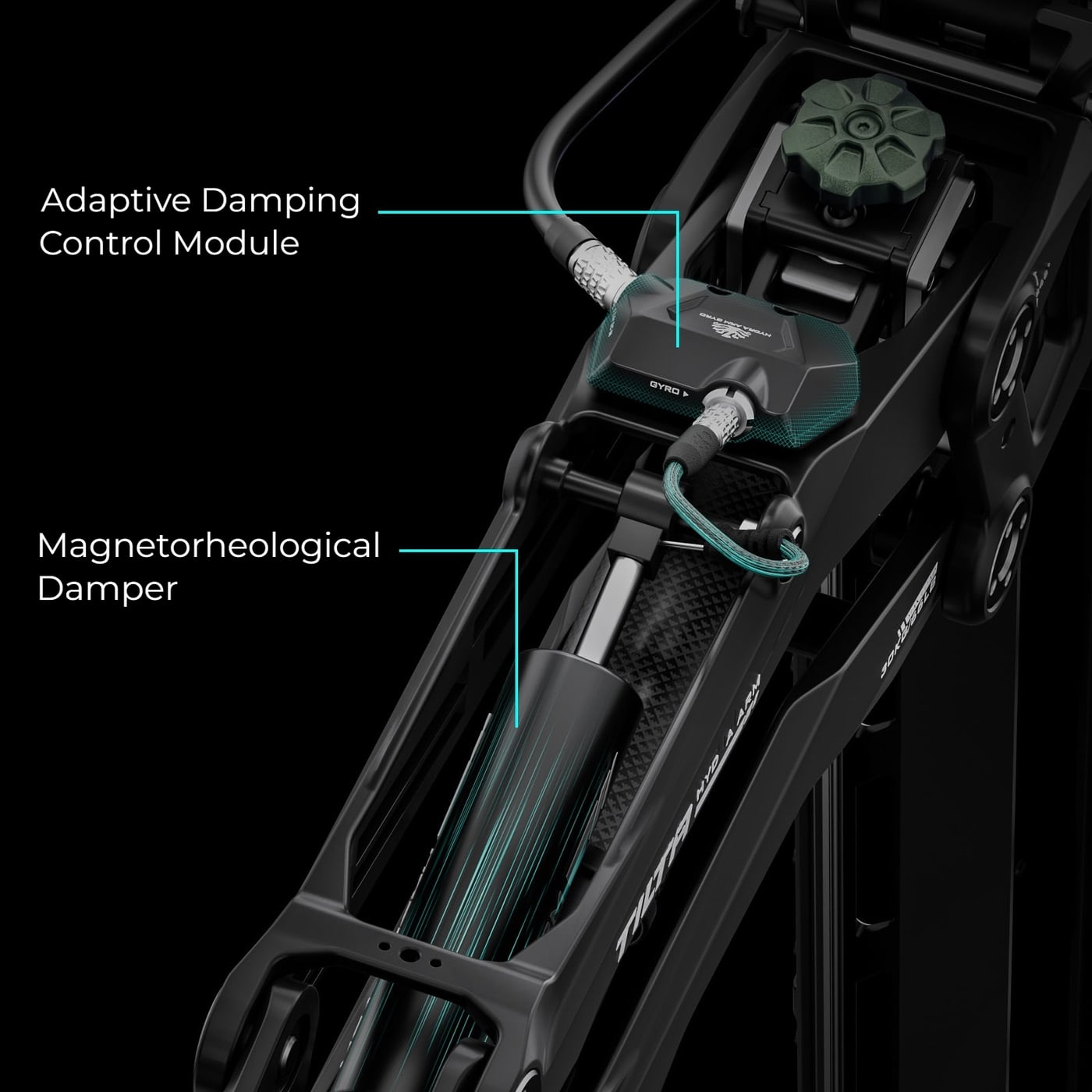
Magnetorheological damper (announced by the maker)
The arm can be fitted with an automatic magnetorheological damper — a technology taken from the automotive industry, where the adaptive damping module reacts to shocks within milliseconds and the shot comes out smoother. The manufacturer lists it on the product page as coming soon; it is not included and we will sell it separately once Tilta releases it.
Straight onto a 50 mm vehicle chassis
The shock-absorbing arm comes with adapters for 50 mm Speed Rail tubes, so it can be mounted straight onto a vehicle chassis where one exists — the manufacturer names the Can-Am Maverick X3, for instance. The whole intermediate structure is dropped and the rig sits lower.
Operates from −30 to 80 °C
Both the shock-absorbing arm and the slider are made of aerospace-grade aluminium alloy and 304 stainless steel. The manufacturer quotes an operating range of −30 to 80 °C (−22 to 176 °F) and resistance to wind, rain and snow, so the shoot does not end with the first shower.
Three cases that fit in a van
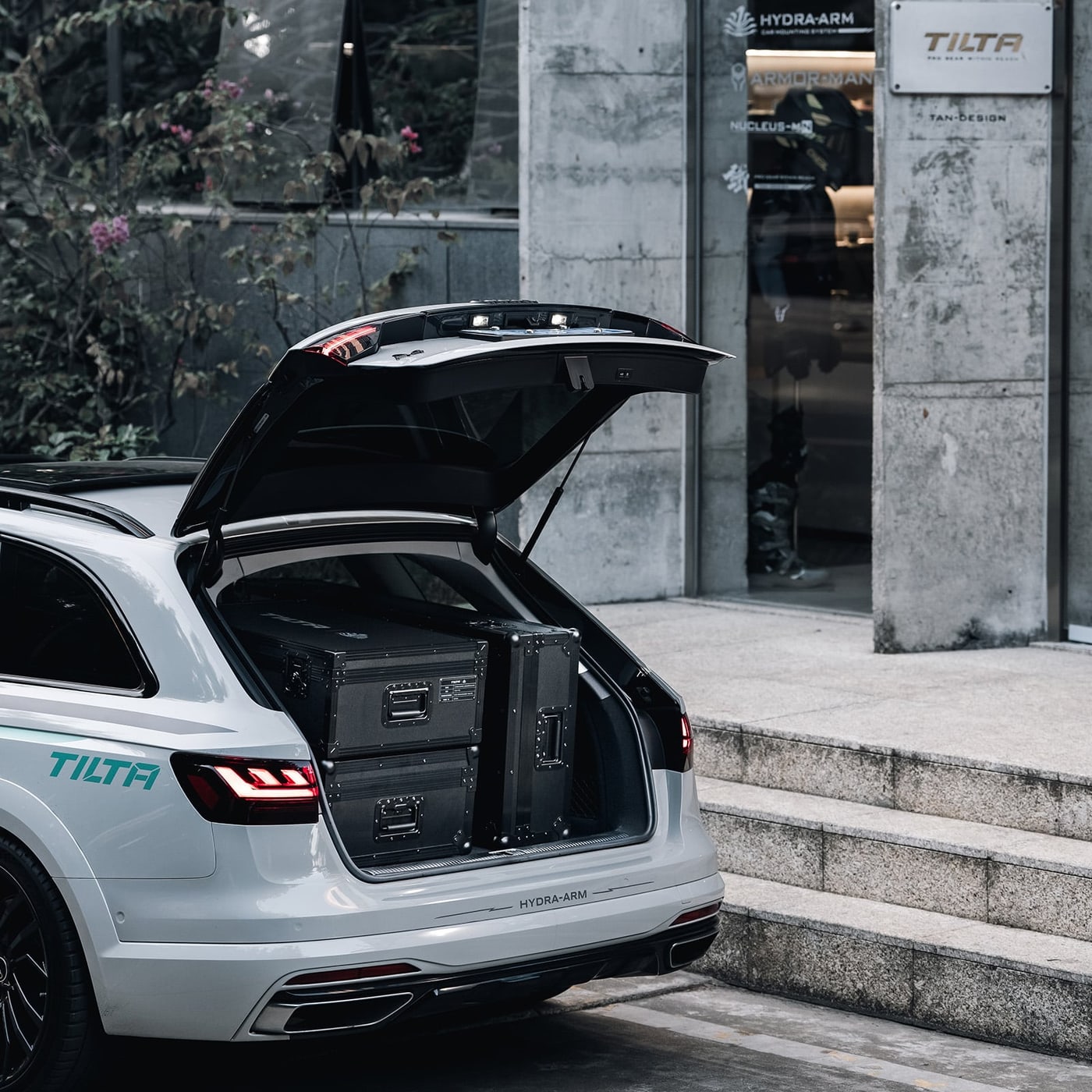
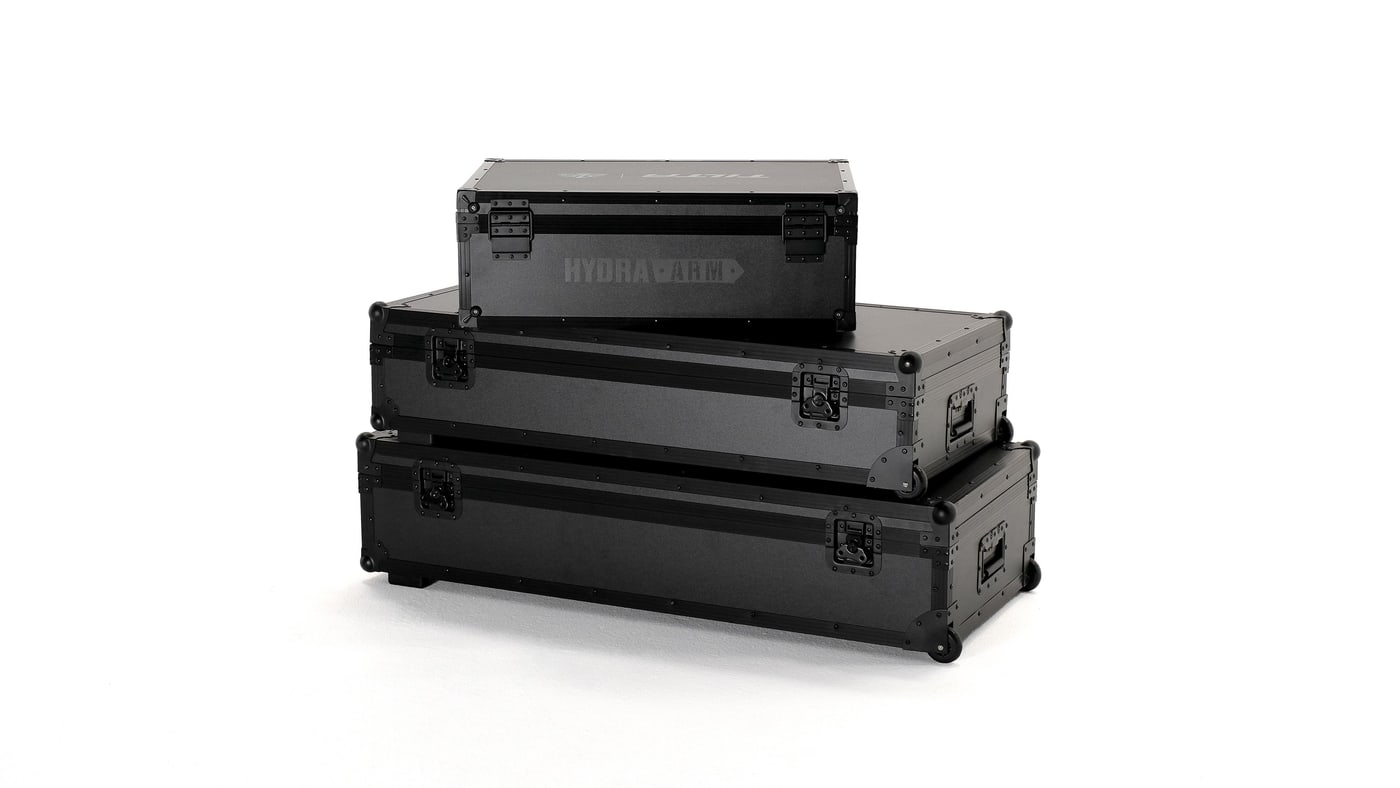
The slider breaks down into three parts and weighs 50 kg (110.2 lb) on its own. The whole system travels in three relatively compact cases that fit in an ordinary SUV or van — no trailer needed.
Custom rigs for live broadcast
Without the shock-absorbing arm and with optional accessories, the slider can be mounted on a vehicle roof for live broadcast, for example of marathons or cycling races. Tilta builds such rigs to order. The accessories for the broadcast setup are not included — the manufacturer's sales team has the details (sales@tilta.com).
What is in the cases
The photographs show what is actually inside the cases. The full itemised list is in the In the Box section.
PACKAGE CONTENT
- Case with the shock-absorbing arm
- Shock-absorbing arm — 1×
- 2-axis damping bracket — 1×
- Shock-absorbing head — 1×
- Motorized slider mounting plate — 1×
- Speed Rail adapter — 1×
- 90° extension bracket — 1×
- Case with the mounting hardware
- Speed Rail set — 2×
- Power cable — 3×
- Speed Rail mounting suction cup — 5×
- Tow hitch adapter — 1×
- Front tow hook adapter — 1×
- Speed Rail mounting clamp — 5×
- Tool set — 1×
- Case with the slider
- Slider connection plate — 2×
- Back plate Speed Rail mount — 2×
- Extension bracket — 1×
- Center back plate Speed Rail mount — 1×
- Control handle with mounting bracket — 1×
- XL rosette Speed Rail mount — 2×
- Control module — 1×
- Slider — top — 1×
- Slider — bottom — 1×
- Transport case — 3× (shown on the packing list, not numbered by the manufacturer)
SPECIFICATIONS
- Payload: 30 kg (66 lb) — camera with a stabilised head
- Slider travel: 1.8 m (5.9 ft)
- Travel speed: full travel in 4 s, descent 0.45 m/s
- Slider weight: 50 kg (110.2 lb)
- Power: 4× V-Mount battery 14.8 V (not included)
- Camera head mount: Mitchell mount; DJI Ronin 2 mounting plate included
- Vehicle attachment: front tow hook adapter, tow hitch adapter, 50 mm Speed Rail tubes with suction cups
- Damping: tension springs, honeycomb EPDM blocks, 2-axis damping bracket
- Operating temperature: −30 to 80 °C (−22 to 176 °F)
- Material: aerospace-grade aluminium alloy, 304 stainless steel, EPDM rubber
- Colour: black
- Transport case 1 (slider): 1270 × 584 × 330 mm, 64.4 kg
- Transport case 2 (mounting hardware): 1168 × 635 × 305 mm, 46.3 kg
- Transport case 3 (arm): 787 × 330 × 584 mm, 28.1 kg
ACCESSORIES (4)
ACCESSORIES (4)
Tilta Hydra Alien Mini Ultimate Kit - Forest Green
A Tilta kit in forest green that handles shooting from a moving car and handheld
253 €
Backordered 5 pcs
Tilta Mitchell Mount Adapter for Hydra Motorized Slider
The Tilta Mitchell Mount Adapter for the Hydra Motorized Slider converts the slider's
91 €
on request
Tilta Hydra Shock Absorbing Arm Pro Kit
Increase the stability of your shots with the Tilta Hydra Shock Absorbing Arm Pro
5 679 €
on request


News, training, and discounts from Syntex
Special offers and discounts for subscribers only · Free audio & video workshops · News and tips from the world of filmmaking
- Show all
Tilta Hydra Motorized Slider Pro Kit
The Tilta Hydra HDA-T04-A Pro Kit motorised slider is the complete rig for shooting13 419 €on request