
 CZ
CZ SK
SK HU
HU AT
AT DE
DE ES
ES SI
SI HR
HR
Nothing in the basket.

- Search
-
Login

-
0
Comparison
Add products to compare, then they will appear here and you can compare parameters.
-
0
0 €
NiSi Nano IR ND1000 52 mm – 10-Stop ND Filter for Long Exposures
SKU: NIR-ND3.0-52
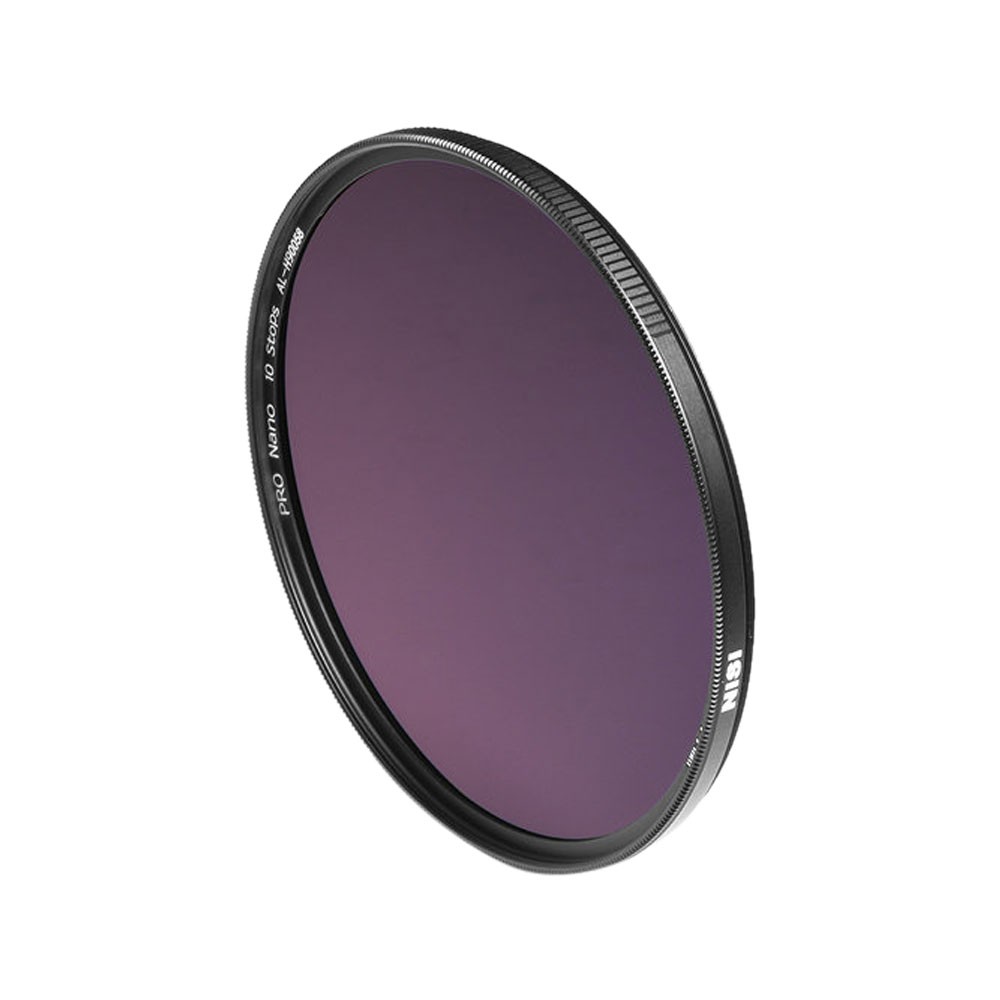
NiSi Nano IR ND1000 (3.0) 52 mm is a 10-stop neutral density filter for lenses with a 52 mm thread. It reduces light by 10 stops, so a 1/125 s exposure becomes about 8 seconds – for silky water, moving clouds and busy places without people. Nano coating reduces glare and reflections and keeps colours true, and the ultra-thin aluminium frame minimises vignetting…
66 € with VAT
54.55 € without VAT
Availability
on request
Product description
SPECIFICATIONS
PACKAGE CONTENT
Product description
NiSi Nano IR ND1000 (3.0) 52 mm is a 10-stop neutral density filter for lenses with a 52 mm thread. It reduces light by 10 stops, so a 1/125 s exposure becomes about 8 seconds – for silky water, moving clouds and busy places without people. Nano coating reduces glare and reflections and keeps colours true, and the ultra-thin aluminium frame minimises vignetting on wide-angle lenses. The classic long-exposure filter for landscape photographers.
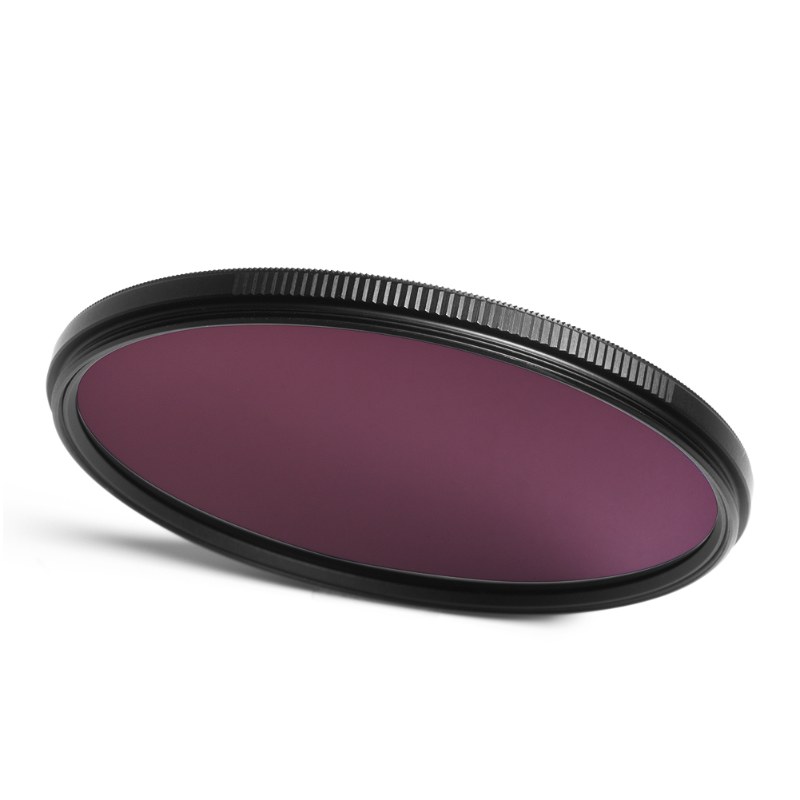
Looking for the filter that turns the sea into mist and clouds into streaks? The NiSi Nano IR ND1000 (3.0) 52 mm is a 10-stop neutral density filter for lenses with a 52 mm filter thread. It reduces the light reaching the sensor by 10 stops, so you can use shutter speeds of seconds or minutes even in daylight: smooth waterfalls and rivers, misty sea, dreamy cloud movement, or empty city squares as moving people disappear. Nano coating minimises glare and reflections and keeps colours vivid and true, and the ultra-thin aluminium frame reduces the risk of vignetting on wide-angle lenses. A tripod and remote release are all you need to start.
KEY FEATURES
- 10 stops (ND 3.0): 1/125 s becomes about 8 s.
- Long exposures in daylight: silky water, moving clouds, empty busy places.
- Nano IR coating: vivid, true colours, less glare and reflections.
- Ultra-thin aluminium frame: minimal vignetting on wide-angle lenses.
- Sizes: 39, 40.5, 46, 49, 52, 55, 58, 62, 67, 72, 77, 82, 86, 95 mm.
WHEN TO USE A 10-STOP ND FILTER
An ND1000 is the classic long-exposure filter. You will need a tripod and a remote release or self-timer.
- Sea and lakes: waves turn into soft mist, the horizon becomes calm.
- Waterfalls and rivers: silky water (often 1–4 s is enough – sometimes a weaker ND64 is better).
- Clouds: streaks of movement across the sky on windy days.
- Cities and architecture: moving people and cars disappear from busy places.
- Video in very bright light: rarely – usually a variable ND is more practical.
ADVANTAGES OVER A STACK OF WEAKER FILTERS OR A VND
- One piece of glass: better sharpness and fewer reflections than stacking several filters.
- No X pattern: unlike variable NDs at maximum density.
- Thin frame: usable on wide-angle lenses.
WHICH FILTER DO I NEED?
| What it does | Best for | Example on syntex.sk | |
|---|---|---|---|
| UV / protective | Clear glass that protects the front lens from dust, rain, sand and scratches; no visible effect on the picture. | Everyday shooting, travel, beach, rain, events. | TTArtisan Slim PRO UV |
| Polarizer (CPL) | Removes reflections from water, glass and leaves, deepens blue skies, increases saturation. | Landscapes, water, architecture, cars, travel. | K&F Concept A Series CPL |
| ND (neutral density) | Darkens the whole image evenly by a fixed number of stops, without changing colours. | Long exposures, smooth water, bright-light video, wide aperture in sun. | K&F Concept Nano-X ND64 |
| Variable ND (VND) | ND with adjustable strength – turn the ring to set how much light is cut. | Video outdoors, quickly changing light. | Moment Variable ND 2–5 stop |
| Black Mist / diffusion | Softens highlights and skin, adds a gentle glow and a cinematic look. | Portraits, video, weddings, night lights. | K&F Concept Nano-X Black Mist 1/4 |
| Square filter system | Holder with square / rectangular filters (ND, graduated ND); one set fits several lenses via adapter rings. | Serious landscape photography, sunsets, graduated skies. | K&F Concept 100 mm square filter holder |
HOW TO SHOOT A LONG EXPOSURE WITH AN ND FILTER
An ND (neutral density) filter darkens the whole image evenly, so you can use a much longer shutter speed or a wider aperture in bright light – without changing colours.
- Put the camera on a tripod and switch off image stabilisation if your camera recommends it on a tripod.
- Compose and focus first without the filter – with a strong ND the viewfinder is very dark and autofocus may not work. Then switch the lens to manual focus.
- Meter without the filter and multiply the shutter speed by the filter factor (see the ND stops table below), or use a long-exposure app.
- Screw on the filter carefully without turning the focus ring, set the long exposure (Bulb mode for times over 30 s) and use a remote release or the self-timer.
- Cover the viewfinder on DSLRs – light entering through the eyepiece can spoil long exposures.
Common mistakes:
- Focusing with the filter on – focus first, then add the filter.
- Forgetting noise reduction – very long exposures produce more noise and hot pixels; long-exposure NR helps.
- Wind and vibrations – a light tripod in the wind blurs the whole picture, not only the water.
HOW TO FIND YOUR FILTER SIZE
The filter thread is printed on the front of the lens barrel or inside the lens cap, marked with the ø symbol (for example ø52). The filter size must be exactly the same – this filter is 52 mm. The table below shows typical sizes, but always check your own lens.
| Typical filter thread | |
|---|---|
| Compact and pancake lenses, small primes | 37 – 52 mm |
| Kit zooms and standard primes | 49 – 67 mm |
| Standard zooms f/4, many travel zooms | 67 – 77 mm |
| Professional f/2.8 zooms | 77 – 82 mm |
| Large telephoto and some ultra-wide zooms | 86 – 105 mm |
Tip – one filter for several lenses: buy the filter for your largest filter thread and use step-up rings for lenses with smaller threads, for example a K&F Concept step-up / step-down ring set. A step-up ring goes from a smaller lens thread to a larger filter (e.g. 67 → 77 mm) and does not cause vignetting; a step-down ring (larger lens, smaller filter) usually does. The only drawback: the standard lens hood and lens cap may not fit with the ring attached.
NANO IR COATING
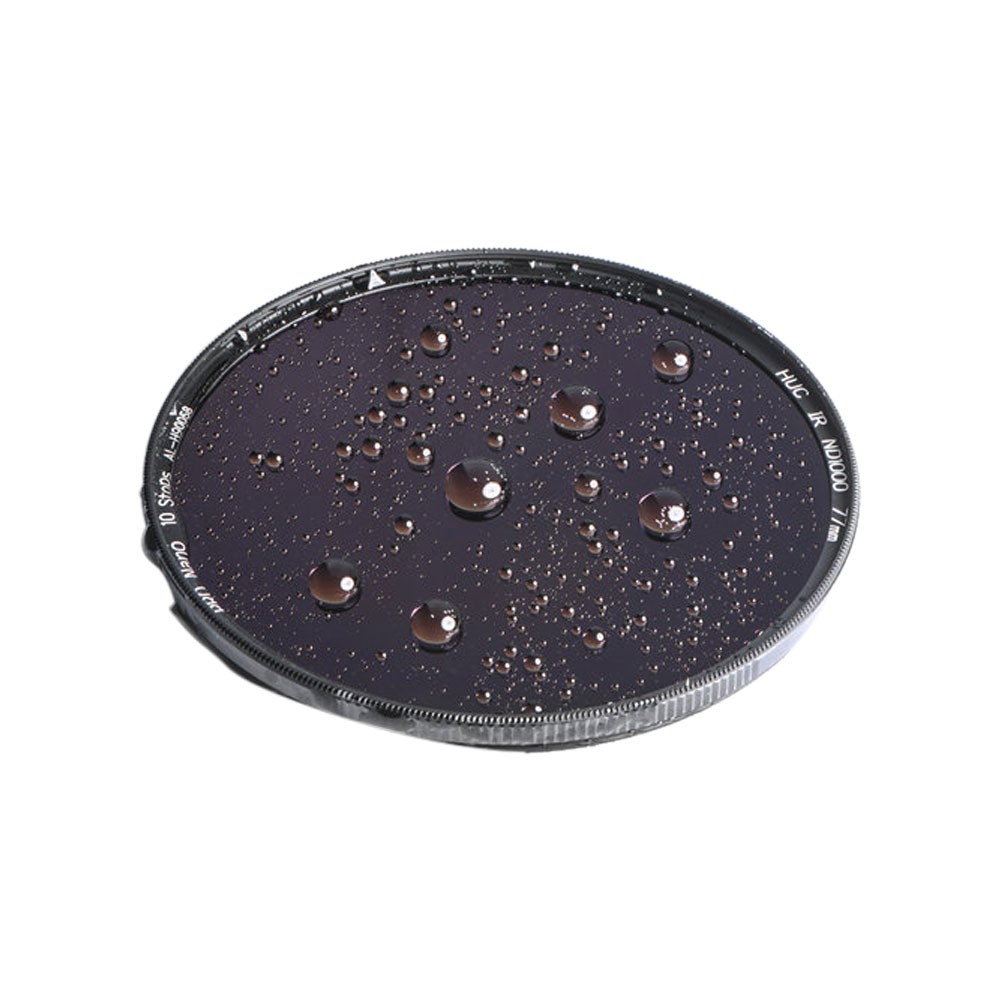
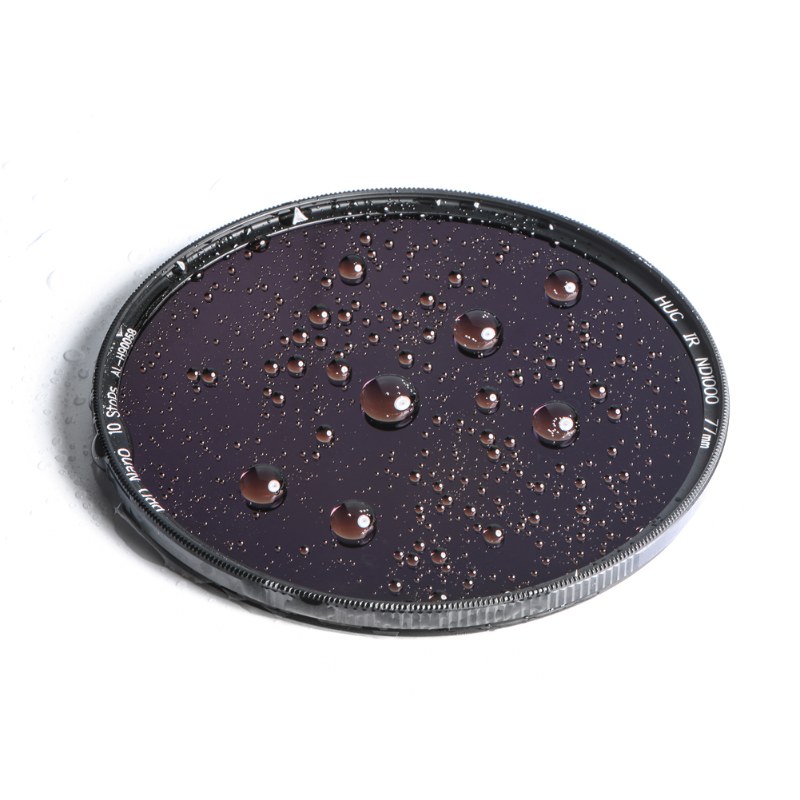
The nano coating minimises glare and reflections from the filter surface and keeps colours rich and true. It is designed to be long-lasting and to protect against scratches.
ULTRA-THIN ALUMINIUM FRAME
The slim aluminium frame minimises the risk of vignetting, so the filter can also be used on wide-angle lenses.
COMBINING FILTERS
- CPL + ND: for long exposures of water with the reflections removed. Put the ND filter on the lens first and the CPL in front, so you can still rotate it.
- Two filters at most: every extra layer of glass adds risk of flare, reflections and loss of sharpness; more than two filters on a wide-angle lens almost always cause vignetting.
- Slim frames for wide angles: on lenses wider than about 24 mm (full frame) use slim filters and check the corners at the widest focal length.
- One filter instead of two: combined filters such as ND + CPL in one frame avoid stacking altogether.
- Systems for faster work: filter systems with an adapter ring (magnetic or press-fit, e.g. NiSi Swift) let you add or swap filters without unscrewing them each time.
USE IT WITH
- Step-up rings: K&F Concept step-up / step-down ring set – one filter for lenses with smaller threads.
- Cleaning: Lenspen cleaning pen and K&F Concept microfibre cloths.
- Filter storage: Moment filter case or Lowepro GearUp Filter Pouch 100.
WHICH NiSi ND FILTER TO CHOOSE?
Fixed ND filters give the strongest effect and best image quality for long exposures; variable NDs are faster for video and changing light.
| Type | Light reduction | Best for | |
|---|---|---|---|
| True Color ND-Vario Pro Nano | Variable ND | 1–5 stops | Video, changing light, wide aperture in sun |
| True Color VND/PL Pro Nano | Variable ND + polarizer, independent controls | 1–5 stops + CPL | Video outdoors with water, glass and foliage |
| Nano IR ND1000 (this filter) | Fixed ND | 10 stops | Long exposures – smooth sea, moving clouds |
| HUC Pro Nano IR ND64 + CPL | Fixed ND + polarizer | 6 stops + CPL | Waterfalls and rivers with reflections removed |
ND1000 VS OTHER ND FILTERS
- ND1000 vs ND64 + CPL: the ND64 + CPL (6 stops) is better for waterfalls with reflections; ND1000 for sea, clouds and very long exposures.
- ND1000 vs variable ND: a VND is faster for video but cannot reach 10 stops cleanly.
CARE AND CLEANING
- Blow off dust first – a blower or a soft brush removes sand and grit that could scratch the glass.
- Clean fingerprints and drops with a Lenspen cleaning pen or a dry K&F Concept microfibre cloths; wipe from the centre outwards.
- Do not breathe on the glass and do not use household cleaners – they can damage the coating.
- Store filters in a case, such as the Moment filter case or Lowepro GearUp Filter Pouch 100, not loose in a bag.
- Do not over-tighten – if a filter gets stuck, a rubber filter wrench or a rubber glove helps; never use tools that bend the frame.
- Cold to warm – after coming in from the cold, let the filter warm up in a closed bag before cleaning to avoid condensation.
ND STOPS – HOW MUCH LIGHT DOES IT TAKE?
| Stops | Example: 1/125 s becomes | Typical use | |
|---|---|---|---|
| ND2 (0.3) | 1 | 1/60 s | slight motion blur, wider aperture in daylight |
| ND4 (0.6) | 2 | 1/30 s | video at 1/50 s in cloudy light |
| ND8 (0.9) | 3 | 1/15 s | video in daylight, flowing water |
| ND16 (1.2) | 4 | 1/8 s | wide aperture in bright sun |
| ND64 (1.8) | 6 | 1/2 s | waterfalls, silky water |
| ND1000 (3.0) | 10 | 8 s | long exposure – smooth sea, moving clouds |
| ND32000 (4.5) | 15 | 4 min | very long exposures, people disappear from busy places |
FREQUENTLY ASKED QUESTIONS
Which size do I need?
The size of your lens filter thread (marked ø on the lens or inside the lens cap). This product is 52 mm.
How do I calculate the exposure?
Multiply the shutter speed without the filter by about 1000 (10 stops): 1/125 s → ~8 s, 1/30 s → ~30 s. See the table below.
Can I focus through the filter?
With 10 stops autofocus often fails – focus first without the filter, switch to manual focus, then screw on the filter.
Does it change colours?
NiSi states the nano coating keeps colours vivid and true; with very long exposures a slight white-balance correction may be needed.
Is it suitable for video?
Only in very bright conditions; for video a variable ND is more practical.
PACKAGE CONTENT
WHAT'S IN THE BOX
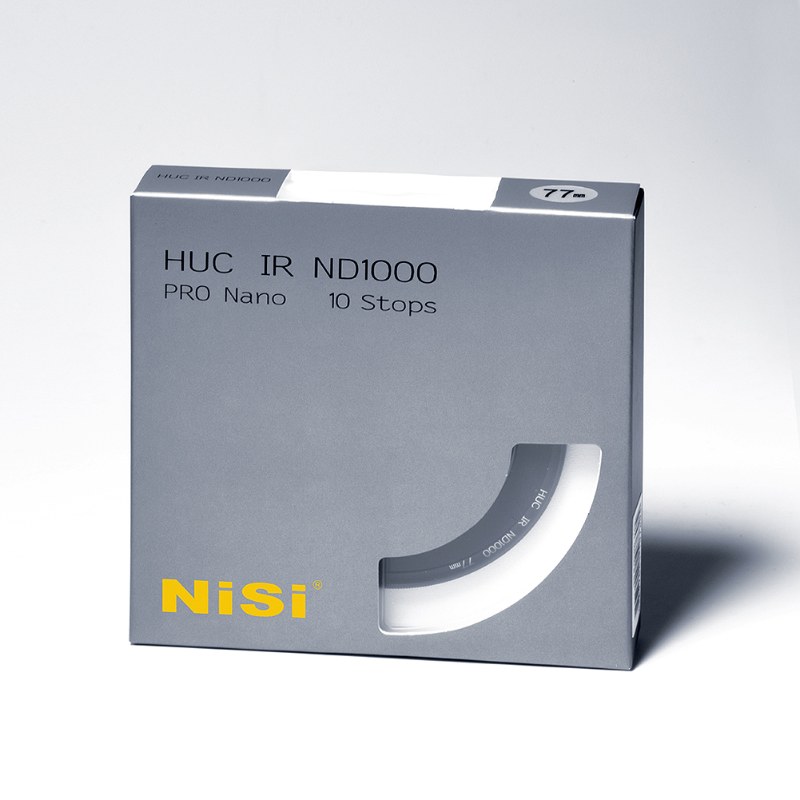
- 1 × NiSi Nano IR ND1000 (3.0) 52 mm filter
- NiSi packaging
Note: lens cap and step-up rings are not included.
SPECIFICATIONS
TECHNICAL SPECIFICATIONS
| General | |
|---|---|
| Brand | NiSi |
| Model | Nano IR ND1000 (3.0) |
| Code | NIR-ND3.0-52 |
| Product type | ND filter (screw-in) |
| Use | Long exposures – water, clouds, cities |
| Filter | |
| Filter type | Fixed ND (ND1000) |
| Filter size (thread) | 52 mm |
| Effect | Darkens the image evenly by 10 stops |
| Light reduction | 10 stops (ND 3.0) |
| Colour rendering | Neutral (Nano IR) |
| Optics and coating | |
| Glass | Optical glass |
| Coating | Nano IR coating |
| Edge treatment | – |
| Frame | |
| Frame material | Aluminium, ultra-thin |
| Frame thickness | Ultra-thin (NiSi does not state mm) |
| Front thread | – |
| Rotation / adjustment | – (fixed) |
| Compatibility | |
| Lens thread | 52 mm |
| Lens hood | Compatible with most lens hoods |
| System | – |
| Physical | |
| Weight | approx. 20 g |
| In the box | Filter 52 mm |
| Warranty | |
| Warranty | 2 years |
Compatibility
For lenses with a 52 mm filter thread. Smaller threads with a step-up ring.
News, training, and discounts from Syntex
Special offers and discounts for subscribers only · Free audio & video workshops · News and tips from the world of filmmaking
- Show all
Hollyland Solidcom BPK01 Beltpack Battery
Spare battery for the Hollyland Solidcom BPK01 wireless beltpack of the Solidcom128 €on request
NiSi Nano IR ND1000 82 mm – 10-Stop ND Filter for Long Exposures
NiSi Nano IR ND1000 (3.0) 82 mm is a 10-stop neutral density filter for lenses with85 €on request
NiSi Nano IR ND1000 72 mm – 10-Stop ND Filter for Long Exposures
NiSi Nano IR ND1000 (3.0) 72 mm is a 10-stop neutral density filter for lenses with80 €on request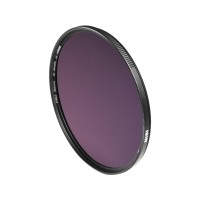
NiSi Nano IR ND1000 52 mm – 10-Stop ND Filter for Long Exposures
NiSi Nano IR ND1000 (3.0) 52 mm is a 10-stop neutral density filter for lenses with66 €on request