



Blog

Press Release

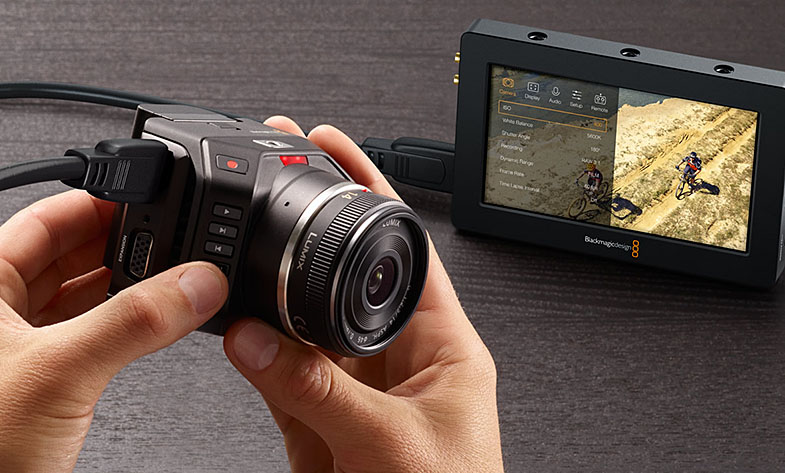
Blackmagic Design announced that multiple Blackmagic Micro Cinemas and Video Assists were used to shoot the web movie for new LEXUS car, LC500. It was shot by Kei Takahashi, a Cameraman and founder of Tokyo-based KID Co. Ltd., on location on and above the highways of California.

With power and comfort, the LC500 was born as a luxury coupé which symbolizes LEXUS’s next generation. To bring out the attractiveness of the car, the production shot the car driving along the stunning Angeles Crest Highwayin California. Shot using a number of cameras, including six Micro Cinema Cameras, the movie captured the intense nature of California and the LC500 powerfully running through the curvy road from various angles. Along with the Micro Cinema Cameras, Takahashi used two Video Assists for monitoring.

LEXUS LC500 Blackmagic Micro Cinema Camera

Takahashi said: “We temporarily blocked about 4 km of the road for the shoot, and let the LC500 run the 4 km. When the car came back to the starting point, we started shooting again. We repeated this several times. It took 15 to 20 minutes for each round, and we only had one day to shoot the entire movie. And since we were at an external location, we had to finish while the sun was out. It was a very tight schedule, so we wanted to capture as many angles as we could.”

The Micro Cinema Cameras were set using a single pipe across the car with grips. Tripod mounts were installed via the grips, where three Micro Cinema Cameras were mounted. Another Micro Cinema Camera with a suction cup was stuck to the window on the driver’s side, while the last was installed near the driver’s foot. With this setup, Takahashi was able to shoot five angles such as the spedometer, the driver’s hand, gas pedal and a number of other specific features of the car in action. Takahashi used another Micro Cinema Camera to shoot a vertical size movie.

“The director and I were thinking that it would be interesting if we put the Micro Cinema Camera rotated in 90 degrees on top of another camera when shooting the LC500 from the camera car. The idea just came up and we decided to shoot the vertical size movie in case we could use the footage for something,” said Takahashi.

LEXUS LC500 Blackmagic Micro Cinema Camera

Also, DaVinci Resolve was used for on set grading, with the final post production process completed in Japan.

“The Micro Cinema Camera’s advantage is its compact size. It can be installed where regular cameras cannot fit. The main advantage that allowed me to shoot the vertical size movie was that it can be rotated in 90 degrees. As the schedule for this project was very tight, it was very beneficial to shoot many angles at a time”

The Video Assists were used to set up the Micro Cinema Cameras. Takahashi talked about Video Assist: “It’s easy to connect and easy to see. It’s easy to use and compact and I like that I can use the Canon battery. The Video Assist is versatile.”

“I work with Murakami, the director of this project, for other projects. The Micro Cinema Camera has become a real stable for us for use on car related jobs. For car commercials, small cameras are often used by installing them in a car like this project or mounted on a head. However, the picture quality of those cameras usually did not look good, and is missing richness in the picture. We are shooting something luxurious, so we want the image to match that. The Micro Cinema Camera, on the other hand, can capture a rich image and is easy to match with other cameras,” concluded Takahashi.

LEXUS LC500 Blackmagic Micro Cinema Camera

Press Photography
Product photos of all Blackmagic Design products, are available at
www.blackmagicdesign.com/press/images.

About Blackmagic Design
Blackmagic Design creates the world’s highest quality video editing products, digital film cameras, color correctors, video converters, video monitoring, routers, live production switchers, disk recorders, waveform monitors and real time film scanners for the feature film, post production and television broadcast industries. Blackmagic Design’s DeckLink capture cards launched a revolution in quality and affordability in post production, while the company’s Emmy™ award winning DaVinci color correction products have dominated the television and film industry since 1984. Blackmagic Design continues ground breaking innovations including 6G-SDI and 12G-SDI products and stereoscopic 3D and Ultra HD workflows. Founded by world leading post production editors and engineers, Blackmagic Design has offices in the USA, UK, Japan, Singapore and Australia. For more information, please go to www.blackmagicdesign.com.

Date: 04. 10. 2017, Category: News
FULL ARTICLE

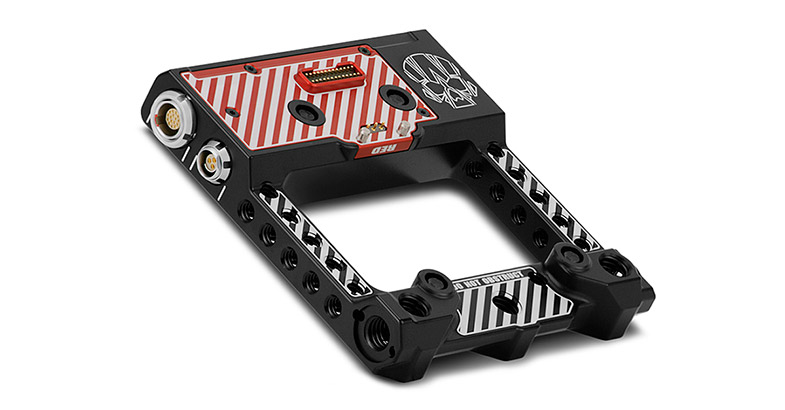
The DSMC2 Gold Mount Battery Module Pro is a low profile cable-free module that enables you to power your DSMC2 BRAIN and camera accessories using standard Gold Mount batteries. The Gold Mount and protected release button ensure ongoing power even during mobile shoots. The module offers a P-Tap connector on top and an auxiliary port on the side for powering peripherals and accessories. Together the P-Tap and auxiliary connectors support a maximum combined current of 3.8 Amps. This module also offers a DC IN power port that can be used to power the camera system when the module is attached to the BRAIN. When DC IN power is supplied to the module, and the camera is turned off, this module can also trickle charge a wide variety of attached Gold Mount batteries.

RED DSMC2 Gold Mount Battery Module Pro

Date: 02. 10. 2017, Category: News
FULL ARTICLE

Tutorials in the new EDIUS Basics series describe basic functionality of the Grass Valley EDIUS Pro 8 and Workgroup NLE applications.



Grass Valley EDIUS 8 9

Date: 29. 09. 2017, Category: News
FULL ARTICLE

Panasonic has updated its GH5 and GH4 mirrorless cameras. Firmware version 2.7 for the DMC-GH4 fixes a bug in VFR (Variable Frame Rate) shooting mode, where, in some cases, the image stabilization did not operate when non-Panasonic interchangeable lens was used. Firmware version 2.0 for the DC-GH5 models includes numerous fixes and enhancements, including:

Panasonic LUMIX DC-GH5

1. Compatibility with "LUMIX Tether" PC software

This new firmware enables GH5 tethered shooting via USB, using “LUMIX Tether" PC software. Users can control the camera by connecting it to a PC via USB. Click here to the LUMIX Tether Program.


2. Improved auto focus performance

- Auto focus performance for subjects with low contrast in photo shooting is improved.

- Tracking auto focus performance in video recording is improved.

- The customized AF area can be continuously displayed in [Multi AF] and [Custom Multi AF] during live-view.

- The AF area in [Multi AF] can be moved to the other edge (side, top or bottom) when it reaches one edge.

- The start point of AF lock can be set on the live view screen in advance in [AF Tracking].

- The AF area can be moved while the shutter button is half-pressed or while recording in [Burst Mode], [6K PHOTO] and [4K PHOTO].


3. Improved performance in [6K PHOTO] and [4K PHOTO]

- The waiting time to start the next burst shooting sequence after [6K Burst] and [4K Burst] is shortened to less than half the time.

- [Loop Rec] is available in [6K PHOTO]. Use of Panasonic SD Memory Card with Video Speed Class 90 is recommended for [Loop Rec] of [6K PHOTO].


4. An additional ALL-Intra Video Recording mode

- 4:2:2,10-bit ALL-Intra video recording mode is added to 4K/FHD video recording. Use of SD Memory Card with Video Speed Class 60 or higher is recommended for 4K ALL-Intra video recording. Operation is confirmed with Panasonic SD Memory Card with Video Speed Class 90.


5. 4K HDR video recording

- [HLG] (Hybrid Log Gamma) is added to [Photo Style]. HDR (High Dynamic Range) is a mode to reproduce both bright part and dark part in an image, making it look just as human eyes see. The camera records video with a designated gamma curve compatible with ITU-R BT.2100, and you can now choose Hybrid LogGamma (HLG) in [Photo Style].

- A low-bit-rate recording mode 4K HEVC for HLG was added. This enables playback on AV equipment compatible with the HEVC compression format, such as Panasonic 4K HDR TVs.


6. Enhancement of the Anamorphic video recording mode

- High-Resolution Anamorphic mode, which enables video recording in 18-mega effective pixels, is added. (Recorded in HEVC.)

- [Anamorphic Desqueeze Display] was added, which lets you view an enlarged image in Cinescope size while recording with 2.0x and 1.33x Anamorphic lens.

- [Video Guide Line] is added to display the image in a variety of aspects, such as Cinescope, 16:9 and 1:1 while recording video. This can be used not only in Anamorphic mode but also in other video recording mode.


7. Enhancement of Body I.S. (Image Stabilizer)

- [I.S. Lock(video)] is added. This powerfully compensates for handshake when the viewing angle is fixed.

- A new handshake correction mode is added, which provides optimum correction when using 2.0x and 1.33x Anamorphic lens.

- In VFR (Variable Frame Rate) shooting mode, there were cases where the image stabilization did not operate when non-Panasonic interchangeable lens is used. This bug has been fixed.


8. Correction of white balance setting

- When the K (Kelvin) value was changed after adjusting the color temperature with 2-axis white balance compensation, the setting was reset. This bug has been fixed.


9. Improved usability of Time Lapse Shot

- The time to finish shooting and the number of recordable pictures are displayed on the stand-by screen.


10. Improved usability of Power Save LVF

- Power Save LVF can now be used during all stand-by display options.


11. Wireless functions

- The Bluetooth Remote Control function can be used with Image App, which will also be updated at the same timing with the GH5 firmware release.

- If the camera has not completed image transmission when it is turned off, it restarts transmission when it is turned on with the [Auto Transfer] function.


12. Other improvements

- A rating function using a Fn button is available in Playback Zoom and Multi Playback.

- The following functions can be assigned to Fn buttons - [Constant Preview] [6K/4K PHOTO Bulk Saving] [Min. Shtr Speed] [RAW Processing] [Rec/Playback Switch] [Destination Slot] and [Mic Level Adj.].

- The DISP.Button can be locked.

- In Relay Rec, there were cases where the video file number was not able to be reset. This bug has been fixed.

- In Relay Rec, there were cases where the video file number was reset after formatting the SD Memory Card. This bug has been fixed.

- In Backup Rec, there were cases where the file number was not reset even after applying resetting. This bug has been fixed.

- The image quality when applying the following settings is improved: Extended low ISO, [i.Dynamic] (Intelligent D-range Control) and Highlight Shadow.

Date: 27. 09. 2017, Category: News
FULL ARTICLE

Press Release

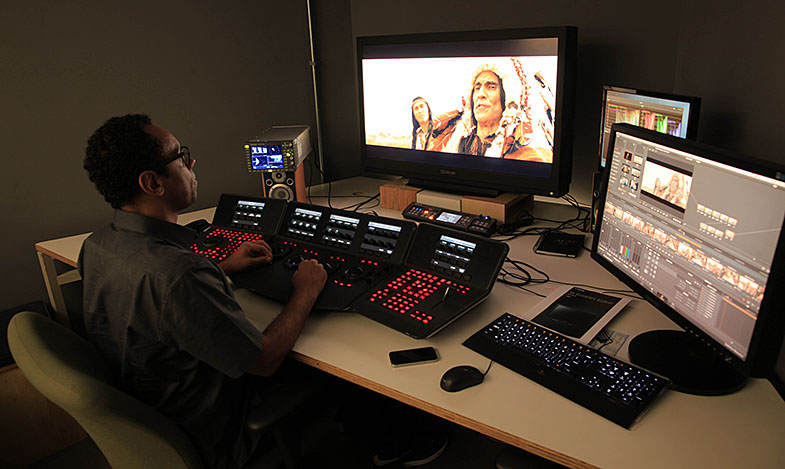
Blackmagic Design today announced that DaVinci Resolve Studio has been used throughout production and post production on 20th Century Fox’s “Kingsman: The Golden Circle,” including SDR and HDR delivery. Joshua Callis-Smith was responsible for the onset dailies while the online edit and final DI were completed by Goldcrest Post.

The second installment of the Kingsman comic book adaption saw cinematographer George Richmond reunite with DIT Callis-Smith and Goldcrest senior colorist, Rob Pizzey following their work together on“Kingsman: The Secret Service” in 2014.

“Our goal with ‘The Golden Circle’ was to maintain the same slick, rich overall aesthetic as the first film,’ while also ensuring we gave the sequel its own unique look,” begins Callis‑Smith.

“Building on our use of Resolve on the first Kingsman film, I ran all of the images into 25 inch OLED monitors which were calibrated to match the DI suite at Goldcrest, and used a Smart Videohub to route pictures to the video operator, who would in turn distribute those images to everyone else.”

Blackmagic Design DaVinci Resolve Studio Kingsman: The Golden Circle

The onset DIT cart also incorporated a Blackmagic UltraStudio 4K capture and playback device along with multiple SmartScope Duo 4K preview monitors. The first grading pass was subsequently completed in DaVinci Resolve with the help of look up tables (LUT) created ahead of time by the colorist, Rob Pizzey.

“‘Kingsman: The Golden Circle’ was a much bigger proposition than ‘Kingsman: The Secret Service,’ with more ambitious VFX shots as well as an HDR deliverable to consider,“ Pizzey explains. “Along with the fact that we were delivering multiple HDR versions including Dolby Vision for theatrical and HDR10 for domestic viewing, we also had a larger number of VFX set pieces, all of which Resolve handled smoothly.”

The conform and online edit was also completed in Resolve Studio by Goldcrest’s Daniel Tomlinson, which allowed the in house team to turn around any edit changes and visual effects updates that took place quickly and efficiently.

Blackmagic Design DaVinci Resolve Studio Kingsman: The Golden Circle

“Working from the RAW rushes gave us maximum flexibility. As for all our deliveries, the HDR grade would originate from the live DI timeline, so we could access any part of the original grade and finesse to achieve the best results in HDR,” adds Pizzey. “Grading the HDR is not just about reproducing the REC 709 version on a HDR monitor. It all boils down to how the original material was shot in the first place. On The Golden Circle we could justify sensitively opening up the contrast ratio as we had the dynamic range to work with. Used in a controlled approach, the results can be stunning.”

He concludes: “Our color pipeline has certainly evolved since the first ‘Kingsman,’ we all worked on together, but one piece of the puzzle has remained the same: DaVinci Resolve. Resolve was central to the successful delivery of post production on ‘Kingsman: The Golden Circle.’ Using it ensured color management remained consistent throughout the entire editorial pipeline, from DIT through to the final results.”

Press Photography
Product photos of all Blackmagic Design products, are available at
www.blackmagicdesign.com/press/images.

About Blackmagic Design
Blackmagic Design creates the world’s highest quality video editing products, digital film cameras, color correctors, video converters, video monitoring, routers, live production switchers, disk recorders, waveform monitors and real time film scanners for the feature film, post production and television broadcast industries. Blackmagic Design’s DeckLink capture cards launched a revolution in quality and affordability in post production, while the company’s Emmy™ award winning DaVinci color correction products have dominated the television and film industry since 1984. Blackmagic Design continues ground breaking innovations including 6G-SDI and 12G-SDI products and stereoscopic 3D and Ultra HD workflows. Founded by world leading post production editors and engineers, Blackmagic Design has offices in the USA, UK, Japan, Singapore and Australia. For more information, please go to www.blackmagicdesign.com.

Date: 26. 09. 2017, Category: News
FULL ARTICLE