



Press Release
Blackmagic Design today announced that Kei Ikeda, one of Japan’s leading music video DP, videographer and screenwriter, and also the founder of production company ISAI, used Blackmagic URSA Mini Pro 4.6K to shoot a number of music videos. He has used the URSA Mini Pro 4.6K to shot videos for some of Japan’s leading musical acts, including popular artists such as KOTORI and Hysteric Panic.
Ikeda shoots and directs many music videos and concert videos, and has created a large number of award winning short films and a feature films. Since founding ISAI, Ikeda has been recognized as a pioneer who has opened up new ways for the visual expression of music.

“The first time I used the URSA Mini Pro was for the band KOTORI, when making their music video for the song ‘Blue.’ The client first asked me to shoot with a film camera, however we did not have enough budget for a film shoot, so I looked for something we could get in a similar image that was within the budget and we reached to the URSA Mini Pro 4.6K. I shot in 3K anamorphic sensor mode so I used a prime lens for still photography, with an anamorphic adapter, SLR Magic,” said Ikeda. After shooting he used DaVinci Resolve’s Camera RAW setting to create the desired look he wanted for the video.
Around the same time, he also shot a video for Hysteric Panic with the same combination of URSA Mini Pro and still lens with SLR Magic. Then, he shot Japanese Idol group Pass Code’s music video as well. “I used Canon prime lenses to shoot the video. For this video, I was hired as DP. This means I did not edit the video, and I shot in ProRes so that the director could easily cut the footage and gave him a LUT after shooting. I usually shoot in RAW when I do everything, from shooting to post production, but it’s handy to have a ProRes recording option when I don’t have total control of finishing projects.”

Ikeda continued: “I used this camera for these groups for the first time. What surprised me was the image quality that I could get out of this wide dynamic range. Later, I used the URSA Mini Pro for another song, ‘ROKUGATSU (June)’ from KOTORI. I used it with Canon’s Cine Prime lenses and shot in RAW. I wanted to bring out more clarity in the picture, so I added more contrast on shadows than I did for previous video with Resolve.”
“After that shoot, I did a couple more projects for different artists and clients. The camera gives me more freedom as I can switch EF and PL mounts depending on the project. I also did high speed shooting for many projects. I shot both uncompressed and compressed RAW, and compressed RAW gives me a very nice image which I hardly can tell the difference from the uncompressed one. “

He also used the URSA Mini Pro for a recent web commercial. “I shot the commercial using a Cooke anamorphic lens with the camera. I have worked with the same client before and that time I used a different camera which was way more expensive than the URSA Mini Pro. Of course the client loved the commercial, however, they said they prefer the commercial’s look captured from the URSA Mini Pro and Cooke lens.”
“The benefit of the URSA Mini Pro is of course its dynamic range and picture quality. It also is easy to handle, which I think is another great benefit of this camera. It allows me to shoot as long as I have the camera. I don’t need to add many new peripherals around the camera, so I do not need a bigger production, or add an extra camera assistant. The URSA Mini Pro is just very easy to use,” Ikeda concluded.

Press Photography
Product photos of all Blackmagic Design products, are available at www.blackmagicdesign.com/press/images.
About Blackmagic Design
Blackmagic Design creates the world’s highest quality video editing products, digital film cameras, color correctors, video converters, video monitoring, routers, live production switchers, disk recorders, waveform monitors and real time film scanners for the feature film, post production and television broadcast industries. Blackmagic Design’s DeckLink capture cards launched a revolution in quality and affordability in post production, while the company’s Emmy™ award winning DaVinci color correction products have dominated the television and film industry since 1984. Blackmagic Design continues ground breaking innovations including 6G-SDI and 12G-SDI products and stereoscopic 3D and Ultra HD workflows. Founded by world leading post production editors and engineers, Blackmagic Design has offices in the USA, UK, Japan, Singapore and Australia. For more information, please go to www.blackmagicdesign.com.
RED announced a new cinematic Full Frame sensor for WEAPON cameras, MONSTRO™ 8K VV. MONSTRO is an evolutionary step beyond the RED DRAGON 8K VV sensor with improvements in image quality, including dynamic range and shadow detail.
This new camera and sensor combination, WEAPON 8K VV, offers Full Frame lens coverage, captures 8K full format motion at up to 60 fps, produces ultra-detailed 35.4 megapixel stills, and delivers incredibly fast data speeds of up to 300 MB/s. Like all of RED’s DSMC2 cameras, WEAPON shoots simultaneous REDCODE RAW and Apple ProRes or Avid DNxHD/HR recording and adheres to RED’s dedication to OBSOLESCENCE OBSOLETE—a core operating principle that allows current RED owners to upgrade their technology as innovations are unveiled as well as move between camera systems without having to purchase all new gear.
The new WEAPON will be priced at $79,500 (for the camera BRAIN) with upgrades for carbon fiber WEAPON customers available for $29,500. MONSTRO 8K VV will replace the current RED DRAGON 8K VV sensor in RED’s lineup, and customers that had previously placed an order for a RED DRAGON 8K VV sensor will be offered this new sensor beginning today. New orders will start being fulfilled in early 2018.
RED has also announced a comprehensive service offering for WEAPON carbon fiber camera owners called RED ARMOR-W. RED ARMOR-W offers enhanced and extended protection beyond basic RED ARMOR, and also includes one sensor swap each year.
Additionally, RED’s enhanced image processing pipeline (IPP2) is now available in-camera for all cameras with HELIUM and MONSTRO sensors through today’s v7.0 release firmware update. IPP2 offers a completely overhauled workflow experience, featuring enhancements such as smoother highlight roll-off, better management of challenging colors, an improved demosaicing algorithm, and more.
This software update adds support for HEVC decoding and hardware acceleration on the latest Mac OS, 7.1 audio track types, improved loudness meters, matte indicators on Media Pool thumbnails and support for dynamics for audio buses in the Fairlight mixer. In addition, this update includes dozens of general performance and stability enhancements.
Tutorials in the new EDIUS Basics series describe basic functionality of the Grass Valley EDIUS Pro 8 and Workgroup NLE applications.

Florida-based broadcasters faced a multitude of challenges during Category 4 Hurricane Irma, one of the strongest hurricanes ever recorded in the Atlantic, from transmitting the news in volatile weather to keeping viewers without power abreast of crucial information via social media.
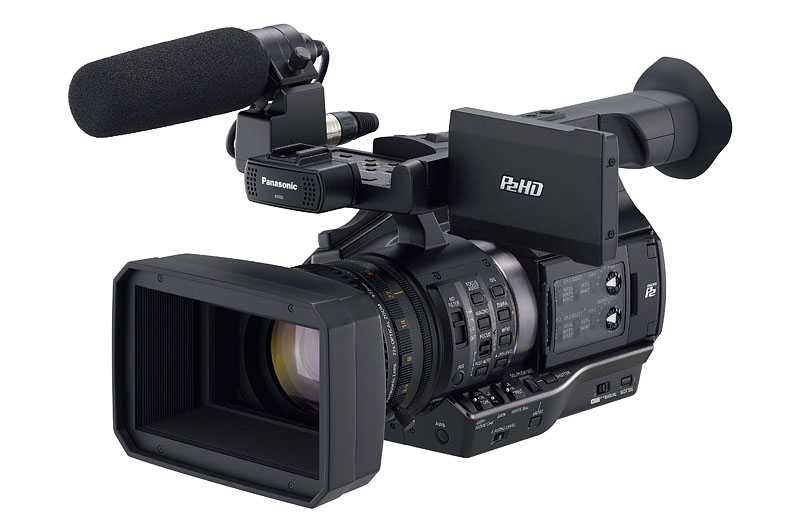
ABC affiliate WFTV-TV, the Cox Media Group (CMG) station serving the Orlando, FL market, relied on Panasonic’s P2 Cast cloud-based news production system throughout the super-charged storm to get news to air/on-line quickly and to keep its reporters safe. And the station’s storm coverage continues, showing Floridians grappling with power outages, residual flooding and clean-up, and preparing for more storms during an active hurricane season.
CMG’s Director of News Technology Dave Sirak, described ENG operations during the storm, “Our crews were scattered in safe locations around central Florida, assigned 12 hours on - 12 hours off shifts and staying at their location to avoid travel on roadways. Conditions varied from full exposure to rain and wind to internal locations inside emergency operations centers. We sent our crews with food and first aid kits, and we delivered fuel and other supplies in a roving fuel truck before and after the storm.”
He continued, “We had approximately half of our AJ-PX800 AVC-ULTRA camcorders using P2 Cast system. In some case our crews were working in traditional live trucks or with bonded cellular backpacks, but the automatic upload of the proxy video allowed us to keep our laptops stored and safe and to keep the cards in the cameras, which were tightly wrapped and protected from water intrusion. Removing the cards would have disrupted the protective rain gear, and wet hands on electronics should be avoided due to exchange of moisture on the cards, which can fog the camera internally, which is fatal.”

The P2 Cast system leverages the advanced features of Panasonic's P2 HD AVC-ULTRA camcorders, integrating their networking capabilities so content uploaded to the cloud is immediately available for reviewing and editing on the web. P2 Cast expedites the delivery of news to air, while also expanding the editing function to any device connected to the internet. A significant P2 Cast advantage is its ability via the cloud to move low bit rate, yet high-quality proxy video off a camcorder in the field, create a video sequence of the desired clips, and then allow newsroom systems to automatically pull back high-resolution video for air from the camera.
“When the eye of Irma moved across central Florida we were forced to put our satellite and microwave dishes down, but with the P2 Cast system our crews were able to continue to shoot and send back reports during the peak period of the storm,” Sirak recounted. ““Our crews could literally stay in the gather mode since their content was being shared automatically. A ‘look live’ would take about 5 -10 minutes to get to air depending on bandwidth and the length of the report. We also limited the exposure of our crew waiting in extreme conditions to be taken live—and when a hurricane is in your backyard you have a lot of crews stacked waiting to be taken live.”
Discussing pushing proxy video clips onto WFTV social media platforms, Sirak added, “Social media is a huge factor in covering a disaster. Orlando was hosting thousands of evacuees from south Florida whose only connection was social media as they traveled in their cars and stayed in hotel rooms. Once Orlando was hit, our viewers were now dependent on social media when their power went out and throughout the lengthy recovery period while we waited for power to be restored.”
Elaborating on his crews’ versatility, Sirak said, “P2 Cast allowed our crews to minimize their exposure to hazardous conditions since they were not connected with cable or other devices. At any time, our crews could change locations and seek areas with better cover from the weather while shooting and sending clips back. What’s more, while our sister station WSB-TV was covering Hurricane Irma from Houston, the WSB crews were deploying P2 Cast to share video with our WFTV crews, both in the field on opposite sides of the storm. This is first time we have used P2 Cast to share content with other crews who were also in the field.”
“P2 Cast is a shoot-and-forget tool for sharing video--when the camera is connected to high-speed internet, the results are remarkable,” he added. “It’s part of our DNA now, and it would be very difficult to do without it.”