
 CZ
CZ SK
SK HU
HU AT
AT DE
DE ES
ES SI
SI HR
HR
Nothing in the basket.

- Search
-
Login

-
0
Comparison
Add products to compare, then they will appear here and you can compare parameters.
-
0
0 €
News
Autodesk released Extension 1 for 3ds Max, Maya, and Mudbox 2014, as well as Service Pack 3 for 3ds Max with several bug fixes. The Extensions are offereded free of charge to customers with current Autodesk Subscription. The Extension for Autodesk Maya 2014 software brings the XGen Arbitrary Primitive Generator for creating hair, fur, feathers, grass, foliage, and other instanced data; a new retopology toolset; new robust and efficient Boolean operations; and enhancements to the Bullet physics plug-in. The Extension for Autodesk Mudbox 2014 software enables to create topologically symmetrical meshes while retopologizing, or from an existing mesh, and a new Caliper tool that helps to accurately measure the distance between two points in linear space, or along a curve. The Extension for Autodesk 3ds Max 2014 software adds the ability to import and visualize massive point cloud datasets, new support for Python scripting, and a Stereo Camera feature set.
Date: 01. 10. 2013,
Category: News
FULL ARTICLE
September 30, 2013
Blackmagic Design announced that Los Angeles based post production house Shapeshifter used Blackmagic Design’s Teranex 2D Processor and DaVinci Resolve color correction software to finish the feature length documentary “Mel Brooks: Make a Noise.”
“Mel Brooks: Make a Noise” recently aired on PBS as part of the popular American Masters series, and has quickly become one of the most talked about documentaries of 2013. The film combines celebrity interviews with archival footage to shed light on the comedy giant’s personal life, creative beginnings and legendary career.
Director Robert Trachtenburg chose to shoot the film’s interviews in 4K at 23.98 fps. This footage was then edited into a 29.97 fps (DF) project and was combined with the archival footage, taken from more than five decades of Mel Brooks in film, television and on stage, which was already 29.97 fps.
Shapeshifter colorist Randy Coonfield began color correction on the film by converting the provided 29.97 fps project back to 23.98 fps, recreating a proper link to the original footage and creating AAF files, allowing him to conform all of the 23.98 fps 4K footage in Resolve to begin color correction. He also did a large amount of zooms and pans to reframe interviews, which had been shot with this idea in mind.
“With Resolve’s ability to work with the full resolution files, zooms of 200 percent and more still looked terrific, which is amazing,” said Randy. “Our work included extensive secondary color, diffusion effects and many Power Windows to create a specific look. This required a lot of tracking as well, and Resolve handled all of it perfectly.”
After color correcting and resizing the 23.98 fps material in Resolve, the team used Blackmagic Design’s Teranex 2D Processor to perform a render process that created DNxHD media for conversion back to 29.97 fps. The new, color corrected 29.97 fps footage was then cut into the sequence, replacing the original lower resolution shots. Once the timeline had been finalized at full HD resolution, a mixdown of the entire piece was created, which was again sent to Resolve for a final color pass.
“Some of the footage needed additional work, like noise reduction, sharpening, repositioning and color,” said Randy. “A few interviews needed more color correction or different zooming, so we went back to the 23.98 fps project. But since much of the archival footage was already color corrected, this step required very little manipulation to achieve our desired result.”
For the final step, the entire 29.97 fps mixdown was sent back to the editing team, who then overcut the archival footage and any newly created footage from the camera files, adding titles and finalizing the film.
“Using both Blackmagic’s Teranex and DaVinci Resolve really streamlined the process of finishing this film,” said Randy. “We combined very different elements together, and Blackmagic helped us achieve the look we were going for, which in the end helped us truly capture the essence of the legendary Mel Brooks.”
Press Photography
Product photos of Blackmagic Design products are available at www.blackmagicdesign.com.
About Blackmagic Design
Blackmagic Design creates the world’s highest quality video editing products, digital film cameras, color correctors, video converters, video monitoring, routers, live production switchers, disk recorders, waveform monitors and film restoration software for the feature film, post production and television broadcast industries. Blackmagic Design’s DeckLink capture cards launched a revolution in quality and affordability, while the company’s Emmy™ award winning DaVinci color correction products have dominated the television and film industry since 1984. Blackmagic Design continues ground breaking innovations including stereoscopic 3D and 4K workflows. Founded by world leading post production editors and engineers, Blackmagic Design has offices in the USA, United Kingdom, Japan, Singapore, and Australia. For more information, please check www.blackmagicdesign.com.
Date: 30. 09. 2013,
Category: News
FULL ARTICLE
September 25, 2013
Nimb TV, an innovative broadcast production start up in Denmark, has unveiled the country’s first, and smallest, Ultra HD OB van. The unit is built around a number of Blackmagic Design's Ultra HD products, including the ATEM Production Studio 4K and Blackmagic Audio Monitor. Uniquely housed in a three wheeler moped van, it can be positioned right at the heart of any live production.
Built with the help of AV specialist Stjernholm & Co, the OB van will be used for high quality, multi camera Ultra HD 4K production in the Danish broadcast industry, big screen events and live concerts. It has already been booked for the 'boot camp' section of the next season of Denmark’s version of The X Factor, which will use various locations across Copenhagen.
Nimb TV's live production workflow includes the ATEM Production Studio 4K, which can handle SD, HD or Ultra HD 4K video sources from up to eight of the team's own cameras, or their broadcast clients. The ATEM Production Studio 4K will be used with an ATEM 1 M/E Production Panel for hardware control.
The ATEM Production Studio 4K's 6G-SDI and HDMI 4K video connections mean Nimb TV can handle Ultra HD 4K video sources via a single cable and each input includes a frame synchronizer allowing the use of non-genlocked sources. There is also an HD down-converted HD-SDI program output for when the switcher is operating in Ultra HD formats, but a regular HD program feed is required.

The workflow also features a HyperDeck Studio Pro SSD recorder, while capture and playback is handled by Blackmagic's UltraStudio 4K. The team has also installed a Blackmagic Audio Monitor, a rack mount extremely high quality audio monitoring solution with advanced 6G-SDI video for Ultra HD video sources, to ensure high quality monitoring wherever the unit is in action.
“We had come across the Blackmagic range of products at NAB and quickly realized that they would be able to deliver huge production power at an affordable cost,” explained Niels Borup, co founder, Nimb TV. “We now have the ability to work with a huge range of customers, from independent filmmakers to national broadcasters, and can offer flexible, reliable Ultra HD 4K production, wherever they want to film.”
“Niels and Toke are a hugely proactive, passionate production team that has spotted a fantastic opportunity in the market,” said Morten Stjernholm, CEO, Stjernholm & Co. “Blackmagic's ATEM Production Studio 4K enables the team to produce content to the same high standard as you find in huge OB trucks, but the size and agility of the moped van gives Nimb a huge competitive edge. The Ultra HD 4K workflow enables the team to offer the highest quality streaming for major live events, as well as a flexible system that broadcasters can quickly plug into with their own camera choices.”
Press Photography
Product photos of ATEM Production Studio 4K, UltraStudio 4K, Audio Monitor and HyperDeck Studio Pro, are available at www.blackmagicdesign.com/press/images.
About Blackmagic Design
Blackmagic Design creates the world’s highest quality video editing products, digital film cameras, color correctors, video converters, video monitoring, routers, live production switchers, disk recorders, waveform monitors and film restoration software for the feature film, post production and television broadcast industries. Blackmagic Design’s DeckLink capture cards launched a revolution in quality and affordability, while the company’s Emmy™ award winning DaVinci color correction products have dominated the television and film industry since 1984. Blackmagic Design continues ground breaking innovations including stereoscopic 3D and 4K workflows. Founded by world leading post production editors and engineers, Blackmagic Design has offices in the USA, United Kingdom, Japan, Singapore, and Australia. For more information, please check www.blackmagicdesign.com.
Date: 25. 09. 2013,
Category: News
FULL ARTICLE
Autodesk, Inc. customers are now be able to pay as they go for all of the company’s latest Design and Creation Suites, Autodesk 3ds Max, Autodesk Maya, and the new Autodesk Maya LT. For the first time, customers can purchase access to a range of Autodesk desktop software on a monthly, quarterly or annual basis, in addition to traditional licenses, broadly expanding choices in how to access and pay for Autodesk software. It’s never been more cost effective for designers, engineers and visual effects artists to get started with Autodesk software with virtually no up-front capital costs, and to quickly ramp up projects using industry-leading Autodesk software. For more information, visit http://www.autodesk.com/pay-as-you-go.
Date: 19. 09. 2013,
Category: News
FULL ARTICLE
Eyeon revealed first information about Fusion 7, an upcoming major version of its prossional compositing system. According to eyeon, “Fusion 7's development is a hybrid of feature requests from our respected artists taken to the next level and eyeon's approach to building the most feature-rich, intelligent software in the world“. Fusion 7 features include:
-
New interface layouts and "tear off" sections.
-
New 3D engine.
-
Alembic importing.
-
Latest FBX scene importing.
-
Linear light and Colorspace control sources and tools.
-
Open Color I/O.
-
Roto Assist - new tooling to speed up rotoscoping.
-
Stereo roto mapping.
-
3D splines.
-
New Deep Volume tooling.
-
Plus so much more...
Date: 19. 09. 2013,
Category: News
FULL ARTICLE
- Show all
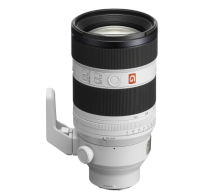
Sony FE 50-150mm F2 GM.
The Sony FE 50–150mm f/2 GM is a groundbreaking professional telephoto zoom lens4 449 €In stock 1 pcs