
 CZ
CZ SK
SK HU
HU AT
AT DE
DE ES
ES SI
SI HR
HR
Nothing in the basket.

- Search
-
Login

-
0
Comparison
Add products to compare, then they will appear here and you can compare parameters.
-
0
0 €
News
October 31, 2013
Blackmagic Design announced a new model of UltraStudio 4K, the world's first video solution to include super fast Thunderbolt 2 technology. The new UltraStudio 4K replaces the previous model and is available now for only 755 EUR.
The award winning UltraStudio 4K, is an attractively designed rack mount capture and playback device based on Thunderbolt 2 technology developed by Intel®. Featuring a machined aluminum front panel with an integrated color LCD as well as fast to use video and audio input buttons. UltraStudio 4K is attractive so it’s perfect for desktop as well as rack mount use. The rear panel includes virtually every type of video and audio connection that exists including 6G-SDI, HDMI 4K, analog component/s-video/composite, as well as balanced analog and AES/EBU digital audio. That means customers can connect to all decks, cameras, monitors and more.
Now with the incredible 20 Gb/s speed of Thunderbolt 2, UltraStudio 4K has even more bandwidth to work with higher quality video and frame rates. Now customers will be able to capture and playback Ultra HD 4K YUV video at 60 frames per second and Ultra HD 4K RGB video at 30 frames per second via the advanced 6G-SDI video connections. The Thunderbolt loop thru allows connection of up to 6 devices, so customers can connect fast disk arrays for massive amounts of video storage with a single Thunderbolt connection to their computer.

UltraStudio 4K handles virtually every television format, featuring 6G-SDI connections that instantly switch between SD, HD, Ultra HD and 4K making it the ideal solution for all post production and broadcast users when working on design, editing, paint, color correction and visual effects tasks. UltraStudio 4K is also perfect for 3D workflow as it features both interleaved/side by side and dual stream capture and playback. Interleaved 3D allows the left and right eye to be interleaved as fields into a single video connection and file, so customers can edit using current editing software.
UltraStudio 4K customers will be able to take advantage of the forthcoming Desktop Video 10 release. The new Desktop Video 10 driver architecture is a major new software update designed from the ground up to be optimized for high speed computers and the new emerging Ultra HD television formats that require massive data speeds. DaVinci Resolve 10 customers will benefit from the simultaneous capture and playback support that lets them capture direct from cameras on set and grade the live video with multiple nodes of color correction for live onset monitoring. This makes lighting a film set easy and allows DOP’s, directors and colorists to work together to optimize the film’s look on set.
"The speed of the new Thunderbolt 2 is mind blowing!" said Grant Petty, CEO, Blackmagic Design. "We are incredibly excited to deliver the worlds first video capture and playback solution that features this amazing technology and includes almost every video and audio connection available! Now with faster more powerful Thunderbolt 2 computers on the way, video professionals will be able to work with multiple streams of 4K and get more layers of realtime effects and color correction than ever before."
UltraStudio 4K Key Features
-
Single Link 6G-SDI, Dual Link 3G-SDI connections, supports SD, HD up to1080p60 and 4K DCI.
-
Compatible with Mac OS X computers with Thunderbolt™ 2 and Thunderbolt.
-
SDI inputs include full SDI re-clocking for capture from poor quality SDI sources.
-
HDMI in and out, supports SD and HD formats up to 1080p60, frame packing 3D and 4K.
-
Component analog in and out.
-
Component analog switches to s-video and composite.
-
2 channel balanced analog audio in and out. Additional RCA HiFi audio in.
-
2 channel AES/EBU unbalanced audio in and out.
-
Timecode in and out on XLR connectors
-
Genlock/tri-sync input.
-
Sony™ compatible RS-422 deck control.
-
Supports uncompressed 8/10 bit and compressed video capture and playback.
-
Supports Ultra HD and 4K DCI capture and playback using new Single Link 6G-SDI or Dual Link
-
3G-SDI connections and HDMI.
-
Capture/playback of side by side, line by line, top and bottom and frame packing 3D via HDMI.
-
Capture/playback of side by side, line by line, top and bottom and dual stream 3D via SDI.
-
Includes hardware up down and cross conversion on playback.
-
Includes hardware SD and HD keying.
-
Supports Final Cut Pro X , Avid Media Composer 7® Adobe® Premiere® Pro CC6, Adobe® Photoshop® CC6, Adobe ® After Effects® CC6 , DaVinci Resolve and more.
-
Includes free developer SDK.
-
Supports free DaVinci Resolve Lite software.
Availability and Price
UltraStudio 4K is available now for 755 EUR ex. VAT.
Press Photography
Product photos of UltraStudio 4K are available at www.blackmagicdesign.com/press/images.
About Blackmagic Design
Blackmagic Design creates the world’s highest quality video editing products, digital film cameras, color correctors, video converters, video monitoring, routers, live production switchers, disk recorders, waveform monitors and film restoration software for the feature film, post production and television broadcast industries. Blackmagic Design’s DeckLink capture cards launched a revolution in quality and affordability, while the company’s DaVinci Emmy™ award winning color correction products have dominated the television and film industry since 1984. Blackmagic Design continues ground breaking innovations including stereoscopic 3D and 4K workflows. Founded by world leading post production editors and engineers, Blackmagic Design has offices in the USA, UK, Japan, Singapore, and Australia. For more information, please check www.blackmagicdesign.com.
Date: 31. 10. 2013,
Category: News
FULL ARTICLE
Od dnešného dňa je v platnosti aj nové telefónne číslo 02 / 3214 4496, ktoré môžete využívať parallelne s naším stále platným číslom 02 /4552 5471.

Date: 30. 10. 2013,
Category: News
FULL ARTICLE
FOX Sports is using Sony's F55 professional 4K camera to give television viewers a better look at close plays during the 2013 World Series. For each game, one manned F55 camera is positioned high over first base to cover all three bases and home plate. The camera signals are sent over fiber to the game production truck and put through Sony's BPU-4000 baseband processor unit, allowing FOX Sports to do multiple cut-outs and zooms of 4K images and extract crisp, clear HD images with no pixel degradation. “There’s more flexibility with 4K content,” said Jerry Steinberg, senior vice president, technical operations, of FOX Sports. “You’re starting with such a high-resolution image and more picture information to work with. Our cut-outs and zooms end up in much higher quality and we can really zoom in on a shot and still get a completely clear image.”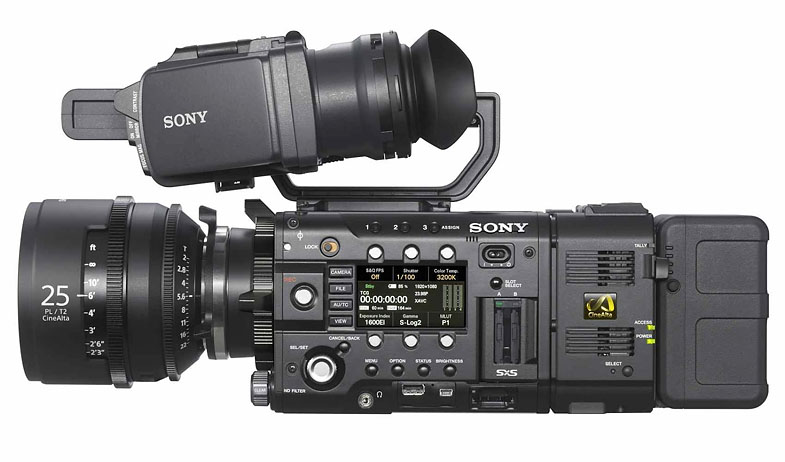
Date: 29. 10. 2013,
Category: News
FULL ARTICLE
October 24, 2013
Blackmagic Design released new software updates that add full support for Apple’s new OS X Mavericks operating system.
Customers can now download the Blackmagic Design software updates, free of charge from the Blackmagic Design web site. The new updates include OS X Mavericks compatibility and interface enhancements for the new operating system and are immediately available for DeckLink, UltraStudio and Intensity Desktop Video products. 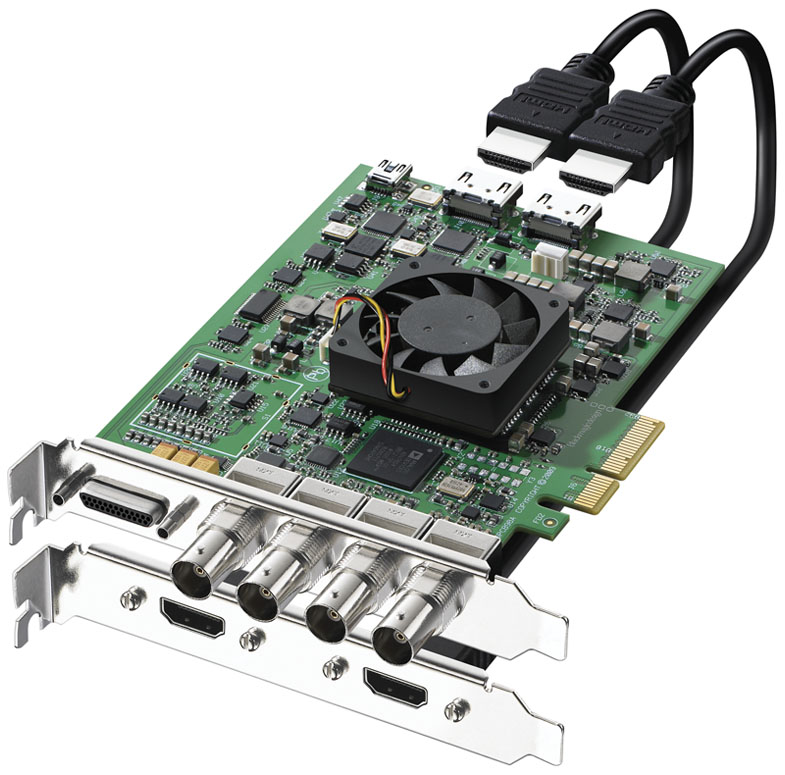
"We are very excited to be releasing software updates for our Desktop Video solutions on the same day that OS X Mavericks is available" said Grant Petty, CEO, Blackmagic Design. "Blackmagic Design works hard to make sure our customers can use the latest features and up to date software in sync with major OS updates. Our customers can be assured that they will continue to be able to easily download our software and enjoy performance improvements when they upgrade to OS X Mavericks and Blackmagic Design products.”
Availability and Price
The software updates are available now free of charge for all DeckLink, UltraStudio, Intensity, Media Express and HDLink customers from the Blackmagic Design web support page at www.blackmagicdesign.com/support.
Press Photography
Product photos of all Blackmagic Design products are available at www.blackmagicdesign.com/press/images.
About Blackmagic Design
Blackmagic Design creates the world’s highest quality video editing products, digital film cameras, color correctors, video converters, video monitoring, routers, live production switchers, disk recorders, waveform monitors and film restoration software for the feature film, post production and television broadcast industries. Blackmagic Design’s DeckLink capture cards launched a revolution in quality and affordability, while the company’s DaVinci Emmy™ award winning color correction products have dominated the television and film industry since 1984. Blackmagic Design continues ground breaking innovations including stereoscopic 3D and 4K workflows. Founded by world leading post production editors and engineers, Blackmagic Design has offices in the USA, UK, Japan, Singapore, and Australia. For more information, please check www.blackmagicdesign.com.
Date: 24. 10. 2013,
Category: News
FULL ARTICLE
October 17, 2013
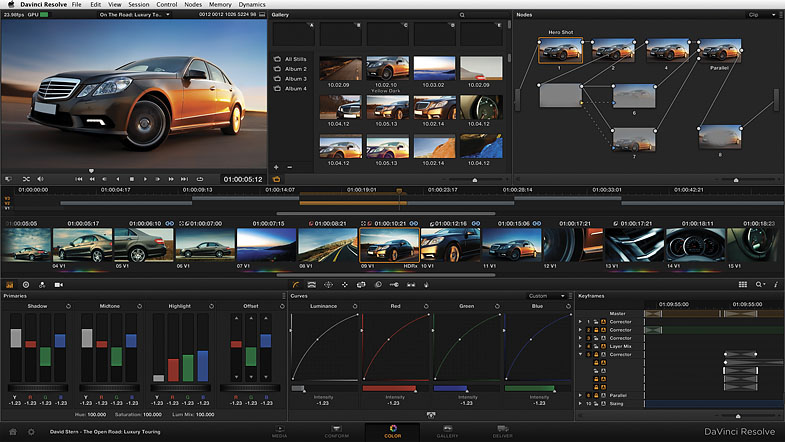
Blackmagic Design announced that Los Angeles-based sister post production companies Encore and Level 3 Post, both part of the Deluxe Creative Services Group, are using DaVinci Resolve for color grading on some of the biggest prime time television programs of the 2013 American fall television schedule. This includes returning hit shows such as “Once Upon a Time” and “Elementary” and new shows such as “Once Upon a Time in Wonderland.”
DaVinci Resolve, the world's most advanced color correction tool, is the standard for high end post production workflows and color correction in film, television programs and global commercial campaigns, and is continuing to grow in its use to get new shows ready for their fall premiers and ongoing weekly shows.
For George Manno, Senior Colorist at Level 3 Post, shows like “Once Upon a Time” and now “Once Upon a Time in Wonderland” represent a colorist's dream. "The 'fantasy' and 'regular' worlds have very different looks," he notes. "We get to make nights a really, deep blue and greens in a forest almost unnatural in the way they pop. It's freeing and allows us to really dig in and try some things that a more typical show wouldn't let you do. We get to see how far we can twist an image from norm."
The sister companies' fall TV shows using DaVinci Resolve include:
Once Upon a Time: George Manno, Colorist, Level 3 Post
Once Upon a Time In Wonderland: George Manno, Colorist, Level 3 Post
Elementary: Tony D’Amore, Colorist, Encore
About DaVinci Resolve
Blackmagic Design’s DaVinci Resolve is the world’s highest performance on set, editing and color correction solution for Mac OS X, Windows and Linux computers. DaVinci Resolve supports more real time color correction than any other system because it’s not limited by the performance of the computer it’s running on. DaVinci Resolve eliminates this performance barrier because it’s based on a cluster of high performance GPU cards, so all processing is always real time. DaVinci Resolve has the power of a true real time performance solution so handles complex color grades even when using dozens of primaries, secondaries, Power Windows™, multi point tracking, blurs, and more. DaVinci Resolve provides incredible performance in a low cost solution which can be easily upgraded by adding extra GPUs for supercomputer power to handle 4K resolutions, stereoscopic 3D and real time grading direct from raw camera files such as ARRI RAW, RED RAW and Sony RAW files which can be handled with ease.
Press Photography
Product photos of DaVinci Resolve are available at www.blackmagicdesign.com/press/images
About Blackmagic Design
Blackmagic Design creates the world’s highest quality video editing products, digital film cameras, color correctors, video converters, video monitoring, routers, live production switchers, disk recorders, waveform monitors and film restoration software for the feature film, post production and television broadcast industries. Blackmagic Design’s DeckLink capture cards launched a revolution in quality and affordability, while the company’s Emmy™ award winning DaVinci color correction products have dominated the television and film industry since 1984. Blackmagic Design continues ground breaking innovations including stereoscopic 3D and 4K workflows. Founded by world leading post production editors and engineers, Blackmagic Design has offices in the USA, United Kingdom, Japan, Singapore, and Australia. For more information, please check www.blackmagicdesign.com
About Encore
Since its inception in 1985, Encore has been providing its clients quality service while consistently remaining at the forefront of technological advances. The combination of award-winning engineering, state-of-the-art technology, an end-to-end file-based workflow, and some of the most respected and creative artists in the industry comes together to make Encore a one-stop-shop for any production's color management, editing and visual effects needs.
Encore provides post production services to top television series, including FX's Once Upon a Time; Fox's Glee; CBS's NCIS and Hawaii 5-0; HBO’s The Newsroom; ABC's Under the Dome and Revenge and many others. Encore is wholly-owned by Deluxe Creative Services Group Inc., a wholly-owned subsidiary of MacAndrews & Forbes Holdings Inc.
About Deluxe Creative Services
Encore is part of Deluxe Creative Services Group, a close-knit group of facilities including Company 3, Beast, Deluxe New York, EFILM, Encore, Level 3 Post, Method Studios, Rushes and StereoD. The group leverages a comprehensive suite of end-to-end services, access to world-class artists, technical expertise and a tight infrastructure with global connectivity. The Content Creation Group businesses are wholly owned by Deluxe Entertainment Services Group Inc., (www.bydeluxe.com), which is a wholly owned subsidiary of MacAndrews & Forbes Holdings Inc.
Date: 17. 10. 2013,
Category: News
FULL ARTICLE