
 CZ
CZ SK
SK HU
HU AT
AT DE
DE ES
ES SI
SI HR
HR
Nothing in the basket.

- Search
-
Login

-
0
Comparison
Add products to compare, then they will appear here and you can compare parameters.
-
0
0 €
News
Press Release
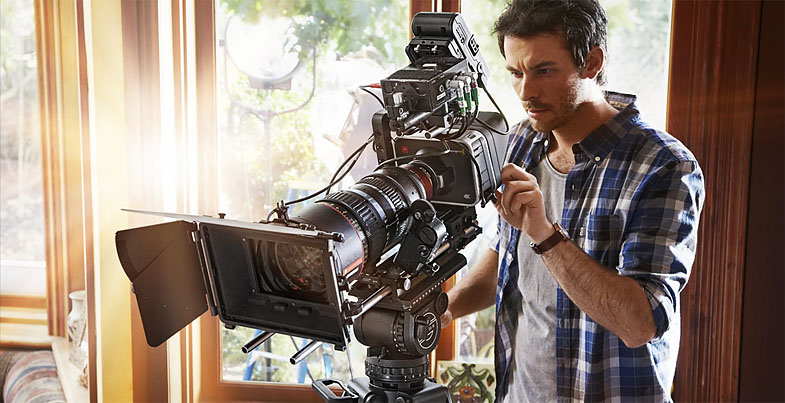
Blackmagic Design announced that Cardy Films has shot “Life of Hers” on the Blackmagic Production Camera 4K. Written by Samantha Chioma, directed by Olan Collardy and Ola Masha, the brand new micro-budget drama series explores the lives of four women living in London as part of the African diaspora.
“Life of Hers” reflects on the existence and friendships of four millennials in a cosmopolitan city. It explores the complexities of life as a young woman and some of the unique conflicts that can arise between inherited traditions and assimilated new cultures. The pilot series is set to follow the Netflix model of releasing all five episodes at once on YouTube so that viewers can watch the series holistically.
In addition to being the executive producer and cinematographer, Olan Collardy also co-directed the “Life of Hers” with writer friend, Ola Masha. As the cinematographer, Collardy wanted the drama to be filmic in quality with a rustic look and natural skin tones.
“I knew, having observed the camera space, that the Blackmagic Production Camera 4K and its beautiful rendition of color and skin tones was the right camera for this job. The Super35 sensor really complemented my vast array of EF lenses and the ability to work in ProRes was also preferential,” Olan reveals, before explaining “While I am accustomed to shooting in RAW, it would have been too cumbersome and risky on a time critical and cost sensitive project such as this.”
Collardy wanted muted colors to best reflect the narrative world in which these women lived. “They had conflicts, some external but mostly internal and we felt going with bright colors or brightly lit environments would have detracted from the feeling of introspection that we wanted to get across to the viewer.
“Shooting with the Production Camera 4K, I knew its sweet spot was 400ASA so we needed to be meticulous with our lighting. We had two ARRI 650W at our disposal and a few LED lights to accentuate and add fill where necessary. Given we were shooting in relatively small spaces, this was ample lighting sources. We also used a number of practical lamps to add some light to dark corners of the frame.”
He goes on to add: “Due to filming schedules and the time of the year, we didn’t have sun down until around 8pm. That meant every ‘night’ shot had be filmed during daytime and we had to get creative with light placement and gels to cheat a night shot. Filming in ProRes also gave us the flexibility needed to adjust things like the white balance during post.”
“The ability to film in 4K was a massive help during the edit as it meant we could recompose shots in post and punch in for a close up without losing detail. Being able to get your wide, medium and close up from a single shot is a massive win especially when shooting on a tight schedule and an even tighter budget,” he concludes. “Blackmagic Design really does give us the best color science and image quality possible for our budget.”
Press Photography
Product photos of the Blackmagic Production Camera 4K are available at www.blackmagicdesign.com/press/images.
About Blackmagic Design
Blackmagic Design creates the world’s highest quality video editing products, digital film cameras, color correctors, video converters, video monitoring, routers, live production switchers, disk recorders, waveform monitors and film restoration software for the feature film, post production and television broadcast industries. Blackmagic Design’s DeckLink capture cards launched a revolution in quality and affordability, while the company’s Emmy™ award winning DaVinci color correction products have dominated the television and film industry since 1984. Blackmagic Design continues ground breaking innovations including stereoscopic 3D and 4K workflows. Founded by world leading post production editors and engineers, Blackmagic Design has offices in the USA, United Kingdom, Japan, Singapore, and Australia. For more information, please check www.blackmagicdesign.com.
Date: 27. 06. 2014,
Category: News
FULL ARTICLE
Livestream released Livestream for Glass. Downloaded more than 3,000 times since the beta version debuted in April, Livestream for Glass is available to all today via Google's MyGlass - the official Glassware app store. For the first time, users can now stream live to millions of viewers on any device, from conferences to live surgeries to concerts. Today's release of Livestream for Glass marks the latest in the company’s efforts to democratize live video, connecting people and live events around the world. To stream live from a Glass camera to Livestream’s Platform, users need only install and say “ok glass, start broadcasting.” With Livestream for Glass, users can read and verbally respond to real-time chat messages from their audience, right in their Glass viewfinder. In addition to Glass, Livestream offers mobile live streaming apps for Android, iPhone, and iPad, as well as a dedicated camera-mounted hardware product, Broadcaster. All of these devices - including Glass - also function as roaming Wi-Fi cameras, connected directly to Livestream's multi-camera live production software, Studio. Livestream Studio is traditionally used for higher-end productions involving graphics and multiple HD cameras, with output to venue screens as well as Livestream. The addition of a remote camera on Glass opens up innovative production possibilities, enabling producers to incorporate the perspective of a performer, athlete, or an audience member.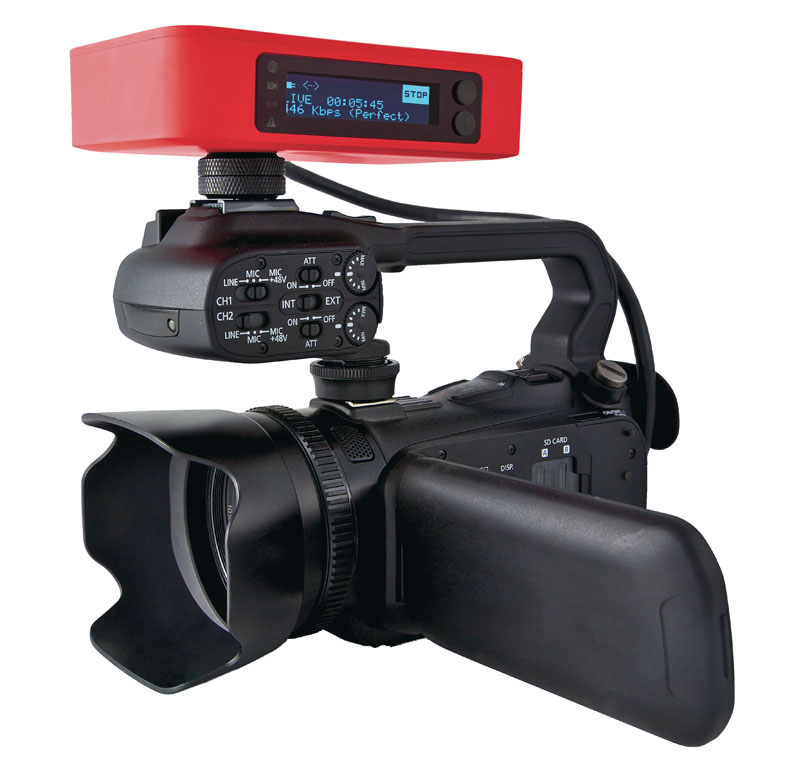
Livestream released Livestream for Glass. Downloaded more than 3,000 times since the beta version debuted in April, Livestream for Glass is available to all today via Google's MyGlass - the official Glassware app store. For the first time, users can now stream live to millions of viewers on any device, from conferences to live surgeries to concerts. Today's release of Livestream for Glass marks the latest in the company’s efforts to democratize live video, connecting people and live events around the world. To stream live from a Glass camera to Livestream’s Platform, users need only install and say “ok glass, start broadcasting.” With Livestream for Glass, users can read and verbally respond to real-time chat messages from their audience, right in their Glass viewfinder. In addition to Glass, Livestream offers mobile live streaming apps for Android, iPhone, and iPad, as well as a dedicated camera-mounted hardware product, Broadcaster. All of these devices - including Glass - also function as roaming Wi-Fi cameras, connected directly to Livestream's multi-camera live production software, Studio. Livestream Studio is traditionally used for higher-end productions involving graphics and multiple HD cameras, with output to venue screens as well as Livestream. The addition of a remote camera on Glass opens up innovative production possibilities, enabling producers to incorporate the perspective of a performer, athlete, or an audience member.
Date: 26. 06. 2014,
Category: News
FULL ARTICLE
Bruce Austin of Bruce Austin Productions Inc. (BAPI) and Dan Harris of Eight Ball Pictures and Stereoscope LLC, have turned to Grass Valley, a Belden Brand, to harness the powerful capabilities of its EDIUS 7 multiformat nonlinear editing software on the film "Our Restless Planet," for the JPL Earth Science Visitor Center. The film highlights the effects of hurricanes, earthquakes and fresh water supplies on our planet.
"We're so proud of this film, which is being seen by thousands of visitors to JPL each year," said Bruce Austin, freelance 3D director of photography, BAPI. "With EDIUS at our fingertips, editing this film was an absolute breeze. We were able to bring multiple formats, resolutions and clips together and were able to edit in real-time without rendering, which made the entire process quick and painless. We're very excited with the outcome of this project, and I don't think it could have been done on any other editing system."
"Our Restless Planet" was assembled with footage from JPL consisting of Red Digital 3D files, 2D-to-3D converted archival footage and a number of other 3D file formats. In addition, Austin shot original footage on a number of 3D cameras, including Sony's TD300 and Panasonic's 3DP1 and Z10000. CG animations of the earth with multiple layers of compositing and chroma keying were accomplished with EDIUS.
"EDIUS allowed me to make editing decisions in real-time while viewing in 3D," said Dan Harris, director and editor, Eight Ball Productions and Stereoscope LLC. "Past experience with other NLE's transcoding slowed the creative process down. With EDIUS, the final delivery was performed in weeks instead of months. Whether editing in 2D or 3D, EDIUS stands out as one of the top editing tools available today."
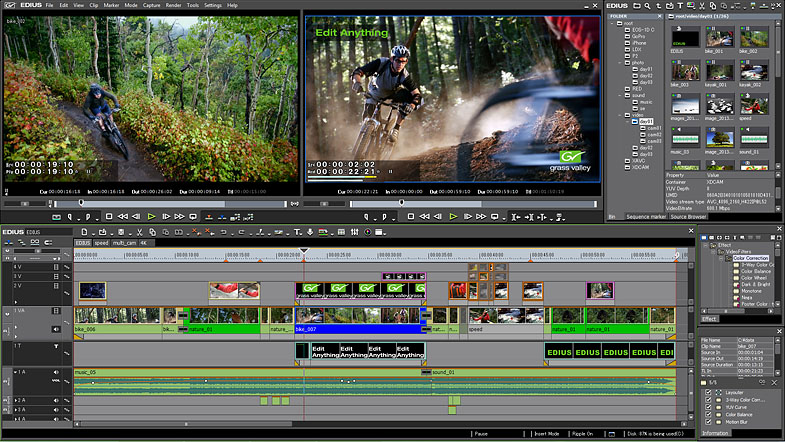
Grass Valley's EDIUS 7 is a comprehensive editing system widely used for broadcast news, newsmagazine and studio program content, as well as by professional video editors working on organizational, documentary and 4K theatrical productions. Designed as a native 64-bit application for Windows 7 and Windows 8, EDIUS 7 takes full advantage of installed physical memory access for super-intensive media operations, especially layering, 3D, multicam and multitrack 4K editing.
About Grass Valley
The new Grass Valley keeps broadcasters, content owners and service providers future-ready as they navigate the changing landscape of television. With the most comprehensive collection of workflow solutions in the industry, Grass Valley delivers end-to-end television production and content distribution workflows that enable the efficiency and flexibility broadcasters need to stay competitive today — while offering technological foresight they need to keep pace with consumers' desires for more content on more devices. Grass Valley, headquartered in Montreal, leverages the collective expertise and depth of the Grass Valley Group and Miranda Technologies, each having been acquired by St. Louis-based Belden Inc. Belden delivers a comprehensive product portfolio designed to meet the mission-critical network infrastructure needs of industrial, enterprise and broadcast markets. With innovative solutions targeted at reliable and secure transmission of rapidly growing amounts of data, audio and video needed for today's applications, Belden is at the center of the global transformation to a connected world. For more information visit www.belden.com.
Date: 26. 06. 2014,
Category: News
FULL ARTICLE
Adobe continues to drive Creative Cloud innovation by announcing 14 new versions of CC desktop applications, including essential tools such as Adobe Photoshop CC, Adobe After Effects CC and Adobe Premiere Pro CC. All the updates are free for users under subscription.
Adobe Photoshop CC 2014
New capabilities in Photoshop CC for photographers such as, Blur Gallery motion effects for creating a sense of motion; Focus Mask that makes portrait shots with shallow depth of field stand out; new Content-Aware capabilities; and the recently introduced Perspective Warp for fluidly adjusting the perspective of a specific part of your image without affecting the surrounding area. Designers using Photoshop CC will enjoy enhanced Mercury Graphics Engine performance as well as the ability to link Smart Objects and share them across multiple documents. With improved Layer Comps, users save time by changing the visibility, position, or appearance of one layer and simply syncing to see the change reflected in all other Layers. Photoshop CC also has ability to pinch and zoom images, create smoother strokes, and deliver a more responsive experience on Windows 8 Touch devices, such as Microsoft Surface Pro 3.
Adobe Premiere and After Effects CC 2014
New features in the video apps include, Live Text Templates and Masking and Tracking, new integrations that leverage the power of Adobe After Effects CC inside Adobe Premiere Pro CC. Race through projects thanks to enhanced graphics performance in Premiere Pro; precise new keying effects in After Effects; a more flexible Direct Link color pipeline in Adobe SpeedGrade CC; and enhanced multi-track tools for audio work in Adobe Audition CC. Integration between apps has also been further improved to save time when working between Premiere Pro and After Effects or SpeedGrade.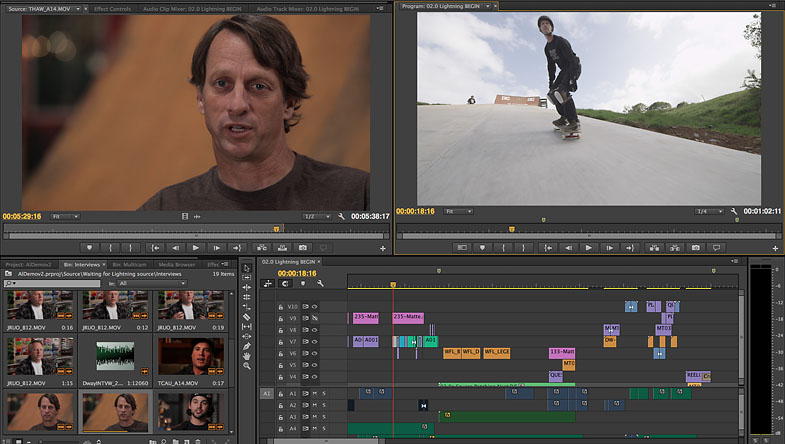
Date: 25. 06. 2014,
Category: News
FULL ARTICLE
Press Release
Major update dramatically improves online editing features, adds new photographer friendly color correction tools, on set media management and much more!
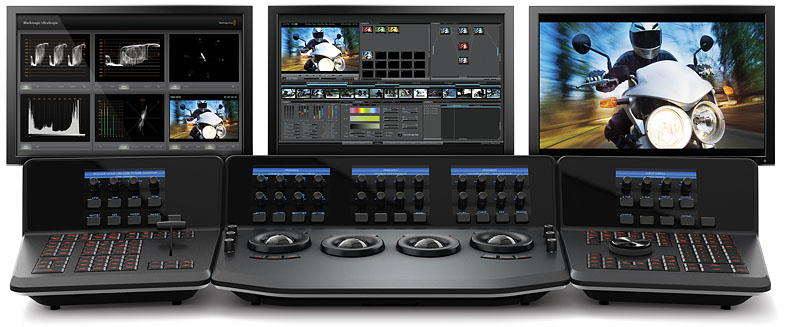
Blackmagic Design announced that DaVinci Resolve 11 public beta is available for customers to download now.
DaVinci Resolve 11 is a major upgrade with over 100 new editing and color grading features. This new update includes major improvements in online editing plus context sensitive trimming, onset file cloning, photographer style color grading tools and an amazing new collaborative workflow that allows multiple users to work simultaneously on the same timeline.
The new DaVinci Resolve 11 has over 70 new editing features based on feedback from professional editors. With DaVinci Resolve 11, editors now have dual monitor support and familiar professional tools like dynamic JKL trimming, audio crossfades and fully customizable keyboard shortcuts for faster editing. Trimming tools are context sensitive, which means DaVinci Resolve automatically knows whether editors want to ripple, roll, slip, slide, extend or shorten edits, based on the position of the mouse. This makes editing super fast because time is not wasted switching tools and clips can be trimmed on multiple tracks simultaneously in the same direction, or asymmetrically.
DaVinci Resolve 11 features a new spline curve keyframe editor integrated into the edit timeline that positions keyframes directly under each clip and in context with the clip. Editors can now also add and animate open FX plugins directly in the timeline as well as use plug-ins for transitions.
The new collaborative workflow tools in DaVinci Resolve 11 allows an editor and multiple colorists to work on different workstations, sharing the same timeline and working in tandem as they complete shots. An example is a colorist could be color grading or tracking windows while another colorist fine tunes grades that are all immediately updated as the editor edits. Each user can see the timeline update so they are all working on the same job at the same time. Sharing the same timeline makes it much easier for creative teams to stay in sync and work faster on large complex jobs such as feature films and television programming.
One of the most exciting advantages of the enhanced editing features in DaVinci Resolve 11 is the dramatically better round trip collaboration with Apple Final Cut Pro X. This is possible because more of the features in each application are compatible so projects can be moved back and forward easily. A powerful example of this integration is when a Final Cut Pro X customer might be shooting an independent film but then wants to move their edit to a large Hollywood post production facility for color grading and finishing. This is an exciting workflow that makes it possible to allow independent filmmakers to integrate with the largest post production facilities.
Color correction features have also been upgraded in DaVinci Resolve 11, including all new RAW image and color grading controls that are designed for photographers who are moving into cinematography. The new camera RAW palette features highlight and shadow recovery, mid tone detail, color boost, saturation, lift, gain and contrast. DaVinci Resolve 11 solves the single frame limitations of photo enhancement systems and gives photographers advanced control over RAW images so they can pull the maximum detail from high dynamic range footage in real time.
Adding to DaVinci Resolve’s powerful on set tools, DaVinci Resolve 11 can now securely back up and save digital camera files. The new DaVinci Resolve clone tool copies media drives, memory cards and camera packs to multiple destinations simultaneously. All copies are checksum verified, that means users get exact bit for bit digital copies of their source media. The new clone tool is included in the free DaVinci Resolve Lite and can be installed on a laptop for on set use.
DaVinci Resolve 11 also features a unique and powerful automatic color chart color balancing tool that works on all types of footage including video, RAW and even film. The new color match tool automatically gives a primary base grade by analyzing shots containing standard color chip charts even if they were shot in different lighting conditions with different exposure and color temperatures.
DaVinci Resolve 11 also adds optimizations to OpenCL image processing which allows improved rendering speeds on the new Apple MacPro systems. The MacPro features dual GPU’s so is the ideal solution for customers looking for an “off the shelf” solution that easily handles the high processing speeds when working on Ultra HD work in the deepest YRGB 32 bit float processing quality.
“This is a massive update and we are really excited about DaVinci Resolve 11”, said Grant Petty, CEO, Blackmagic Design, “Since we added the new editing tools into DaVinci Resolve we have had some great feedback from editors working on high end feature film and television programming jobs. We have rolled this great advice into DaVinci Resolve and now it’s a fantastic full featured online editor. Of course we continue to add wonderful color correction and on set tools into this release as well. This is the best version of DaVinci Resolve we have ever released and we are going to provide this update to all DaVinci Resolve customers free of charge. This means the cost of switching to the worlds most exciting online editor will be zero!”
Availability and Price
DaVinci Resolve 11 public beta is available now for download from the Blackmagic Design web site free of charge for all DaVinci Resolve customers.
Press Photography
Product photos of DaVinci Resolve 11, and all other Blackmagic Design products, are available at www.blackmagicdesign.com/press/images
About Blackmagic Design
Blackmagic Design creates the world’s highest quality video editing products, digital film cameras, color correctors, video converters, video monitoring, routers, live production switchers, disk recorders, waveform monitors and real time film scanners for the feature film, post production and television broadcast industries. Blackmagic Design’s DeckLink capture cards launched a revolution in quality and affordability in post production, while the company’s Emmy™ award winning DaVinci color correction products have dominated the television and film industry since 1984. Blackmagic Design continues ground breaking innovations including 6G-SDI and 12G-SDI products and stereoscopic 3D and Ultra HD workflows. Founded by world leading post production editors and engineers, Blackmagic Design has offices in the USA, UK, Japan, Singapore and Australia. For more information, please go to www.blackmagicdesign.com
Date: 25. 06. 2014,
Category: News
FULL ARTICLE