
 CZ
CZ SK
SK HU
HU AT
AT DE
DE ES
ES SI
SI HR
HR
Nothing in the basket.

- Search
-
Login

-
0
Comparison
Add products to compare, then they will appear here and you can compare parameters.
-
0
0 €
News
The new update, released earlier this month, adds new features to the multi-view outputs on all ATEM Production Studio 4K models as well as ATEM 2 M/E Broadcast Studio 4K, so that customers can create unique multi-view layouts, based on the needs of their live production. VU meters can be selectively displayed on each window for any combination of inputs. The opacity of the VU meters can be adjusted too, so customers can see them at full brightness, or as a transparent overlay on top of the video. In addition, the program and preview windows can now be swapped and customers can also turn off the safe area grid on the multi-view output. The ATEM Switcher 6.9 update also adds rotational DVE functions to the ATEM 2 M/E Broadcast Studio 4K model. This gives customers working on live switched productions even more high quality video effects than ever before, all the way up to high frame rate Ultra HD 2160p60. The update is available for download now from the Blackmagic Design website and is free of charge for all Blackmagic ATEM switcher customers.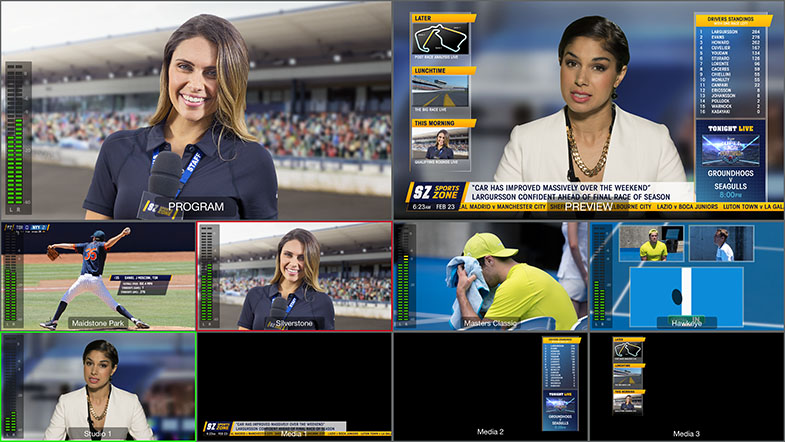
Date: 21. 07. 2016,
Category: News
FULL ARTICLE
Press Release
Blackmagic Design announced that more than 20 of this summer’s hottest films used its digital film cameras, VFX and motion graphics software Fusion Studio and DaVinci Resolve Studio on set, editing, color correction and finishing tools to shoot, composite and grade the films.
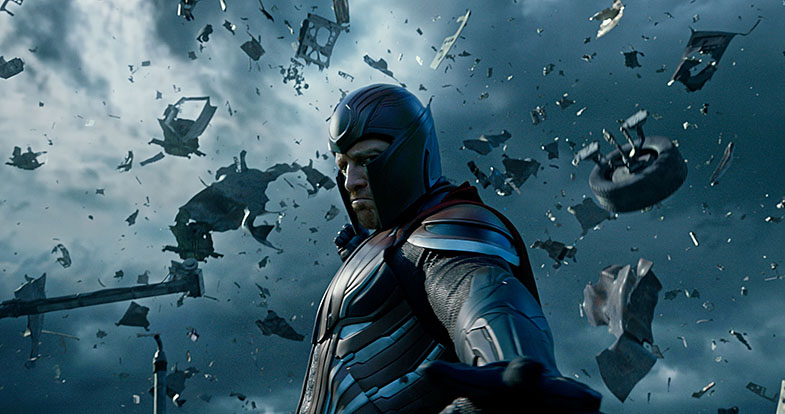
From capturing car crashes and action scenes in “The Infiltrator” and “Jason Bourne,” to VFX work, such as compositing “The Founder” and shooting VFX plates for “Independence Day: Resurgence,” and finessing color in “Alice Through the Looking Glass” and “X-Men: Apocalypse,” Blackmagic Design products were used to help deliver these films and more. The summer films that used Blackmagic Design products include:
“Ben-Hur" Second Unit DP Sergei Kozlov used several Blackmagic Micro Cinema Cameras to capture the opening action sequence of the film;
“Don’t Breathe” DP Pedro Luque used a Pocket Cinema Camera for the film’s action scenes;
“The Infiltrator” DP Joshua Reis used three Production Camera 4Ks as crash cameras; and
“Jason Bourne” Second Unit DP Igor Meglic used several Micro Cinema Cameras and Pocket Cinema Cameras to shoot action scenes for the film.
Visual Effects:
“The Founder” was composited by Jeremy Nelson at Moving Target using Fusion Studio;
“Independence Day: Resurgence” had VFX plates shot by Additional VFX Supervisor Douglas Hans Smith and the team at Uncharted Territory using URSA Mini 4.6K; and
“The Shallows” Cody Cuellar at Digital Sandbox used DaVinci Resolve Studio to grade their shots for VFX Supervisor Scott Anderson.
Color Grading using DaVinci Resolve Studio:
“Alice Through the Looking Glass” was graded by Stefan Sonnenfeld of Deluxe’s Company 3;
“Central Intelligence” was graded by Kostas Theodosiou of FotoKem;
“The Conjuring 2” was graded by Mark Griffith of FotoKem;
“Don't Breathe” was graded by Siggy Ferstl of Deluxe’s Company 3;
“Don't Think Twice” was graded by Sam Daley of Technicolor PostWorks;
“Equity” was graded by Roman Hankewycz of Harbor Picture Company;
“The Fits” was graded by Sam Daley of Technicolor PostWorks;
“Florence Foster Jenkins” was graded by Adam Glasman of Goldcrest Post;
“The Founder” was graded by Stefan Sonnenfeld of Deluxe’s Company 3;
“Independence Day: Resurgence” was graded by Walter Volpatto of FotoKem;
“Jason Bourne” was graded by Rob Pizzey of Goldcrest Post;
“Me Before You” was graded by Rob Pizzey of Goldcrest Post;
“Now You See Me 2” was graded by Stephen Nakamura of Deluxe’s Company 3;
“Popstar: Never Stop Never Stopping” was graded by Siggy Ferstl of Deluxe’s Company 3;
“Swiss Army Man” was graded by Sofie Borup of Deluxe’s Company 3;
“Teenage Mutant Ninja Turtles: Out of the Shadows” was graded by Stefan Sonnenfeld of Deluxe’s Company 3;
“Warcraft” was graded by Siggy Ferstl of Deluxe’s Company 3;
“Wiener-Dog” was graded by Sam Daley of Technicolor PostWorks;
“X-Men: Apocalypse” was graded by Stephen Nakamura of Deluxe’s Company 3; and
“Yoga Hosers” was graded by Mark Todd Osborne at Runway.
Press Photography
Product photos of Blackmagic URSA Mini 4.6K, Micro Cinema Camera, Pocket Cinema Camera, Production Camera 4K, Fusion Studio, DaVinci Resolve Studio and all other Blackmagic Design products are available at www.blackmagicdesign.com/press/images.
About Blackmagic Design
Blackmagic Design creates the world’s highest quality video editing products, digital film cameras, color correctors, video converters, video monitoring, routers, live production switchers, disk recorders, waveform monitors and real time film scanners for the feature film, post production and television broadcast industries. Blackmagic Design’s DeckLink capture cards launched a revolution in quality and affordability in post production, while the company’s Emmy™ award winning DaVinci color correction products have dominated the television and film industry since 1984. Blackmagic Design continues ground breaking innovations including 6G-SDI and 12G-SDI products and stereoscopic 3D and Ultra HD workflows. Founded by world leading post production editors and engineers, Blackmagic Design has offices in the USA, UK, Japan, Singapore and Australia. For more information, please go to www.blackmagicdesign.com.
Date: 20. 07. 2016,
Category: News
FULL ARTICLE
For a limited time, the Odyssey RAW Bundle for the Odyssey7Q+ and Odyssey7Q is on sale for $400 off. This offer is valid from Monday, July 18 until Monday, August 15. The Odyssey RAW Bundle enables recording using the RAW data signal from select cameras from Sony, ARRI, Canon, Indiecam and IO Industries. Depending on camera model, recordings are available in RAW and/or Apple ProRes (HQ/422/LT). The Odyssey RAW Bundle now also supports the Sony PXW-FS5 camera! Note that the FS5 requires a firmware option from Sony to output RAW data. Convergent Design has produced two tutorial videos (part 1, part 2) to show how to setup the FS5 and Odyssey7Q+ together to shoot 4K and 2K in RAW or in Apple ProRes, and up to 240p. No other device integrates with the Sony FS5 and offers as much support as the Odyssey7Q/7Q+.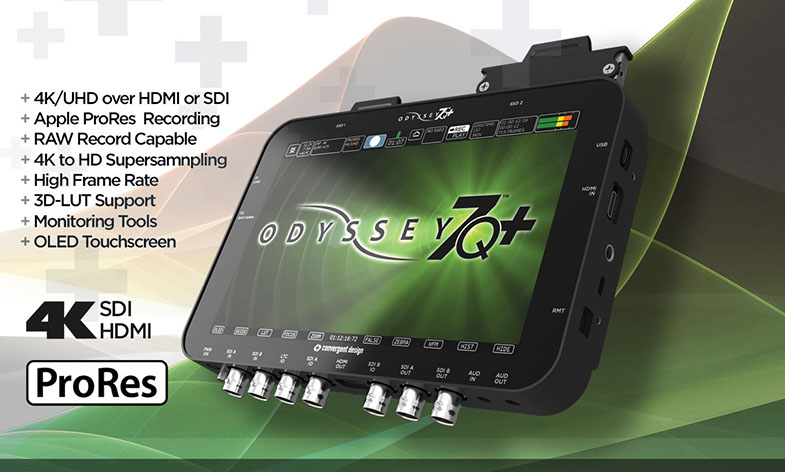
Date: 19. 07. 2016,
Category: News
FULL ARTICLE
The new EDIUS Podcast series in English will cover how to get started with EDIUS, answer typical support questions and bring news about new features and plug-ins. The podcats will be published approx. weekly on podcast.edius.net, the first video details the installation and registration procedure.
Date: 19. 07. 2016,
Category: News
FULL ARTICLE
Tomorrow, July 19th, 2016, Panasonic will release a new formware upgrade for its revolutionary 4K digital film camera VariCam LT. Version 3.0 will feature improved Audio Level adjustment interface; 1080/60i,50i mode for ProRes HQ recording; 1080p mode for AVC-Intra100 recording; 24.00p mode for Proxy G6 recording; updates for EF-mount lenses; CDL/LUT recording to an SD card; SURROUND VIEW setting for VF; as well as an audio indication when the REC button is pressed. Panasonic also plans to implement RAW output, soon.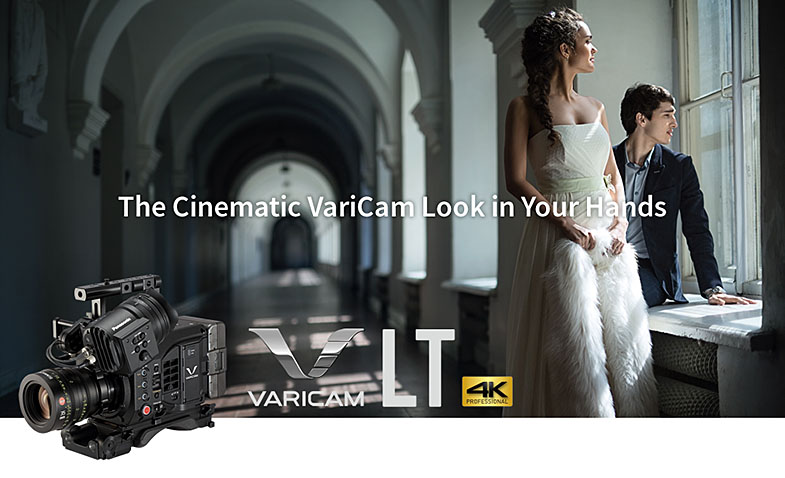
Date: 18. 07. 2016,
Category: News
FULL ARTICLE