
 CZ
CZ SK
SK HU
HU AT
AT DE
DE ES
ES SI
SI HR
HR
Nothing in the basket.

- Search
-
Login

-
0
Comparison
Add products to compare, then they will appear here and you can compare parameters.
-
0
0 €
Blog
Press Release
Blackmagic Design announced DaVinci Resolve 15, a massive update that fully integrates visual effects and motion graphics, making it the world’s first solution to combine professional offline and online editing, color correction, audio post production, multi user collaboration and now visual effects together in one software tool. DaVinci Resolve 15 adds an entirely new Fusion page with over 250 tools for compositing, paint, particles, animated titles and more. In addition, DaVinci Resolve 15 includes a major update to Fairlight audio, along with over 100 new features and improvements that professional editors and colorists have asked for. A public beta of DaVinci Resolve 15 is available today and for immediate download from the Blackmagic Design website.
DaVinci Resolve 15 continues to revolutionize post production by combining 4 extremely high end applications as different pages in one single piece of software. The edit page has all of the tools professional editors need for both offline and online editing, the color page features the world’s most advanced color correction tools, the Fairlight audio page is designed specifically for audio post production, and the new Fusion page gives visual effects and motion graphics artists everything they need to create feature film quality effects and animations. All it takes is a single click to instantly move between editing, color, effects and audio.
This gives individual users unlimited creative flexibility because they can learn and explore different toolsets. It also enables collaboration so people with different talents can work together on the same project at the same time. The DaVinci Resolve 15 collaborative workflow dramatically speeds up post production because customers no longer need to import, export or translate projects between different software applications, and work no longer needs to be conformed when changes are made. Everything is in the same software application.
DaVinci Resolve 15 Detailed Overview
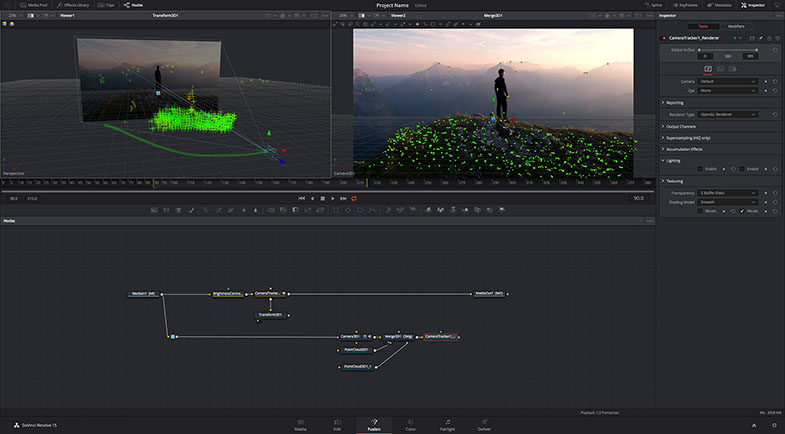
DaVinci Resolve 15 features an entirely new Fusion page for feature film quality visual effects and motion graphics animation. Fusion was previously only available as a stand alone application and is the world’s most advanced visual effects and motion graphics software. It is now built into DaVinci Resolve 15. The new Fusion page gives customers a true 3D workspace with over 250 tools for compositing, vector paint, particles, keying, rotoscoping, text animation, tracking, stabilization and more. Adding Fusion to DaVinci Resolve has been a massive project that will be completed over the next 12-18 months. Customers can get started using Fusion today to complete nearly all of their visual effects and motion graphics work. The standalone version of Fusion will continue to be available for customers who need it.
In addition to bringing Fusion into DaVinci Resolve 15, Blackmagic Design has also added support for Apple Metal, multiple GPUs and CUDA acceleration, making Fusion in DaVinci Resolve faster than ever. To add visual effects or motion graphics, customers simply select a clip in the timeline on the Edit page and then click on the Fusion page where they can use Fusion’s dedicated node based interface, which is optimized for visual effects and motion graphics. Compositions created in the standalone version of Fusion can also be copied and pasted into DaVinci Resolve 15 projects.
DaVinci Resolve 15 also features a huge update to the Fairlight audio page. The Fairlight page now has a complete ADR toolset, static and variable audio retiming with pitch correction, audio normalization, 3D panners, audio and video scrollers, a fixed playhead with scrolling timeline, shared sound libraries, support for legacy Fairlight projects, and built in cross platform plugins such as reverb, hum removal, vocal channel and de-esser. With DaVinci Resolve 15, customers no longer have to worry about audio plugins when moving between Mac, Windows and Linux because the FairlightFX plugins run natively on all three platforms.
DaVinci Resolve is the fastest growing nonlinear video editor in the industry. It’s also Hollywood’s favorite color corrector. Blackmagic Design has listened carefully to feedback from professional colorists and editors. DaVinci Resolve 15 includes over a hundred new features and improvements that editors and colorists have asked for.
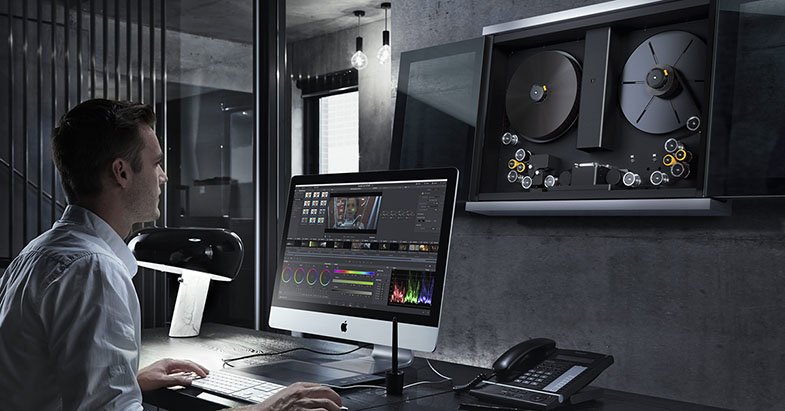
Colorists get an entirely new LUT browser for quickly previewing and applying LUTs, along with new shared nodes that are linked so when one is changed they all change, multiple playheads for quickly referencing different shots in a program, over 5x performance improvement for stabilization, improved noise reduction, and new Super Scale HD to 8K up-rezzing. DaVinci Resolve 15 also expands HDR support with GPU accelerated Dolby Vision metadata analysis and native HDR 10+ grading controls. In addition, new ResolveFX let customers quickly patch blemishes or remove unwanted elements in a shot using smart fill technology. There are also new ResolveFX for dust and scratch removal, lens and aperture diffraction effects, and more.
Professional editors will find new features in DaVinci Resolve 15 specifically designed to make cutting, trimming, organizing and working with large projects even better. DaVinci Resolve 15 has dramatically improved load times so that large projects with hundreds of timelines and thousands of clips now open instantly. New stacked timelines and timeline tabs let editors see multiple timelines at once so they can quickly cut, paste, copy and compare scenes between timelines. There are also new markers with on-screen annotations, subtitle and closed captioning tools, auto save with versioning, greatly improved keyboard customization tools, new 2D and 3D Fusion title templates, image stabilization on the Edit page, a floating timecode window, improved organization and metadata tools, Netflix render presets with IMF support and much more.
For the ultimate high speed workflow, customers can add a DaVinci Resolve Micro Panel, DaVinci Resolve Mini Panel or a DaVinci Resolve Advanced Panel. All controls are logically placed near natural hand positions and are made out of the highest quality materials. Smooth, high resolution weighted trackballs and precision engineered knobs and dials feature the perfect amount of resistance for accurately adjusting any setting. The DaVinci Resolve control panels give colorists and editors fluid, hands on control over multiple parameters at the same time, allowing them to create looks that are simply impossible with a standard mouse.
In addition, Blackmagic Design also introduced new Fairlight audio consoles for audio post production that will be available later this year. The new Fairlight consoles are available in 2, 3 and 5 bay configurations. Prices for the new Fairlight control panels are approximately 80% less than the previously available panels with prices ranging from 21,995 to 48,995 USD ex. VAT.
Availability and Price
The public beta of DaVinci Resolve 15 is available today as a free download from the Blackmagic Design website for all current DaVinci Resolve and DaVinci Resolve Studio customers. DaVinci Resolve Studio is available for 259 EUR ex. VAT.
The Fairlight consoles will be available later this year and will be priced from 21,995 USD ex. VAT for the Fairlight 2 Bay console.
Press Photography
Product photos of all Blackmagic Design products, are available at www.blackmagicdesign.com/press/images.
About Blackmagic Design
Blackmagic Design creates the world’s highest quality video editing products, digital film cameras, color correctors, video converters, video monitoring, routers, live production switchers, disk recorders, waveform monitors and real time film scanners for the feature film, post production and television broadcast industries. Blackmagic Design’s DeckLink capture cards launched a revolution in quality and affordability in post production, while the company’s Emmy™ award winning DaVinci color correction products have dominated the television and film industry since 1984. Blackmagic Design continues ground breaking innovations including 6G-SDI and 12G-SDI products and stereoscopic 3D and Ultra HD workflows. Founded by world leading post production editors and engineers, Blackmagic Design has offices in the USA, UK, Japan, Singapore and Australia. For more information, please go to www.blackmagicdesign.com.
Date: 23. 04. 2018,
Category: News
FULL ARTICLE
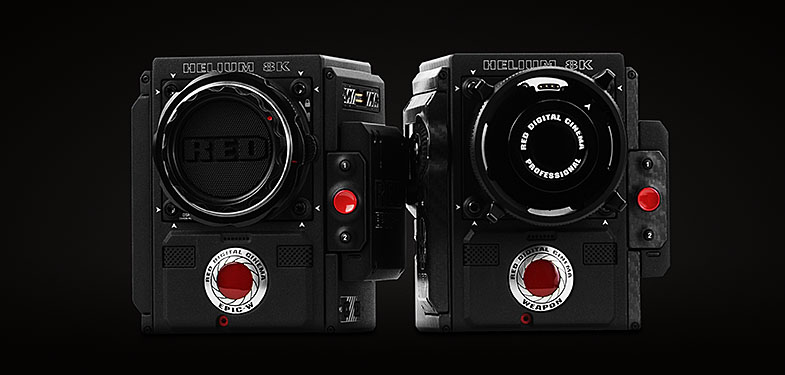
RED Digital Cinema released a new firmware for the DSMC2 line of digital film cameras (WEAPON, EPIC-W, SCARLET-W, RAVEN). The new version fixes over 30 issues, does not support rollback to a previous version of the firmware, and requires users to format their Mags.
http://www.reduser.net/forum/showthread.php?167181-DSMC2-Release-Build-v7-0-2
WEAPON FIRMWARE (6K CF, 8K S35, 8K VV, 8K VV ANA) https://www.red.com/downloads/55a01322f01b305ec100179a
WEAPON FIRMWARE (MAGNESIUM ONLY) https://www.red.com/downloads/56af8a8ccc11fa5a1b0020a4
RED EPIC-W FIRMWARE
https://www.red.com/downloads/56d874d3f01b302cf500085a
SCARLET-W FIRMWARE
https://www.red.com/downloads/56af8ace2325b449230020b0
RED RAVEN FIRMWARE
https://www.red.com/downloads/56af8b709bf7e832280022aa
R.C.P. SDK
https://www.red.com/downloads/533c9a8226465a0b61000996
DSMC2 Release Build v7.0.2, April 19, 2018
Improved RED MINI-MAG reliability
Added DSMC2 GEMINI support
Fixed camera crash in playback after changing control surface
Fixed 2K 6:5 distorted image after toggling HDRx with Lookaround
Fixed intermittent audio anomalies in recording
Fixed Stop Lights based on RAW data
Fixed distorted image in playback on HELIUM camera using preset with flip/mirror enabled
Fixed diagonal tearing of RED Touch 7" or RED Touch 4.7" LCD
Fixed camera freeze and/or shutdown after WiFi connection
Fixed Legacy ACES to use restricted (legal) range
Fixed incorrect LUT applied with ACES and 3D LUT preset
Fixed VU meter accuracy in playback with 4 channel audio
Fixed 6K 6:5 distorted image in playback
Fixed focus mode locked on RACK when toggling thru settings
Fixed loss of UI control on top LCD after switching to clean
Fixed blue tint with Motion Mount and IPP2 for HELIUM or MONSTRO based cameras
Fixed power information on UI when Jetpack attached
Fixed EVF port hot plug with no HDMI port on attached module
Fixed aperture control with Sigma lens
Fixed Focal Length displayed in UI when using Element Technica protocol
Fixed relative shutter angle with Reduce Judder Preview
Fixed camera response slowdown in AF Continuous mode
Fixed monitor artifacts when the Global Flip/Mirror feature is enabled
Fixed intermittent camera HD-SDI output on startup
Fixed RTC battery discharge rate when powered off
Fixed all HDR display presets to use restricted (legal) range
Fixed 3D LUT input to be REDLogFilm based
Fixed intermittent locking of Flanders DM-series monitors
Fixed horizontal tear on startup at 2K 2:1 119.88fps with HDRx
Fixed incorrect values after importing an RCX Look preset
Updated DSMC2 GEMINI 5K 6:5 format to use full sensor height (3600×3000)
Date: 20. 04. 2018,
Category: News
FULL ARTICLE
AG-AC30, UX90, UX180, DVX200 improvements:
1. On rare occasions, the operation of REC button on the unit or a wired remote control may no longer have any effect. This problem is fixed.
2. If the card is ejected from the main slot during the simultaneous recording, the recording in the sub-slot stops 10 hours after the start of recording. The indication shows the same as during recording, and the operations of REC button are refused. This problem is fixed.
3. LCD may not show anything when the camera is booted up. This problem is fixed.
4. A very few SD cards may have a write error. This problem is fixed.
UX90, UX180, DVX200 improvements:
5. If the network address is changed when WIRELESS SETUP is set to [DIRECT] and DHCP is set to [SERVER], it sometimes made the camera impossible to connect to the iPad. This problem is fixed.
DVX200 improvements:
6. If SET button is operated on AG-ROP app, the count number of “Jog Dial” item of Hour Meter is increased. This problem is fixed.
7. When 480i squeeze output is carried out, an image quality may be the slight deterioration. This problem is fixed. (Recording signals do not have any problem, only output signals have this problem.)
Conditions:SDI/AVOUT output of playback on MOV/MP4/AVCHD
Input: 1920x1080i/1440x1080i/720x480i
Output: Squeeze output of 720x480i (down-conversion)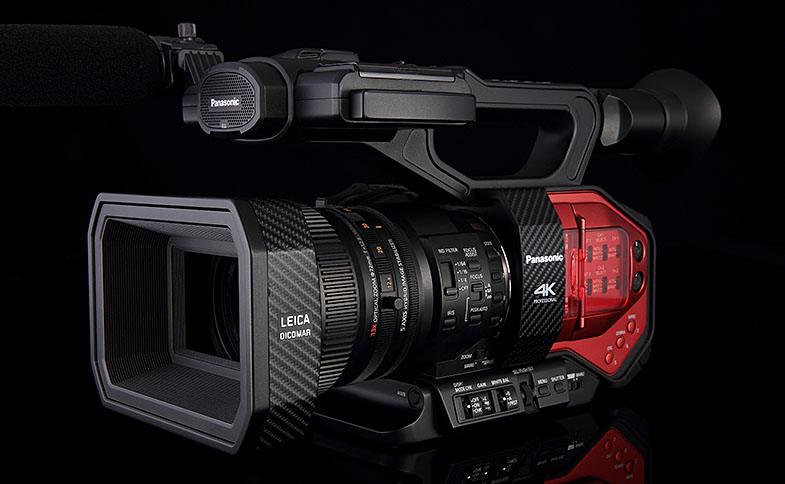
Date: 18. 04. 2018,
Category: News
FULL ARTICLE
Press Release
Blackmagic Design announced Cintel Scanner 2, a new second generation model of its popular real-time film scanner. Cintel Scanner 2 features the incredible speed of Thunderbolt 3 and PCIe host computer connections, as well as a new skid plate for 35 mm HDR film scanning and timecode output. The new Cintel Scanner 2 will be available in June for 25.325 EUR ex. VAT.
The new Cintel Scanner 2 features entirely new high speed interfaces for connecting to Mac and Windows computers. With incredibly fast 40Gb/s Thunderbolt 3 technology, the Cintel Film Scanner 2 can connect to the latest Mac computers for realtime 4K film scanning. In addition, there’s also an external PCIe interface for connecting to Windows and Linux based computers that don’t have Thunderbolt 3.
The new bi-phase sync and timecode output connection lets customers sync the Cintel Film Scanner 2 with external equipment. This is ideal for use with devices such as audio followers that playback mag sound track reels in sync with the film and that often don’t have timecode inputs, as they use an electronic tach pulse to follow sync. When used with equipment that supports timecode, the scanner can provide a timecode output to allow the audio device to match both position and sync. The addition of bi-phase sync support makes the Cintel Scanner 2 compatible with a wider range of historical audio devices than ever before.
The Cintel Scanner 2 also features a new skid plate that enables HDR (high dynamic range) film scanning of 35mm film. This makes it possible to meet the growing demand for 4K HDR content. Since the native resolution of 35mm is 4K with high dynamic range, customers can scan their existing film libraries with the Cintel Scanner 2 and recover vibrant 4K high dynamic range images for distribution on the latest streaming services such as Netflix and Apple TV. Support for 16mm HDR scanning will be added in a future update.
The HDR scanning features of Cintel Scanner 2 are available through DaVinci Resolve 15 Studio, which will be included with the scanner. DaVinci Resolve 15 Studio features full GPU accelerated color grading and mastering support for DolbyVision, HLG, HDR and HDR10+. In addition, DaVinci Resolve 15 Studio adds new ResolveFX Revival tools for automatic dirt removal, dust busting, spot patch replacement with smart fill technology, and advanced temporal and spatial noise reduction.
Availability and Price
Cintel Scanner 2 will be available in June for 25.325 EUR ex. VAT.
Press Photography
Product photos of all Blackmagic Design products, are available at www.blackmagicdesign.com/press/images.
About Blackmagic Design
Blackmagic Design creates the world’s highest quality video editing products, digital film cameras, color correctors, video converters, video monitoring, routers, live production switchers, disk recorders, waveform monitors and real time film scanners for the feature film, post production and television broadcast industries. Blackmagic Design’s DeckLink capture cards launched a revolution in quality and affordability in post production, while the company’s Emmy™ award winning DaVinci color correction products have dominated the television and film industry since 1984. Blackmagic Design continues ground breaking innovations including 6G-SDI and 12G-SDI products and stereoscopic 3D and Ultra HD workflows. Founded by world leading post production editors and engineers, Blackmagic Design has offices in the USA, UK, Japan, Singapore and Australia. For more information, please go to www.blackmagicdesign.com.
Date: 17. 04. 2018,
Category: News
FULL ARTICLE
Press Release
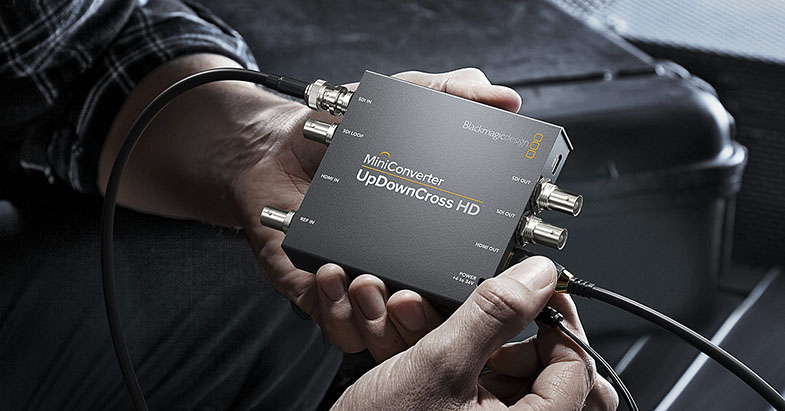
Blackmagic Design announced Blackmagic Mini Converter UpDownCross HD, a new broadcast quality standards converter that lets customers convert any SD or HD video format to any other SD or HD video format via SDI and HDMI input and output connections. In addition, customers also get automatic scaling of computer resolutions to standard broadcast formats. Blackmagic Mini Converter UpDownCross HD is available now for 129 EUR ex. VAT.
Blackmagic Mini Converter UpDownCross HD is an incredibly affordable high quality standards converter that broadcasters can use to convert video formats from its SDI and HDMI inputs. It’s perfect for converting between existing SD and HD broadcast equipment, as well as for connecting SDI equipment to consumer HDMI devices such as laptop computers and big screen televisions. Blackmagic Mini Converter UpDownCross HD uses low latency, high quality Teranex conversion algorithms for broadcast quality results. Customers can simply set the output format they need and the input format is automatically converted, which also ensures valuable equipment is protected by always sending the correct video output signal.
Connecting HDMI computers to professional SDI equipment is virtually foolproof with the Blackmagic Mini Converter UpDownCross HD. That’s because customers never have to change their computer’s display setting. The converter takes whatever the HDMI output is from the computer and then automatically scales and standards converts it to the correct broadcast standard set by the user.
Mini Converter UpDownCross HD features multi rate 3G-SDI connections that work with all SD and HD equipment and video formats up to 1080p60, as well as Level A and B devices. The converter features one 3G-SDI input with a loop output that bypasses all processing, an HDMI input, reference in, two 3G-SDI outputs and an HDMI output.
The 3G-SDI connections feature built in re-sync so all conversions match the reference input video timing signal. In addition, the converter has extremely low SDI jitter and high quality multi-tap video filters. This allows customers to use longer cables to maintain the integrity of the signal for broadcast quality video. Audio is also automatically delayed based on the conversion being performed and then embedded back into the signal so it’s always perfectly synchronized with the video.
The Blackmagic Mini Converter UpDownCross HD includes a universal power supply with international socket adapters for all countries. The power supply features a screw lock connector so customers never have to worry about the power cord being accidentally disconnected.
Blackmagic Mini Converters are part of a large family of professional broadcast converters that includes incredibly affordable Micro Converters as well as advanced models with a massively increased range of features. This range includes 3G, 6G and 12G-SDI models that are compatible with SD, HD and Ultra HD all the way up to high frame rate 2160p60. Blackmagic Mini Converters and Teranex Mini converters feature support for a wide range of connections such as balanced analog and AES/EBU audio, redundant inputs, analog video, optical fiber and more.
Availability and Price
Mini Converter UpDownCross HD is available now for 129 EUR ex. VAT.
Press Photography
Product photos of all Blackmagic Design products, are available at www.blackmagicdesign.com/press/images.
About Blackmagic Design
Blackmagic Design creates the world’s highest quality video editing products, digital film cameras, color correctors, video converters, video monitoring, routers, live production switchers, disk recorders, waveform monitors and real time film scanners for the feature film, post production and television broadcast industries. Blackmagic Design’s DeckLink capture cards launched a revolution in quality and affordability in post production, while the company’s Emmy™ award winning DaVinci color correction products have dominated the television and film industry since 1984. Blackmagic Design continues ground breaking innovations including 6G-SDI and 12G-SDI products and stereoscopic 3D and Ultra HD workflows. Founded by world leading post production editors and engineers, Blackmagic Design has offices in the USA, UK, Japan, Singapore and Australia. For more information, please go to www.blackmagicdesign.com.
Date: 17. 04. 2018,
Category: News
FULL ARTICLE